At Capital One, we don't just use technology, we architect it. Our teams have true end-to-end product ownership, shipping distributed systems that handle high concurrency at scale. No single server bottlenecks, engineered beyond legacy downtime, and operating right here in downtown Toronto. That's technology at Capital One. Search technology at Capital One Canada.
At MedCan, we know that life's greatest moments are built on a foundation of good health, from the big milestones to the quiet winds. That's why our annual health assessment offers a physician-led, full-body checkup that provides a clear picture of your health today and may uncover early signs of conditions like heart disease and cancer. A healthier you means more moments to cherish. Take control of your well-being and book an assessment today. MedCan. Live well for life. Visit MedCan.com slash moments to get started.
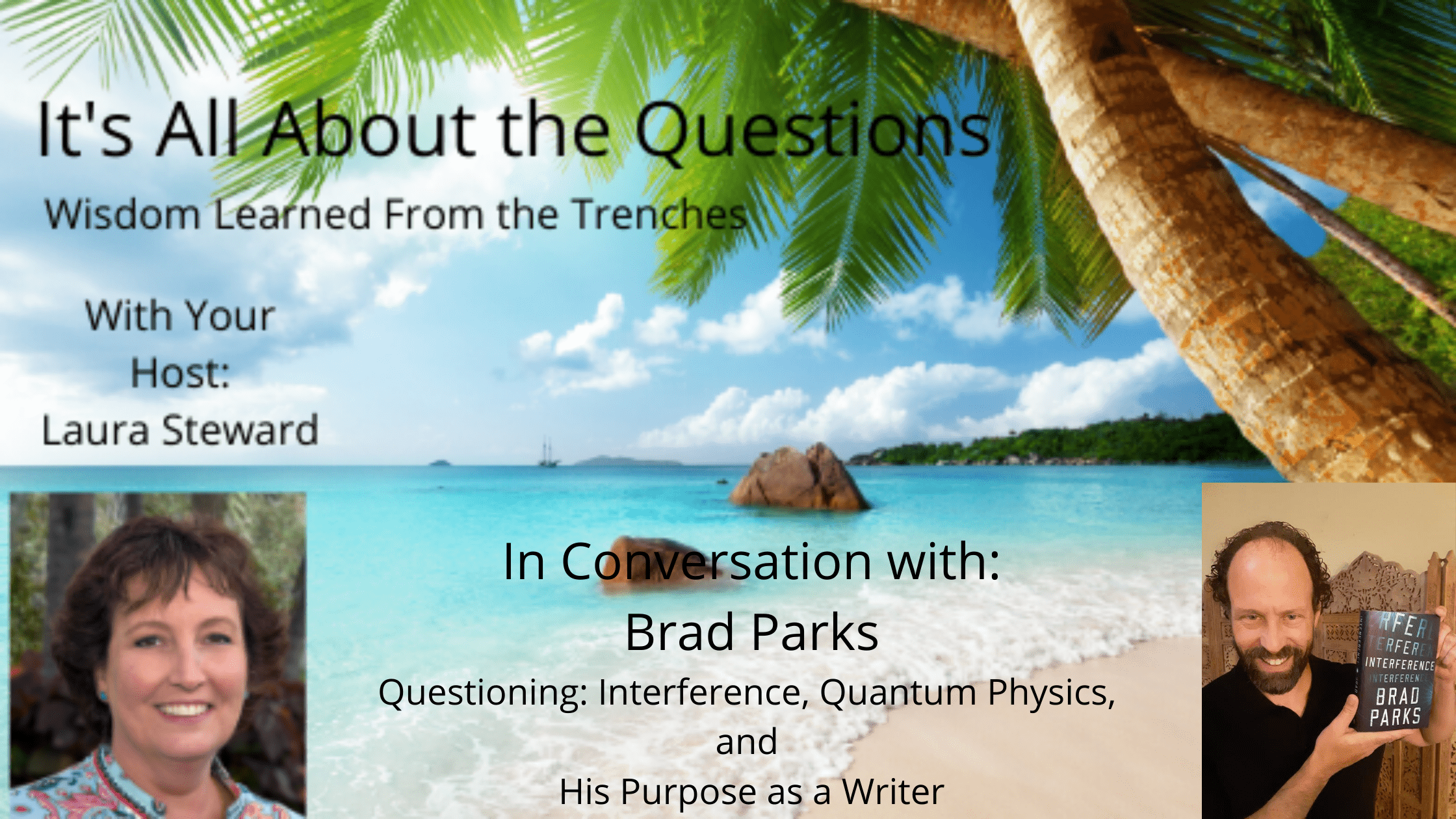
Welcome to It's All About the Questions, where learning to ask the right questions can help you achieve lifelong success. Now, here to help you ask all the right questions is award-winning author, international speaker, and business strategist, Laura Stewart. Good morning, good afternoon, and good evening, everyone, and welcome, welcome, welcome to the show. As you know, my favorite part of the week, but this is a different time of the day than you're used to seeing me doing my show, because that was the only way I could get the amazing man that you see on the other picture in the screen who's waving at you right now, Brad Parks, one of my favorite authors in all the world, who just is launching today, which is why I was willing to change the time so I can get him, his new novel, Interference, by that man, Brad Parks. Love, love, love this book. 437 pages or something, read it in one day, because I could not put it down. So, Brad, welcome to the show.
Well, Laura, thanks for having me on. It's good to be here. And I, so now this is the big test, right? And this is what I live to do as a thriller author. Did I make you ignore like your laundry, your dishes, you know, like with a little bit of slovenliness in your house because you just couldn't put the book down. That's, that's really what I'm going for. I'm like the opposite of Mr. Clean. I ignored wanting to go to the bathroom. Nice. That's good too. We can go scatological. I'm fine with that. That's great. Yeah. And it was one of the, I picked it up because, you know, I needed to read it for the interview and.
I was treasuring it and waiting till just before. So it would all be really fresh in my mind. And I picked it up and my phone's ringing, my cell phone's texting, all this stuff is happening. And finally somebody's like ready to knock on my door because they thought something happened to me. And I kept getting back-to-back texts and they're like, where are you? Are you okay? And I said, I'm reading Brad's new book. And they're like, oh, okay. Well, I'm glad we didn't quite get to the level of law enforcement being called, but that's good. That's good. Yeah. It's definitely one of those books that grabs your interest, like all of them. I mean, the last time you and I spoke, I looked it up, was March 3rd, 2018, when you were launching your book Closer Than You Know.
And the Vero Beach Book Center, want to give a shout out to them, local independent bookstore. We really need to support them right now. They introduced us because you were going to be coming there. And I know that for you right now, launching a book looks radically different than the book touring. Yes.
So what is that like for you right now? Yeah, it's definitely different. You know, like normally I would have a suitcase packed and I would have my suits all ready to go and I'd be taken off. And so I always do like a local launch party. And so I would be doing the in-person local launch party. And then tomorrow morning I'd be getting on an airplane and I'd be either on an airplane or in a car going somewhere every day for the next couple of weeks. And it's really...
weird like you know the things that I normally do like you know making sure my oil is changed well I don't need to do that to zoom and you know getting a haircut well you know I would kind of slack on the haircut a little bit because you know when you're when you're only this big on the screen you can't really see it all that well anyway the heck with it so it's been uh yeah it's been a very different experience it's in a way and this is the first time I'm realizing it it does make the whole thing feel a little less real, right? There's something about like going to Vero Beach Book Center and actually like seeing a nice stack of the books, like on a, you know, like right as you walk in at the Great Table at Vero Beach Book Center, like, and they would always put my books like right there. So I think the first time I was at Vero Beach Book Center, was that the show I did with Brad Meltzer? That was the second one you did. Oh, okay. Okay. Gotcha.
um so i so anyway great store uh you know some great memories of that store and like but like doing that sort of thing makes the whole thing feel like oh this is real now like i'm actually signing this book for someone who's gonna go home and read it it must be out in the world and now it's like kind of like intellectually i know that there have been a bunch of books kind of delivered all around the place and and theoretically it's in people's hands and whatnot but i don't know i'm kind of lacking that that real face-to-face contact although i always like am quick to remind myself so anytime i start to feel a little sorry for myself right because of this code thing oh my book tour okay let's put things a little bit in perspective here If the worst thing about COVID in your life is having your book tour messed up, you're doing okay. One of my favorite things early in the pandemic, as I was feeling sorry for myself, weren't we all kind of feeling sorry for ourselves, whatever, the New York Times put out this chart of how dangerous is your job?
And it put on one axis, it put like how many people you kind of come in contact with during the day. And then the other axis, it was like, how close is the contact, right? The doctors and the lawyers and the first responders and the grocery store baggers and the real heroes of this pandemic were all the way up in that right corner, right? They had the most dangerous jobs you can have. Authors were all the way down left. We were next to lumberjacks as having the safest possible job. Lumberjacks, okay. Me and the lumberjacks, basically. You have to write a book about that next. Yeah. Something with lumberjacks. Yeah, I don't know if that's going to get a drawing a different audience than I maybe normally do.
Laura, I don't know. I don't know. Something about, you know, some murder or some kidnapping or something in the Pacific Northwest where the lumberjacks are. Yeah, but the whole time I'd had that Monty Python skit going through my head. You know, I'm a lumberjack and I'm okay. I dress in women's clothing. I couldn't write that book just because of Monty Python and the lumberjack. So we're going to leave that one on the back. Okay, it gives new meaning to get thee a shrubbery, right? Exactly.
Oh, man. Okay, I can just go totally off in a torque on Monty Python. We're not going to allow that. We're not going there. Although you're kind of getting with the beard and the whole thing. You're kind of leaning that way from Holy Grail, you know?
All right. So the book tour looks radically different. The advanced reader copy. And a number of people were like, well, it says it's supposed to come out in July. And it shifted to September 1. What was that also like for you? Because I know a lot of people were waiting for it. And then they're like, oh, great. Now I have to wait even longer. But I'm telling everybody it is totally worth it. And you can buy it today. Go ahead. Right. So the reason for that is that I was selected as an Amazon First Reads. I did see that.
Yeah, which is a program where if you are an Amazon Prime member, you could download the book for free in the month of August. And it's actually, it sounds weird to say, I'm very excited to have my book downloaded for free by hundreds of thousands of people. But this is a very 2020 thing, Laura. It's all about tricking the algorithm. Right. Because basically what happens is it makes the algorithm think that because, okay, so how the algorithm thinks is these people have downloaded the book for free, but they paid the Amazon Prime and therefore we count this as a paid book. So as far as the algorithm is concerned right now, I'm James Patterson because I just sold 200,000 books in the last month. Right. Well, I like it better than his. So the algorithm is agnostic when it comes to that sort of thing. But it was just a level of exposure, frankly, that I kind of couldn't say no to, you know, when you talk about, you know, 200,000 people.
suddenly getting your book, that's a, that's pretty good numbers. So, so that's why we kind of agreed to have it pushed back. And I apologize to some of my, my favorite people in the world about that. But, you know, at the end of the day, this is a, this ain't show friends, it's show business. And, you know, this was, this was good for book sales. So yeah, it's really interesting. You talk about the algorithms and everything, right? Because it's science, it's math, it's science. And this is the first book of yours that I've ever read that.
talks to your passion of physics. And I've always been fascinated by Einstein. I've known a number of theoretical physicists in real life. And of course, I was a huge fan of the Big Bang Theory, which was a lot of fun. Schrodinger's Cat, you know, all of that stuff. Sci-fi. Anybody who reads sci-fi. James Rollins. I don't know if you've gotten him to quote on this book yet, but you have to get James Rollins to quote on this book. He must. And I'm going to shoot him an email and tell him he must because I've interviewed him. And I'm like, you got to interview. You got to talk about this book. But anyway, you know, this whole idea of this world where when you start getting right down to it, math.
And these things that we can't even see really do say a lot about the world as we know it. We don't see it, but when we move our hand, we do whatever. There is some sort of math about matter and energy and movement that scientists can science the heck out of, right? Right. What is it about physics and science that made you shift from your usual thematics that you knew from being a Washington Post journalist and the Star-Ledger and Newark and all of that that made you say, oh, I want to geek out? Well, I've kind of always been a geek, Laura. So it's not like I'm discovering some new side of myself, believe me. No, I think I have been wanting to write a physics book for a long time. Like I've had this kind of longstanding crush.
on the history of science, of all things. I just, I find it to be just a fascinating, fascinating area of study, you know, because it's really the history of ideas and how we come to understand the world and to see these people grappling with these very large questions and the different ways in which they've answered it over the decades and centuries and kind of how that story evolves. I just, I love any part of that narrative. I think like the story of physics itself, I will not bore you with it right now. But, you know, but it's, you know, it's fascinating stuff of like, you know, especially being able to watch it in the rearview mirror.
because that's when the storyteller can really make sense of it. I think physics right now can often be very confusing because a lot of it is you don't know who's right, who's wrong, where is this all heading. It's a hard story to tell right now, but when you can look back 100 years, and a lot of the science that I'm dealing with in this book is stuff they started to unearth about 100 years ago, you can really kind of say, okay, these were the ideas that became transcendent and this is why, and then play with them. So in this book in particular, in Interference, the concept we deal with is quantum entanglement, which sounds absolutely goofy to the layperson. And actually, it sounds really goofy to the scientists too, but it's...
a real thing. And basically it goes like this. Every now and then, two particles can be born entangled. And when that happens, they are never again truly apart. You can tickle one and the other feels it immediately, no matter how far apart they may have traveled, right? Which is kind of a mind-bending concept. And if you're confused by it and I'm confused by it, it's okay because you mentioned you love Einstein. Einstein was confused by it too. He was actually the guy who kind of discovered entanglement, if you will, in as much as he was looking at these new...
equations in quantum mechanics that were coming out. And he wasn't the one promulgating the equations, but he certainly understood them, right? And he would look at these equations and go, well, okay, no, wait a second. If that's true, then this must be true. And one of the things that he realized was that in order to balance these equations, entanglement would have to be happening, right? Now to Einstein, this meant that quantum mechanics, as it was being described, was fundamentally broken. Because am I allowed to swear on the Facebook Live? Yes, you can. You couldn't when I was on broadcast. Light swear. Einstein thought entanglement was batshit.
Right. He actually, he described it as spooky action at a distance because he didn't believe that there could be something. Because what happens is, you know, you've got particle over here, particle over here. You do this thing, something to this one. And this one immediately, immediately, instantaneously shows that it is aware what you've done over here. And how is that possible if they're separated by, say, a galaxy? Right. Because that would mean something is moving faster than the speed of light. And Einstein thought nothing was faster than the speed of light, which is why he called entanglement spooky action at a distance. Right. And he said, well, this is absurd. Right. Except over the last hundred or so years, we have actually proven entanglement.
and demonstrated it in laboratories. As our technology has gotten more sophisticated, we've been able to kind of slowly, and this happened over a number of decades, actually, where they would sort of thought they would have it proved, but then another physicist would come along and say, well, you might not have it proved because there could be this little loophole over here that's allowing us to see this thing that we think we see, but we're not really seeing it. Well, slowly over the decades, they closed off one loophole after another, after another, until they finally, they were left with one loophole, and it was the, no, what was it? It was like the... the choice loophole right the notion that like the free choice loophole that the scientists studying this might have been somehow inadvertently making decisions that made it seem that entanglement was happening when really all we were getting was the fact that it was human beings making these decisions so a couple of scientists got together and they said okay every time a decision needs to be made in this particular experiment we're going to do with this very sensitive delicate equipment we are going to ask two quasars quasars are these incredible high energy cores of galaxies right and uh we are going to ask a quasar that is
eight billion light years one way, and another quasar that is 12 billion light years another way. And we're going to look at the light coming from these quasars. So this is a light that has been traveling to us since before there was such thing as planet Earth. And before any of these scientists were born, before our species was born, before, like, so we've eliminated human choice of all possibility of humans being involved in this, because the quasars are going to make the decisions, and they let the quasars make the decisions, and guess what? Entanglement is real. Entanglement really happened. And one of the scientists, serendipitously, who was doing this quasar decision, this quasar experiment,
is a guy I went to college with at Dartmouth. Where the book is set. Yes, where the book is set. We sang in the same singing group, right? And so he is now a professor of physics at MIT. Dave Kaiser is his name. I mentioned him in the acknowledgements. And so I always sort of followed Dave's career because I was the science geek and it was always interesting to watch what Dave was doing. And so in 2018, his team definitively proved that like there are no more exceptions. There are no more possibilities. Like entanglement absolutely is 100% proven. It's real. It's really happening. And it was later in 2018 that I then started brainstorming and writing that novel of like entanglement, this cool thing of like, okay.
we've entangled particles we've entangled molecules which of course are much bigger than particles we've entangled like systems of molecules right so the great what if at the heart of interference is what if two people could become entangled and you know like haven't you ever felt you know whether it's twin sense or maybe you know the you know the feeling you have with a good friend or with a spouse where something happens to them you just kind of know something my grandmother died i knew she died exactly like do you think it's possible that human beings can be entangled with each other and that's the premise of interference I wasn't expecting it when I started reading the book, right? And I knew from all the materials I had received in advance of reading it that we were talking about quantum entanglement, quantum interference, you know, quantum physics. And I went, oh, this should be really good because it's something I love.
you explained it in such a way that I kept going, oh, this is interesting. This is interesting. And every idea that I thought where you might go with it was not where you went with it, which of course made me not want to go to the bathroom. Forget I had to go to the bathroom, not eat, not drink, not respond to text because I'm like, oh my God, where's he going? Where's the twist, the turn and how you brought in all the different pieces. And by the way, I thought your description of Schrodinger's cat was the best one I think I've ever read. Oh, well, thank you. So it certainly helps that although I'm kind of a science nerd.
I was never very good at science. And so like, and I don't really, and so I'm always very close to that lay person who knows nothing about science because I basically am that lay person who knows nothing about science. So I'm always kind of thinking like, all right, how would I explain this to a dummy like me? And that's what I end up typing in the book. But I think because I love it and because I'm fascinated by it, those are the parts that definitely kind of really engaged my own brain and that I just found incredibly interesting and fun to play with. And if that was what kept you from going to the bathroom and got you dehydrated, well, then that's a win, Laura. I'm giving you that.
Well, and then, you know me from our first interview, and my listeners know that I tend to go in different directions than a lot of other people do when they're doing interviews. So I'm reading it, right? And I'm thinking these thoughts of matter and energy and how they interact, right? Because you talk about that in the book, and then with your protagonists and the antagonists, and, you know, we can go through all the book literary things, you know, all the different characters, the fact that you talk about hearing loss in it. My listeners know I've been dealing with the reverse. Two years I've been trapped in my house with sound-induced vertigo.
because i have now all of a sudden bionic hearing so the slightest sounds can cause massive vertigo including my own voice right so to read about a character who has some sort of hearing thing that was really cool not something talked about a lot but i knew it had purpose because all of these little threads in the hands of somebody like you, means something. But this idea of matter and energy and how they interact, my thoughts went to Brad Parks, the former Washington Post journalist, the former New York Star general journalist, the man who's literally walked a beat, done stuff that a lot of us don't get to see. And I'm curious, when you were writing this, was this whole idea of matter and energy and how they interact Did what's going on in the world today with how you see action and reaction and action and reaction and how things tend to spiral, was that in your thoughts at all of how people can go down these rabbit holes in ways that if you just touch them like you do in the quantum?
interference, entanglement, you touch and something else immediately gets touched. Yeah, I don't know if explicitly it's there, but, you know, I'm definitely a believer that, well, it's the P.D. James theory. She has a great quote that nothing that ever happens to a writer, no matter how trivial, no matter how tragic, or, you know, she has a wonderful way of saying, but basically the point is nothing that ever happens to a writer is wasted, right? And I think we're all...
in this world and wrapped up in matter and anti-matter and all this wonderful stuff swirling around us and and of course it's going to impact your art right um and oftentimes in ways that i might not even realize you know one of the more rewarding aspects of of now having the book actually out in the world is hearing people like you kind of interacting with it and like i just got a long note from a friend uh and he Bless his heart. He said this is going to be too long for an email. So he wrote out a Microsoft Word document for me that was a page and a half long and enclosed it and then sent me the attachment. And I can't say where he went with it because I don't want to spoil some aspects of the book for readers. I'm trying really hard not to either. It's really fun, though, to see where different people's brains kind of head with this. And I don't know. I think that's part of the magic of fiction, right? So you talk about Bridget Bronick, the protagonist of this book, who has hearing loss, right? Well, how did that come to be? Well, it's actually not so magic. So I have a basic rule, Laura.
My protagonists can't be Dirks, right? I have to like my protagonists because if I'm going to spend 400 pages with them, I got to like them. And so while I was kind of coming up with Bridget Bronick, we had a new neighbor moving across the street. And she was, her name is Melissa. She's a librarian who has hearing loss. I love it. And I'm like, ha.
I'm a librarian with hearing loss. And I just, immediately, I just liked her. Like, we just, we talked, she was fun, she was funny, she was interesting. Like, I just liked her. And I'm like, okay, so what should Bridget Veronica be? How about a librarian with hearing loss? I don't know. And then you kind of put that into the world, right? And you kind of see, how is that going to play? And how's it going to go? And I mean, initially, I was kind of excited by the idea because this is a thriller that I'm writing right here, if I've done my finger right.
And you don't often see that character in a film, like somebody with hearing loss. And I just thought that was cool, like something different to explore and something interesting. But then the other aspect of this, and this was something I definitely was intentional about exploring, is that I'm always fascinated by the notion of... how disabilities, what we classically call disabilities, often come with special abilities. Like I had a cousin who had Down syndrome. Did you know that people with Down syndrome report something like 98% of people with Down syndrome say they're happy and satisfied with their lives? You cannot find a subsection of people anywhere that report that great levels of life satisfaction, right? So isn't that Down syndrome, we would call that a disability, but it comes with this magical ability, this like happiness that so many of these people report having. Or dyslexia, classic example. Dyslexics, you know, they're gonna have a hard time reading, they struggle in school.
They are our greatest entrepreneurs. The number of dyslexics who go on and start businesses because they have these fabulously creative brains that approach problems in different ways than most of the rest of us, right? And so they end up starting businesses. And isn't that a great ability that goes with the disability and whatnot? So I always kind of just had that in my head. Now, in the case of Bridget Bronick with hearing loss, and this is, I became aware with my neighbor, Melissa. I would talk to my neighbor, Melissa. And if I was face-to-face with her and talking with her, no problem. If I did this and turned around and said the same sentence as loudly and as clearly.
she couldn't hear me she couldn't hear me she was both hearing me because she has not complete total hearing loss she has partial hearing loss but she was also looking at me and reading my lips and i thought lip reading now there's kind of like a superpower that goes with disability and isn't that something that i could use later in the book that's not uh you know what i love about it is and i wasn't expecting You're not expecting it. And it's not a normal thriller thing. Like, I'm always looking to do something that you've never read in a book before, right? And so having a thriller hero who knows how to defuse bombs with their toes, you've probably read that somewhere, right? But having a thriller hero use lip reading like that, eh, maybe that's one you haven't seen before. And I just, I love being able to bring those kind of elements in my novels. There wasn't a single character in this book. I keep holding up the cover so everybody sees it. No, that's good. My publicist will pay you extra for that.
By the way, your publicist, lovely, lovely woman. We've had some great conversations. And I've dealt with some not so nice publicists. So it's really nice when you have the nice interactions. All the characters in this book, even the ones you want to hate, you get wrapped up in them because there's a backstory. There's something going on.
When I was reading through this, and the lip reading thing, totally brilliant, because I've had to, for the last two years, I almost watch TV exclusively with just closed captioning. Oh, yeah. And because the sounds are just too difficult for me. And one of the shows wasn't closed captioned. but I really wanted to watch it. And all of a sudden I realized I knew everything they were saying because over the last few years, I've sort of built up the superpower of I can lip read, but also get from their interactions, what is going on and the emotions and the words. So total, total superpower. And I love that you built that in there. When you were writing the book, there's so much going on in the world today around COVID.
And this whole idea of these super labs that are building all these bioweapons and, you know, the government doesn't want stuff to get out. And I'm trying to figure out how to phrase this so we don't talk about anything because there is nothing about viruses in this book, everybody. Okay. I'm trying to. There's a little bit. Yes. I wrote it before COVID just for the record. So yes, the notion that a virus is making people sick, like, you know, that was one of those things where life imitated art, not the other way around. Okay. So when you, when you talked about, you know, using viruses with quantum entanglement and this and that, and then you, you mentioned, and I don't think this is going to.
ruin anything from anybody. Spoiler alert, not going to do that. But you talked about the government. You talked about China and these different pieces. For you as a human being in the world and as an author in the world and a former journalist, how does that play into you deciding to use something or not use something? Knowing that everybody nowadays blames China like we used to blame when I was growing up, Russia. And we're still blaming Russia and we're still blaming China. And it's constant back and forth. But how do you find that balance for yourself in what's believable, what makes it too political, that kind of thing?
Yeah, the political stuff is hard, right? Because things that didn't used to be political have somehow become political. Like you wouldn't think saying, hey, wear a mask in the middle of a pandemic would be a particularly political thing either way, right? But somehow it has become politically charged. I don't know. So I guess I ultimately believe, though, is that my job is to give you the best story I can give you. So like I serve the story. And if you end up...
So what's funny is, okay, because this was an Amazon first read selection, right? It's already been out in the universe for a while, and I've already gotten a bunch of reviews on the site, right? And so you get this different take, and I generally, I have a rule for myself. I only check once a day, like, because I do read my reviews, right? And if I, because if I did more often than that, I'd be, like, checking constantly. I'd be, like, a little rodent in the cage, like, constantly hitting the thing with the pellet. Anyway, so I get, like, a day's worth. So, you know, 30, 40, 50 reviews all at once, and I just kind of read them all. And you get this great back and forth sometimes. Like, so, for example, in the same book, Interference, I got one guy say,
Well, interference was fine, but there was all this Me Too garbage thrown in there, and I don't want to read about this crap. In the same day, I got another one calling me sexist and misogynist for something I wrote. So like, on the one hand, I'm a toady for Me Too, and on the other hand, I'm a misogynist. Like, make up your mind, people. Like, I don't know. So, you know, there's a certain amount of this stuff that you kind of just, you put out in the world, and some people are going to have a very strong reaction to something about the book, but you kind of have to recognize that every now and then that has more to do with...
them that it does with you. And so I really, all I'm trying to do to answer the question is I'm trying to tell the best way I can. And, you know, in terms of what I use and what I don't use, frankly, when I write, Laura, I know you would like to hold me up because I've won awards and whatnot as being such a paragon, a great writer and everything. No, I am like a drowning man. Okay. I'm in the water. I'm going down. I am going to grab onto anything I can possibly grab that allows me to get to the next scene, to hook the reader a little more, to twist it. Like, oh my God, I could use that for a twist and it's China.
Take it. You know, I mean, it's not, there's no great intent to have any kind of political message one way or the other, frankly, in this whole thing. You know, I mean, I think it does have to be somewhat grounded in reality. It's funny, I always say as a former journalist, people like their truth to be stranger than fiction, but they like their fiction to read like it's true. So you do kind of have to be careful of like, you know, making it.
somewhat plausible and making it possible. But I think the bounds of what's acceptable there, I mean, is it plausible that, in the case of this book, that a young woman, a young graduate student, would possibly be accusing her older married professor of sexual harassment? Has that ever happened? Oh, yeah, all the time. And so, yes, has it happened to you? Is that very plausible? Yeah, it is. So like, okay, I'm good here. So I think that's like...
It's not, again, I'm not trying to craft any message. And I'm not, you know, the question that please don't ask me because I'll never have a good answer. Like, what do you want readers to take away from this book? Like, that ain't my job. All right. Like, I don't decide what you get to take away. I just get to decide what I put in. Right. And hope that what you take away is mostly skipping certain bodily functions so you can keep reading. That's, that's by and large what I want you to take away every time. I can't tell you how much water I drank when it was all over. I was like, oh my God, it's been like six hours. I haven't moved. I got up and I was like. Stay hydrated, Laura. Come on. Let's go. All right. I'm going to have some right now.
The reference to Me Too, where you just talked about the graduate student, by the way, everybody, I am not going to spoil this, but oh my God, that whole section and how it ended up blew me away. Totally blew me away. But it's, again, it's one of those people want their fiction to read like truth. You take your different pieces and your perspective as a reader of your work. And the interwovenness of it, I had forgotten you went to Dartmouth. Okay. So when I was reading it, I went- Yeah, Dartmouth would like me to forget that I went there too, but it hasn't happened. Anyway, sorry to interrupt. But like when I'm reading it, I'm like, okay, he's been there or he's just making this stuff up.
And I need to ask you this because you describe one of the professor's places where he's living. And I'm like, I wonder if he lived in a place just like that where it's like the lean-to on the side of the building that was added into it. The descriptiveness of what you put in so many of the scenes of all of your books is one of the things that draws me to it as well because I can feel it. I can see it. I can almost smell the places that you talk about in the book. So is that?
Are those places that you've been to that you know specifically or where does that come from? Probably not specifically, but yeah, no, it's very much my life experience coming in. So for me, everything that happens in the novel that I write down is something that I can see in my head. And the choice I have to make as a storyteller is how much do I tell you about? Because if I slow it way down too much and tell you absolutely everything I'll see, you'll get bored. And that will be bad because then you'll get up and go to the bathroom. I don't want that. But so, you know, you kind of like, and I think what this shows actually, Laura, is that you're a good reader because I think good readers can.
take those like one or two or three key details that I as a writer give and flesh it out themselves. So I bet that that crappy little lean-to tapped onto the side of the house that I had a character living in, even though I'm seeing something in my head, you're seeing something else in your head. I mean, there are different lean-tos, right? But it works. It totally works. And I don't have to give you every single detail of that lean-to to summon something in your head. But, you know, where did I first see that lean-to? Who the heck knows? I mean, yeah, I went to Dartmouth. You know, tromped around New Hampshire quite a bit. Specifically, I don't know. So there is one house that is fairly specific, fairly late in the book where Emmett Webster...
who we have not talked about yet, Emmett Webster is our New Hampshire State Police Detective, is going looking for a certain character. And he goes to this graduate student housing that is described in somewhat vivid detail. I actually, I ended up taking some of the vivid detail out because I didn't want to get anyone arrested. I don't know what the drug laws are in New Hampshire anymore. Anyhow, but that was very much based on a specific off-campus house that I may have frequented once or twice as an undergraduate. And I love that apparently I described it well enough because one of my friends who lived in said off-campus house messaged me about a week ago and went, was that?
My house? Like, yeah, Alan, it was. That was the place. So yeah, now and then you kind of draw something straight from your experience. And then other times it's just a generality or kind of an amalgam of images that kind of come together in your brain that you end up imagining and then you describe in the novel. And I'm glad that it was vivid for you. Having gone to college and lived a college life and everything and watched tons of movies that talk about the college and read many books, I really felt that you captured that whole idea of tenured professors that everybody hears about that.
idea of campus life and even the subtleties and not so subtleties of the politics that go on. And then, because you mentioned Emmett Webster, who is, I think, one of my new favorite characters that you've written about. He's a good guy. In terms of, you know, the police officer that's trying to get past some really horrible grief-stricken things that have happened. We can say it. As the novel begins, his wife passes away.
I don't like to spoil. Yeah, I know that, but it's so early on. Yeah, but you can, so it's okay. Yes, I can say it. So sorry, people. But that's a defining element of his character, right, of who Emmett Webster is. He is this man dealing with grief. And so, yeah, where does that stuff come from? Well, it turns out that when I was working in a newspaper a bunch of years ago, I had a woman who was two desks behind me who, at a relatively young age, lost her husband. And I watched her go through that, like I said, for the couple years after that.
I sat, like I said, two desks away. And, you know, one of the things I learned from that was how close that loss always was for her. You know, and people would be like, well, I don't want to mention her husband because she might not be thinking about it right now. You're always thinking about it. She's always thinking about it. She's always, it's always right there. She's always waking up every morning and there's something missing in the bed. Right. And she's always thinking in terms of like, oh, I'd love to tell Walter about this. Well, you know, like, and so like being able to put that into Emmett Webster, the cop. And actually one of my favorite reviews I've gotten so far was from a recent widower.
who was talking about how he had just lost his wife and about how the way that Emmett Webster was portrayed was, to him, very accurate. And it made him feel like there was somebody else out there who was experiencing the same thing. And when you get that, it's like, oh, man. I mean, that's... that's what I write for, right? To bring people to life that way and to, I don't know, help that guy or not. I mean, that sounds incredibly self-serving of me, but to make that connection with that man, right? That he maybe felt a little less alone in the world because somebody else understood what he was going through and that there was this character that he could latch onto and say, yeah, that's me. I just think that's like one of the incredibly powerful things about this is why we read fiction. Well, you did that for me too with that section about Emmett Webster. My mom died just a little less than three years ago. And my mom...
that imbued in me the love of fiction of all kinds, the love of books. It doesn't matter, fiction, nonfiction, whatever. It was just the love of books. And the fact that, you know, the character, he was going to be retiring and they were going to go in an RV and travel. And then the love of his life passes. And all of a sudden, those priorities change because it doesn't feel like it would be the same without her. Since my mom died, I took care of her for six years. Oh, wow. And then it's like, okay, now I'm alone. My brother's in heaven. My dad's in heaven. I'm not married. I got divorced. My dog died. And it's...
I felt it in there and the struggle that he was going through of getting back into some sort of rhythm, but then how others may perceive you because they've kind of moved on. Right. Because, hey, that funeral was three months ago. Yeah. Right. And work moves on around you and now you're coming back in. So it was very poignant and it did hit my heart quite a bit. And it was subtle, but it was there. And I went, I can relate to this character. And your characters are very relatable, the good guys and the bad guys, but they never go into caricature.
Well, that's what I hope, right? You know, I always say, like, I want my characters. And if there's a theme of all of my books, even though I've kind of zigged and zagged and kind of taken different turns, like to me, my characters are always people that you could meet in the grocery store. They're not ex-special forces. They can't break your job by looking at it. They're not superheroes. Even your marine character. The one exception might be the shadowy billionaire at the heart of this, Sean Plotner. Maybe Sean has people do his shopping for him, admittedly, so you're not going to meet him at the grocery store. But I don't know. I guess what's important is they're real to me. These are people who exist in my head. I can close my eyes. I can see them. I can hear what their voices sound like. And then it's kind of my job to, one, bring them faithfully to the page. And then, two,
allow them to be consistent with themselves, which sounds kind of goofy, but I'm sort of amazed by the number of times when I'm trying to write a scene and it's not working, it's not working, and I'm always like, what the, what the heck is going on here? And again, I'm like a drowning man when I write, so there's a lot of like thrashing going on and, but like, so it's sometimes hard with all the water that I'm kicking up to know exactly what's going wrong, but oftentimes what's going wrong is I'm making a character do something they don't want to do and that they wouldn't naturally do, and that as soon as I identify that and fix it, the scene suddenly works. It's like, well, because I was forcing that character to do something for my needs, not for their needs, right? And so, yeah, hopefully in the end, what you get is characters who are well-drawn and as real to you as they are to me. When you said, what the hee-haw, heck.
I need to know. Do you say that when you're writing? I might use stronger language. Although I'm very careful. You will not see four letter words in my books. And that's been a long standing policy of mine. And I have to thank the late, great Mary Higgins Clark for that. I know she's terrific. So I had for my very first book, I had an opportunity to get a blurb from Mary Higgins Clark. Right. But I was told.
She does not blur books with four-letter words in them. Okay. So the agent at the time who was telling me this was asking me, she's like, well, you know, because my first response was, you know, this was for my first book, which was about a newspaper reporter in Newark, New Jersey. Well, if you've ever been in a newsroom, there's a lot of language flying around. And if you've ever been in the streets of Newark, New Jersey, there's a lot of language flying around. And, you know, so at first I'm like, I am an artiste. I am representing this world as it truly is. And my agent said, well, let me ask you something. You know, there's a certain percentage of people who simply do not want to see these words in their books. And they will not.
read you from then on if they see these words. And we can debate like what size of the readership is that? Is it 10%? Let's call it 10%. Okay, 10%. She said, do you want your readership to be 10% larger or 10% smaller? Good point. Point, yeah. And then she asked me, she's like, okay, who is, you know, who's your favorite author right now at this moment? And I think at that moment, I'm like, Harlan Coben, right? And she said, does Harlan Coben use those words?
And I realized I didn't know. Oh, that's because I don't know either. I don't. Yeah, I could. So I actually had to go and look at it. Actually, Harlan does not use those words. And so I spent one morning, a very memorable morning in my life. And my agent had done a word search on the book. And she found the S word 116 times in the manuscript and the F word 120 times. That's quite good. So I spent an entire morning removing 116 S's and 120 F's from my manuscript. And to get to the much cleaner product that you see before you. How did we start on all this? I know it started with Mary Higgins Clark, but what even got me into that? I'm not sure. But yes, it's a clean book that you can.
Read it to your grandma if you want to. It's the red skeleton version of books versus the... Oh, hee haw hack. That's right. You asked the hee haw hack. No, I say something much stronger. But then I go back and make sure that none of those words actually appear in the book. I was talking. I don't remember who it was at one point in time. This was back when I was in high school or something. And somebody said to me that using curse words, especially in writing, means that you can't think of an even better word to use. Right.
And I agree with that for the most part. There is one word I miss terribly though, Laura. Mother F. Turns out there's just no good synonym for Mother F. That's what I learned that morning when I was getting rid of my 120 Fs. A few of them were Mother Fs, and there's no substitute for that. But, you know, live and learn and move on. And yeah, right around it. And every once in a while, I will have a character say something like, you know, I uttered a curse or something like that. But I think, you know, readers, when you say that, like, I swore at the person, if that's what my protagonist is saying, he's probably Mother Fing them. Just is. Sorry. Right. But you, a lot of people shut down when they say things like that. Yeah, they just don't want to see that. And that's fine.
So, and I don't want to, you know, I don't want anything that gets in the way of the reading experience or that gets in the way of people's enjoyment. You know, you don't want to, you don't want to create friction where there doesn't need to be friction. So there's enough friction in the world, everywhere you go right now. I had just somebody climbing in my attics, looking at insulation because I've got a moisture mold problem upstairs. And, you know, he put the mask on and we got into this whole conversation about kind of theoretically about friction of all kinds, you know, and because insulation, friction, heat, ventilation, you know, the whole thing. So there is definitely enough.
One of the things that I love, and a friend of mine who's listening to the show right now live on Facebook, Tom Kyes, is a huge fan of yours. He is a former journalist, former editor of a newspaper, and he now writes fiction books like you do. He's written three books, one of them Random Road. Everybody, I'm going to give a shout out to him because Brad just said hi to him, and he loves you, Brad. He loves everything you've written. But what I love about reading books like this is, as my mother always said,
Books can transport you anywhere you want to go in the world, even when you feel trapped. There is another world you can go to, and all you need to do is pick up a book. Right. And your books, is this the 11th or the 10th? This is my 10th, yeah. This is your 10th, okay. Well, happy anniversary, 10th book. Thanks, yeah, big deal. Huge. I've only got three, you got 10. They transport you, and your books, this is my, because I just love you, I don't have a lot of fiction authors on my show. Most of the people I interview are nonfiction people, because I do a lot of business stuff.
And transporting somebody to a world that shows them hope and possibility or allows them to escape from whatever situation they're in, even if it's for just a few moments, is a skill. And it is one of those things that not everybody has the ability to do. And I feel it's a higher purpose. That if you write books like this, you have a higher purpose. You believe that you're here to do something. So if I were to ask you, in your life, with your family,
Do you feel you have a purpose? Yeah. And you just stated it beautifully, Laura. So like, I'm actually going to, can you go back in Facebook and kind of like copy that and then paste it in? Like, yes, my purpose is exactly what you just described. I mean, no, let's be clear. Like I do, I do write for a living. I mean, this is how I support my family. So like that's, that's always.
a reality, of course. I'm not independently wealthy. I drive a 2014 Ford Fusion, so we don't have hot and cold running servants around here. But beyond those necessities of like, why do you write? That's it for me. I mean, what you've just articulated. I think there's a big divide in the writing community between people who fundamentally write for themselves. And there's nothing wrong with that, by the way. I'm taking shots at no one. But those of us who write for others.
And I have always been someone who writes for the reaction I get in other people. I want to move people with words, right? And whether that's, sometimes you make them laugh, and sometimes you make them cry, and sometimes you make them facepalm. Oh my God, I can't believe this character's such an idiot. All of that in all your books. All that, right, all the time, right? And sometimes you're just like, oh my God, I gotta keep reading because like, how the heck is this gonna be like, you know, or just- I gotta go back because- I gotta go back and figure it out. You know, maybe it's just like that little bit of brain candy that you're like, ooh, that's cool, that's fun, I like, you know. So all those kind of things of like, yeah, that's-
That's why I do it. Like, I really, I think of this as entertainment on the page. And I want you to be entertained for 400 pages or however long this book is. And that's what I do it for. And when I get that reader email saying that, like, you made me ignore my laundry, you made me ignore my husband, you made me ignore my kids, you made me, you know, that's, yep, that's it. All right, job well done for today. I can quit now. Because that's, you know, yeah, to be able to transport people, to be able to take them out of whatever they happen to be in at the moment. I mean, it's certainly why I read, right? So to be able to give that pleasure to other people, if I can do that.
then yeah, how simple or complex is this? That's what makes my life worthwhile. Seriously, to be able to do that for other people, that's why I do what I do. And I know on social media, on Facebook, at Brad Park Books, you engage back and forth with your fans a lot about what's going on and what's happening. How does that help you as an author? Because I have a lot of authors and wannabe authors that listen to my show as well. So I would be remiss if I did not ask you a question about...
the business side of books. We opened up talking about, you know, the change in the date and the algorithms and all of that. But for somebody who's listening that is wondering what they need to do, what tidbit you could give them, what would be your advice to an author? So, yeah, when it comes to that front, I would say you really have to... decide the one thing you want from this and then let it guide the rest of your decisions from there. And so for me, I have to make a living doing this. I have no other means of support. I have no other marketable skills, Laura. I mean, this is it. So I got to make a living doing this. And that has guided some of my decisions.
Even though I love the word mother F, I take it out of my book because I don't want to make that where you're mad at me, right? Or like I've fired an agent. That wasn't fun, but I had to because I need to make a living doing this. I've left publishing houses. I've done, you know, a lot of things because like the goal has always been need to make a living and that kind of like, you know, but that's not the only goal, right? And I think depending on where people are in their lives, in their careers, in what's going on, there can be a lot of different reasons, but pick that one, right? So, okay, look, we would all love to be JK Rowling or John Grisham or whoever, you know, world famous and rich and beloved and all this kind of stuff.
No, pick that one thing. So maybe that one thing for some of the people listening out there right now is they want to leave a book behind that their grandchildren can read someday. And that is an incredible goal. I get kind of well up when I think about that, of that book becoming someone's legacy. Also, if that's the case, if that's really what drives you, then heck, if we're talking from the business side, forget getting an agent, forget getting a publisher, forget, you know, like just publish the book and hand it to your grandchild. Like it'll save you so much pain and rejection and strife. And like, you don't need that stuff. Or, you know, but maybe, um,
Maybe you're writing for the esteem of other writers. Like you want other writers to recognize that, you know, your ability as a writer, which is another like perfectly valid goal. So maybe that like leads you to, you know, a smaller publishing house where you, you know, you don't have to worry quite so much about how many books you sell because the expectations are lower. And like that can be a wonderful experience. Or, you know, maybe you really are just writing for something deep within yourself and, you know, like some, feel some urge in you. And in which case, you know what, if you don't get published at all, that's okay because you've already accomplished your goal.
Right. If you are writing to satisfy something deep in your soul, it doesn't matter whether it gets published or not. So I think it's just like pick that one thing and let one thing, whatever it is, recognize one, that one thing is valid because it's valid for you. Ergo, it's valid. And two, you let that one thing drive every decision you make from there on out. And hopefully if you do that, you get that one thing. I don't know. How's that for advice? That all that kept going through my head was that's the show ending. I mean, it was just.
You know, because I do so much with business folks and life stuff and everything, I think that's advice whether you're writing a book or anything. It's life advice. And I love that. And that just says so much of who you are, Brad, and who your characters come through in your books. So thank you. Yeah, well, thank you. This is fun, Laura. You are good at this. I said you were good at this two years ago. You're good at this. I love that we get to that deeper human level. That's a lot of fun. And that's a great thing to be able to share with you and to share with the other people watching. And I don't know. I think like...
ultimately we're on this planet to yeah we gotta get ourselves fed and we gotta you know a certain amount to eat and whatnot but like ultimately like we're on this planet to connect with other human beings um and so to make that connection with you and hopefully some of the other people watching today Warms my heart, and I appreciate that. Thank you. And let's give a feed out to your publisher and your numbers so that you can continue to feed your family. Where can everybody get this book? They can get it wherever they prefer to get books, whether that's the Vero Beach Book Center or whether that's an online bookseller or whether that's another bookseller. It is available wherever books are sold. It is on e-book. It's on audio if people like to do that. It is everywhere they want to be. We hope. As of today. It's like everywhere. As of a few weeks ago. The line is out of the cage. Now it's out everywhere, and everybody can get to it.
And the best way for people to interact with you, to communicate back and forth with one of their favorite authors or new favorite authors. Right. So they can go to www.facebook.com. That's probably where I lurk mostly online. Twitter is Brad underscore Parks. My website, I kind of want to kick around www.bradparksbooks.com. Or, you know, if you're this deep into this Facebook Live and you haven't run away screaming and you just want to send me an email, brad at bradparksbooks.com. I'd love to hear from you.
Okay, awesome. And this is going to go out on social media everywhere after the Facebook Live. It'll be everywhere as well. And I know you have several more coming up with your launch so people can find you and get different perspectives of interviews with you. So what's your book tour kind of look like? It looks like two virtual events and that's it. Really? I'm doing a Zoom tonight and then I'm doing a Facebook Live on Thursday night at eight o'clock.
And that's all she wrote. It's going to be a little weird, Laura. I got to be honest. Like I'm used to like, yeah, I'm on the road for a couple of weeks. I'm going to bookstores. I'm, you know, meeting with people. And now it's just like, I'm not leaving the house. Oh man. All right. Well, we got to get some more book tour thingies going for you because everybody needs to read this book. If you like to just escape, it is wonderful and brilliant lesson on physics in here too.
and making it completely understandable. So I want to know for anybody that reads the book, post up on my social media anywhere and Brad tagging him on Facebook at Brad Park Books and me anywhere. I am Laura Stewart is my handle or the Laura Stewart everywhere on social media. I love it. Thank you for being here with me today and for the gift of a day where I just forgot everything else and got lost in another world.
It's a total gift. Thanks very much. And thanks for, thanks for living with me. All right. So hang on a minute while I close out. The whole idea of the show is to help you shift your perspectives, to get, to escape to other worlds that you may not know in real life and in fiction. And the way you do that is by asking questions, because as you know, as you've been following me, the right questions can change your life. So what are you asking today? Have a great day, everybody, and get a new book. And this is the one I recommend today, Interference by Brad Parks, if you're listening just on the podcast. Have a great day, everyone.
You've been listening to It's All About The Questions, starring Laura Stewart. Connect with Laura at itsallaboutthequestions.com and download a free workbook that will help you ask better questions starting today. At Capital One, we don't just use technology, we architect it. Our teams have true end-to-end product ownership, shipping distributed systems that handle high concurrency at scale. No single server bottlenecks, engineered beyond legacy downtime, and operating right here in downtown Toronto. That's technology at Capital One. Search technology at Capital One Canada.
At MedCan, we know that life's greatest moments are built on a foundation of good health, from the big milestones to the quiet winds. That's why our annual health assessment offers a physician-led, full-body checkup that provides a clear picture of your health today and may uncover early signs of conditions like heart disease and cancer. A healthier you means more moments to cherish. Take control of your well-being and book an assessment today. MedCan. Live well for life. Visit MedCan.com slash moments to get started.