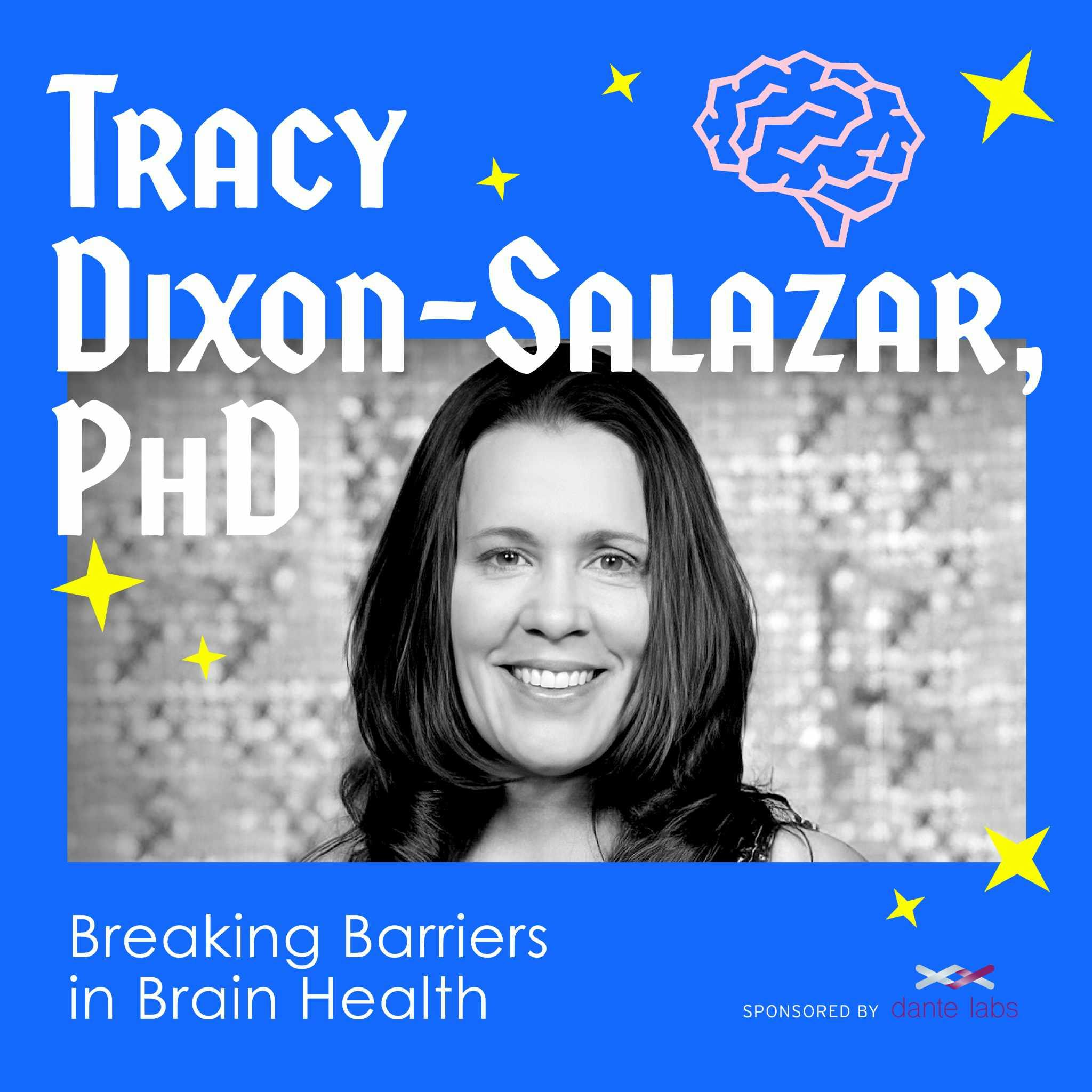
Breaking Barriers in Brain Health with Tracy Dixon-Salazar, PhD episode artwork

EPISODE · Nov 16, 2023 · 52 MIN

Breaking Barriers in Brain Health with Tracy Dixon-Salazar, PhD

from Once Upon A Gene · host Effie Parks

ONCE UPON A GENE - EPISODE 207 Breaking Barriers in Brain Health with Tracy Dixon-Salazar, PhD For Epilepsy Awareness Month, I am joined by Tracy Dixon-Salazar, a rad scientist-mom and patient advocate. Her adult daughter Savannah was diagnosed with LGS as a child and in this episode, Tracy shares her best advice for advocating for your child and also the wisdom she's learned along the way if you're a parent with a new diagnosis.  EPISODE HIGHLIGHTS Can you share about yourself and your rare disease journey? My daughter Savannah is 30 years old and she started having seizures when she was 2 years old, with no family history, no head injury and no explanation of what caused them. She had seizures everyday, up to hundreds on a bad day. She was diagnosed with epilepsy, which evolved into Lennox-Gastaut syndrome (LGS), a severe form of epilepsy. There wasn't a lot of information available when we received a diagnosis and it was really scary as we learned more about the disease. From the time Savannah was diagnosed at 5 years old to the time she turned 18 years old, she had more than 40,000 seizures and it seemed all I could do was count them. She tried and failed 26 different treatments and nothing worked. I wanted to end her suffering, so I enrolled in college and started taking science classes to better understand the medical papers I was reading. Then after about 12 years, I got my Ph.D. in developmental neuroscience. I went on to do post-op in neurogenetics which is when the genomic revolution happened. My job in the lab was to sequence exomes and my boss suggested that we sequence Savannah. It took a year of analyzing and we found that she has a lot of genetic mutations in her calcium signaling pathway and I knew there was something to it, which led us to a drug that's not used for epilepsy, but gave Savannah a 95% reduction in her seizures within two weeks.  What is the importance of genetic testing for diseases under a larger umbrella disease? It's critical to get genetic and genomic testing. Genetic testing is important especially if you aren't responding to the current treatments. Whole exome testing is becoming more affordable and a great place to start, but if you can get panel testing, do that because even if there's no available treatment, the panel may reveal other data that's helpful and you can help pioneer new treatment options. If you have unexplained rare disease, do not pass go, do not collect $200, go now and push to get genetic testing.  What promising areas of research is the LGS Foundation funding that you believe can change the landscape of treatment? We funded the first mouse model of Lennox-Gastaut syndrome, which replicates the brain waves. There are 7 FDA-approved drugs for LGS, none that target the electroencephalogram (EEG), they all target seizures. We are now targeting focused ultrasound in an animal model that replicates the brain waves of LGS. This is a non-invasive therapy we're using to see if we can prevent the evolution to abnormal brain waves. Additionally, we're funding research to quantify the LGS diagnosis through EEG. We also just launched the Learn form Every Patient Database, a natural history study. LINKS AND RESOURCES MENTIONED ONCE UPON A GENE - EPISODE 172 - From Cancer Biologist to Rare Disease Mom - Digging Into the Data to Better Understand SCN8A with Madeleine Oudin PhD - Professor of Biomedical Engineering at Tufts https://effieparks.com/podcast/episode-172-digging-into-the-data-to-better-understand-scn8a-with-madeleine-oudin-phd LGS Foundation Website https://www.lgsfoundation.org/ LGS Foundation Facebook https://www.facebook.com/lgsfoundation1 LGS Support Groups https://www.lgsfoundation.org/get-connected-and-supported/online-communities/ LGS Learn From Every Patient Database https://www.lgsfoundation.org/lgs-learn-from-every-patient-database/ Dante Labs https://us.dantelabs.com/

ONCE UPON A GENE - EPISODE 207 Breaking Barriers in Brain Health with Tracy Dixon-Salazar, PhD For Epilepsy Awareness Month, I am joined by Tracy Dixon-Salazar, a rad scientist-mom and patient advocate. Her adult daughter Savannah was diagnosed with LGS as a child and in this episode, Tracy shares her best advice for advocating for your child and also the wisdom she's learned along the way if you're a parent with a new diagnosis.  EPISODE HIGHLIGHTS Can you share about yourself and your rare disease journey? My daughter Savannah is 30 years old and she started having seizures when she was 2 years old, with no family history, no head injury and no explanation of what caused them. She had seizures everyday, up to hundreds on a bad day. She was diagnosed with epilepsy, which evolved into Lennox-Gastaut syndrome (LGS), a severe form of epilepsy. There wasn't a lot of information available when we received a diagnosis and it was really scary as we learned more about the disease. From the time Savannah was diagnosed at 5 years old to the time she turned 18 years old, she had more than 40,000 seizures and it seemed all I could do was count them. She tried and failed 26 different treatments and nothing worked. I wanted to end her suffering, so I enrolled in college and started taking science classes to better understand the medical papers I was reading. Then after about 12 years, I got my Ph.D. in developmental neuroscience. I went on to do post-op in neurogenetics which is when the genomic revolution happened. My job in the lab was to sequence exomes and my boss suggested that we sequence Savannah. It took a year of analyzing and we found that she has a lot of genetic mutations in her calcium signaling pathway and I knew there was something to it, which led us to a drug that's not used for epilepsy, but gave Savannah a 95% reduction in her seizures within two weeks.  What is the importance of genetic testing for diseases under a larger umbrella disease? It's critical to get genetic and genomic testing. Genetic testing is important especially if you aren't responding to the current treatments. Whole exome testing is becoming more affordable and a great place to start, but if you can get panel testing, do that because even if there's no available treatment, the panel may reveal other data that's helpful and you can help pioneer new treatment options. If you have unexplained rare disease, do not pass go, do not collect $200, go now and push to get genetic testing.  What promising areas of research is the LGS Foundation funding that you believe can change the landscape of treatment? We funded the first mouse model of Lennox-Gastaut syndrome, which replicates the brain waves. There are 7 FDA-approved drugs for LGS, none that target the electroencephalogram (EEG), they all target seizures. We are now targeting focused ultrasound in an animal model that replicates the brain waves of LGS. This is a non-invasive therapy we're using to see if we can prevent the evolution to abnormal brain waves. Additionally, we're funding research to quantify the LGS diagnosis through EEG. We also just launched the Learn form Every Patient Database, a natural history study. LINKS AND RESOURCES MENTIONED ONCE UPON A GENE - EPISODE 172 - From Cancer Biologist to Rare Disease Mom - Digging Into the Data to Better Understand SCN8A with Madeleine Oudin PhD - Professor of Biomedical Engineering at Tufts https://effieparks.com/podcast/episode-172-digging-into-the-data-to-better-understand-scn8a-with-madeleine-oudin-phd LGS Foundation Website https://www.lgsfoundation.org/ LGS Foundation Facebook https://www.facebook.com/lgsfoundation1 LGS Support Groups https://www.lgsfoundation.org/get-connected-and-supported/online-communities/ LGS Learn From Every Patient Database https://www.lgsfoundation.org/lgs-learn-from-every-patient-database/ Dante Labs https://us.dantelabs.com/

NOW PLAYING

Breaking Barriers in Brain Health with Tracy Dixon-Salazar, PhD

0:00 52:27

No transcript for this episode yet

We transcribe on demand. Request one and we'll notify you when it's ready — usually under 10 minutes.

No similar episodes found.

No similar podcasts found.

Frequently Asked Questions

How long is this episode of Once Upon A Gene?

This episode is 52 minutes long.

When was this Once Upon A Gene episode published?

This episode was published on November 16, 2023.

What is this episode about?

ONCE UPON A GENE - EPISODE 207 Breaking Barriers in Brain Health with Tracy Dixon-Salazar, PhD For Epilepsy Awareness Month, I am joined by Tracy Dixon-Salazar, a rad scientist-mom and patient advocate. Her adult daughter Savannah was diagnosed...

Can I download this Once Upon A Gene episode?

Yes, you can download this episode by clicking the download button on the episode player, or subscribe to the podcast in your preferred podcast app for automatic downloads.
URL copied to clipboard!