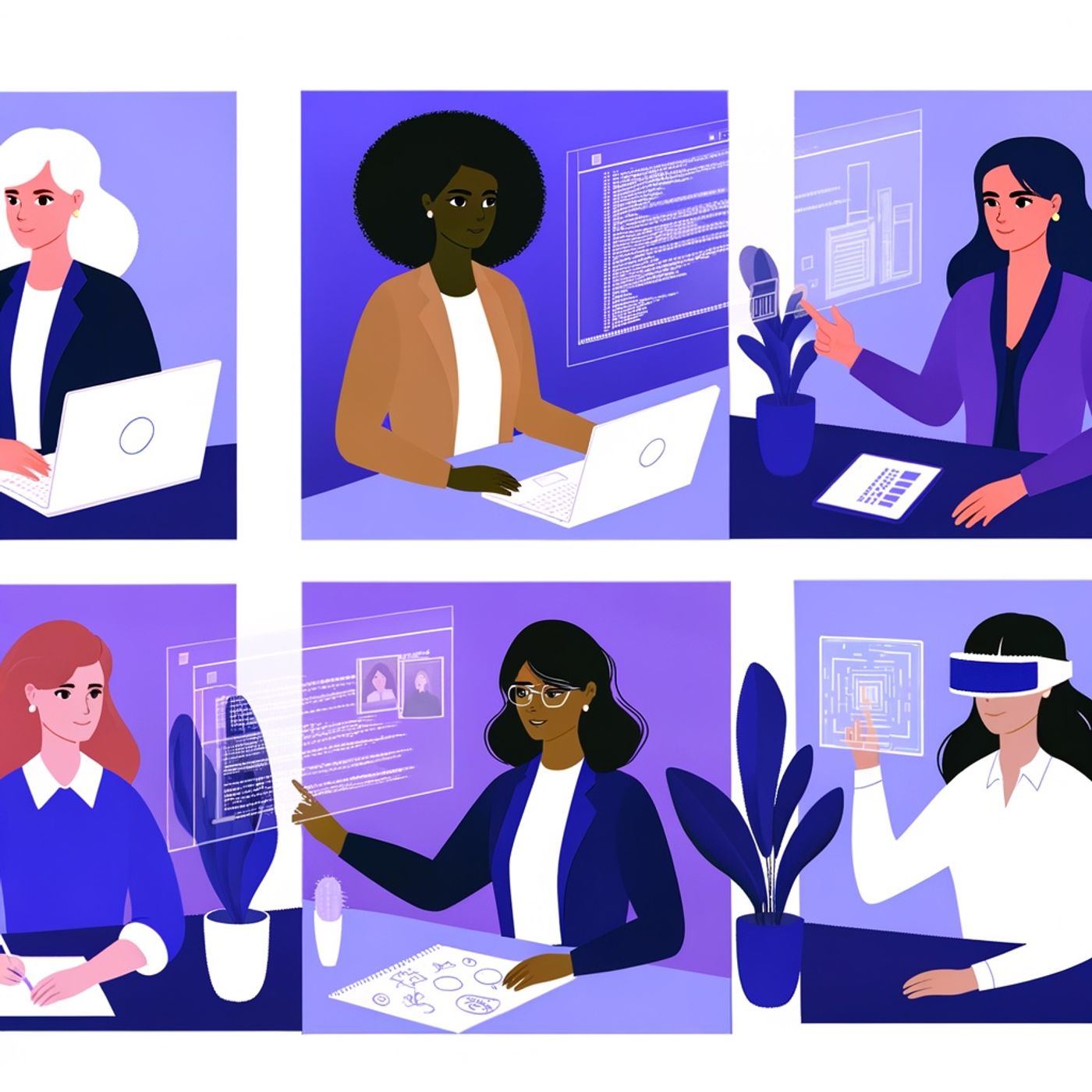
Breaking the Bro Code: Women Reboot Tech in 2025 episode artwork

EPISODE · Sep 3, 2025 · 3 MIN

Breaking the Bro Code: Women Reboot Tech in 2025

from Women in Business · host Inception Point AI

This is your Women in Business podcast. Welcome to Women in Business, the podcast where we showcase drive, ambition, and hard-won victories for women in boardrooms, labs, and coding sprints. Today, we dive head-first into the realities and opportunities that women are facing in the tech industry as the economic landscape shifts in 2025. Let’s get straight to it: the tech field is undeniably influential and fast-evolving, but it’s also where the **gender gap remains stubbornly visible**. While women make up about 26% of the STEM workforce in the U.S. and around 25 to 30% globally in tech roles, fewer than 20% hold leadership positions. Think about that: less than one in five leaders at tech firms is a woman, and only 8% of chief technology officers are female. Not a single Big Five tech company—Google, Apple, Meta, Amazon, Microsoft—has ever had a woman CEO. These numbers aren’t just data points. They represent a challenge, but also a clarion call for change. But the gender gap isn’t just about titles and roles. Women in tech report persistent *“bro culture”*—in fact, a whopping 72% have said it persists in their workplace. This isn’t just anecdotal; it’s a signal that workplace dynamics and inclusion policies need a harder look. Many women share stories of microaggressions, invisible labor, and the exhausting dance of being the “only” in the room. Despite this, women-led startups and communities, like the WomenTech Network and StrongDM, are fighting to redefine the narrative—making diversity a business strength rather than a checkbox. Economic headwinds, layoffs, and venture funding challenges have hit women in tech especially hard. The pandemic saw more women leave the sector, but remote work also unlocked new opportunities for flexibility and resilience. Yet, half of all women who start in tech leave by age 35. Disproportionate burnout, lack of mentorship, and pay disparities remain considerable obstacles. Men in tech earn, on average, $15,000 more per year than women in similar positions. In some technical roles, the gap widens even further. Despite these setbacks, there is surge in momentum. Remote work, targeted education programs, and diversity initiatives continue to open doors for more women seeking entry—or re-entry—into tech. Forward-thinking metro areas like Columbia, South Carolina and Little Rock, Arkansas are proving that accelerating gender diversity isn’t limited to Silicon Valley anymore. Companies are starting to realize that boosting female representation and promoting pay equity isn’t just ethical—it fuels productivity, creativity, and innovation. Let’s consider actionable strategies and discussion points for this journey: The first: How are mentorship, sponsorship, and visible role models changing the tech landscape for future generations? Second, what does genuine pay equity look like, and how can women advocate for themselves and others in negotiations or policy conversations? Third: What are the most powerful ways w This content was created in partnership and with the help of Artificial Intelligence AI.

This is your Women in Business podcast. Welcome to Women in Business, the podcast where we showcase drive, ambition, and hard-won victories for women in boardrooms, labs, and coding sprints. Today, we dive head-first into the realities and opportunities that women are facing in the tech industry as the economic landscape shifts in 2025. Let’s get straight to it: the tech field is undeniably influential and fast-evolving, but it’s also where the **gender gap remains stubbornly visible**. While women make up about 26% of the STEM workforce in the U.S. and around 25 to 30% globally in tech roles, fewer than 20% hold leadership positions. Think about that: less than one in five leaders at tech firms is a woman, and only 8% of chief technology officers are female. Not a single Big Five tech company—Google, Apple, Meta, Amazon, Microsoft—has ever had a woman CEO. These numbers aren’t just data points. They represent a challenge, but also a clarion call for change. But the gender gap isn’t just about titles and roles. Women in tech report persistent *“bro culture”*—in fact, a whopping 72% have said it persists in their workplace. This isn’t just anecdotal; it’s a signal that workplace dynamics and inclusion policies need a harder look. Many women share stories of microaggressions, invisible labor, and the exhausting dance of being the “only” in the room. Despite this, women-led startups and communities, like the WomenTech Network and StrongDM, are fighting to redefine the narrative—making diversity a business strength rather than a checkbox. Economic headwinds, layoffs, and venture funding challenges have hit women in tech especially hard. The pandemic saw more women leave the sector, but remote work also unlocked new opportunities for flexibility and resilience. Yet, half of all women who start in tech leave by age 35. Disproportionate burnout, lack of mentorship, and pay disparities remain considerable obstacles. Men in tech earn, on average, $15,000 more per year than women in similar positions. In some technical roles, the gap widens even further. Despite these setbacks, there is surge in momentum. Remote work, targeted education programs, and diversity initiatives continue to open doors for more women seeking entry—or re-entry—into tech. Forward-thinking metro areas like Columbia, South Carolina and Little Rock, Arkansas are proving that accelerating gender diversity isn’t limited to Silicon Valley anymore. Companies are starting to realize that boosting female representation and promoting pay equity isn’t just ethical—it fuels productivity, creativity, and innovation. Let’s consider actionable strategies and discussion points for this journey: The first: How are mentorship, sponsorship, and visible role models changing the tech landscape for future generations? Second, what does genuine pay equity look like, and how can women advocate for themselves and others in negotiations or policy conversations? Third: What are the most powerful ways w This content was created in partnership and with the help of Artificial Intelligence AI.

NOW PLAYING

Breaking the Bro Code: Women Reboot Tech in 2025

0:00 3:58

No transcript for this episode yet

We transcribe on demand. Request one and we'll notify you when it's ready — usually under 10 minutes.

MG Show MG Show The MG Show, hosted by Jeffrey Pedersen and Shannon Townsend, is a leading alternative media platform dedicated to uncovering the truth behind today’s most pressing political issues. Launched in 2019, the show has grown exponentially, offering unfiltered insights, comprehensive research, and real-time analysis. With a commitment to independent journalism and factual integrity, the MG Show empowers its audience with knowledge and encourages active participation in the political discourse. Eat to Live Jenna Fuhrman, Dr. Fuhrman Our health is our most precious gift and smart nutrition can change your life. Each month, join Dr. Fuhrman and his daughter, Jenna Fuhrman as they discuss important topics in the world of nutrition. Eat to Live will change the way you eat and think about food. French Your Way Jessica: Native French teacher founder of French Your Way Boost your French listening skills and test your comprehension with this one of a kind series of podcasts. Get the chance to listen to a real conversation between native speakers talking at normal speed AND customise your learning experience through carefully designed sets of questions (2 levels of difficulty) available for download at www.frenchvoicespodcast.com. All interviews also come with the transcript. French teacher Jessica interviews native speakers of French from around the world who share a bit of their life and passion. Where else would you meet in one same place a French yoga teacher based in Melbourne, a soap manufacturer from Provence, or a couple cycling around the world? The Small Business Startup School – Business Notes | Financial Literacy | Retail Psychology – For Professionals & Entrepreneurs The Small Business Startup School Inc. Starting or buying a small business? While personal circumstances may vary, business patterns remain timeless. On The Small Business Startup School, we explore strategies, insights, and practical solutions to help entrepreneurs confidently navigate their journey.Hosted by Ola Williams—a retail entrepreneur, fintech founder, and financial coach with over two decades of experience—this podcast marries financial awareness and retail psychology with optimism to deliver actionable takeaways.Join us to learn, grow, and connect as we uncover the keys to business success.Let’s continue to learn together and be encouraged to keep on connecting!

Frequently Asked Questions

How long is this episode of Women in Business?

This episode is 3 minutes long.

When was this Women in Business episode published?

This episode was published on September 3, 2025.

What is this episode about?

This is your Women in Business podcast. Welcome to Women in Business, the podcast where we showcase drive, ambition, and hard-won victories for women in boardrooms, labs, and coding sprints. Today, we dive head-first into the realities and...

Can I download this Women in Business episode?

Yes, you can download this episode by clicking the download button on the episode player, or subscribe to the podcast in your preferred podcast app for automatic downloads.
URL copied to clipboard!