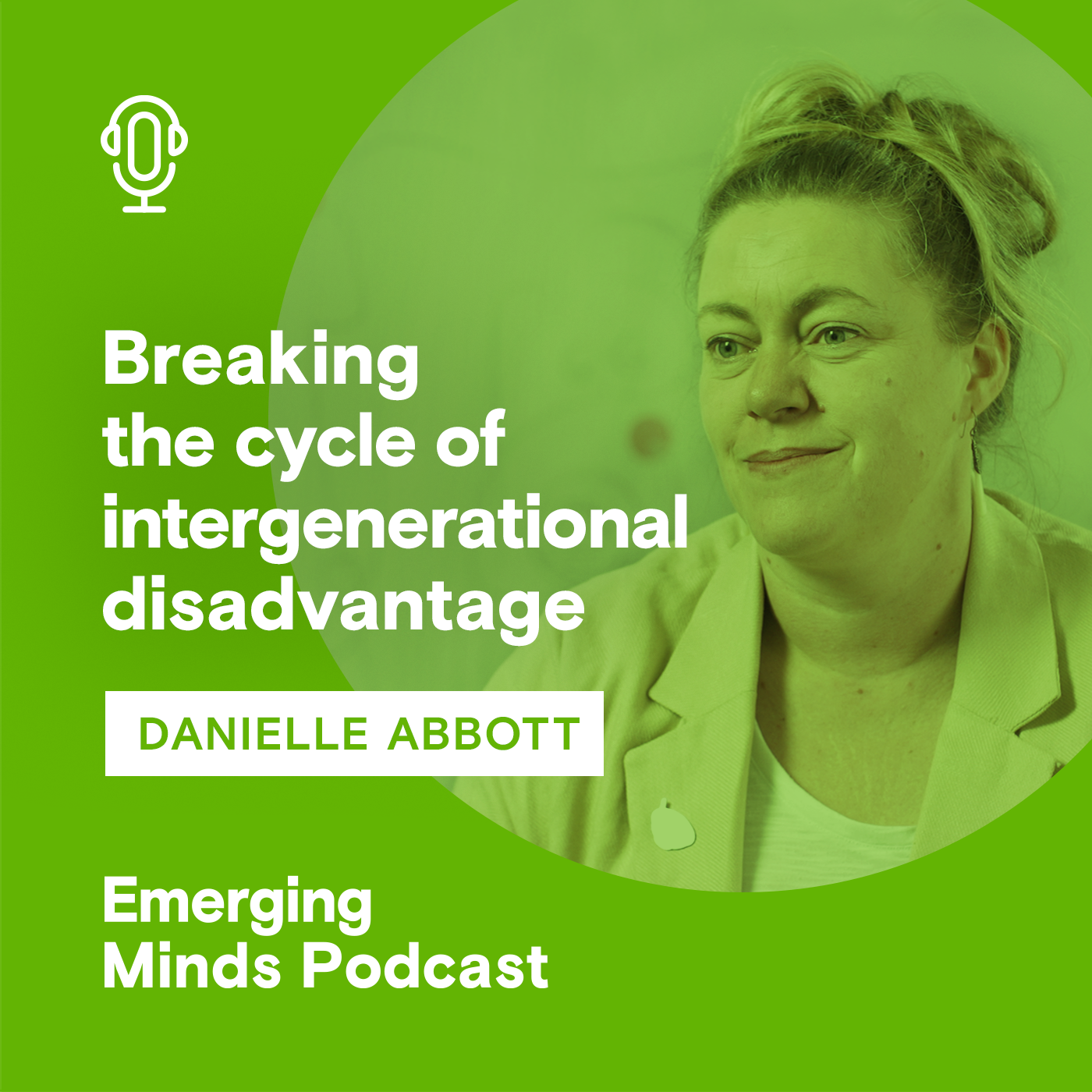
Breaking the cycle of intergenerational disadvantage
from Emerging Minds Podcast Hosted by Emerging Minds
In this episode, we are joined by Danielle Abbott from The Australian Centre for Social Innovation (TACSI). Dani has worked with TACSI for 10 years, exploring innovative ways of working with tough and complex issues. She is the Quality Implementation Lead for Family by Family and the Virtual Village programs, which have been codesigned with families for families. These programs combine the lived experiences of families with proven social theory and evidence-based practice to create confidence, self-agency and resilience for participants. Families that have been involved attest to the programs’ helpfulness in shifting the negative effects of intergenerational disadvantage. Dani describes the issues that families with experiences of intergenerational disadvantage face and the impacts it has on children’s mental health and wellbeing and on parents and parenting. She discusses the type of deeply human and compassionate therapeutic relationship that will support practitioners to truly walk alongside families and help effect deep and long-term change. Dani also shares some of the key things that are helpful for practitioners to know about in supporting families to ‘chip away’ at cycles of intergenerational disadvantage, based on her many years of experience. Though it deals with a difficult issue, this episode is inspirational and optimistic, providing real-life examples of families experiencing intergenerational disadvantage and some of the significant changes they have made. In this episode you will learn: how trauma and toxic stress impact on the child and intergenerational cycles [00:07] how to develop authentic therapeutic relationships and compassionate, trauma-informed practice [09:38] the importance of personal agency, supportive relationships, modeling of parenting skills and interactions, and taking a strengths-based approach [16:00] how to support parents and children with emotional regulation [23:19] the importance of early intervention and support to break the cycles of intergenerational trauma. [37:37] Further information and resources: Intergenerational Mental Health e-learning course https://learning.emergingminds.com.au/course/intergenerational-mental-health The impact of trauma on the child e-learning course https://learning.emergingminds.com.au/course/the-impact-of-trauma-on-the-child Supporting infants and toddlers e-learning course https://learning.emergingminds.com.au/course/supporting-infants-and-toddlers The impact of parental substance use on the child e-learning course https://learning.emergingminds.com.au/course/the-impact-of-parental-substance-use-on-the-child Parental substance use and child-aware practice e-learning course https://learning.emergingminds.com.au/course/parental-substance-use-and-child-aware-practice The impact of family and domestic violence on the child e-learning course https://learning.emergingminds.com.au/course/the-impact-of-family-and-domestic-violence-on-the-child Family and domestic violence and child-aware practice e-learning course
Embed this episode
No transcript yet.