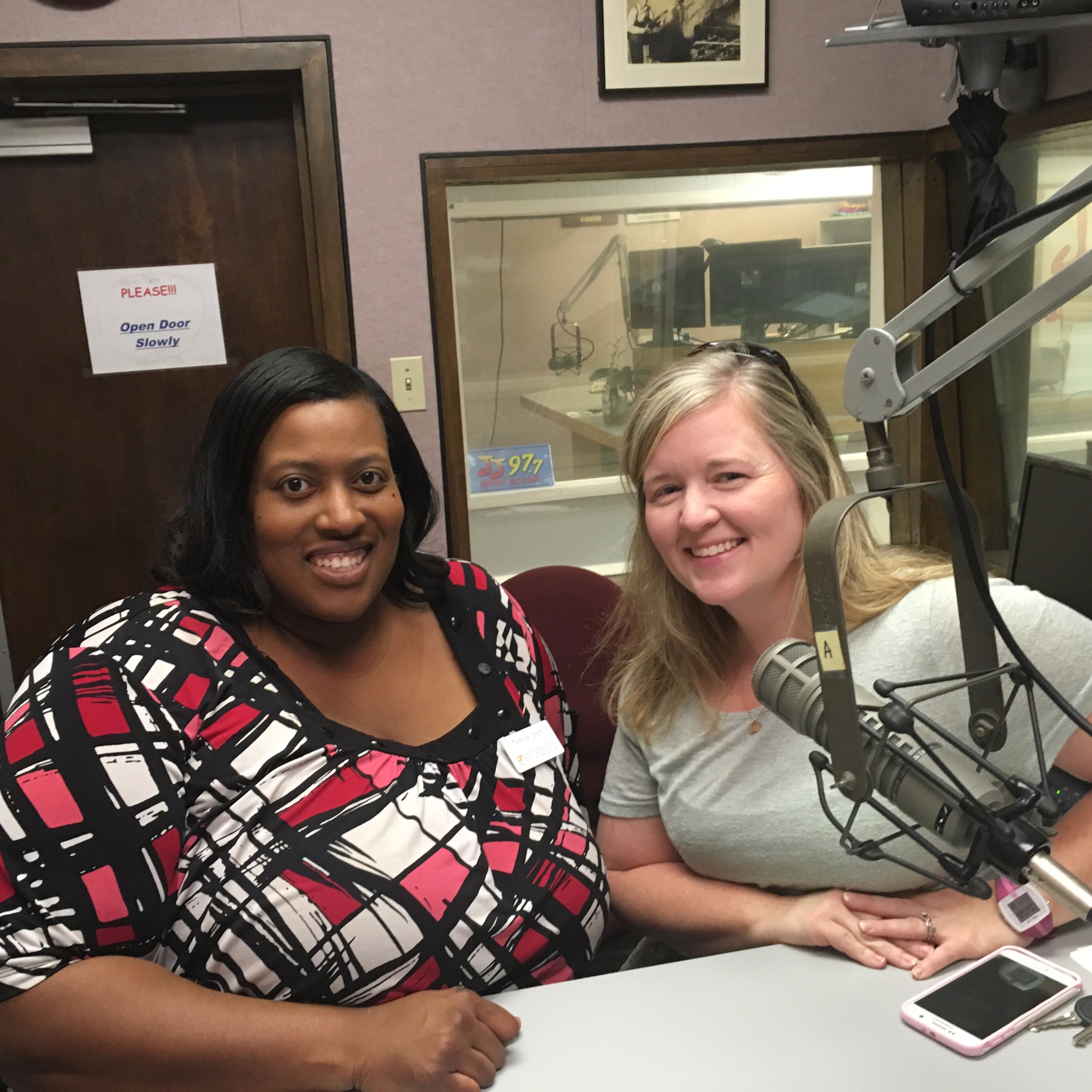
We'll be right back. And getting back in the routine of school. And, Neal, this is something that we are living. So we can talk about this.
Yeah, that's why we have the bags on the right now. We're living it. We are living this moment. Because today is the first full day back at school for my kids.
What about yours? This is the first day back at school. So they jumped right in with a full day this year. And it's the first day of our senior year of high school.
Oh, I'm bittersweet. So, you know, we did the last first day of school pictures this morning. All the last first. I've got a period of last first day pictures.
We did all that on Friday. We had a half day to ease back into this. There you go. So we're going to talk today about ways that parents or caregivers can kind of make this transition as easy as possible.
Because it can be hard. It can be hard. You've got a lazy summer and just get back in that schedule. Because not only school is starting back, but all those extras are starting back.
Yeah, they're starting back. So the first thing that I'd suggest, and we've done this in our home, is talk to, you know, your kids about the upcoming year. Ask them if they've got any questions. If they're going to a new school, you know, reassure them.
Oh, and y'all started middle school this year. Yes. I need a little reassurance. You have questions.
Hold on, her. I forget you've been there. You know, but some things may change. Friendships may look different.
You're going to have new teachers, new expectations. You know, just have some conversation with them about it. Talk to them about it. Regardless if they're going to be at the same school or a new school, it's going to be a new year with a new teacher.
So did you kind of hype it up a little bit? Oh, yeah. It's going to be a great year. Yes.
And he, you know, my son is excited. A lot of his friends are playing like football and stuff. So he's pumped up about going to support the football games. Oh, yeah.
He can go do those kinds of things. Yeah, like this is his school, his stuff like that now. And my daughter, I mean, their school is firstly third. She's in third.
So she's like. Oh, she's one of the big girls on campus. Exactly. So she was pumped.
So he is excited here. So, you know, all of that's important. One thing that we find very valuable is to lay out the next day's clothing at night. And I mean, I'm talking everything, not just certain pants.
I'm talking underwear, socks, shoes. If you've got a girl, jewelry and accessories. You know, everything you can do, do it at night. You know, a lot of times the classrooms, depending on what the air conditioning situation is, especially in August, September, your kids make them play about being chilly.
That's true. So you may need to dress them in layers. Or even as it gets cool in the morning and it warms up during the day, they may need layers on that they can kind of take off as it gets warmer. So you have to kind of think ahead.
If they're going to need a sweater or a jacket or whatever, make sure that you get that out. And then it needs to be ironed. You know, you say time by doing ironing the night before. Oh, yeah, that's not what happened in the morning in my house.
You know. No, I think that's a great tip. And that's something that I feel like we start out doing that and then we're like slowly wane off. But maybe we can get on board better with that.
But it does save a lot of time and headache. It does. That stress. It does.
Another thing to do the night before is make sure their backpacks are ready to go. Everything, homework's in there. Anything that's signed is done. Because I can't stay.
Don't run to me. Oh, I need this filled out. Yeah, we were getting in the car. Like, no.
You should have done it last night. Well, today's the last day. I can't go on the filter. You know.
Or I need to help making this correct show on my homework. No. Like, do that all the night before and put your backpacks where they can easily be grabbed and just walk out. Don't be searching for stuff.
No, no, no. No time for that in the morning. That's a good tip right there. And the same thing if you're making your child's lunch.
You know, a lot of kids do bring their lunch to school. And if you make your child's lunch, you know, preparing it the night before as much as you're able to, putting it in the refrigerator so that it can, you know, be grabbed and just taken out the door. Well, and in our house, I hate making lunch. I don't know.
It's just like one of my least favorite chores. So the kids, they can take it, but they need to make it. And I give them everything they need. Oh, wow.
So they choose to make it and take it? Yeah. A lot of times, if the stuff is here, they will do that. I don't know why.
It's just not my favorite activity. Oh, no. I'm not making lunch. A lot of times, like, it's free at school.
Yeah, you're going to get to school. But, yeah, I think that's a great tip. You know, another thing that's an adjustment that I talk to my kids about the week before school started, we probably should have done it a couple weeks out, but was getting back in that bedtime routine, you know, because in the summer, we all stayed up later. We didn't have to get up every day at a certain time.
But try to go to bed at the same time every night and get up at the same time in the morning. And think about your children's ages. Those younger kids need a little bit more sleep, eight to ten hours, to be ready for what they're going to have to do at school. You know, it's a long day for these kids.
It's nonstop. Yeah, and most places, kindergarten, they don't nap anymore. No. You know, so these little babies are just getting up.
You'll be all eight. Yes. So I think it's great to have a bedtime routine, you know, maybe a certain time. My youngest is in third grade, she's eight.
But eight o'clock is our bedtime. So about 7.30, we're going to start. We should have already had our bath. We're getting bathed, brushed shaved hair, everything's ready to go for school.
We're going to tuck in, read a little book so that she can get that sleep she needs. And so with the routine, she knows what's coming. Knows what to expect, you know, we kind of, you know. And sometimes it varies, you know, as you well know, those extra activities.
Sometimes we don't get home until 7, 7.30, eight o'clock, you know. But on those nights, we come home and immediately begin that bedtime routine. Right. And, you know, you talk about little children.
Teens, they don't get enough rest, most of them, you know. And, you know, the older you get, the more homework you have or the more studying you need to do. Or if you're in extracurricular activities, like you said, getting home later. My son works a job.
You know, this is his second school year being employed. So the nights that he has to work, he's got to factor that in, along with the assignments and all the other things that he's got to do. So helping your teen learn to use time wisely so they can stay on track. Because they need a bedtime routine, too.
And I'll tell you, winding down technology, that is the key to making sure that those preteens and teens get enough sleep at night. I agree. Because a telephone, especially when they're first starting out with a mobile phone, it may need to charge in a common area. Maybe it doesn't need to be in the bedroom at night so you can monitor what time they're getting off the telephone.
Oh, I agree. Well, at our house, at that time, the phone comes to mom and dad. Yeah, yeah. And, I mean, that's just helpful because they're not playing video games or texting someone or doing something else.
And technology keeps us wired, you know, with the television. We all, like adults, we need to shut it down about 30 minutes before we go to bed. We do. For sure.
You know, some, some here, this is something that I do personally. I get myself ready before I wake them up. Because then I can devote what I need to to them to help them, you know, whatever they need to do. Now, that may not work for everybody, you know, but I do.
I think sometimes I'll get myself ready, mine is dry in my hair. Get them up and move because they're old enough to dress themselves. Go back and finish dry my hair. That kind of last minute stuff.
Yeah. Check in on them. You know, you got X amount of time. Let's move.
Yeah. Yeah, you find yourself being a coach in the morning. You know, it's like 10 minutes, you know. Yeah.
You got 10 minutes to do this. We're five minutes. You know, and my son actually has to leave the house before we do. So, he's got to keep going.
He's got to keep going early, early. Right. You know, because he's at school by seven. So, he's got to, you know, keep going.
And I will say one thing that I found, too. Yeah. You know, try to follow the same schedule. And I've heard you say y'all do that.
You know, kind of even in the morning. It's like, okay, we do this. You get up. You brush your teeth.
You wash your face. You dress. You know, doing a night routine. You know, we eat.
We bathe. We do these types of things. Children learn what's expected of them. You know, things go more smoothly.
Anytime there's a change in that routine, discussing it with your child ahead of time. That always prepares them. So, you know, if we're not going to be home tonight to do our regular routine, they need to know that. Or, you know, they usually are picked up by this person and someone else is going to pick them up this afternoon.
And it's not an emergency. You know this. Tell them. Prepare them.
I think that's a great thing. Also, be in touch with your students, teachers, so that they can know. Because they can be helpful in that, too. Right.
Because I know there's been a couple mornings where we had a bad morning. Oh, yeah. And I would just text the teacher real quick. Look, just FYI.
Today's terrible. Yeah. So, if there's an issue, just let me know. You know, most of the time, they're fine.
But I think that the schedule is so important. It just makes it run more smoothly. And then they start to kind of learn how much time they need for each thing that they've got to get done in the morning. Right.
That's important. Right. And I love how you talk about, discuss with them. Yeah.
Make them part of the conversation. You know, don't talk to each other and talk over them. And it's about them. Right.
Because there's been times, you know, we're not going to be home tonight, so I'll tell my daughter, when you're in after school care tonight, you need to make sure to get your homework done. We will go over it when we get home. But we're not going to have time to sit down and do it at the house. So, get it done after school care, and we'll check it when we get home.
And now she knows what to expect. Yes. Yeah. Nothing's a surprise.
Another thing, too, you know, when I talk about those rough mornings we've had a couple times. But, you know, think about your children's emotions. They start at the house, and however they're feeling that morning, they're going to take that to school with them. You know, so we want to have a play that morning as much as we can.
So, I've got to force a smile when it's early, and I'm sleepy. Yeah. Okay. Because, just like when we have a rough morning, we take it to work.
We do. You know, and it kind of dictates how your day's going to go if you allow it to. So, our kids are just little people. Right.
And, you know, whatever they're dealing with at home, or whatever stress maybe has happened in that home, or even, like, really good stuff. Like, Grandma and Grandpa may be here to visit, and I've got to leave them. You know? Right.
That's hard. Well, we celebrated my birthday last night, ate all this cake, and, you know, now you're expecting me to, you know, sit here and pay attention. Right. So, think about those things as the school year gets going.
Yeah. And, you know, it's important. You mentioned, you know, if we're at Grandma and Grandpa visiting, or whatever else is going on, it's important if your kids be at school every day. Unless they are sick.
Of course, if they're sick, we don't want them there spreading anything. But, as much as you can, schedule doctor appointments, dentist appointments, all of those for non-school hours. I mean, my son knew growing up that when it was spring break, fall break, we were probably going to go to the dentist, the pediatrician. You know, we had the eye doctor.
Yeah. There were some things that were scheduled during that time. We're in the same way. Or, schedule them for after-school hours.
Take advantage of Saturday appointments at places that have those. You know, if they're not sick, have them there. Because when they miss class time, you know, they're missing instruction. They miss a lot.
Yeah. One day is a lot. It's a lot. It's a lot.
You know, it's going to be good. And they get out enough. Like, now, I mean, I'm looking at the schedule, like, well, now I know why we go back to school August the 1st. Oh, okay.
But it's all good. You know, I'm glad my kids and your child are at places that they love, schools they love, with friends and great teachers and administration that supports them. You know, so going back to school is a good thing. It is.
It's a good thing. And as long as you get on your routine, it's not that bad. That's right. Everybody's going to get to move in at 5 September.
It'll just be old hats, everybody. Exactly. Exactly. So, thank you for joining us for this episode.
And in the words of Mr. Bob Marley, live the life you love. And love the life you live. Welcome back to school, everybody.