What I do ain't make believe that you will say I sit and try but when you can be in daylight, it's just me, myself, and I. And I just need my something out of it. I want one style and my something's coming. We're in a home with Sarah and Teneil.
Sarah, we got a little bit of daylight soul going on. Me, myself, and I. I like it. That's all you need.
That is all you need. So we were about dancing on that way. We were. We were.
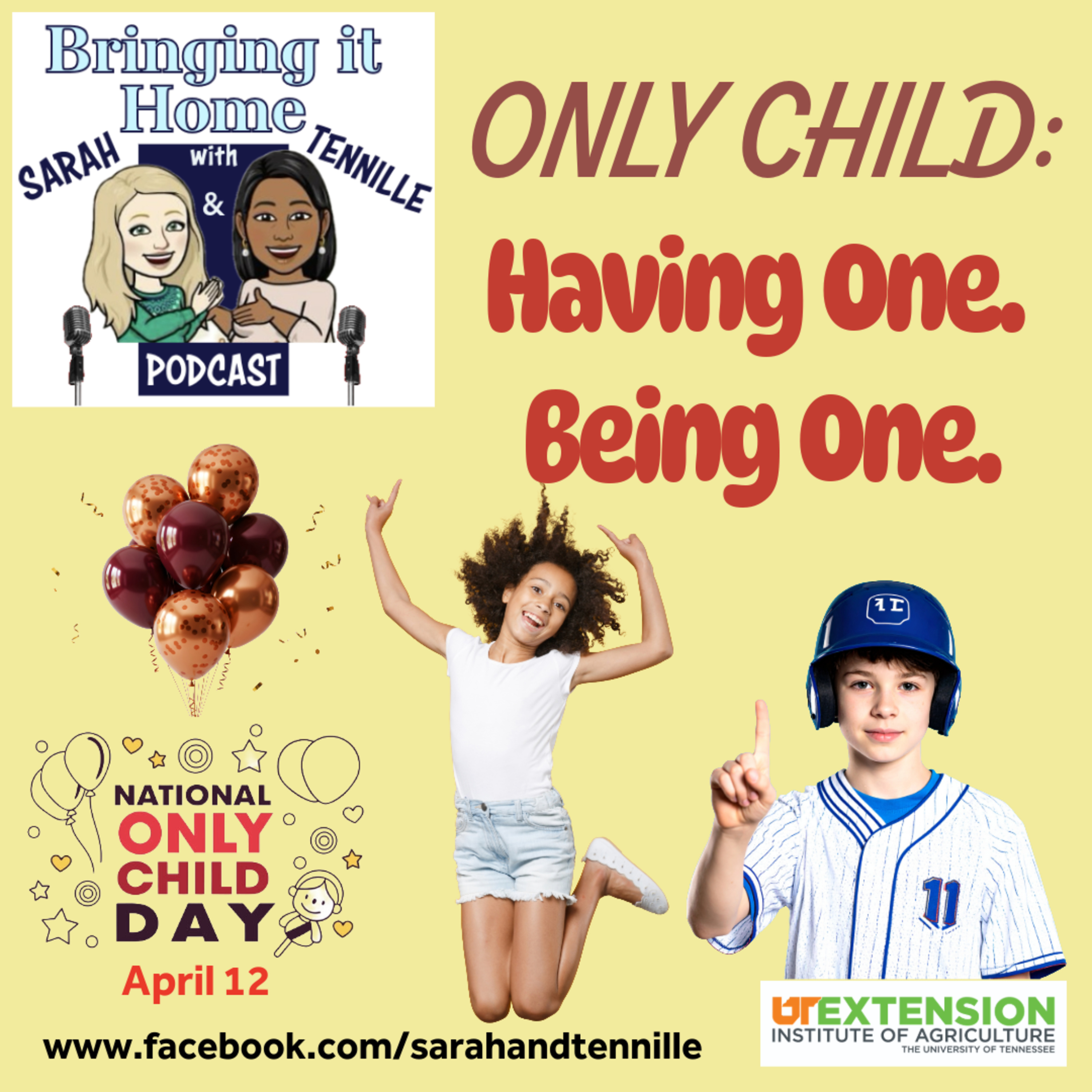
That was a good little throwback. But that was the reason why we chose me, myself, and I. I want to make this recognition because if you're on social media, you're always saying that today is brothers day and sisters day. And then when you get into parenting, this is daughters day and sons day.
Siblings day. Siblings day. Oh, what about the only children? Well, guess what?
Y'all only child children? If I say that right, y'all have a day too. You missed it. It was yesterday.
We had it next year. April 12th. That is national only child day. So we thought this might be a day to talk about it from two perspectives.
The one from having just one child and being a child. So you have a sister that's close to your age. I did. We're three years apart.
I wasn't only child, but I don't remember it. Yeah, I have a quick wait. So I am like an only child because I had one sibling who passed away a few years ago, but he was ten years older than me. So we weren't little at the same time.
And so I grew up as an only child. And so I relate to the only child more than I do the sibling. You're not an only child. Exactly.
The way that you grew up in the age difference played a factor. Right. So I was keeping article, okay, says that the number of people ending their childbearing years with one child has doubled in the last generation. So in 1976, which happens to be around the time that I was born, there were only 11% of families that had one child.
Now there are about 22%. Okay. So that's almost a board of people that just have one child. Right.
I mean, and you can see that, you know, I'm thinking about like my friend group, a lot of people. Yeah, I have several friends that have one child, but it's different outside of the US, isn't it? It is. I just didn't realize 49% and you're at 59% of Portugal.
Wow. Yes. And I mean, a lot of single child families. It is.
Yeah, by choice too. By choice in many cases. So why are there more single child families now? Well, the stigma is pretty much reduced of just having one, you know, used to be back in the day if people only had one child, people were like, Oh, who are they going to play with?
Oh, they're going to be all about themselves. And there was a lot of pressure. There was. And I think that life has just changed too.
You know, there's a lot of more working mothers out of the home. There wasn't the pressure like you're saying. So like many several generations ago, people had multiple kids because they were working farms and all that kind of stuff like lifestyles and change. I think about my grandmother, my paternal grandmother, she had 14 children and her child with the most children had seven.
So literally half as many as her mom had and then none of her children, you know, her daughters. Anyway, they had their review. So you just look at it like, you know, people are getting married later and just throw this in here. Female infertility, I did a little research tends to lower between ages 32 to 37.
Male infertility starts around age 35. So we're looking at we're getting married later and we're just less likely to have as many children by the time we get married. Right. And that's not just here in the US.
Right. So your general infertility rate has gone down globally. Yeah. So that may be what's going on over in Portugal.
Yeah. Like you mentioned, I don't know. It's choice too. A lot of people are just using it on some patch.
Children or just have one. That's right. So let's talk about some of the benefits of having an only child. A benefits of having only child because there are some, right?
Oh, for sure. I mean, think about money. We'll start. Oh, money is, yeah.
You know, but affordability when it comes to education and activities that your children choose to participate in, you know, one in day care versus two or, you know, putting money back for college or, you know, how you want to educate them from, you know, during their grade school years in high school, you know, one versus two or three, four, however many, it makes a difference. You've definitely got more choices. You just have one child. So the economic difference is huge.
Right. And it's not just education. I mean, it's everything they can potentially be involved in, which is a lot. Yeah.
Yeah. That's true. That's true. And kind of staying on the money topic.
Your vehicle and your housing options stay more flexible. With one child, the third seat is optional. I don't have to have a big vehicle that in turn we talked about last week. That's right.
I can have a smaller vehicle to get us where we need to go because there's not as many of us. Same with the home. I don't have to purchase or rent as large of a home as I would if I had a ritual. That's true.
And so that saves me some money in the budget also. You know, and then too, we talked about the affordability for your children's interest. We'll make about affordability for the parents' interest. You know, you may be a family that likes to travel.
Well, I can do that a little easier maybe if it's less people than I'm putting the bills on. But things like that, thinking about the parents' interest and things as well. Even if it's just something like a bowling night or something that the parents like to do, it's easier for you to do that if you just have one child and you're not maybe as tired as you're just having the one child, especially as they get older, you're able to sleep with an eye and you're able to do those things a little bit. Yeah, absolutely.
I think about stress level. The more people on the house, the higher the stress level can be. So if I'm focused on just taking care of one, then that's all I really have to worry about. So I'm maybe more rested.
That's true. Again, especially as the child ages and you're not having to get up throughout the night and those types of things. Yeah, I'm not saying it goes away. No, no, no, the stress level doesn't go away.
It's maybe a little late. You've only got stress over one period instead of four. So a little bit less stress going on there. Think about your marriage or your significant other.
There are more chances for a couple to connect when there is only one child in the picture. Because at night, there's only one child to get down to sleep and then maybe you all can watch a movie or if you want to have a night out or something, it's cheaper to get babysitting for one person. And it's easier to find somebody who's willing to keep one child than maybe three. So, you know, there are probably more chances for the couple to get together and just kind of build their relationship if there's only one child in the picture.
Yeah, true. This one's kind of funny too. But the potential for a quieter home, I think that really depends on the kid. No, that's less stress.
But yeah, it can keep up quite a bit of noise. One of my kids, when it's just that one's home, I'd never know they're in the house. The other one, everybody on the other. Yeah.
So, you know, there's that too. And then too, when your kid gets older and makes plans, you know, you got to be nice, mom and dad. Yeah, you do. And, you know, I read somewhere and I think it was really funny that they were talking about when you only have one child, your childless friends are more likely to still come over.
You know, it kind of scares them away when you've got three more. There's a lot going on. But if you just have one child, it's a little calm. Go back and say, how quiet or calm or a little bit.
And so the ones that don't have your children come to see you. Yeah, they like to hang out with you. So, you know, there's a bit of it's too heavy and only child. So if you're kind of toying with the idea of shouldn't have one too, maybe it'll be late for some of you, but for those of you that are still able to ponder that, those are some bit of it's now being an only child can be beneficial also.
And these responses came from talks and interviews that were done with adults who were only children. Okay, so they have lived in life. They lived in life and they're speaking from experience. And so one of the things that is at the top of the list, we're kind of going back to money, but there were more family resources.
And so there were more experiences growing up, you know, parents would afford to pay for more trips or better trips. You know, maybe there were three of us, we had to get in the car and drive somewhere. Well, we might be able to go abroad if we got one child or go say beachfront instead of saying five miles from the beach. You know, more experiences or maybe the opportunity to get lessons, you know, dance lessons, my live lessons, whatever you want to learn how to do, it's more likely that you'll have the money to do it with one child.
Okay. Yeah. So they thought that that was a real benefit of being only child. Well, another one that these people surveyed commented about was their relationship with their parents.
So some of them felt extremely close to their parents because they got all their attention. You know, they were really always allowed to tag along. You know, they got, they got all the one on one, which is hard to do when you have multiple kids, you know, I mean, you know, I have to and I definitely try to make sure I spend ample amount of time with those. But when you're the only, you get it all.
I remember being this little girl and you know, I want to go with mom all the time. And so I could go grocery shopping. Wherever you went, you know, I pretty much was there and I can see getting all of your parents' attention, even as an adult of, you know, getting your parents' attention is a good thing. So I can see why they would think that and say that, you know, children who are only children, they turn outward to their friendships in order to find playmates.
And many times you grow up with those same playmates and you get very close to those. Well, I know your an example of that. I think about a lot of my friends who, and some of my friends were only children, but I also had a couple of friends that were in my same boat. Their siblings were much older and they have to be boys.
Yeah. Not my friends had older sisters. I just think that's really funny. But anyway, and we're still, you know, good friends today.
Yeah. No, one of them, they didn't interview me. No, one of my daughters has been friends is an only child and he's like my third kid, you know, and he says like my kids are like his brother and sister, you know. So yeah, I mean, our families are very close.
Yeah. Yeah. I think that's very true. I think that's true.
That's true. That's true. That is an important benefit. And you know, another thing that some of the professionals said being an only child can lead to increased maturity because you think about this, if you're the only child and you get tired of hanging out by yourself, you go and you hang out with your parents, you hear things that adults are talking about.
I'm not saying things that's inappropriate, but you're hearing about world events and you're hearing about science and you're hearing about, you know, things that you wouldn't talk about with a sibling. Right. You can hear your parents discussing it. So you become well versed in a lot of different things, even the programs that your parents watch on television or a little more educational to you than probably what you watching with a sibling.
That's very true. And so you probably start out with a slight edge in knowledge of some of the things that go on the road. Right. Which means you're going to be a little more mature than some of your peers.
That's true. That's true. And so if you're not, you're an only child, we can certainly see where some of these things would come into play. Absolutely.
And I'm glad that you pointed out that I didn't even know if they existed. So we're only children. They probably didn't know either. Like I said, they missed it.
It was yesterday. But hey, you know what? Go ahead and celebrate today. You're an only child.
You make the rules for yourself and you decide when you want to celebrate. So thank you all for listening to this episode in the words of Bob Marley. Now he wasn't an only child, but I think he had a lot of children too. Well, anyway, this day went for his family.
But anyway, he would want you to live the life you love. And love the like you live. See you next time.