KPBS On Demand is supported by the San Diego County Toyota dealers. The Toyota Corolla is a compact sedan with a spacious interior, contemporary design, and features for everyday travel. Visit your local San Diego County Toyota dealer or Toyota.com. Toyota, we make it easy. You're Norma Desmond. Used to be in silent pictures. Used to be big. I am big.
It's the picture that got small. And they started to talk, neither of which pleased Norman Desmond in Sunset Boulevard. But silent films were never meant to be silent. People were not filling cinemas to watch movies in the 1920s in complete silence. They were meant to be accompanied by music. And today I'll be speaking with Ben Modell, who's dedicated himself to creating music scores to bring silent films back to glorious life. Welcome back to listener-supported KPBS Cinema Junkie. I'm Beth Accomando.
Ben Modell helped me through the pandemic. He created something called the silent comedy watch party. And for 90 minutes every week, he played live music to silent comedy shorts from his living room and live stream them to people in lockdown. It was an oasis. It was a brief escape from all the worries and stress of COVID and social unrest. It was also an opportunity to discover silent comedians whose works have not been celebrated to the same degree as those of Charlie Chaplin, Buster Keaton, Harold Lloyd, and other silent era stars.
This month also marks a special anniversary for Modell. It was 10 years ago that he created Undercrank Productions to produce and distribute quality DVD and now Blu-ray releases of rare silent films featuring scores he created to bring them to life. I need to take a quick break and then I'll be back to discuss the art and craft of creating music for silent films. Here in Southern California, we know all too well the devastation wildfires can cause. That's why our mission is to stop the next one before it starts. I'm Brian D'Agostino, leader of SDG&E's wildfire and climate science team. And we've built one of the most advanced wildfire prevention programs in the country with a team of world-class meteorologists using artificial intelligence and real-time weather data, all to help keep our communities safe. We're also building a stronger grid and using public safety power shutoff when necessary, because believe me, I've seen firsthand how unpredictable wildfires can be. But here at SDG&E, we face that uncertainty head on to help keep you safe. Learn more at sdge.com slash wildfiresafety.
Welcome back to Cinema Junkie. Ben Modell creates and performs live music for silent movies on both piano and theater organ. He's managed to make a career out of doing this nationally and even around the globe. He's the resident film accompanist at the Museum of Modern Art in New York and at the Library of Congress' Packard Campus Theater. But right now, he's excited about celebrating the 10th anniversary of his boutique home video label, Undercranked Productions. I started my interview by asking him about what first got him interested in silent films and creating silent film scores.
I started accompanying silent movies when I was in college. I had gotten to film school having grown up being absolutely enamored with silent film and silent film comedy, and I took piano lessons growing up. I wasn't a prodigy or conservatory material, but I could play the piano, and these films... were being shown in film history classes at NYU in dead silence. This is back just before VHS and Laserdisc, so everything was still being shown in 16mm prints, and those don't have music on them. They don't have any sound on them. And I think that the only thing worse than watching a silent film with a bad score is watching one with no score whatsoever. And I had not had any background in performing on piano. I'd been in a school band and stuff, but this was different. But I think between my desire to help the movies not die and actually live again in front of fellow film students and the fact that people were watching the movie and not really...
me, I think got me past any nervousness that I had. And there was a great deal of satisfaction that I was helping these movies be entertaining. And you have a company, Undercrank Productions, and this is celebrating a 10-year anniversary. So explain what you do through that company. I produce and distribute rare and undeservedly overlooked silent films on home video, initially just on DVD. And as of last year, we moved into Blu-ray as well. And we had our very first...
home video release in June of 2013. And so we're celebrating the 10th anniversary this June of 2023. All 28 of our releases will be on sale. And so that way, people who have only heard of Buster Keaton or Harold Lloyd or Mary Pickford can fill out the landscape of what they know about silent movies with films starring Marcel Perez and Alice Howell and Marion Davies. And the folks who have already backed some of my projects or on Kickstarter or bought some of the DVDs already can fill out, you know, the completest that can fill out their undercrank shelf.
And you compose or find the music to combine with these films. Oh, yes. I mean, it's all my music. Well, I've actually released a few discs of silent films scored by other people, Andrew Simpson and John Marsalis. In both cases, they had come to me with a project idea that they had wanted to do. Like everything else I released, these are all films that are worth seeing, that deserve to be seen. But a company like Flickr Alley and Kino Lorbor Criterion Collection isn't going to put their time and effort and money into releasing some of these kinds of things, but they deserve to be seen. But for the most part, it's my...
scores on piano and on theater organ. Part of what got me going to start this was to have an opportunity to score more silence for home video. Instead of waiting for somebody else to hire me, I hired myself and created the company, if you want to call it that, by figuring out a workflow that hadn't been done before, I think. And what's your process like of creating that music, and what are you kind of looking for in the film and then trying to do with your music? Well, it's...
Different with in-person performance or live performance when I live stream a silent film show or recording. The processes are slightly different. But basically, in either direction, I watch the film ahead of time, especially if it's a feature. Comedy shorts don't take the same degree of preparation, but a feature like Paths to Paradise with Raymond Griffith, which we have coming out on Blu-ray and DVD in June. I watch the film ahead of time, and even though it's a film I know pretty well, I'll make some story notes, things I know to mark for myself ahead of time where there's either a surprise or a sudden shift in mood.
Or, you know, you have two people at a dining table having a conversation and somebody bursts in and they all have to run out and jump onto horses and run off or something like that. So that way I'm prepared so that I don't want to be late because then it calls attention to the score. In the case of... a rare occasion where a piece of music is deliberately referenced either by a close-up of a phonograph record label or somebody putting a piece of sheet music on the piano and then playing it and then talking about it, which is the case in a film like The Marriage Circle, the Ernst Lubitsch film, which I have not released, but I've recently played for MoMA's new restoration of it. There's a very specific Ich liebe dich is placed on the piano and played and discussed among the characters. So you have to be ready for that sort of thing. So it's a mix of improvisation in performance or in recording. It's not...
winging it per se, but it's kind of like how a jazz musician, when they improvise, they're drawing on a musical vocabulary they've developed and are still also being present in the moment so that other new things can happen. That's the basics of it. The difference is that with home video, you can start and stop. When I started scoring things 15, 20 years ago for real classic DVDs, a smaller label, or for Kino Lorber, I would do... huge chunks at a time. And what I've gotten over to doing in the last few years is because I can stop and start. It's more like composing only instead of writing everything down first a few bars at a time, I may elect to record that way or just know, oh, I can stop if I feel like this isn't going well. Or I know at the end of the scene, I can resolve and then stop and pick it up from there. And then if I really want to, I can go back and edit and punch in and out a couple of bars and disagree with my own choices. So it's a form of composition, I think.
But it's rooted in improvisation. Now, you said some of the music you have done is with organ. So how do you compose that? Do you actually use an organ in a theater, or do you have some sort of computer version of that that you can make use of? I work with virtual theater organ software. I live in Manhattan, and believe it or not, there really aren't any theater organs to go play. There's one at Radio City, but they're a little busy. And there's a couple of other instruments that are just in disrepair.
And even if they, you know, just renting a giant movie theater and the logistics and technology of recording it properly are really complicated. So I've been working with this software or one software or another since 2006. But it allows me to have that movie palace sound without leaving my living room. But the nice thing about it also is, because it resides on my MacBook, I can take my MacBook and some keyboards and MIDI organ pedals and bring that sound to other places. And it's important, I feel, that people understand that silent movies are not accompanied by an out-of-tune upright piano, which is sort of a stereotype. And it's also, a piano is a much more convenient instrument. So historically, that's what we've heard on home video releases or on Turner Classic Movies. A theater organ has gotten a little overlooked. So for me, it's part of my initiative to remind people that this was really the other thing you heard in the silent film era.
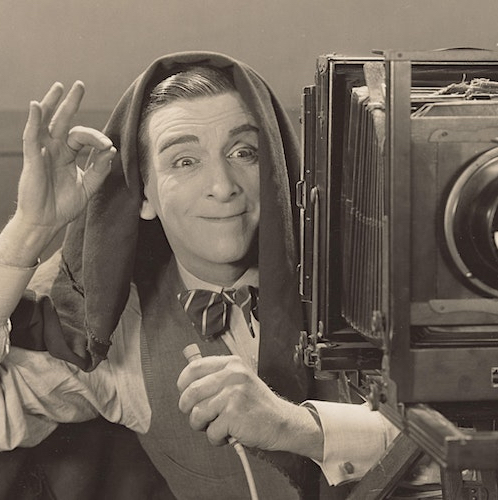
was The Sound of the Mighty Whirlitzer, or one of the many other brands. And using this virtual theater organ software, it's made by Hauptwerk, which is the software that holds the samples, and I use a set of samples made by Paramount Organ Works, but there are others. Although people have said, what theater did you record that in? And now I have to come up with a snappy name from my living room Rialto or whatever you want to call it. But I do, like with the Tom Mix release I have coming up in July, I will record something on one film on piano and then the other film on organ so people hear both. I did the same thing with the two discs set of Edward Everett Horton's silent comedies that we released last year. Just so people hear both sounds also.
Now, you do a lot of work with comedy silence, and I'm just curious. I mean, they're so visually engaging and clever. How much fun is it to do silent comedy music, and what kind of things are you tapping into, and what kind of things are you looking to do? Are you matching what's going on on the screen, playing a little counter to it? What kind of inspiration do you use? Well, it's actually more of a challenge because the comedies are fun to watch, and they're fun to present to an audience, especially a new audience that hasn't seen.
a buster keaton comedy or a harold lloyd comedy comedy music is comedy music and i can get worn out from doing it it is a lot of it's just a mix of anticipation and release, and then boom chick, boom chick, chase music or that sort of thing. But what I do try to do is with each comedian where this is the case is to make sure I understand the joke and to understand the mindset or style of that comedian. Harry Langdon has his own rhythm and style where I think, I wind up watching his face. I think a lot of the slapstick is going on inside his head as he stands there and tries to figure out what's going on. With Laurel and Hardy, there's a different rhythm where there's the setup, then there's the punchline, and then there's an extra couple of bars of...
Stan usually trying to figure out what just happened. And then there's another reaction of Ollie trying to figure out what happened, where to go next. So it's almost this bar of 5-4 that you're playing, or an extra bar of 2 that you're throwing in. Chaplin has not only his own rhythms, but he has a viewpoint. And so there are certain things, for instance, with Chaplin, there's almost, in all of his films, there's a sequence with him sitting down, usually with ensemble player Albert Austin. And there's something about, they're sitting at a table eating, and there's either jokes about table manners or indigestion.
The joke behind it is that there is this contrast of this... what you're seeing and the difficulties people are having with food. There's a certain element of satire, so playing something dainty and light under it makes the humor that Chaplin is trying to get across work a little bit better. And outside of that, I try not to do things like slamming my hand on the keys when somebody falls. It calls attention to what I'm doing. That's not my taste. Other companies do that, and that's their choice. And I also have found that I will get into sort of a Carl Stalling mode, if I may use that expression. Carl Stalling, who scored all the Warner Brothers cartoons, where you can, just from the musical fluidity I've been able to get myself to, to stop and start on a dime and change.
change directions and make things, in some cases, look like what you're watching has been choreographed to music. And I'm trying to now experiment with pulling away from that because I've gotten good enough at it that I can make people's closing doors and picking up an object fit musically, not in a cartoony way, but that may create music that looks like it was already created when what you're seeing. The idea is for the viewer to enjoy what's happening and to support what's happening on screen so that it resonates and entertains. a viewer of today the way it was intended and the way it went across in the 1920s or teens.
What do you think it was about silent film that really hooked you, that made you think, like, this is something that I want to somehow be a part of? Well, I had always been crazy about these films. I had discovered them when I was a toddler, according to my folks. Back in the 1960s, these films were shown in the afternoons as kids programming or filler, and they were shown on public television. So you could discover these things. I think what made me move into doing more with silent film, because it is what I do for a living, I had spent several years trying to...
make a go of doing filmmaking. I did stand-up and improv and sketch a comedy for a bunch of years. And there was a moment that I had after feeling like I was banging my head against the wall for a while where I realized that anything I'd ever done with silent film just kind of worked out. And I leaned in that direction and it slowly and gradually snowballed and became quote-unquote what I do. And I think that the home video business is an extension of the accompaniment and programming work that I do. It's for me, I'm not...
Because I'll always get asked, what is your favorite film to play for? And I have to disappoint people by saying, I don't have one. This isn't about me creating music. This is me about showing movies to people. As people did for me when I was young, I'm passing that on. So when I get contacted by a venue, I don't go down a short list of films and go, oh, I would like to play this. I think, what if your audience has seen already? What haven't they seen? Et cetera, et cetera. It's more, I'm a programmer who accompanies films more than a musician looking to play my wonderful music for people. And some people who've heard me play would agree.
I need to take one more break and then I'll be back with the rest of my interview with Ben Modell. Here in Southern California, we know all too well the devastation wildfires can cause. That's why our mission is to stop the next one before it starts. I'm Brian D'Agostino, leader of SDG&E's wildfire and climate science team, and we've built one of the most advanced wildfire prevention programs in the country with a team of world-class meteorologists using artificial intelligence and real-time weather data, all to help keep our communities safe. We're also building a stronger grid and using public safety power shutoff when necessary, because believe me, I've seen firsthand how unpredictable wildfires can be. But here at SDG&E, we face that uncertainty head-on to help keep you safe. Learn more at SDGE.com slash wildfiresafety.
Welcome back to Cinema Junkie. I'm not the only person Ben Modell helped through the pandemic. One of the people who would join me each week to laugh out loud at the antics of the silent comedy watch party was Nico Will. We both love movies and have been TCM Film Festival buddies. I asked her to talk about what Modell's work meant to her.
So I started watching The Silent Watch Party and sort of the darkest depths, for me anyway, in the pandemic. When we were locked down, we weren't allowed to see our family and friends. And it became sort of a little oasis where I could get together with other people to watch these amazing films. And also with a live accompaniment, it really felt like we were connected with the artists and the other people watching. And that was, we needed that. I needed that. The other thing it connected us with was the past. You know, when you watch these people on screen, you're like, they've gone through a pandemic. You know, 1918.
Spanish flu. They had two world wars ahead of them they had to deal with that humanity got through the other side. I think for both of those reasons it was really important and it was it was such a nice thing to have and a nice thing to do and I was so grateful. It was. It was like a little hope every week.
That was Nico Will, a fellow silent film cinephile. I reminded Modell how his work helped people through the pandemic. Yeah, that's the silent comedy watch party, which is now, we're still going. It's a live stream, live accompanied, live introduced silent film program, which I pretty much invented and created the week we were all watching everything shut down. I did a pilot in the second week of March, middle of March of 2020, just to see if it would work on my YouTube channel. And the response was overwhelming, not because, oh, this was such a wonderful show, but...
The entire planet was so incredibly stressed out, and the opportunity to laugh while locked in your home for an hour, hour and a half, was something that people really needed. I had had the idea for a few years, but suddenly there was nowhere to go to see silent films, and this was the only way to get them out there. So we've done 92 episodes now, and we're up to 240 comedy shorts. But aside from the numbers, as you experienced, Beth, when you and I saw each other at the TCM Classic Film Festival in April, people came up to me. while you and I were talking and recognized me from the silent comedy watch party and thanked me and Steve Massa and my wife, Mona Allen, and Steve's wife, Susan, and our graphic designer, Marlene Weissman, and Crystal Kai, our associate producer, for doing these shows to help them get through the pandemic and through the wonders of technology. You know, I could bring Steve in remotely. It was, again, it was something done in service of other people. This wasn't something we put behind a paywall. And again, this comes back to the sharing.
of these films with other people as being the main thing and not an opportunity to give a concert. And also we're watching a funny movie, but just to help people laugh and get through what we all have just been through. Well, I've seen a lot of silent films, but... I have not seen as many of the shorts. And so for me, not only did it brighten my pandemic days, but as somebody who is like a cinephile, I really liked seeing some of these films that I had never experienced before. And one thing that really strikes me about those silent comedies is like how dangerous it was for some of those comedians. Those are really our first stuntmen, I feel like. Oh, yeah. Stuntmen, stuntwomen. I mean, everybody, because there was no sync sound. There was no recorded sound. You had to.
do things and on top of that there's something about what I call the silent film universe that lends itself to coming up with especially for comedies gags that are even not only bigger but things that cannot happen in real life but because you are you have this There's something about this world that exists in silent film because of the lack of sound, because of the lack of color, and because of the speed up that everybody was utilizing. It's not a mistake. The cameras were running at one speed. The films were always being shown faster and everybody knew it. So they either moved slower or created gags that you could make it look like it was something super dangerous, but it was also carefully choreographed and executed. But you had this latitude, this freedom to create what we now think of as cartoon gags, except Warner Brothers cartoons hadn't been invented yet.
Bob Clampett was probably in grade school. That kind of insane stuff that you experience from Tex Avery cartoons, you could do in a silent film. Not only do, but the audience will buy it. We will just buy anything as long as the people we are watching believe it's real. And this is what sound film took away. You now could hear everybody talking, but this level of humor and gags went out the window. No wonder Charlie Chaplin held onto it until 1936. Well, and the other thing about it, too, is there is so much inventiveness in what they are doing. And I think...
Because you didn't have dialogue, because you didn't have other things to distract you, they were really focused on the visual elements to make this work. But some of it, in how they executed it and in the end result, is just so original and wildly fun. Yeah, and I don't know how much people were discussing this while they were making the films, but because the lid was off as far as reality and what you could do, the whole rationale of, well, oh, you couldn't do that or no one would buy that, goes out the window. So if you're teetering on a ladder in an apartment, and of course you could go out the window and be hanging off of a flagpole and then a piano falls out of the sky, and then you grab onto the piano and land on a dump truck full of sand that's going by, and that goes off a cliff and you land in the water. You could make up anything and actually do it.
As you saw, some of the films that we showed on the silent comedy watch party feature people you don't know, but they're so crazy, really. And you could just go from one thing to another because you had to get to the next gag. I mean, this is the thing about silent film and silent film comedy that I think that it would be fun to play with again. And now that things are opening up, I hope to give this a shot myself at some point. And when you were screening those films, and I don't know if you do this in person as well, but you really do a lot of research, too, into the films and into the people who worked on them. So we were not getting just a movie and music. We were getting a whole education.
Oh yeah, I think somebody posted a comment on one of the YouTube feeds for, I think once we hit 13 shows or something, oh, this is like taking a college course, you know. And Steve and I, you know, our wives, usually before COVID, they wouldn't come to all the shows that we did. They had no choice now, but they have now seen, you know, hundreds of comedy shorts and they've gotten, as everyone has, quite the education in the various people in them, the animals that Steve has helped identify and the different directors and background performers. Steve and I just find all this stuff very interesting. He's very much interested in...
Well, the careers and lives of the ensemble performers, the people around Harold Lloyd and Buster Keaton. And I'm also very interested in what it was like on set to make these films. So we try to share that as well as sharing something that we think is funny whether you've heard of the comedian or not. Is some of that information on the DVDs and Blu-rays that you've created? Yes. In some cases, you know, because the workflow that I discovered...
To make these lesser known films available involves having the discs made as a manufacturer on demand. So instead of, I mean, the big hurdle for me was there's no way I can make a thousand of these and then see what happens. And manufacturer on demand means when an order is placed, the disc is made, the case is made up, it's put together and it's shipped. So there's no inventory to deal with. But manufacturer on demand means no booklets. And Crystal Cahey, our associate producer and really my right hand on a lot of these projects, suggested for the Edward Everett Horton project to do a video essay.
And I thought, that's perfect. And the video essay, 9, 10, 11 minutes, it's like those interstitial things you see on Turner Classic Movies. It's visual. We can include clips and stills and give you the same kind of background, maybe even more than you might get out of a booklet. So Crystal worked with Steve Massa to create a video essay for the Edward Everett Horton Project. And people loved it. We've done another video essay for the Raymond Griffith Blu-ray and DVD that's coming out in June. And it's full of great information where possible. We're going to try to include this on our future releases. We weren't able to do so on the Tom Mix.
That'll be coming out in July, mainly because none of us had the availability or the time. But there's also plenty of information on Tom Ix that you could Google up. Raymond Griffith, not so much at all. And Edward Everett Horton, not at all. And so we're planning on doing this moving forward as a substitute for the booklet. I think they're a lot of fun. Now, we've lost a lot of our film history. Some films just don't exist anymore. Where are you finding these films? How are you kind of digging them up? And, you know, what's the challenge of doing all that?
The whole process of doing these DVDs started with me and a stack of 16mm prints of rare silent comedy shorts. In some cases, I had the only print, and in some cases, it was something that existed in an archive but didn't circulate. And so that's one way. There are collectors who have. these prints that were made in the 1920s and 1930s for home rentals, sort of like the recently defunct DVD Netflix operation. And this is where I came up with the term accidentally preserved, which is the name of my first DVD. And we've done four volumes of that. These are films where there were copies made in 16mm and in Europe on 9.5mm film for the home use market. No one thought, oh, in 100 years, these will be the only copies. It's a good thing we're making these prints. They were just making it so that people could watch them at home.
In many cases, these silent films only exist because these prints were made. The Universal Show-at-Home Library, which was launched in the mid-20s, there are many films like The Hunchback of Notre Dame with Lon Chaney, only exists because there are 16mm Show-at-Home prints from the 1920s. The new restoration that was done came from one of those prints. There's no 35mm anywhere on the planet of that film. So that's one thing. Every once in a while, somebody will turn up a print at a flea market or eBay or in a basement.
Whatever. The other place I'm finding these films is the Library of Congress, and they've been there, and the process is really more just digging into the vaults and going, you know, because what I'm doing with the Undercranked Productions releases is trying to fill out the landscape to bring the films of the stars who people went and saw while they were waiting for the next Greta Garbo film or the next whatever. I've been an accompanist. for silent films at the Library of Congress's Packard Campus Theater since, I think, 2009. So I'm down there five or six times a year, and, you know, my friend Rob Stone, who's a film curator and preservationist there, and also programs the films that are shown for free in the theater.
We'll talk about what do you have and what's in the collection, and I'll have ideas for features or shorts, or Rob will have an idea, or sometimes it'll come from, you know, Steve Massa will have a suggestion like The Mishaps of Musty Suffer, which was a sort of a comedy serial from 1916 and 1917. Steve got me interested in looking into those, which the Library of Congress has 24 of the 30 of those that were made, and I've released two discs of those. And because these were preserved by the Library of Congress, that project led to my having a co-branding deal with the Library of Congress, which is still in. in place today so a lot of these films have been there in the vaults for decades but because they don't have somebody super famous they haven't gotten the interest or attention of other interested parties. So the Edward Everett Horton comedy shorts, for instance, they're extremely well-made, extremely funny. I mean, they were produced by Harold Lloyd's company. His name is not on them, but these were Harold Lloyd projects. They were preserved in the early 70s by a guy named Richard Simonton from Nitrate Camera Negative. And just nobody had thought, oh, let's release these things. I know Harold Lloyd's granddaughter, Suzanne, told me she had tried to get companies that were releasing the Harold Lloyd features to include some of these as extras, and that just didn't materialize. But all eight of the shorts...
The preservation materials were at the Library of Congress, and it's been an extremely popular and fun discovery for a lot of people. And where can people follow you or get more information? I'm so glad you asked. All the DVDs, you can find them at undercrankproductions.com, so you can take part in the big sale that's running from June 1st through June 30th on any online outlet that you deal with. That's one place to go. My own website is silentfilmmusic.com, or you can just type in benmodel.com, and that's where you can find out about my performance schedule.
My podcast, the Silent Film Music Podcast. My blog is there. There's a link to my work with Ernie Kovacs projects. We have a book called Ernie and Kovacs Land coming out in July from Fantagraphics Books. So silentfilmmusic.com for all of my stuff and the undercrankproductions.com website for all of our home video releases, many of which have been shown on Turner Classic Movies, by the way. All right. Well, I want to thank you very much for talking about silent films and silent film music. Thanks so much for having me on deck. That was Ben Modell, founder of Undercrank Productions and the Silent Comedy Watch Party.
Through the end of June, Undercrank Productions will be holding a sale on all its DVDs and Blu-rays. You can also still enjoy archived editions of the silent comedy watch party anytime to brighten your day. That wraps up another edition of KPBS listener-supported Cinema Junkie. If you enjoy the podcast, then please share it with a friend because your recommendation is the best way to build an addicted audience. You can also help by leaving a review. Till our next film fix, I'm Beth Accomando, your resident cinema junkie.
But here at SDG&E, we face that uncertainty head on to help keep you safe. Learn more at SDGE.com slash wildfiresafety.