
EPISODE · May 7, 2026 · 7 MIN
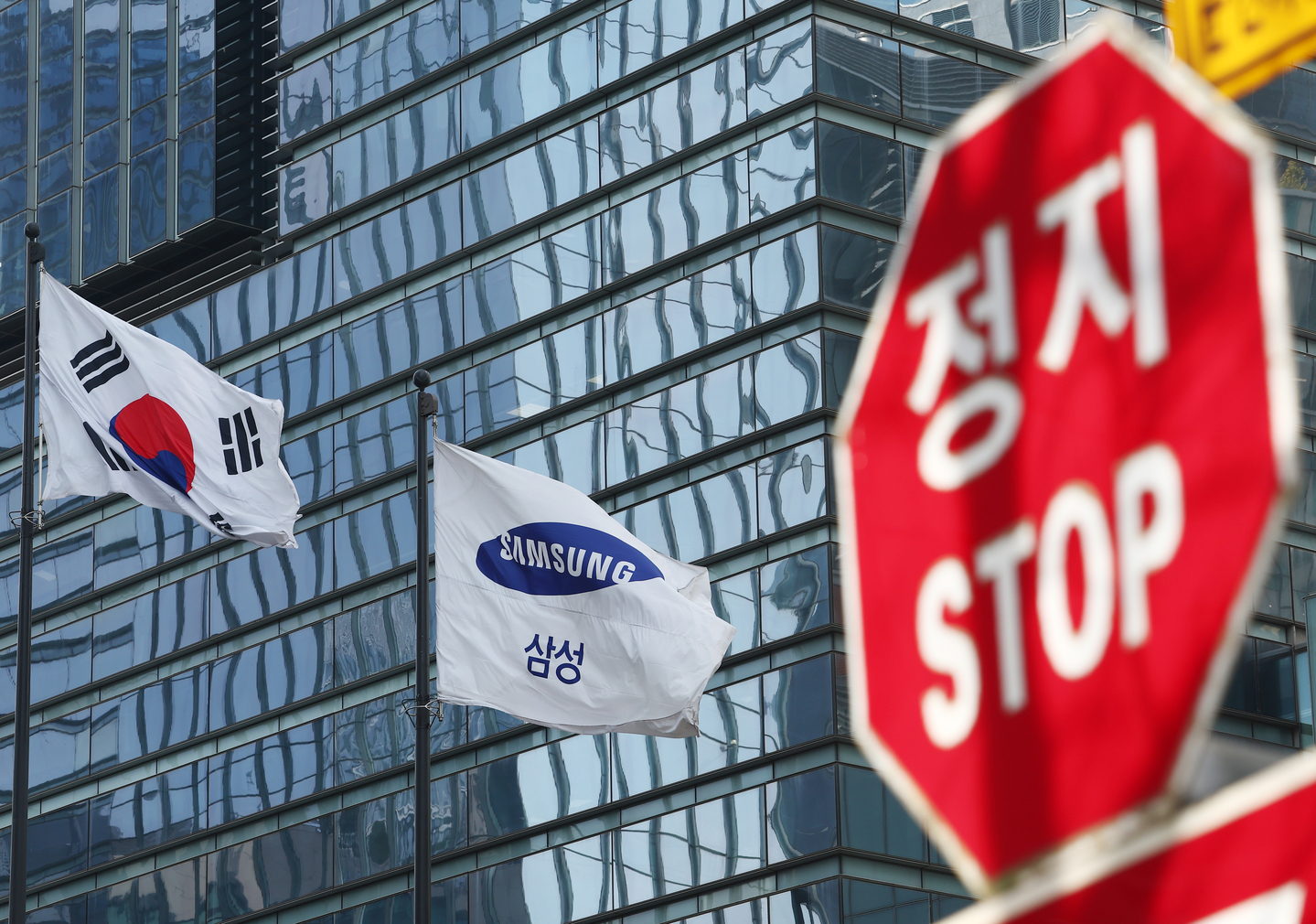
Brokerages sour on Samsung as union bonus demands threaten profits
from Korea JoongAng Daily - Daily News from Korea · host LEE JAE-LIM
This article is by Lee Jae-lim and read by an artificial voice. After soaring nearly fivefold in a year thanks to explosive demand for advanced memory chips, Samsung Electronics is now facing some cautious calls from both local and foreign securities firms, with analysts lowering ratings and target prices. At the heart of the concern is costs. Samsung's union is demanding that 15 percent of annual operating profit be distributed as employee bonuses — a figure that, applied to FnGuide's 2026 consensus estimate of 340 trillion won ($235 billion) in operating profit, would translate to roughly 47.6 trillion won in bonus payouts. The high-stakes labor dispute at Samsung has drawn intervention at the highest levels. Korea's president, lawmakers, Samsung's board chairman and its co-CEOs have all waded into the standoff in an effort to defuse tensions. Meanwhile, friction is growing within the union itself, as workers in the semiconductor division and those in other business units clash over how profits should be shared. Rather than treating it as a structural risk, several reports have trimmed their target prices on the premise that the company's hefty bonus commitments will inevitably eat into operating profits over the remaining three quarters. Shares in the Suwon, Gyeonggi-based chipmaker rose 2.07 percent to close at 271,500 won on Thursday, a day after surging 14.41 percent to a historic high that pushed Samsung's market capitalization past $1 trillion, making it only the second Asian company to cross that threshold after Taiwan's TSMC. Financial burden after bonus payout Citi Research was the first brokerage to cut its target price, trimming it by 6.25 percent to 300,000 won while maintaining a buy rating. The firm cited earnings downside from bonus provisions, conservatively estimating that 10 percent of annual operating profit — in line with SK hynix's precedent — would be distributed as employee compensation, pressuring profit figures in 2026 and 2027. "We can reasonably predict that the company will move forward with provisioning," said Peter Lee, managing director at Citi Research. "Since nothing was set aside in the first quarter, they would need to cover a full year's worth across the remaining three quarters, and that figure could be larger than what the market expects, with a more meaningful drag on quarterly earnings than people are currently pricing in." Factoring in those additional costs, Citi revised its 2026 and 2027 operating profit estimates down by 10 and 11 percent, respectively, to 306.3 trillion won and 351.7 trillion won. Labor relations have historically never been a serious risk factor at Samsung, a company not typically associated with public industrial disputes. But SK hynix's decision to distribute 10 percent of annual operating profit as employee bonuses has stirred frustration among Samsung workers, who believe they deserve comparable treatment — or better. The National Samsung Electronics Union (NSEU) is demanding that the threshold be set at 15 percent of total annual operating profit, and has declared an 18-day strike running from May 21 to June 7. Domestic analysts, however, view the target price impact as purely numerical — a function of how management and labor ultimately structure the bonus agreement — rather than a meaningful threat to chip production. Ko Young-min, an analyst at Daol Investment & Securities, raised his target price to 390,000 won, citing continued strength in memory prices and upward earnings revisions. The brokerage lifted its 2026 annual operating profit estimate to 366.1 trillion won and also pointed to a favorable contracting environment for memory suppliers to secure long-term supply agreements of up to five years. Samsung Electronics said at its April earnings call that it had already signed such deals with several customers and that the agreements were more binding than in the past, when contracts rarely lasted a year, and clients largely dictated terms. "A rec...
Embed this episode
NOW PLAYING
Brokerages sour on Samsung as union bonus demands threaten profits
No transcript for this episode yet
Similar Episodes
No similar episodes found.
Similar Podcasts
No similar podcasts found.