Brutalism episode artwork

EPISODE · Apr 14, 2025 · 18 MIN

Brutalism

from High Theory · host High Theory

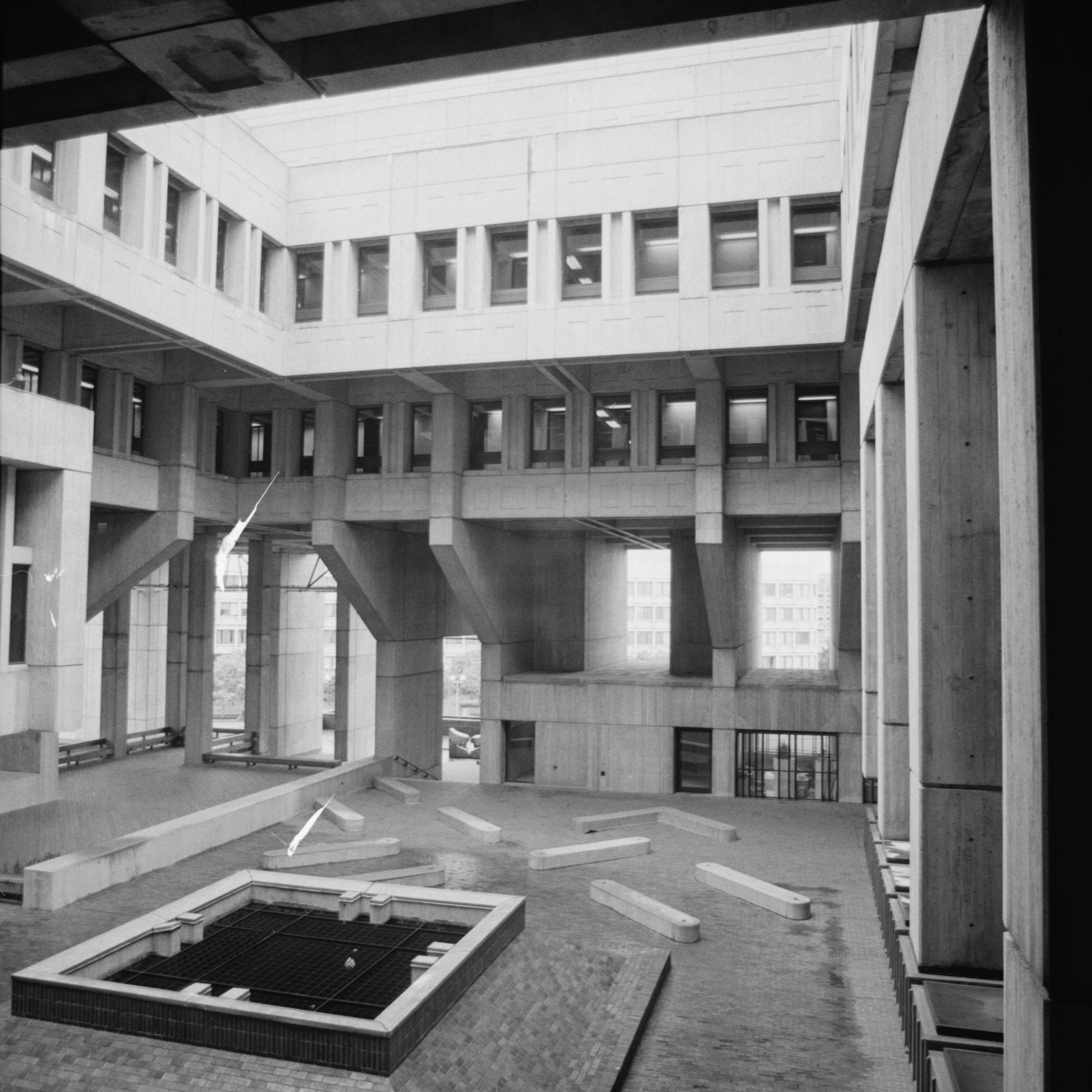
In this episode of High Theory Nasser Mufti talks with us about Brutalism. A twentieth century architectural style featuring imposing structures made of a lot of concrete, brutalist structures tend to provoke strong reactions. People either love it or they hate it – you never get a middling conversation about brutalism. Often used for government buildings, university libraries, and hospitals, Nasser suggests it represents the architecture of the state itself, massive bureaucratic structures in which we get lost, but also perhaps, nostalgia for a state that actually takes care of its citizens. Before we recorded the episode, Nasser sent me this article about the Brutalist campus at the University of Illinois where he works, which is full of beautiful black and white images. In the episode he refers to a line in Charles Dickens’s Bleak House (1853), which describes Chesney Wold as “seamed by time.” And he reminds us that verb form “decolonizing” is quite new, even Ngũgĩ Wa Thiong’o Decolonizing the Mind: The Politics of Language in African Literature (1986) only uses the gerund in the title. The neologism “decolonizing” is distinct from the world historical project of decolonization and the historiographic method of decolonial analysis that comes from Latin American studies. Nasser Mufti is an associate professor of English at the University of Illinois, Chicago, where his research and teaching focuses on nineteenth century British and postcolonial literature and theory. He is especially interested in literary approaches to the study of nationalism. His first book, Civilizing War: Imperial Politics and the Poetics of National Rupture (Northwestern University Press, 2018) argues that narratives of civil war energized and animated nineteenth-century British imperialism and decolonization in the twentieth century. You can read it online, open access, which is pretty damn cool! He is working on two new projects, the first, tentatively titled Britain’s Nineteenth Century, 1963-4, looks at how anticolonial and postcolonial thinkers from the Anglophone world turned to nineteenth century British literature and culture as a way to think decolonization. The second, titled “Colonia Moralia,” examines the dialectics of postcolonial Enlightenment through comparative readings of T.W. Adorno and V.S. Naipaul. The image for this episode is a photograph of Boston City Hall, a Brutalist building mentioned in the episode. The black and white photograph shows an interior courtyard of the building, a large concrete structure with many windows, located at One City Hall Square, Boston, Suffolk County, MA. It comes from the US Library of Congress Prints and Photographs Online Collections. Learn more about your ad choices. Visit megaphone.fm/adchoices

In this episode of High Theory Nasser Mufti talks with us about Brutalism. A twentieth century architectural style featuring imposing structures made of a lot of concrete, brutalist structures tend to provoke strong reactions. People either love it or they hate it – you never get a middling conversation about brutalism. Often used for government buildings, university libraries, and hospitals, Nasser suggests it represents the architecture of the state itself, massive bureaucratic structures in which we get lost, but also perhaps, nostalgia for a state that actually takes care of its citizens. Before we recorded the episode, Nasser sent me this article about the Brutalist campus at the University of Illinois where he works, which is full of beautiful black and white images. In the episode he refers to a line in Charles Dickens’s Bleak House (1853), which describes Chesney Wold as “seamed by time.” And he reminds us that verb form “decolonizing” is quite new, even Ngũgĩ Wa Thiong’o Decolonizing the Mind: The Politics of Language in African Literature (1986) only uses the gerund in the title. The neologism “decolonizing” is distinct from the world historical project of decolonization and the historiographic method of decolonial analysis that comes from Latin American studies. Nasser Mufti is an associate professor of English at the University of Illinois, Chicago, where his research and teaching focuses on nineteenth century British and postcolonial literature and theory. He is especially interested in literary approaches to the study of nationalism. His first book, Civilizing War: Imperial Politics and the Poetics of National Rupture (Northwestern University Press, 2018) argues that narratives of civil war energized and animated nineteenth-century British imperialism and decolonization in the twentieth century. You can read it online, open access, which is pretty damn cool! He is working on two new projects, the first, tentatively titled Britain’s Nineteenth Century, 1963-4, looks at how anticolonial and postcolonial thinkers from the Anglophone world turned to nineteenth century British literature and culture as a way to think decolonization. The second, titled “Colonia Moralia,” examines the dialectics of postcolonial Enlightenment through comparative readings of T.W. Adorno and V.S. Naipaul. The image for this episode is a photograph of Boston City Hall, a Brutalist building mentioned in the episode. The black and white photograph shows an interior courtyard of the building, a large concrete structure with many windows, located at One City Hall Square, Boston, Suffolk County, MA. It comes from the US Library of Congress Prints and Photographs Online Collections. Learn more about your ad choices. Visit megaphone.fm/adchoices

NOW PLAYING

Brutalism

0:00 18:32

No transcript for this episode yet

We transcribe on demand. Request one and we'll notify you when it's ready — usually under 10 minutes.

Chewing the Fat with WorkForge WorkForge Bite-Sized Conversations for Building a Stronger Workforce Welcome to Chewing the Fat, a podcast delving deep into the world of food manufacturing. Dive into real conversations around critical topics like staffing, retention, onboarding, and career development in this essential industry. Subscribe now to gain insights from your peers, subject matter experts and more on the biggest issues facing food manufacturers today: -Hiring and retaining employees -Addressing the challenges of the Silver Tsunami -Improving time to productivity of new employees -Engaging employees from hire to retire And more... Tune in to Chewing the Fat, a WorkForge podcast, and join the conversation on how to build and sustain a resilient, high-performing workforce in food manufacturing. Sermons | Countryside Bible Church Countryside Bible Church At Countryside Bible Church, we equip believers to joyfully live holy lives, to serve one another, and to share the gospel of Jesus Christ, all to the glory of God. We are committed to a high view of God, and a high view of Scripture. IT IS WHAT IT IS with SHALLZ - SHALLY ZOMORODI Shally Zomorodi What?  "It is what it is" with ShallZ – Shally ZomorodiWhen? WeeklyHow long? 35 minutesEvery week, Mother of 4, wife, morning TV news anchor and ultimate hostess, Shally Zomorodi talks about life - its up's and downs and how to stay on track in her weekly podcast, ‘It is what it is.’  Known for her high energy, infectious smile and ability to see the cup as half full Shally talks about all things in life and how to work through its challenges. From parenting, marriage, friendships, current events to how to smile when it just seems impossible ‘It is what it is’ is the perfect podcast to help inspire you to dance through the rain. The Syndicate Blogcast: Startups | Startup Investing | Tech News | Angel Investors | VC | Venture Capital | Private Equity | Crowdfunding | Fundraising Matt Ward - Serial Entrepreneur | Angel Investor | Startup Advisor | Amazon Ecommerce The Syndicate Blogcast show is an extension of The Syndicate podcast, featuring long form articles on the future technology, ecommerce, business and life. The mini-sodes deconstruct high level startup, business and tech issues to help investors and operators better understand and win the market. Recurring topics include: Facebook, Google, Amazon, Apple, Ecommerce, Blockchains, ICOs, Cryptocurrencies, Marketing, Fundraising, Venture Capital, Startup Challenges, Business Development and more. The Blogcast comes in addition to The Syndicate - the place where investors and startups combine to create crazy businesses and even crazier returns. The Syndicate podcast is a deep dive on the angel investors and VCs behind the big name startups. We interview the best and brightest investors, syndicate leads, GPs, limited partners and startup founders to create an original, off the cuff discussion on startup investing.

Frequently Asked Questions

How long is this episode of High Theory?

This episode is 18 minutes long.

When was this High Theory episode published?

This episode was published on April 14, 2025.

What is this episode about?

In this episode of High Theory Nasser Mufti talks with us about Brutalism. A twentieth century architectural style featuring imposing structures made of a lot of concrete, brutalist structures tend to provoke strong reactions. People either love it...

Can I download this High Theory episode?

Yes, you can download this episode by clicking the download button on the episode player, or subscribe to the podcast in your preferred podcast app for automatic downloads.
URL copied to clipboard!