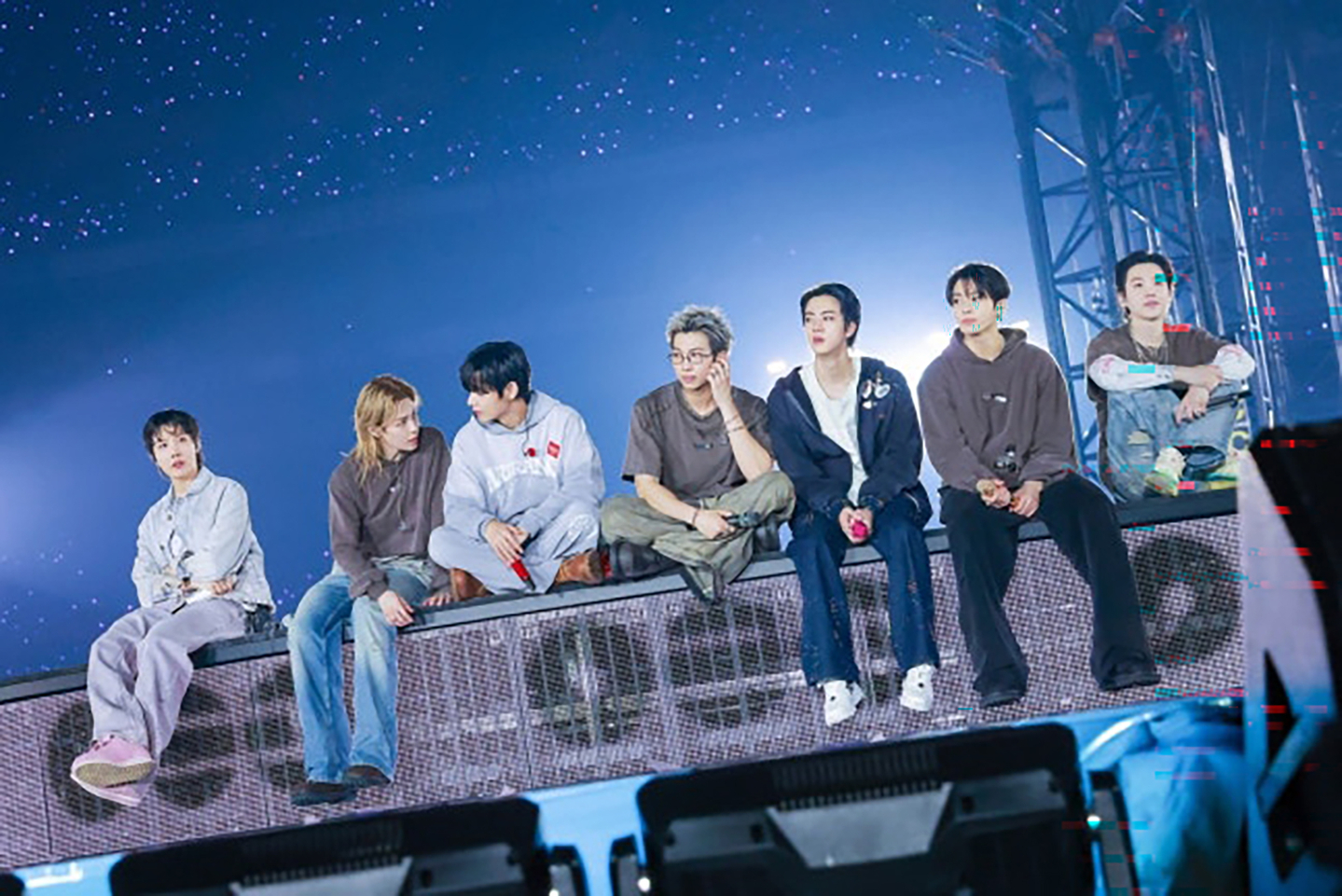
BTS may be on the road, but 'Run BTS' can always be found at home episode artwork

EPISODE · May 13, 2026 · 5 MIN

BTS may be on the road, but 'Run BTS' can always be found at home

from Korea JoongAng Daily - Daily News from Korea · host SHIN HA-NEE

This article is by Shin Ha-nee and read by an artificial voice. "I'll have to think of 80 different closing comments for our shows, so I've been thinking about how I should approach them," V said at the end of BTS's second "Arirang" world tour concert in Goyang, Gyeonggi, on April 11. "So I decided to share how I've been doing." It was an offhand remark — casual onstage banter that made the stadium concert feel, at least briefly, like a conversation with fans. At the same time, his words hinted at the rigor of the group's current schedule. BTS is back as a septet after a nearly 4-year hiatus, with its first full-fledged tour in more than six years. The tour spans over 80 shows across dozens of cities and is expected to run for at least a year, marking K-pop's biggest tour yet — but for fans, the scale of the tour may also mean another form of waiting. Unlike a conventional album promotion cycle, a stadium tour does not guarantee a steady stream of television appearances or weekly music show performances. Instead, once the initial burst of promotions passes, an artist's activity becomes more sporadic and intensely focused on touring. That is where "Run BTS" (2015–) comes in. BTS was one of the acts that pioneered "self-produced content," which refers to regular video content, often in a variety show format, produced and distributed by agencies rather than through traditional broadcasters. Such shows, usually released on YouTube, are not merely a way to fill the time between official activities. They help both fans and nonfans alike stay engaged by forming a continuous narrative that people can easily grow attached to and turning the group's chemistry into content that lasts well beyond its time on stage — especially since some moments become viral memes. But at what cost? Friendly neighborhood BTS BTS began releasing episodes for "Run BTS 2.0" on April 23, starting with a special trip, in which the members played games and spent time together away from a crowd. The first episode garnered over 10 million views in the first 10 days of its release. First launched in 2015, "Run BTS" went on hiatus alongside the band. The original 155-episode run, which continued through 2021, has accumulated a total of 140 million views, while the 10 special episodes released through 2023 have drawn 130 million. Variety shows centered on idol groups existed before, but BTS was among the acts that pushed the format outside the boundaries of traditional broadcasting. And for the septet, "Run BTS" was not a mere side project; it served as a core tool for expanding its reach and communicating with a broader audience. "In our early days, we really made a lot of content," said V during a 2023 appearance on the tvN talk show "You Quiz on the Block" (2018–) when asked what he thought helped BTS become the global superstar that it is today. "Back when no one [in K-pop] was doing behind-the-scenes videos on YouTube, we did that and more," he continued. No rest for idols BigHit Music uploaded the series to YouTube in 2022 after initially only releasing episodes on the fan platform Weverse. This move transformed the show into an accessible gateway, introducing the band to casual viewers and turning them into committed fans. Self-produced content has since become a key method for fans to connect with their idols in a personal way. For example, Seventeen has had runaway success with its own self-produced series, "Going Seventeen" (2017–), which became an online sensation among the global K-pop community. Each episode easily draws millions of views, with some of its most popular videos surpassing 20 million. In a 2023 survey of Seventeen's fans conducted by the fandom platform blip, 59.5 percent of respondents named "Going Seventeen" as what led them to be fans of the group, compared to the 10.8 percent who cited music and performance videos. While such content fills the gaps between official promotional cycles — previously a period of time during which ...

This article is by Shin Ha-nee and read by an artificial voice. "I'll have to think of 80 different closing comments for our shows, so I've been thinking about how I should approach them," V said at the end of BTS's second "Arirang" world tour concert in Goyang, Gyeonggi, on April 11. "So I decided to share how I've been doing." It was an offhand remark — casual onstage banter that made the stadium concert feel, at least briefly, like a conversation with fans. At the same time, his words hinted at the rigor of the group's current schedule. BTS is back as a septet after a nearly 4-year hiatus, with its first full-fledged tour in more than six years. The tour spans over 80 shows across dozens of cities and is expected to run for at least a year, marking K-pop's biggest tour yet — but for fans, the scale of the tour may also mean another form of waiting. Unlike a conventional album promotion cycle, a stadium tour does not guarantee a steady stream of television appearances or weekly music show performances. Instead, once the initial burst of promotions passes, an artist's activity becomes more sporadic and intensely focused on touring. That is where "Run BTS" (2015–) comes in. BTS was one of the acts that pioneered "self-produced content," which refers to regular video content, often in a variety show format, produced and distributed by agencies rather than through traditional broadcasters. Such shows, usually released on YouTube, are not merely a way to fill the time between official activities. They help both fans and nonfans alike stay engaged by forming a continuous narrative that people can easily grow attached to and turning the group's chemistry into content that lasts well beyond its time on stage — especially since some moments become viral memes. But at what cost? Friendly neighborhood BTS BTS began releasing episodes for "Run BTS 2.0" on April 23, starting with a special trip, in which the members played games and spent time together away from a crowd. The first episode garnered over 10 million views in the first 10 days of its release. First launched in 2015, "Run BTS" went on hiatus alongside the band. The original 155-episode run, which continued through 2021, has accumulated a total of 140 million views, while the 10 special episodes released through 2023 have drawn 130 million. Variety shows centered on idol groups existed before, but BTS was among the acts that pushed the format outside the boundaries of traditional broadcasting. And for the septet, "Run BTS" was not a mere side project; it served as a core tool for expanding its reach and communicating with a broader audience. "In our early days, we really made a lot of content," said V during a 2023 appearance on the tvN talk show "You Quiz on the Block" (2018–) when asked what he thought helped BTS become the global superstar that it is today. "Back when no one [in K-pop] was doing behind-the-scenes videos on YouTube, we did that and more," he continued. No rest for idols BigHit Music uploaded the series to YouTube in 2022 after initially only releasing episodes on the fan platform Weverse. This move transformed the show into an accessible gateway, introducing the band to casual viewers and turning them into committed fans. Self-produced content has since become a key method for fans to connect with their idols in a personal way. For example, Seventeen has had runaway success with its own self-produced series, "Going Seventeen" (2017–), which became an online sensation among the global K-pop community. Each episode easily draws millions of views, with some of its most popular videos surpassing 20 million. In a 2023 survey of Seventeen's fans conducted by the fandom platform blip, 59.5 percent of respondents named "Going Seventeen" as what led them to be fans of the group, compared to the 10.8 percent who cited music and performance videos. While such content fills the gaps between official promotional cycles — previously a period of time during which ...

NOW PLAYING

BTS may be on the road, but 'Run BTS' can always be found at home

0:00 5:23

No transcript for this episode yet

We transcribe on demand. Request one and we'll notify you when it's ready — usually under 10 minutes.

No similar episodes found.

No similar podcasts found.

Frequently Asked Questions

How long is this episode of Korea JoongAng Daily - Daily News from Korea?

This episode is 5 minutes long.

When was this Korea JoongAng Daily - Daily News from Korea episode published?

This episode was published on May 13, 2026.

What is this episode about?

This article is by Shin Ha-nee and read by an artificial voice. "I'll have to think of 80 different closing comments for our shows, so I've been thinking about how I should approach them," V said at the end of BTS's second "Arirang" world tour...

Can I download this Korea JoongAng Daily - Daily News from Korea episode?

Yes, you can download this episode by clicking the download button on the episode player, or subscribe to the podcast in your preferred podcast app for automatic downloads.
URL copied to clipboard!