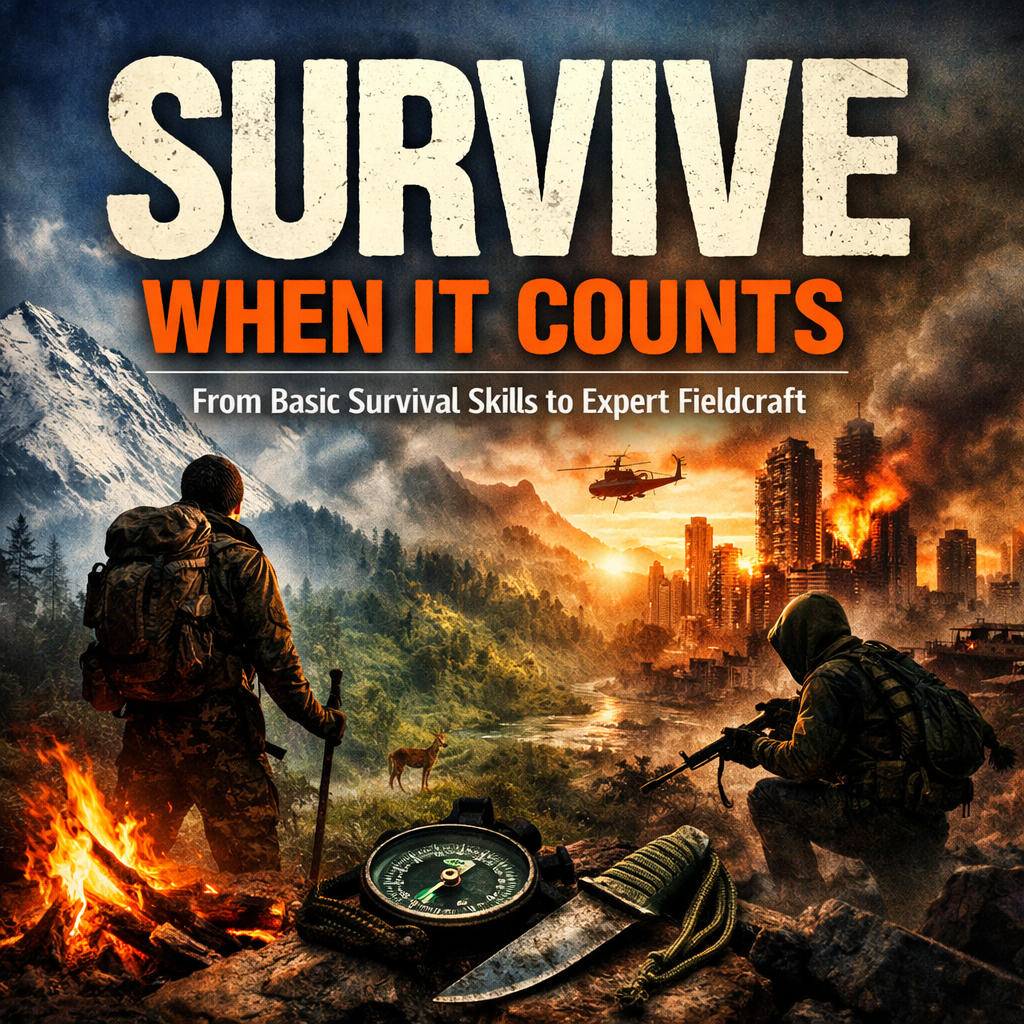
Bugging Out episode artwork

EPISODE · May 11, 2026 · 3 MIN

Bugging Out

from Survive When It Counts

When people hear the phrase bugging out , they often picture a dramatic last-minute escape: bags grabbed in a rush, a car packed to the roof, and a quick getaway from some looming disaster. But in reality, bugging out is not about panic. It’s about having a plan, making smart decisions, and knowing when leaving is safer than staying put. In survival terms, bugging out means moving from a compromised location to a safer one because the situation has become too dangerous to remain where you are. That could be a wildfire approaching too fast, a flood cutting off access, civil unrest, a chemical spill, or any event where your home, workplace, or neighborhood is no longer the best place to be. The goal is not to outrun every problem. The goal is to recognize when mobility gives you the best chance to stay alive. The first and most important part of bugging out is decision-making. Many people wait too long because they want more certainty before acting. The problem is that survival rarely gives perfect certainty. You need triggers. What conditions would make you leave? What roads would be unusable? What warnings would push you into action? A bug-out decision should be based on objective signs, not hope. If you already know your exit points, alternate routes, and destination, you can move early and avoid the chaos that traps everyone else. Next comes your gear, and this is where a lot of people overcomplicate things. A bug-out bag should support movement, not slow it down. It needs to cover the basics: water, calories, shelter, first aid, navigation, light, fire, communication, and a few personal essentials. But the real question is whether you can carry it, use it, and keep moving with it. Every item should earn its place. The lighter and more functional your kit is, the easier it becomes to travel on foot, switch transport methods, or stay mobile if roads and fuel are no longer reliable. Planning your destination matters just as much as the bag itself. Bugging out without a clear place to go is just wandering with equipment. A good bug-out plan includes a primary location, at least one backup option, and the ability to reach either without depending entirely on one route. That might be a trusted friend’s property, a family cabin, or a prearranged safe location. You should also think about what happens if you arrive tired, wet, hungry, or after dark. The destination needs to be realistic, accessible, and suitable for the type of emergency you’re preparing for. Finally, bugging out is as much a mental skill as a physical one. Stress narrows judgment, and fear can make people act too slowly or too fast. Practicing bug-out scenarios before an emergency helps build confidence. Walk your route. Pack your bag. Time your departure. Talk through the choices you would make if roads were blocked or communications failed. The more familiar the process becomes, the less likely you are to freeze when it matters most. Bugging out is not an admission of defeat. It’s a strategic move when staying put is no longer the safest option. With a clear trigger, a practical kit, and a destination you trust, you turn uncertainty into action. And in a true emergency, that kind of preparation can make all the difference. Sponsor: Find the book on Amazon and Books Central Website

When people hear the phrase bugging out , they often picture a dramatic last-minute escape: bags grabbed in a rush, a car packed to the roof, and a quick getaway from some looming disaster. But in reality, bugging out is not about panic. It’s about having a plan, making smart decisions, and knowing when leaving is safer than staying put. In survival terms, bugging out means moving from a compromised location to a safer one because the situation has become too dangerous to remain where you are. That could be a wildfire approaching too fast, a flood cutting off access, civil unrest, a chemical spill, or any event where your home, workplace, or neighborhood is no longer the best place to be. The goal is not to outrun every problem. The goal is to recognize when mobility gives you the best chance to stay alive. The first and most important part of bugging out is decision-making. Many people wait too long because they want more certainty before acting. The problem is that survival rarely gives perfect certainty. You need triggers. What conditions would make you leave? What roads would be unusable? What warnings would push you into action? A bug-out decision should be based on objective signs, not hope. If you already know your exit points, alternate routes, and destination, you can move early and avoid the chaos that traps everyone else. Next comes your gear, and this is where a lot of people overcomplicate things. A bug-out bag should support movement, not slow it down. It needs to cover the basics: water, calories, shelter, first aid, navigation, light, fire, communication, and a few personal essentials. But the real question is whether you can carry it, use it, and keep moving with it. Every item should earn its place. The lighter and more functional your kit is, the easier it becomes to travel on foot, switch transport methods, or stay mobile if roads and fuel are no longer reliable. Planning your destination matters just as much as the bag itself. Bugging out without a clear place to go is just wandering with equipment. A good bug-out plan includes a primary location, at least one backup option, and the ability to reach either without depending entirely on one route. That might be a trusted friend’s property, a family cabin, or a prearranged safe location. You should also think about what happens if you arrive tired, wet, hungry, or after dark. The destination needs to be realistic, accessible, and suitable for the type of emergency you’re preparing for. Finally, bugging out is as much a mental skill as a physical one. Stress narrows judgment, and fear can make people act too slowly or too fast. Practicing bug-out scenarios before an emergency helps build confidence. Walk your route. Pack your bag. Time your departure. Talk through the choices you would make if roads were blocked or communications failed. The more familiar the process becomes, the less likely you are to freeze when it matters most. Bugging out is not an admission of defeat. It’s a strategic move when staying put is no longer the safest option. With a clear trigger, a practical kit, and a destination you trust, you turn uncertainty into action. And in a true emergency, that kind of preparation can make all the difference. Sponsor: Find the book on Amazon and Books Central Website

NOW PLAYING

Bugging Out

0:00 3:26

No transcript for this episode yet

We transcribe on demand. Request one and we'll notify you when it's ready — usually under 10 minutes.

Breaking News Show | eTurboNews Juergen Thomas Steinmetz News is relevant to the global travel and tourism industry, human rights and global issues.Breaking news when it happens and only from the source. LIGHTS, CAMERA, SMILE! Creatives Club Media Lights, Camera, Smile, is a podcast for anyone with a dream to share something with the world, out of the overflow of themselves - be it their mind, their heart, their personalities, and much more. Each of us are alive in this moment in time, with an innate ability to have ideas and create various things to benefit both ourselves and the people around us for a reason, and here, you will find the encouragement, the inspiration, and the motivation to do just that. Hosted by Cicily, founder of Creatives Club, she dives into various topics surrounding creativity and business. Exploring entrepreneurship for creatives in a corporate reality, sharing tips and tricks in a media centered company, answering questions regarding what a creative actually is are just a few of the things discussed on this podcast. Be encouraged to create for yourself as Cicily gets vulnerable by pivoting the camera to herself for the first time.To submit questions for Cicily to answer, or have her address certain t Solving for Change MOBIA Technology Innovations Solving for Change welcomes business and technology leaders to share stories of bold business transformation within complex organizations. In an era when technology and markets are changing around businesses, the key to staying competitive is to evolve in response to those changes.  MOBIA’s Mike Reeves and Marc LeBlanc investigate business transformation, deconstructing the challenges, ambitions, and market disruptions that drive companies to embark on transformation journeys, and exploring their unique approaches to achieving meaningful outcomes.  What sparks leaders to pursue business transformation? How do they overcome the challenges along the way? What are the keys to creating enduring change?  Through in-depth conversations with business and technology leaders, Mike and Marc answer these questions and explore how businesses evolve by pulling four key transformation levers: people, process, technology, and culture. Invictus by Greyana, A Tomione Podfic M+G Readings Sporadic uploads thanks to gallstones.Voldemort intended the object to be used by his most loyal follower in the event that his horcruxes were destroyed, but it ended up in Hermione’s possession instead.It sent her back to a time when he was much less the monster that she’d always known him to be. Nothing could have prepared her for the intelligence and charm of Tom Riddle.He isn’t who she thought he was.Hermione discovers that it’s a dark descent into the madness of the man she should hate, but can’t… a descent she will never emerge fr

Frequently Asked Questions

How long is this episode of Survive When It Counts?

This episode is 3 minutes long.

When was this Survive When It Counts episode published?

This episode was published on May 11, 2026.

What is this episode about?

When people hear the phrase bugging out , they often picture a dramatic last-minute escape: bags grabbed in a rush, a car packed to the roof, and a quick getaway from some looming disaster. But in reality, bugging out is not about panic. It’s about...

Can I download this Survive When It Counts episode?

Yes, you can download this episode by clicking the download button on the episode player, or subscribe to the podcast in your preferred podcast app for automatic downloads.
URL copied to clipboard!