
EPISODE · Nov 22, 2025 · 5 MIN
Build Your Own Quantum Computer
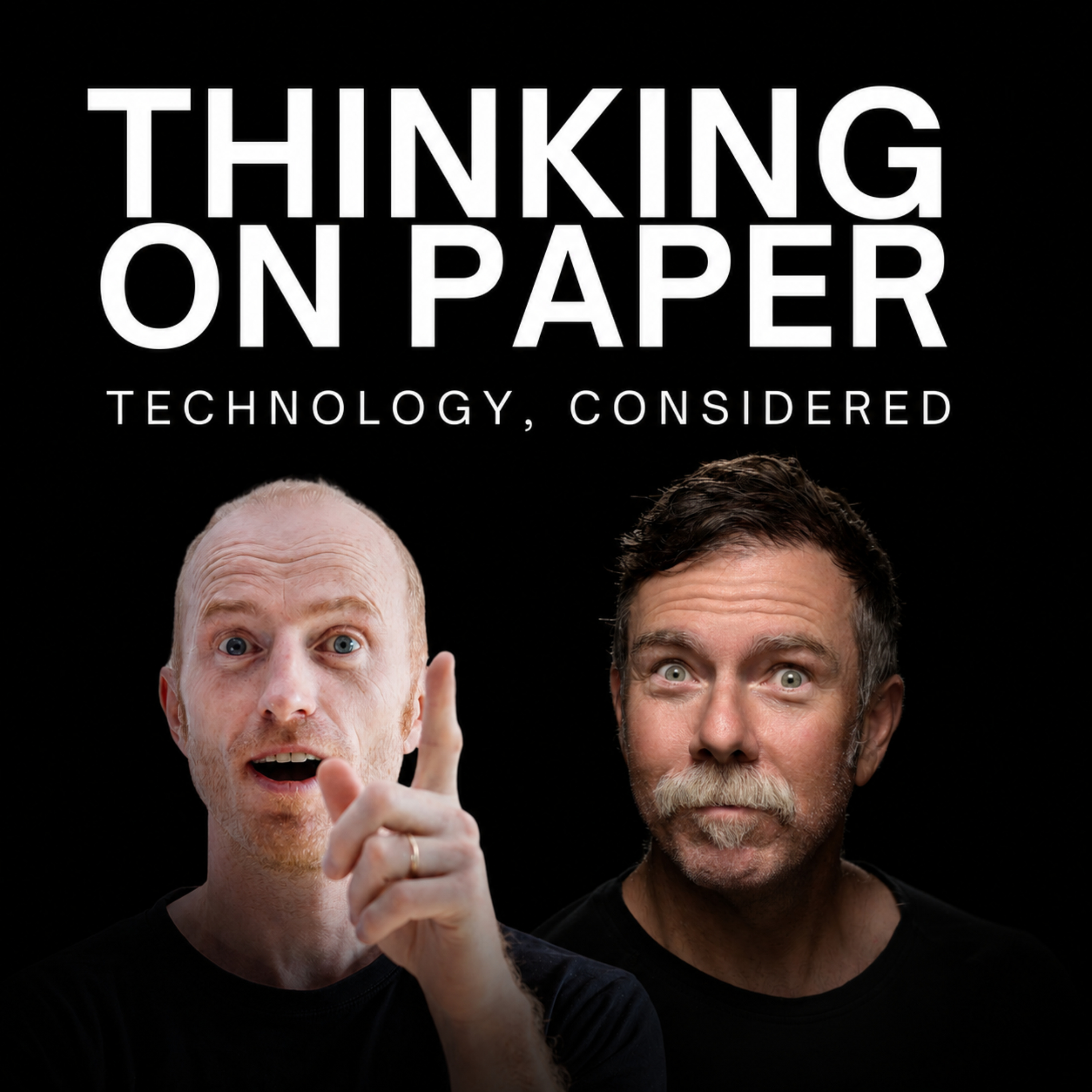
from Thinking On Paper · host Mark Fielding and Jeremy Gilbertson
What if someone handed you the recipe for a quantum computer?Coleman Collins of IonQ breaks down DiVincenzo's criteria—the five capabilities any system needs to be a quantum computer.Physicist David DiVincenzo created the checklist. Every major quantum architecture (superconducting circuits, trapped ions) follows it.The five requirements:1. A well-defined qubit (your basic unit of quantum information)2. Initialization (set every qubit to a known starting state reliably)3. Long coherence times (qubits stay stable long enough to compute without losing quantum state)4. Measurement (read each qubit's state at the end—ideally individually)5. Universal gate set (single-qubit control + entanglement = any computation you want)Mix them together. You have a quantum computer.We talk about:- Why these five criteria matter (the foundation of every quantum system)- What coherence means (how long quantum states survive)- Why measurement is harder than it sounds- How entanglement enables universal computation- Which quantum architectures excel at which criteria- Why trapped ions vs superconducting qubits make different tradeoffsThis is the foundation. Every major quantum company—IBM, Google, IonQ, Rigetti—is solving these five problems in different ways.Now you know what they're building toward.---Other ways to connect with us:Listen to every podcastFollow us on InstagramFollow us on XFollow Mark on LinkedInFollow Jeremy on LinkedInRead our SubstackEmail: [email protected]
Embed this episode
NOW PLAYING
Build Your Own Quantum Computer
No transcript for this episode yet
Similar Episodes
No similar episodes found.
Similar Podcasts
No similar podcasts found.