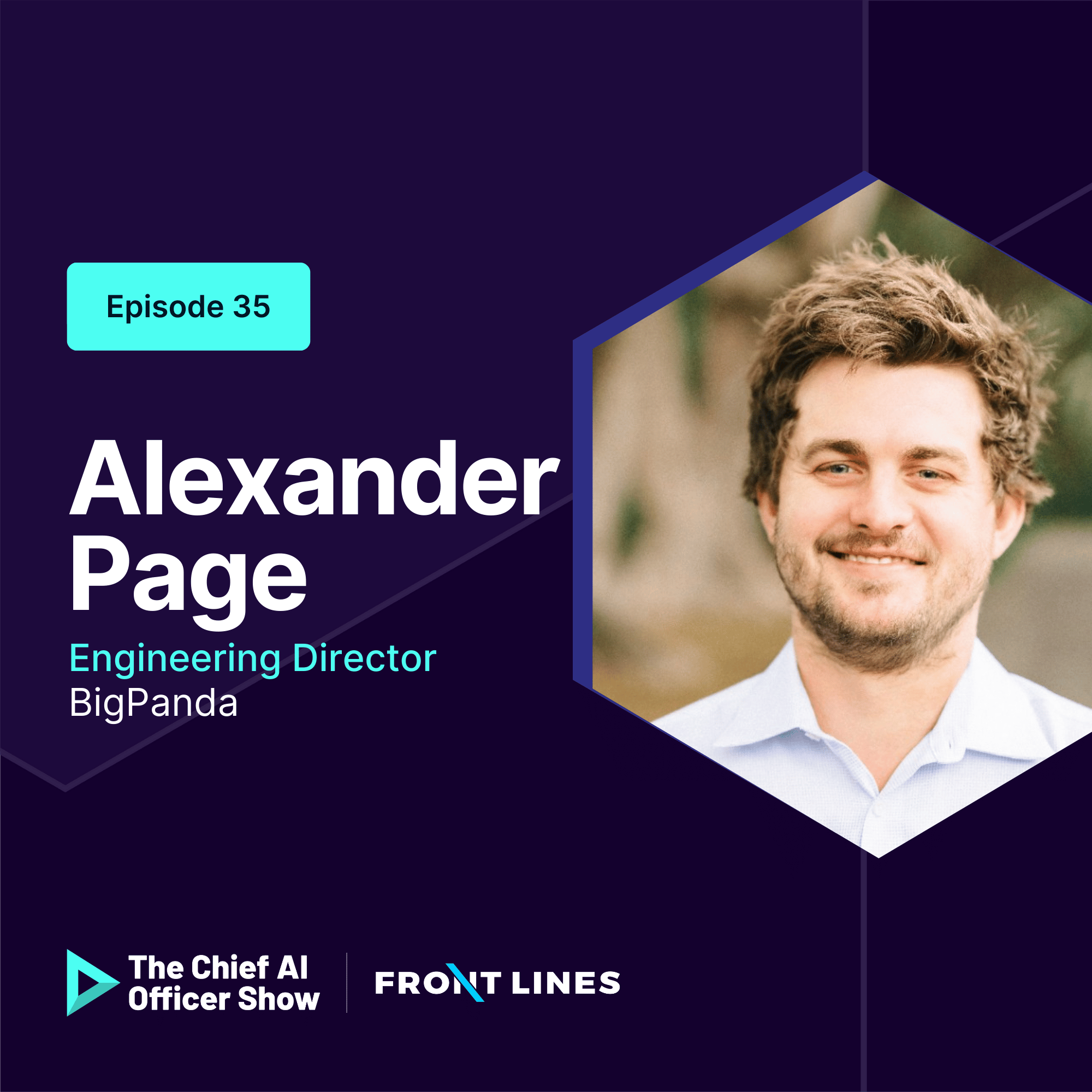
Building AI agents for infrastructure where one mistake makes Wall Street Journal headlines episode artwork

EPISODE · Jan 16, 2026 · 47 MIN

Building AI agents for infrastructure where one mistake makes Wall Street Journal headlines

from The Chief AI Officer Show · host Front Lines

Alexander Page transitioned from sales engineer to engineering director by prototyping LLM applications after ChatGPT's launch, moving from initial prototype to customer GA in under four months. At Big Panda, he's building Biggy, an AIOps co-pilot where reliability isn't negotiable: a wrong automation execution at a major bank could make headlines.Big Panda's core platform correlates alerts from 10-50 monitoring tools per customer into unified incidents. Biggy operates at L2/L3 escalation: investigating root causes through live system queries, surfacing remediation options from Ansible playbooks, and managing incident workflows. The architecture challenge is building agents that traverse ServiceNow, Dynatrace, New Relic, and other APIs while maintaining human approval gates for any write operations in production environments.Page's team invested months building a dedicated multi-agent system (15-20 steps with nested agent teams) solely for knowledge graph operations. The insertion pipeline transforms unstructured data like Slack threads, call transcripts, and technical PDFs with images into graph representations, validating against existing state before committing changes. This architectural discipline makes retrieval straightforward and enables users to correct outdated context directly, updating graph relationships in real-time. Where vector search finds similar past incidents, the knowledge graph traces server dependencies to surface common root causes across connected infrastructure.Topics discussed:Moving LLM prototypes to production in months during GPT-3.5 era by focusing on customer design partnershipsEvaluating agentic systems by validating execution paths rather than response outputs in non-deterministic environmentsBuilding tool-specific agents for monitoring platforms lacking native MCP implementationsArchitecting multi-agent knowledge graph insertion systems that validate state before write operationsImplementing approval workflows for automation execution in high-consequence infrastructure environmentsDesigning RAG retrieval using fusion techniques, hypothetical document embeddings, and re-representation at indexingScaling design partnerships as extended product development without losing broader market applicabilitySeparating read-only investigation agents from write-capable automation agents based on failure consequence modeling

Episode metadata supplied by the publisher feed · Published Jan 16, 2026

Alexander Page transitioned from sales engineer to engineering director by prototyping LLM applications after ChatGPT's launch, moving from initial prototype to customer GA in under four months. At Big Panda, he's building Biggy, an AIOps co-pilot where reliability isn't negotiable: a wrong automation execution at a major bank could make headlines.Big Panda's core platform correlates alerts from 10-50 monitoring tools per customer into unified incidents. Biggy operates at L2/L3 escalation: investigating root causes through live system queries, surfacing remediation options from Ansible playbooks, and managing incident workflows. The architecture challenge is building agents that traverse ServiceNow, Dynatrace, New Relic, and other APIs while maintaining human approval gates for any write operations in production environments.Page's team invested months building a dedicated multi-agent system (15-20 steps with nested agent teams) solely for knowledge graph operations. The insertion pipeline transforms unstructured data like Slack threads, call transcripts, and technical PDFs with images into graph representations, validating against existing state before committing changes. This architectural discipline makes retrieval straightforward and enables users to correct outdated context directly, updating graph relationships in real-time. Where vector search finds similar past incidents, the knowledge graph traces server dependencies to surface common root causes across connected infrastructure.Topics discussed:Moving LLM prototypes to production in months during GPT-3.5 era by focusing on customer design partnershipsEvaluating agentic systems by validating execution paths rather than response outputs in non-deterministic environmentsBuilding tool-specific agents for monitoring platforms lacking native MCP implementationsArchitecting multi-agent knowledge graph insertion systems that validate state before write operationsImplementing approval workflows for automation execution in high-consequence infrastructure environmentsDesigning RAG retrieval using fusion techniques, hypothetical document embeddings, and re-representation at indexingScaling design partnerships as extended product development without losing broader market applicabilitySeparating read-only investigation agents from write-capable automation agents based on failure consequence modeling

PodParley-generated summary based on available episode metadata and transcript content.

NOW PLAYING

Building AI agents for infrastructure where one mistake makes Wall Street Journal headlines

0:00 47:13

No transcript for this episode yet

We transcribe on demand. Request one and we'll notify you when it's ready — usually under 10 minutes.

Frequently Asked Questions

How long is this episode of The Chief AI Officer Show?

This episode is 47 minutes long.

When was this The Chief AI Officer Show episode published?

This episode was published on January 16, 2026.

What is this episode about?

Alexander Page transitioned from sales engineer to engineering director by prototyping LLM applications after ChatGPT's launch, moving from initial prototype to customer GA in under four months. At Big Panda, he's building Biggy, an AIOps co-pilot...

Can I download this The Chief AI Officer Show episode?

Yes, you can download this episode by clicking the download button on the episode player, or subscribe to the podcast in your preferred podcast app for automatic downloads.
URL copied to clipboard!