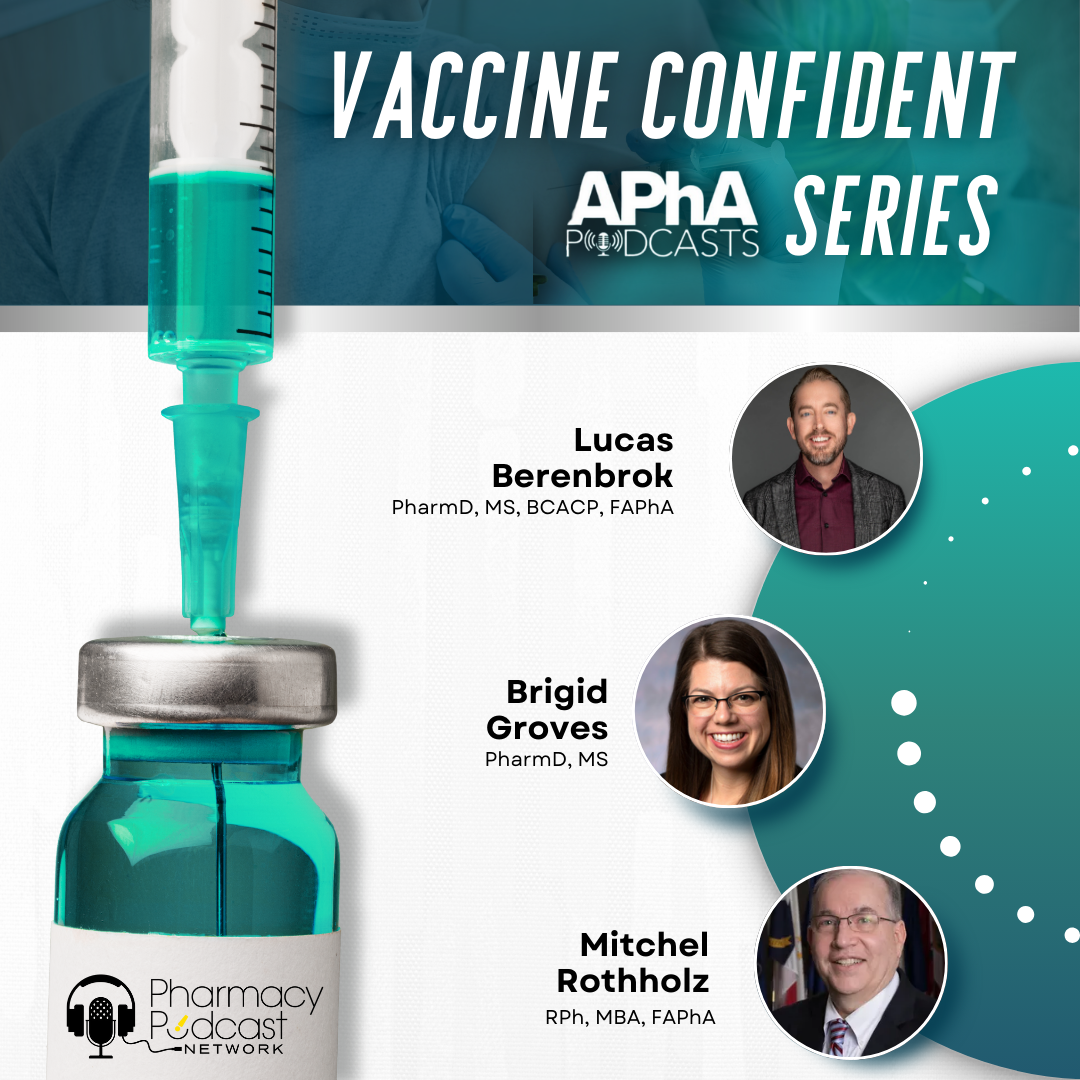
Building Trust in Vaccines and Vaccination Programs | Building Vaccine Confidence with APhA episode artwork

EPISODE · Feb 13, 2025 · 22 MIN

Building Trust in Vaccines and Vaccination Programs | Building Vaccine Confidence with APhA

from Pharmacy Podcast Network · host Pharmacy Podcast Network

Featured Guests Brigid Groves, PharmD, MS Mitch Rothholz, RPh, MBA, FAPhA Lucas Berenbrok, PharmD, MS, BCACP, FAPhA Key Takeaway Tools and techniques pharmacists can use to foster trust with patients regarding vaccines. CDC’s "Vaccinate with Confidence" Initiative Protect Communities CDC is supporting partners to find and protect communities at risk through new investments and partnerships. Leverage CDC’s Immunization and Vaccines for Children cooperative agreement to support efforts to identify and respond to areas with low vaccine coverage. Public trust in pharmacists and pharmacy teams helps reinforce vaccine messages. Collaboration with community leaders and influencers is crucial—messages must be evidence-based and credible. Best Practices for Pharmacists "Walk the talk"—if you or a family member received concomitant vaccines, share your experience. Example: "I received three vaccines at one visit (flu, COVID, and RSV), and I am here to talk about it (and I do)." Engage with patients by listening rather than lecturing. Acknowledge patient concerns and provide them with information to consider. Vaccine hesitancy is not the same as being anti-vaccine—many patients are "vaccine contemplators." Vaccine Effectiveness COVID-19 Vaccines Effectiveness Against Severe Outcomes Updated vaccines (September 2023 – January 2024) have been effective against XBB lineage and the new JN.1 variant. Waning Protection Booster doses are recommended as vaccine effectiveness declines over time. Population Variability Effectiveness varies based on age, underlying health conditions, and other factors (e.g., immunocompromised individuals may experience different levels of protection). General Vaccine Effectiveness Real-World Conditions Effectiveness is measured under real-world conditions, factoring in vaccine type, dosage, and timing. Monitoring & Updates The CDC continuously tracks vaccine effectiveness to adjust recommendations as needed. Impact of Vaccination Measles: Cases reduced from hundreds of thousands annually to only 49 in 2021. Polio: The U.S. has been polio-free since 1979. Hepatitis B: Routine vaccination significantly reduces liver cancer risk. Childhood Vaccinations: 100% reduction in cases of diphtheria, Hib, measles, mumps, polio, and rubella. Influenza incidence reduced by 17%. Overall Impact: Childhood immunizations have averted over 24 million cases of vaccine-preventable diseases in the U.S. Between 1994-2013, vaccinations prevented: 322 million cases of disease 21 million hospitalizations 732,000 deaths Public Health Strategies Use immunization data to identify areas of low vaccine coverage. Engage with local health departments to monitor vaccine-preventable disease trends. Strengthen immunization programs to enhance outbreak response. Encourage collaboration among healthcare providers—it shouldn’t matter who vaccinates, the goal is increasing immunization rates. Empowering Families CDC is partnering with key organizations to strengthen vaccine conversations between providers and parents. Strategies Start vaccine conversations early, targeting parents of infants and pregnant women. Reduce hesitancy and improve access in community health centers. Develop provider toolkits to address parental concerns during outbreaks. Combating Misinformation CDC is working with local messengers and partners to stop vaccine myths. Challenges & Key Messages New administration statements have increased vaccine doubts, making conversations harder. There is no link between vaccines and autism, diabetes, or other diseases. Investments in Public Trust: Work with social media companies to promote trustworthy vaccine information. Provide accessible, accurate vaccine data to policymakers. Engage state and local health officials to counter misinformation effectively. Priorities for 2020 and Beyond CDC aims to ensure that every community is protected through: Data-driven strategies to identify vulnerable populations. Expanding local resources to strengthen vaccination efforts. Building a culture of immunization in healthcare settings. Improving public communication on vaccines. Enhancing partnerships to promote immunization initiatives. Ten Key Messages for Pharmacists Engaging with Vaccine-Hesitant Individuals Vaccines Save Lives – They prevent serious diseases and save millions of lives each year. Rigorous Testing – Vaccines undergo extensive trials and continuous monitoring to ensure safety and effectiveness. Community Immunity – Vaccination protects those who cannot be vaccinated, such as infants and immunocompromised individuals. Combating Misinformation – Rely on credible sources for vaccine facts. Misinformation fuels fear and hesitation. Mild Side Effects – Most side effects (e.g., sore arm, mild fever) are temporary. Severe side effects are extremely rare. Consult Healthcare Providers – Encourage patients to ask healthcare professionals for reassurance. Vaccines and Fertility – There is no evidence that vaccines, including COVID-19 vaccines, affect fertility. Herd Immunity – High vaccination rates protect entire communities. Rapid Vaccine Development Explained – COVID-19 vaccines were developed quickly due to unprecedented funding and collaboration—without compromising safety. Long-Term Benefits – Vaccination prevents future outbreaks and contributes to long-term public health. Pharmacists’ Role in Addressing Hesitancy Provide accurate, evidence-based information. Listen actively to patients' concerns. Engage with community health workers to strengthen local vaccination efforts. Listen to all 3-parts of this series:  https://pharmacypodcast.com/2025/03/10/vaccine-confident-podcast-series/ 

Featured Guests Brigid Groves, PharmD, MS Mitch Rothholz, RPh, MBA, FAPhA Lucas Berenbrok, PharmD, MS, BCACP, FAPhA Key Takeaway Tools and techniques pharmacists can use to foster trust with patients regarding vaccines. CDC’s "Vaccinate with Confidence" Initiative Protect Communities CDC is supporting partners to find and protect communities at risk through new investments and partnerships. Leverage CDC’s Immunization and Vaccines for Children cooperative agreement to support efforts to identify and respond to areas with low vaccine coverage. Public trust in pharmacists and pharmacy teams helps reinforce vaccine messages. Collaboration with community leaders and influencers is crucial—messages must be evidence-based and credible. Best Practices for Pharmacists "Walk the talk"—if you or a family member received concomitant vaccines, share your experience. Example: "I received three vaccines at one visit (flu, COVID, and RSV), and I am here to talk about it (and I do)." Engage with patients by listening rather than lecturing. Acknowledge patient concerns and provide them with information to consider. Vaccine hesitancy is not the same as being anti-vaccine—many patients are "vaccine contemplators." Vaccine Effectiveness COVID-19 Vaccines Effectiveness Against Severe Outcomes Updated vaccines (September 2023 – January 2024) have been effective against XBB lineage and the new JN.1 variant. Waning Protection Booster doses are recommended as vaccine effectiveness declines over time. Population Variability Effectiveness varies based on age, underlying health conditions, and other factors (e.g., immunocompromised individuals may experience different levels of protection). General Vaccine Effectiveness Real-World Conditions Effectiveness is measured under real-world conditions, factoring in vaccine type, dosage, and timing. Monitoring & Updates The CDC continuously tracks vaccine effectiveness to adjust recommendations as needed. Impact of Vaccination Measles: Cases reduced from hundreds of thousands annually to only 49 in 2021. Polio: The U.S. has been polio-free since 1979. Hepatitis B: Routine vaccination significantly reduces liver cancer risk. Childhood Vaccinations: 100% reduction in cases of diphtheria, Hib, measles, mumps, polio, and rubella. Influenza incidence reduced by 17%. Overall Impact: Childhood immunizations have averted over 24 million cases of vaccine-preventable diseases in the U.S. Between 1994-2013, vaccinations prevented: 322 million cases of disease 21 million hospitalizations 732,000 deaths Public Health Strategies Use immunization data to identify areas of low vaccine coverage. Engage with local health departments to monitor vaccine-preventable disease trends. Strengthen immunization programs to enhance outbreak response. Encourage collaboration among healthcare providers—it shouldn’t matter who vaccinates, the goal is increasing immunization rates. Empowering Families CDC is partnering with key organizations to strengthen vaccine conversations between providers and parents. Strategies Start vaccine conversations early, targeting parents of infants and pregnant women. Reduce hesitancy and improve access in community health centers. Develop provider toolkits to address parental concerns during outbreaks. Combating Misinformation CDC is working with local messengers and partners to stop vaccine myths. Challenges & Key Messages New administration statements have increased vaccine doubts, making conversations harder. There is no link between vaccines and autism, diabetes, or other diseases. Investments in Public Trust: Work with social media companies to promote trustworthy vaccine information. Provide accessible, accurate vaccine data to policymakers. Engage state and local health officials to counter misinformation effectively. Priorities for 2020 and Beyond CDC aims to ensure that every community is protected through: Data-driven strategi

NOW PLAYING

Building Trust in Vaccines and Vaccination Programs | Building Vaccine Confidence with APhA

0:00 22:49

No transcript for this episode yet

We transcribe on demand. Request one and we'll notify you when it's ready — usually under 10 minutes.

That Hoarder: Overcome Compulsive Hoarding That Hoarder Hoarding disorder is stigmatised and people who hoard feel vast amounts of shame. This podcast began life as an audio diary, an anonymous outlet for somebody with this weird condition. That Hoarder speaks about her experiences living with compulsive hoarding, she interviews therapists, academics, researchers, children of hoarders, professional organisers and influencers, and she shares insight and tips for others with the problem. Listened to by people who hoard as well as those who love them and those who work with them, Overcome Compulsive Hoarding with That Hoarder aims to shatter the stigma, share the truth and speak openly and honestly to improve lives. The Small Business Startup School – Business Notes | Financial Literacy | Retail Psychology – For Professionals & Entrepreneurs The Small Business Startup School Inc. Starting or buying a small business? While personal circumstances may vary, business patterns remain timeless. On The Small Business Startup School, we explore strategies, insights, and practical solutions to help entrepreneurs confidently navigate their journey.Hosted by Ola Williams—a retail entrepreneur, fintech founder, and financial coach with over two decades of experience—this podcast marries financial awareness and retail psychology with optimism to deliver actionable takeaways.Join us to learn, grow, and connect as we uncover the keys to business success.Let’s continue to learn together and be encouraged to keep on connecting! DIOSA. Carolina Sanper This podcast is a sacred space created by Carolina Sanper where you connect with your inner wisdom and embody your magnetic feminine power.It is the realization that the mystical realm is where you plant the seeds of your desired reality.It is a portal to your true essence: awareness, presence, and receiving with ease. Welcome home, DIOSA. 🖤 XXX Tech by SOVRYN Dr. Brian Sovryn The crossroads between technology, sensuality, and metaphysics - and the longest running anarchist podcast in the world! Brought to you by Dr. Brian Sovryn.

Frequently Asked Questions

How long is this episode of Pharmacy Podcast Network?

This episode is 22 minutes long.

When was this Pharmacy Podcast Network episode published?

This episode was published on February 13, 2025.

What is this episode about?

Featured Guests Brigid Groves, PharmD, MS Mitch Rothholz, RPh, MBA, FAPhA Lucas Berenbrok, PharmD, MS, BCACP, FAPhA Key Takeaway Tools and techniques pharmacists can use to foster trust with patients regarding vaccines. CDC’s "Vaccinate with...

Can I download this Pharmacy Podcast Network episode?

Yes, you can download this episode by clicking the download button on the episode player, or subscribe to the podcast in your preferred podcast app for automatic downloads.
URL copied to clipboard!