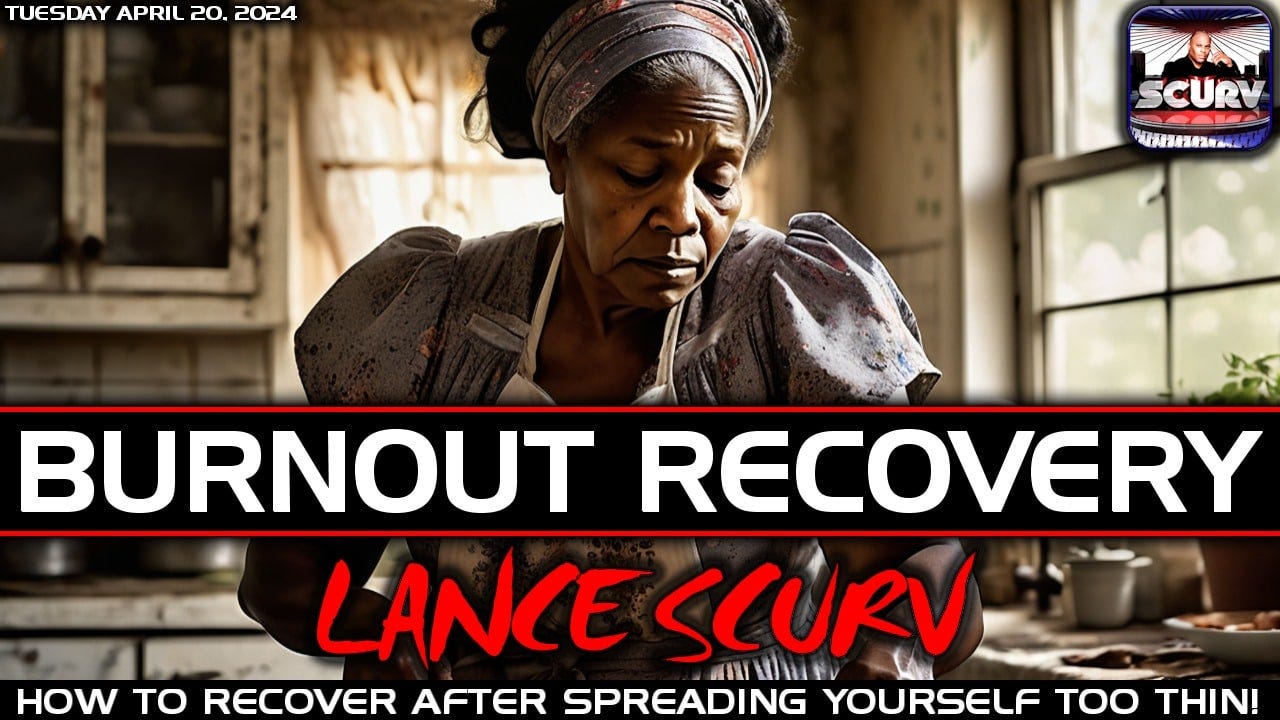
BURNOUT RECOVERY: HOW TO RECOVER AFTER SPREADING YOURSELF TOO THIN...
from LanceScurvX Hosted by LanceScurvX
In the not-so-distant past, society operated at a slower, more predictable pace. Communities were tightly knit, work hours were well-defined, and people had time to unwind and connect with one another. The advent of electric lights, industrialization, and the mass migration to cities brought about profound changes. Suddenly, the world was no longer bound by the natural rhythms of daylight and darkness. Businesses began to operate around the clock, and work schedules became increasingly unorthodox. The human body, once accustomed to predictable cycles of work and rest, was now pushed to its limits, forcing people to adapt to an economy that demanded relentless productivity. This shift has had a profound impact on our lives. The pressure to keep up with the demands of modern life—to work longer hours, earn more money, and meet the ever-increasing cost of living—has taken a toll on our physical and mental health. Family ties have weakened, communities have fragmented, and mental health issues have surged. We have become a society of overworked, underpaid, unhappy, and unhealthy individuals, trudging through life like zombies. The relentless pursuit of material success has led many to the brink of burnout, where exhaustion, stress, and a sense of emptiness have become the norm. It’s time to acknowledge the warning signs of burnout and take proactive steps to restore our well-being. Recognizing the Red Flags of Burnout 1. Chronic Fatigue- Chronic fatigue is one of the most obvious signs of burnout. This isn’t just feeling tired after a long day; it’s a deep, pervasive exhaustion that doesn’t go away even after rest. When you’re constantly feeling drained, struggling to muster the energy to get through the day, and relying on caffeine or other stimulants to keep going, you’re likely experiencing chronic fatigue. This can lead to reduced productivity, decreased motivation, and an overwhelming sense of weariness.- Chronic fatigue often stems from pushing yourself too hard for too long without adequate rest or relaxation. It’s your body’s way of telling you that it can’t keep up with the demands being placed on it. Ignoring this red flag can result in more severe health problems, including immune system suppression, increased susceptibility to illness, and even depression. Recognizing this early and taking steps to address it is crucial for preventing a full-blown burnout. 2. Insomnia or Disturbed Sleep- Burnout often manifests as difficulty falling asleep, staying asleep, or waking up too early and not being able to go back to sleep. Despite being exhausted, your mind races with worries about work, finances, or personal obligations, making it nearly impossible to get the rest you need. Over time, sleep deprivation can exacerbate feelings of stress, anxiety, and irritability, leading to a vicious cycle that’s hard to break.- Sleep is essential for physical and mental restoration. Without it, your body and mind cannot function optimally, and you become more susceptible to mistakes, accidents, and poor decision-making. Insomnia is not just a symptom of burnout; it can also be a significant contributor to it, as the lack of sleep compounds your exhaustion and diminishes your ability to cope with stress. 3. Loss of Appetite- Burnout can also affect your relationship with food. You might notice a significant decrease in appetite, where the thought of eating feels like a chore, or food loses its appeal altogether. This loss of appetite can lead to unintentional weight loss, nutrient deficiencies, and a further decline in energy levels.- The loss of appetite is often linked to the body’s stress response. When you’re under constant pressure, your body may go into a fight-or-flight mode, suppressing non-essential functions like digestion. This can lead to poor eating habits, such as skipping meals or relying on unhealthy snacks for quick energy, which only exacerbates the physical toll burnout takes on your body. 4. Reduced Sex Drive- A noticeable drop in libido can be another red flag of burnout. When you’re burned out, your body prioritizes survival over pleasure, leading to a significant reduction in sexual desire. This can strain intimate relationships and contribute to feelings of disconnection or frustration.- The reduction in sex drive is often linked to the hormonal imbalances that result from chronic stress and fatigue. Cortisol, the stress hormone, can suppress the production of sex hormones, leading to a decreased interest in intimacy. This not only affects your physical health but also your emotional well-being and relationships. 5. Irritability and Mood Swings- If you find yourself snapping at others over minor issues or feeling inexplicably angry or frustrated, you might be experiencing irritability, another common symptom of burnout. Mood swings, where you feel fine one moment and overwhelmed the next, are also indicative of burnout. These emotional fluctuations can strain relationships and make it difficult to manage everyday challenges.- Irritability and mood swings are often the result of accumulated stress and exhaustion. When your body and mind are pushed to their limits, your ability to regulate emotions diminishes. This can lead to outbursts, conflicts with loved ones, and a general sense of dissatisfaction with life. Addressing the underlying causes of irritability is essential for improving your overall emotional health. 6. Cognitive Impairment- Burnout can significantly affect your cognitive functions, leading to problems with concentration, memory, and decision-making. You may find it hard to focus on tasks, forget important details, or make mistakes that you wouldn’t normally make. This cognitive impairment can be frustrating and can contribute to feelings of incompetence or self-doubt.- The brain, like the body, requires rest and recovery to function properly. When you’re burned out, the brain’s resources are depleted, making it difficult to process information, solve problems, or think creatively. This can lead to a decline in work performance and increased stress as you struggle to keep up with your responsibilities. 7. Physical Symptoms- Burnout often manifests physically in the form of headaches, muscle tension, digestive issues, or even chronic pain. These symptoms can arise from the constant state of stress your body is under, and they can worsen over time if not addressed.- Physical symptoms are your body’s way of signaling that something is wrong. Ignoring these signs can lead to more serious health problems, including chronic conditions like hypertension or heart disease. It’s important to listen to your body and take action to alleviate these symptoms before they become debilitating. 8. Emotional Detachment- A sense of emotional numbness or detachment from your work, relationships, or even yourself can be a sign of burnout. You may feel indifferent to things that once brought you joy or find it hard to connect with others on an emotional level. This detachment can lead to feelings of isolation and a sense of meaninglessness.- Emotional detachment is often a defense mechanism against the overwhelming stress and fatigue associated with burnout. It’s your mind’s way of protecting itself from further emotional strain. However, this detachment can also prevent you from fully engaging with life, leading to a loss of fulfillment and satisfaction. 9. Increased Cynicism- Burnout can lead to a negative or cynical attitude towards work, life, or people in general. You may find yourself increasingly disillusioned with your job, your relationships, or your goals, and begin to question the value or purpose of what you’re doing. This cynicism can be a sign that burnout has taken a deep toll on your outlook on life.- Increased cynicism is often the result of prolonged stress and disappointment. When your efforts seem to go unrecognized or unrewarded, or when you feel trapped in an unsustainable lifestyle, it’s easy to become cynical. This mindset can fur… Get full access to LanceScurvX at www.lancescurvx.com/subscribe
Embed this episode
No transcript yet.