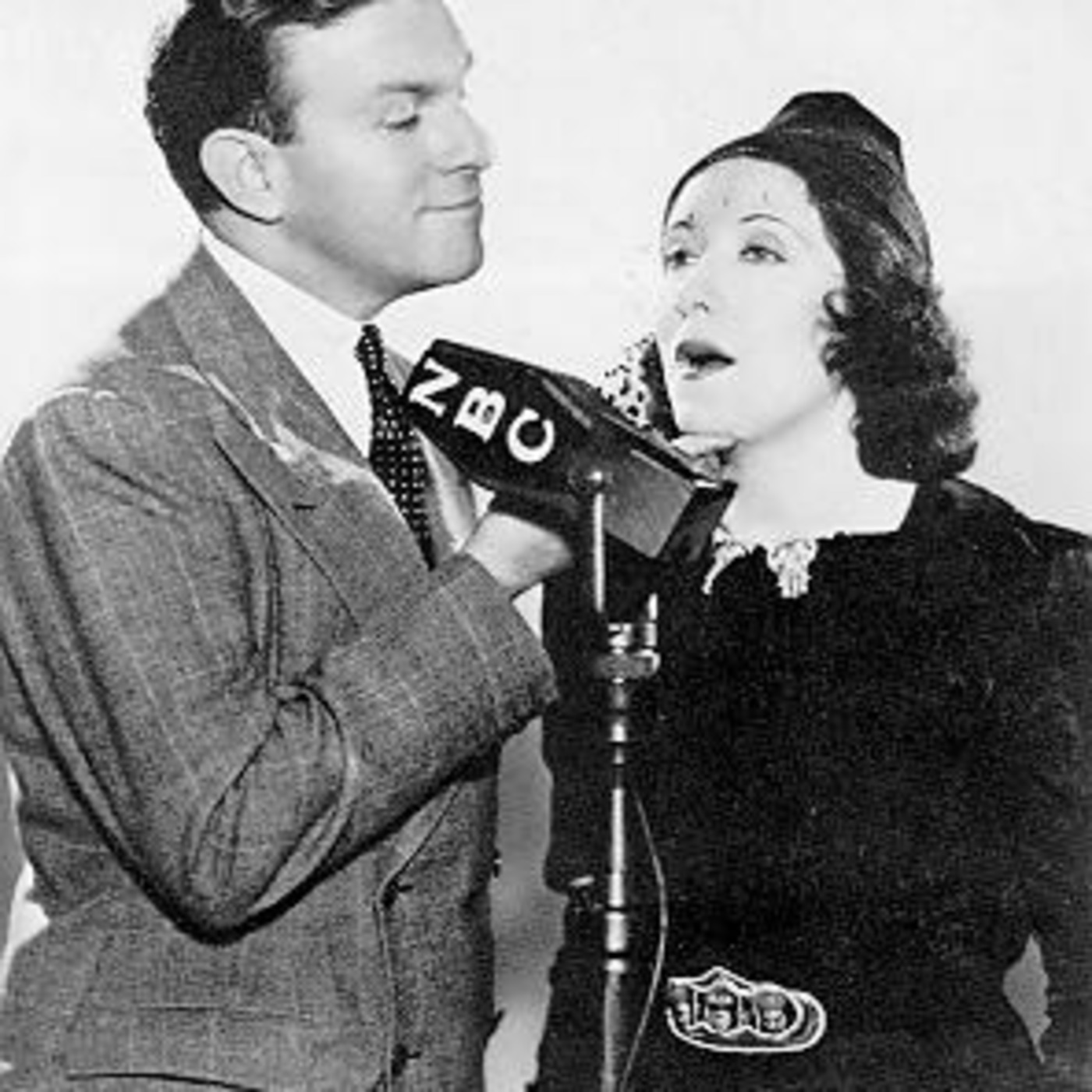
Burns & Allen 1938 episode artwork

EPISODE · Jan 28, 2007 · 27 MIN

Burns & Allen 1938

from Radio America · host Radioamerica

I would like to take this time to thank every one for listening to Radio America We have been on podomatic now for 1 year and a few weeks. We have just surpassed 210,000 downloads. And we truly want to thank everyone , to celebrate our 1 year anniversary and download. We are offering a special if you buy 3 cds you get the 4th free, that a total of 200 shows for $15.00 which includes shipping clickhere Visit the Radio America Store web site.Buy your 50 mp3 for &5.00 please include on the special msg on order that you are coming from podomatic. Again Thanks for making Radio America # 1 in Comedy for this long Thanks Grace Ethel Cecile Rosalie Allen was born into a show business family; after being educated at Star of the Sea Convent School in girlhood, she teamed in vaudeville with her sister, Bessie, in 1909. She met George Burns and the two immediately launched a new partnership—but they did not click until Burns cannily flipped the act around: after a Hoboken, New Jersey performance in which they tested the new style for the first time, Burns's hunch proved right. Gracie was the better laugh-getter, especially with the "illogical logic" that informed her responses to Burns's prompting comments or questions. Allen's half of the act was known generally as a "Dumb Dora" act, named after a very early film of the same name that featured a scatterbrained female protagonist, but her "illogical logic" style was several cuts above the Dumb Dora stereotype, as was Burns's understated straight man. The twosome worked the new style tirelessly on the road, building a following, and finally playing the vaudevillian's dream: the Palace in New York. They fell in love along the way and married in Cleveland, Ohio on January 7, 1926—somewhat daring for those times, considering Burns's Jewish and Allen's Irish Catholic upbringing.[2] (For her part, Allen also endeared herself to her in-laws by adopting his mother's favourite phrase, used whenever the older woman needed to bring her son back down to earth: "Nattie, you're a nice boy," using a diminutive of his given name. When Burns's mother died, Allen comforted her grief-stricken husband with the same phrase.)

I would like to take this time to thank every one for listening to Radio America We have been on podomatic now for 1 year and a few weeks. We have just surpassed 210,000 downloads. And we truly want to thank everyone , to celebrate our 1 year anniversary and download. We are offering a special if you buy 3 cds you get the 4th free, that a total of 200 shows for $15.00 which includes shipping clickhere Visit the Radio America Store web site.Buy your 50 mp3 for &5.00 please include on the special msg on order that you are coming from podomatic. Again Thanks for making Radio America # 1 in Comedy for this long Thanks Grace Ethel Cecile Rosalie Allen was born into a show business family; after being educated at Star of the Sea Convent School in girlhood, she teamed in vaudeville with her sister, Bessie, in 1909. She met George Burns and the two immediately launched a new partnership—but they did not click until Burns cannily flipped the act around: after a Hoboken, New Jersey performance in which they tested the new style for the first time, Burns's hunch proved right. Gracie was the better laugh-getter, especially with the "illogical logic" that informed her responses to Burns's prompting comments or questions. Allen's half of the act was known generally as a "Dumb Dora" act, named after a very early film of the same name that featured a scatterbrained female protagonist, but her "illogical logic" style was several cuts above the Dumb Dora stereotype, as was Burns's understated straight man. The twosome worked the new style tirelessly on the road, building a following, and finally playing the vaudevillian's dream: the Palace in New York. They fell in love along the way and married in Cleveland, Ohio on January 7, 1926—somewhat daring for those times, considering Burns's Jewish and Allen's Irish Catholic upbringing.[2] (For her part, Allen also endeared herself to her in-laws by adopting his mother's favourite phrase, used whenever the older woman needed to bring her son back down to earth: "Nattie, you're a nice boy," using a diminutive of his given name. When Burns's mother died, Allen comforted her grief-stricken husband with the same phrase.)

NOW PLAYING

Burns & Allen 1938

0:00 27:50

No transcript for this episode yet

We transcribe on demand. Request one and we'll notify you when it's ready — usually under 10 minutes.

No similar episodes found.

Frequently Asked Questions

How long is this episode of Radio America?

This episode is 27 minutes long.

When was this Radio America episode published?

This episode was published on January 28, 2007.

What is this episode about?

I would like to take this time to thank every one for listening to Radio America We have been on podomatic now for 1 year and a few weeks. We have just surpassed 210,000 downloads. And we truly want to thank everyone , to celebrate our 1 year...

Can I download this Radio America episode?

Yes, you can download this episode by clicking the download button on the episode player, or subscribe to the podcast in your preferred podcast app for automatic downloads.
URL copied to clipboard!