While every other channel is fighting for your customer's attention, podcasts are where they've already given it. No one accidentally listens to a podcast for 45 minutes. They choose to be here. They trust the voice in their ears.
And when that voice talks about your brand, it doesn't sound like advertising. It sounds like a recommendation from a friend. ACAST gives you that trust at scale. Digital precision, post-read authenticity, and performance data that proves it worked.
Don't fight for attention. Buy it with ACAST. Learn more by visiting acast.com slash advertise. And this week is the amazing Mike Powell.
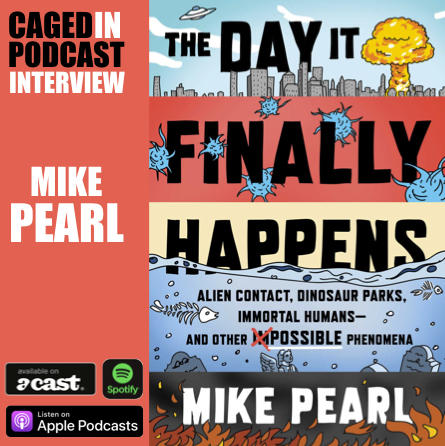
Mike has written a book called The Day It Finally Happens. I'm not going to talk about it too much in the intro throughout this episode. And really, really dive deep into some of the subjects of some of the chapters. But I implore that if you're interested in Mike's book, and I really, really, really do recommend it.
I've been listening to an audiobook. You can buy it from Amazon or wherever you can get books from. It is a really interesting and fascinating look at just possibilities of what could happen if certain things were to happen in the world. I know that's a very lackluster explanation, but Mike does a much better job of it in the podcast.
So, yeah, just sit back and enjoy this one. And there will be plenty more interviews to come in the future. Today, I'm joined by Mike Powell, author of The Day It Finally Happens, Alien Contact, Dinosaur Parks, Immortal Humans, and Other Possible Phenomena. How are you, Mike?
You know, pretty as good as could possibly be expected under the conditions we're all under. Well, yeah, your book kind of prophesies this in a weird way. How does that make you feel? Well, if I had listened to a lot of the people that I talked to for the book, then I would have had a lot more food stored up in my shed.
I would have had way more ammunition. I feel like I didn't listen to my own advice. Well, yes, it's quite interesting. The writer of Contagion has recently been interviewed and asked about the film mirrors what's going on right now.
He's like, yeah, I'm not surprised. Like everyone I spoke to said, this is exactly what will happen at some point, not a matter of when. A matter of like if it's a matter of when it will happen. And every beat of that film has kind of come true in this weird time, really, isn't it?
Like, yeah, I mean, Contagion, it's crazy how like all that stuff about touching your face, you know, that was in the movie, ended up like playing in all of our lives, ended up being our everyday reality. Well, yeah, that's that obviously, yeah, I'm talking about the chapter, the day antibiotics don't work anymore, which obviously, right, this is like that's kind of how it's so prescient to what's going on right now in regards to yourself. But like, that's just one of many topics you cover in this book. Just kind of, yeah, you go ahead, man.
I'm glad you highlighted that chapter, you know, because it's like, what interested me when I started writing about the day that antibiotics don't work anymore was the idea that, you know, they're not going to be able to do, you know, if your diabetic grandmother needs to have her leg removed or something like that, then she's not going to be able to get that surgery anymore after antibiotics, because when antibiotics aren't usable anymore, just because they would formally, a procedure like that, they would normally pump you full of antibiotics to guarantee that you'll live through that amputation. And just the idea that like a lot of what I guess you would call like, you know, everyday infections, normal infections would become like, you know, would go back to being, you know, you get splintered, you can die again. You know, we're used to the idea that like, you know, if you cut your, if you're slicing an avocado and you cut your hand open and you need stitches or something like that, that injury is, oh, certainly not going to kill you. And when we lose antibiotics, we go back to a world where, you know, no, you really need to worry about that injury.
And that's what I was kind of focused on when I wrote that chapter. And just by kind of by happenstance, people wanted to talk, I went in with that in mind and people wanted to talk about pandemics. And, you know, because, because bacteria, this is not a bacterial pandemic. And yet when you talk to epidemiology people, they're just like, well, there's a lot of, there are a lot of plague is a bacteria.
And it's also a contagious pathogen. And in our minds, I don't think we kind of like, make the connections and divisions between bacteria and viruses, you know, bacteria are these giant things that like, you know, they hang around, they reproduce on their own, they're super different as, as organisms. But you know, when you're dying of one, you don't care whether you're dying of a virus or a bacteria. So when I was writing that chapter, I ended up writing about pandemics.
Just like you said, the scientists were so eager to tell me how a pandemic was coming, you know. So I didn't set out, I didn't set out to predict this. I didn't, chapter wasn't about predicting that this was going to happen. When you read it, it's not like it'll go below by flow through this pandemic that we're going through.
It's just that like, you know, we really shouldn't have seen this coming because I was a guy who wasn't trying to write about a pandemic and I wrote about one anyway. And it was, it was out there. We should not be surprised that this happened. Well, it goes beats for beats with like a lot of the stuff like you kind of see, like we should be worried about, like you mentioned, like, presenteeism, like that kind of idea that without sick leave, we are just kind of putting ourselves out to this and like to go back to the thing of contagion, whilst researching for that film, the writer said like, that is one of the things they were told is without sick leave, like people will like just spread things so fast.
And that's that's kind of what we're seeing. I guess like, for me, it's like a British person, we've kind of got presenteeism mixed with this stiff upper lip of like, keep calm and carry on. So like, we're, we're doubly fucked, I guess, in a way. Well, I mean, I mean, you know, in the US, it's like, we have presenteeism just because we have no social safety net.
Yeah. You know, you've got the doll such as it is and we've got like nothing. Yeah. Yeah.
We got your fucked. And then in Japan and South Korea, they've got presenteeism just because, you know, I lived in South Korea for a year and it's just that like, you know, you work 16 hour days just because you don't want to rock the boat. Yeah. They want you in there all the time and, you know, and so, and in South Korea, you show up with your sick when you're doing your presenteeism, you do it, you know, surgical mask at least within an hour learning that that helps.
You know, what's funny is being in South Korea, when I was, none of the foreigners would wear mask. It all felt so weird. It was like, what do I think I'm going to walk around street wearing a mask? What am I a surgeon?
It was weird. I'm not going to do it. And boy, has that ever changed, you know? Well, like, I don't want to focus this whole because I guess everyone like listening has probably just got pandemic being shoved down their throats at the moment.
But as I said, this is one of many like chapters in this book, one being, I read the title and I was like, that's that's the first chapter. So, so help. But it's something I really, really wanted to read was the day the UK finally abolishes its monarchy, which is something I personally call for a lot of the time because. Yes, are you a republican?
Well, I just kind of see like, as a redundant prospect in the way that like, like you bring up the point in your book about like, the people who should be fearful of the lack of monarchy in this country are people working in tourism. I found a really interesting point, but like, account the points of that just like, obviously not to, you've done the research, but I look at France and like, they still have the castles and like the, they have all the stuff that the monarchy used to own. People still go there, legitimate. We won't lose Windsor Castle if we get rid of the monarchy.
Like, if anything, it'll probably bring more people in because we can turn them into like heritage sites or like, people can actually look inside as opposed to going, oh, the queen lives in there. Yep, exactly. I mean, the classic example is, you know, 10 and square and all of the, like, everything in Beijing used to be, that used to be all the impers stuff. And, and now like, that's still what everybody wants to see, because now it's, now is this stuff.
And, and like, you know, but the counterpoint of that was that there I was in the, I was in Windsor because I wanted to see the crowds around the queen because I needed to talk to them. And they were all there. They had just, they had just spent money on train tickets to go to Windsor to see the queen on Easter. And, and, and then I, and I met up a mother and her daughter who had flown in from Florida, well, they, you know, they, they knew that they couldn't afford to see the, the, the royal wedding at the time, the one between them, they didn't marry.
They were like, oh, we're just hoping that we'll see him on Easter. And they didn't, they didn't show up at church that day. You know, but they got to see, they got to see, they got to see, they got to see, they got to see one of them. They got somebody royal was there.
And, and, and, you know, they, so they were, they were money, but is that it? But it, but it is, you know, is the fact that like people show up from Florida and, you know, fly into Leighton Airport and say in an Airbnb, is that like, is that worth of a system of government? Is it worth that being the basis of your system of government? Well, it's, it's not though that the royal family in this country don't, don't actually govern any, any thing.
Really. They just, they just kind of, they obviously have like, we have, like, we have, yeah, like a politicians that we have political parties that run the country, but the, I, I, I, I'm obviously not coming as somebody who knows what's going, like, knows all about it. I'm no expert in any way, but like, it's more of a thing that like, in times like now, especially like in a time of crisis, they wheel out the, the Queen to kind of like let the people know like, ah, you're going to be all right. Even if that may not be the case, she's kind of just like a state figure to, to tell us, tell us on Christmas day and in the times of panic like, you're going to be all right.
And it's, it's a very bizarre construct, I guess, right? But like, you know, if, if you look at, if you look at the, if you look at the system, the way that like, Graham Smith of Republic wants you to look at it, you know, then he, then he says this and I'm actually kind of persuaded by it. That guy, by the way, Graham Smith of Republic, I love him. He's not very charismatic.
He just goes on to your, he just goes on to your, your like, talk shows, even alive by much more charismatic and better spoken TV hosts and stuff like that. And it's like, here's a guy who hates the Queen and then they have a lot and then they tell him off and then there he goes and then nobody has to think about it at all. You know, you know, he makes the argument that, and it's probably one that is not news to anybody, because it's just like, you know, it's just like you look at Prince Charles' history of investments, you know, and his, his biases clearly inform the actions that he will prefer Parliament take when he's king down the line. And so people know, people know what people, you know, he, he, he bestows titles upon people and people want those titles.
And so you know how you will, you know what behavior will sort of win you these forms of approvation and, and a claim and, and that is a form of power and that is a form of, that is a valuable type of, of, of, of effect to play the, of a move around. So, you know, it's, it's not that the royals have no power, they have rubber stamp power, but you know, it comes down and this is why I talk about it in the book. This is sort of, this is like, do they have no power? Because here's a question.
If you, if Parliament takes action to remove the, to become a republic and then they have an act of Parliament that's done and signed, it's approved, they have to then take that for a cent, so they're going to whoever the monarch is. Do they then rubber stamp it? Because they, they rubber stamp it, they're done, you know, they can, do they actually make that move? Do they end, do they end the, the K in UK for all time?
Yeah, well, we had a very like, weird moment at the start of the year, this year where our current Prime Minister lied to the Queen about the, the, the fun, the fun thing that we had to distract us from everything before this pandemic, which was Brexit. Yeah, it was a nice distraction for a while. Yeah. I don't know where, if we're going to pick up with that once, once all this is blown over.
But yeah, there was a whole thing that obviously like, yeah, Boris Johnson had lied to the Queen about like, I want these are my plans when like, they weren't at all. So yeah, you are right in that, yeah, there is, I'm probably speaking on things that I probably don't know that much about, which is always like, hey, that's why I speak to people like you who have done the research and looked into these things. I feel I felt a bit bad way in, because I'm, I'm American, therefore I have this sort of like inherent bias. They teach us, they teach us from like, you know, when we're in first grade, they teach us that the King of England is a real bastard and we kick his ass in the country.
And so like, you know, I went into it, I went into it, I went into it sort of with that in mind, what I have to, I have to, as open-minded as I possibly can, to the idea that maybe having a monarch in charge of everything is great. And the only, and the best thing I could say about a monarch is you have somebody who's raised to be good at like shaking hands and being nice to foreign dignitaries. And that person is the head of state of your country who all dignitaries, you know, that's, that's who they're going to meet. And our person is whatever dickhead we, you know, we feel like electing that year.
And it can be somebody who really, really sucks at, you know, shaking hands and being nice to, not shaking hands anymore, but being nice to foreign dignitaries and stuff like that. We have right now. Yeah. Very interesting time to be talking, I guess about this kind of stuff.
But yeah, I guess, I'm not sure when this will go out, but this is within the week of, I guess we'll be at some point it will be branded as bleach gate in the near to distant future, I guess. Yeah, yeah. But I will say this about Donald Trump. He, he, and believe me, I am not even a Republican.
But like, you know, you watch the news and you see like the, you see pundits on CNN and MSNBC kind of pooping every possible potential hair-rained cure and crazy elixir that's going to cure coronavirus. And, and, and like, I'm, my fate is in science and, and, but I desperately want it to turn out that eating toothpaste cures coronavirus so that we can, so that this can all be done. Oh, like, when, when, when, like, you know, as a, as a good coastal media elite person, I am supposed to look at all of those people who are injecting themselves with bleach with such disdain. But it's like, no, I, I get it.
Yeah, I got friends of mine who, who saw that like, saw an article headline that just read like, France is doing studies to see if nicotine, like, is, like, against coronavirus. And they're like, all of a sudden, it's like, this 20 day habit's going up to 40. Because it's like, this is going to kill it. Let's, let's, let's go in.
Like, I mean, I quit smoking. If I could go back to smoking and say like, no, it's good now. Yeah. That would be the best.
So, um, yeah, with, like, I guess, how would you like, I hate to do this, but how would you kind of like sum up like the elevator pitch for your book, basically, for people, for people at home who kind of want to maybe take, we've dived in a little bit on two of the chapters, but it's a, it's a collection of hypothetical future scenarios that really could happen. And I sort of describe them in terms, I describe them in the terms that I personally think are most plausible or interesting. And then I work backwards to sort of explain why I've given you that scenario. So it's a mix of fiction.
In fact, each one starts usually with like a little kind of short story or something like that. And then I sort of use, research, a lot of time spent at the library, a lot of interviewing people, a lot of travel around the world. I went to, I went to the UK, I went to India, I went all over the place trying to find the answers to the answers to like what these things would be like. And so that includes the day we talked about the one that the UK, we talked about the one about antibiotics not working anymore.
There's one about the last fish in the ocean buying. There's one about the US banning all the guns. And so these are not all things that I think will happen, but I sort of presupposed that they will for each chapter. And then I work backwards from that assumption, sort of explaining what that day would feel like, what would be good, what would be bad, what would it feel like, what would it smell like, what would you experience.
So you know, you can say that you feel emotionally prepared for all of these things, because God knows no matter how much, no matter how many people went out there and saw content, nobody was actually prepared for this that we're going through right now. But you know, maybe you were a little bit more emotionally, maybe you were glad you saw it because you got a little preview and it's what I hope I can offer with my team. Well, like you mentioned at the beginning of your book, like part of the reason for kind of tackling this, maybe I got it wrong, but like part of the reason for tackling these subjects and kind of it's from a place of like anxiety, almost like an anxiety and fear and like fight it like come head on with your own with your own like fears of the world. Like do you think, does it help you?
Has it helped you in this book to kind of tackle like those fears? You know, my my, this is what I've been doing for years now is sort of like taking these topics and and figuring out what would happen. And it is because, at the beginning, I mean, it was because I'm a person with an anxiety disorder, I get panic attacks, I get nightmares. And researching the thing, researching my phobias.
And I'm a person, I'm one of those, I'm one of those knowledge is power people. Other people aren't, you know, I've had people read it and say like, I had to, I had to put it down. Gary, you know, which is like, which is cool to hear as an author. Like you love to hear that somebody was like so scared of your book that they had to put it down.
I guess it's the same as like directors finding like, oh, my film was so shocking. Like people walked out of the cinema. Yeah, it makes you feel cool. But it's like, but I've also had people, a lot of people read it and said like, oh, soft stuff didn't scare me at all.
I heard it all before, which is bullshit because I've read it. I was like, my book is not in any other journalistic source. But you know, your mileage may vary on how scary stuff actually is, you know, it goes, it covers, it covers things that would be nice, like the abolition of all slavery for all time. And it goes into like the heat death of universe in the other one.
So it covers the gamut, scary topics. And you know, if you come away, if you come away, kind of scared or anxious, my wife got kind of scared, scared and anxious by it, then that's one example of reaction to it. And apparently another example of what reaction to it is to be like the 14 year old big brother at the state fair, that wasn't scary at all. Well, like, I, like when you agreed to do this interview, I kind of like, right, I need to, I need to like, I've had to head on into this book and kind of like, at least like, I listen to audio books at least listen to some of it or get my head, like get my head around it and then kind of listen to the forward and was like, like, because I'm prone to like catastrophizing a lot of the time, like, I'm also like, yeah, I'm there on a spectrum of like anxiety and like, but I've passed, this should be and this should be the worst time to possibly, or like, some could say to listen to listen to read or listen to your book, but I personally found it like, even the coronavirus itself, like, I've never been so calm.
Just because I guess my years of panic and worry and thinking about like, what is the worst that can happen in a way has kind of one of those, it has happened, like, do you know what, like, that makes sense. I don't know, like, kind of, it does make sense. I mean, that's very nice. What I'm curious, like, which, what, what part are you listening to when you felt especially like calm?
Just in that like, or this, this situation that we're all in is making you feel calm. Yeah, just like kind of, and I would normally ingest what I was reading, like, in regards to your book, a lot of the time, then I would take it away and then just like kind of let it wash over me and just panic me and lay, laying awake. Oh, shit. Yeah, the oceans, I really need to get out there and I originally to like, throwing all the, like getting rid of all the plastic in my house, like that's it.
I'm going totally sustainable. I do whatever I need to do to kind of, whereas like, now, obviously I'm not just, I'm not buying more plastic. That's not, that would be opposite to that. But like, it was like, right, no, I can kind of like, I could deal with this.
And I guess it's a two part pronged effect of living in this time where it's like, well, everything is kind of a bit crazy. And I don't know, this has been a real, a real knock on the door for me for my anxiety. And that like, I'm not like, I don't know, this is probably something I should speak to my therapist about. No, I mean, I think, I think I can address what you're talking about exactly.
I mean, you know, when it comes to reading, reading like, I don't know, I don't know exactly what to call it, catastrophe journalism or, you know, stuff about how like, stuff where the thesis of what you're reading is like, everything is bad and all of it has to change and every, and we're all bad. When you read those kinds of pieces of journalism, they either say, they sort of say like, like, when you read about climate change, and there's, there's not one specific chapter on climate change in the book. It's just sort of a theme that sort of like runs throughout the entire book, which that was one thing that I hadn't learned and wrote it, because climate change is not a day when it finally happens, because that already happens. So, you know, when it comes to reading about that issue, there's this tendency that journalists have to sort of say at the end of one of the pieces, you know, to talk about like, all 99% of all species go extinct, you know, week and all your fault, your person reading this.
And, you know, they're right. But like, then at the end, they say like, oh, we need to move toward more sustainable energy sources or whatever it is, you know, if I'm more reusable, plastics, something like that, and you read it and you're just like, well, that's obviously what I, if I, if I, if I switch to all renewable energy, if I put solar panels on my home, it's not going to stop this problem. Like, that's, that's clearly not the answer. The answer is something where we have to do things that are so disruptive to the status quo that like, you're going to see it, you walk out in the street, you're going to see that that change is happening.
You know, Greta Thunberg, you know, said, one of the things she said was that like, when she learned in school how bad climate change was, then she was, she was shocked to find out that was how bad it was, because she was like, why don't I see out in the streets? Why don't I see it changing? You know, what I, it's, this is all going on as well. They're driving cars.
What are you doing? And like, that was sort of what, like, sent her into a, like almost like, almost like into a common host state for a while, of course, she became the activist that we all know today. And, and so I say all that to say that like, when we, when we read all these things and kind of become powerless, it's like, it's like, I think something snapped in all of our brands, when we were reading about this pandemic in January, we were just like, oh, you know, like, Adam Curtis, the documentarian Adam Curtis, he has that he has that Oh dear thing that like, when you read something, then as you're a passive consumer of journalism, you read it and say, Oh dear, and then move on with your life. And that's your role in this is just to consume journalism and move on.
It's not like you're supposed to like change the system. And that's not what happened with this one. We didn't get to all just read about the pandemic. It was going like, Oh, things are bad in China.
Oh dear. And then all those things are bad where you are. And you can't just say, Oh dear, you got to not leave. And so this was an example of something where like, you know, it arrived, it showed up, it rang your doorbell.
It really said hello to you. You didn't, there was no cognitive dissonance between reading about it in the newspapers and looking out in the street, you can look out in the street and see this pandemic out there. And, and so it's like, okay, so back to climate change, like, you know, you, you, I can't tell you what the exact connection is, how these two issues of fail, what are we going to see, like nobody driving, like, how is that worked exactly? And I couldn't answer the question.
But what I will say is that like, when we're actually doing something about it, we're doing the equivalent of social distancing for climate change, it'll be like this, because you will look out the window and see that it's happening. So you won't, you will no longer have that feeling that nothing is happening, that nothing is being done. So I mean, I think like having having a world event happen and then having it ring your doorbell sort of is teaching us that we're, we actually are in the same world as the news. And it can actually show up at your house.
And that therapy for us all, maybe we're all kind of more emotionally ready to deal with things, like the things in my book, when, when the time finally comes, that was a long monologue. And I end up having, no, so what was the genesis of the book? Like, when did you like, when did you first get the idea that they and like, how did you come upon these being the things that like, you say, climate change is something that runs throughout the book, which like, you do get that you talk about like the degree, how much the degrees do you have. And just a lot of the issues kind of whether it's the, like, the when will, when will the last bar of oil be used or the thing of like, fish, like, fishing and stuff.
All of these things will affect just our kind of mass farming of fish. Obviously do effects, climate change and stuff like that. But yeah, how did you come up, come about these, these were the definite things like, I guess some people like some of the titles are a bit more lighthearted, like the day we get a real Jurassic Park, like, but like, yeah, well, I mean, it was, it was, it was all of the things that I'm, that I kind of think about all the time. Like, I, like, I have a personality where I don't think, I don't like to just sort of, I don't like to be getting hurt if you just go out here, like I like to go, I like, well, like, when somebody says like, and then, then there'll be a pandemic.
So think about that. Then I'll say like, okay, like, then there's pandemic. So then, then what happens, then what happens, then what happens, then what happens, then what happens, that's my personality. You know, that the universe sounds real bad.
So what if we're there and the heat that is happening? So like, what do we get? What happens to my body? Like, you know, like, I just, that's how I treat these things.
I want to know the, I want to know the ending of the movie, whatever people are describing, I just, I want to, like, it's going to be really bad. Tell me the whole thing. So it's just that, that instinct, to just know the whole thing, to not just leave it at the ellipses, like, it's going to be bad. Just so give that some thought, just like, to take a step further.
So let's just like, all of these issues that like, I, you know, the Jurassic Park one is, that's a good example because like, you know, that, when that movie came out, or when that movie end book came out when I was in third grade, it was all very much like, you know, there were, there were, it was such a big blockbuster movie that there was like a TV special per day, like, the real Jurassic Park, that happened. And, and they were all really dumb. Well, they weren't all really dumb. It's just that like, they didn't, the people doing that research didn't do even the amount of research that Michael Crichton did to write the original book.
And, so they didn't really, didn't really like, give it any thought, you know, it would just, it would be as, it would be as unthought out as somebody just kind of going like, well, you know, actually dinosaurs are extinct, they're all dead. So, you know, like, like, you know, it was just sort of like, the sort of like, the sort of like, one actually things are not like, they are in fiction. This is, this is not where in the world, which is nonfiction, things aren't like fiction here. So, no.
And, you know, I've just never been, I've just never been sort of like satisfied with, with that kind of like, dismissive, like, let's be grown up thing that, that I think like, that I usually are, you know, like, debunker articles or things like that. Which, which does, which does sort of like, sometimes drive me toward like, conspiracy websites and the show ancient aliens and stuff like that. But like, I have, I have, I have, I still have a reality filter, don't worry. I go there, I think, I like to think I can sift out what's the meaningful and useful when I'm in those kind of places.
So, I kind of wanted to write something that was not so sort of like dismissive and though let's be adult, about all of these topics that, you know, what interests me that I think other, other sort of like books and articles and things like that were, we're handling it in a way that I found that like, dismissive and boring and done. When did you start like, you said you've always written articles about this kind of topic and the things that make you scared. Where was it? Like, where were you like, before I see the book, like, what, what publication were you writing?
Okay, yeah, for advice. Yeah, I was working at Vice and, and like, I didn't always, I wasn't always able to write things like this. I mean, I didn't, I didn't know I could, I had a column, I started out writing just about like, like, the world, the world around me in LA and like, like, I wrote this, my first article that ever wrote freelance for Vice when they first started taking, when they first rolled out Vice.com as a, as a publication online with its own editorial staff, they opened an LA office around that same time and they hired editors and I was just like, oh, I like that magazine, if they're gonna have editorial on their website, I want to write for them. I didn't have, I worked in advertising, I was, nobody was.
I was like, I had no, I didn't even major in journalism, I majored in screenwriting. I just, I was just like, that's not fun and I want to do it and it would be better than the job I have. And so I wrote, I immediately wrote an article about like, one about LA, just about some like, ridiculous municipal projects that were going on where they were like selling LA kind of landmark buildings and I got it really funny. And then, and then, and then the second article that I wrote was this really sort of like, sarcastic article about Earth Day and about how like, Earth Day is, it's Earth Day and then I wrote about a bunch of the horrible, like, total despair inducing things that were happening in the world at the, like, around Earth Day, like, yay.
So that was not a very mature, neither of those were very mature. These things are depressing and that kind of makes me laugh in a dark way. And like, you know, and I slowly found my way into like that kind of thing, that kind of like, this is a summer and that's funny thing was a path that I kind of followed until I eventually had a full time job there. And then I would say, I would say questions in story meetings, like, you know, what is it like, like, what's the day like when Kim Jong in, when Kim Jong in like sends a nuclear missile over to LA and like, what happened then, you know, and that was, and they were just like, you know, I don't know, can you write about that?
And I was like, no, maybe. And then I tried it and it worked. And I became the guy who does that, whatever that is. And then I did, I did a million of those kinds of articles.
Well, yeah, we kind of brings me to, it sounds like this could have been one of your, like, pictures. What happens when we interview Nicholas Cage, just with Nicholas Cage Quokes, which like, he's like, like, eventually this had to be a Nicholas Cage. And of course, of course, but like, what, like, what I like to do with this podcast is just speak to people from so many different walks of life and just find out about like, what they do, and then just at some point in their life, there's been this intersection with Nicholas Cage, whether it be, yeah, it's like, tomorrow I'll be speaking to a software designer who has a, I'm not even sure how it works. That's why I'm speaking to him, but he has a thing where he can use the kind of GPS in your phone.
And he had, he showed me a five minute presentation where he had, you log on to a website, and if you move your phone, it uses like the access and the GPS, and it moves a picture of Nicholas Cage on screen. So it's those kind of, I want to meet, I want to meet those kind of, I guess, how he touches the lives of various people in so many walks of life. And yeah, like, again, I don't know when this will go out, but like, I have plans to talk to a historian and tour guide from New Orleans to kind of find out what makes it such a crazy and appealing place for Nicholas Cage. And this guy, have you been to New Orleans?
Have you been to? No, no, I'm fortunate. I think it's cemetery or where his pyramid is. Yes.
So this, I found this guy just from being like, first of all, I want to speak to the person who built that, built that mausoleum. And then I was like, I couldn't find a name. And then this guy was quoted in an article, Rob Florence, his name was quoted in an article that said, all about the conspiracy theories around why it's a pyramid. Is it Nicholas Cage is a part of the Illuminati?
Is it just a nod to the National Treasure Films? So yeah, obviously this would eventually come, for a set, well, would come around to Nicholas Cage. So how did how did that article come about? Was it just one of these kind of, I don't know, like, as you said, like, blue sky thinking, just, how about we do this?
It's one of those ideas. So done that advice, you have to do it. Like, you know, you get, you get, you get, you get all kinds of PR, you know, from all sorts of people, when you work at a publication like that, and you just ignore most of them because you just can't use it. It's just like, hi, I'm from, you know, I'm from, I'm from NBC.
And our new Joe has a brand tie in with Colgate, and we would like to, you to worry about it. And we're just like, no, and you just have to ignore most of them. And they know you're going to ignore most of them. And it's just like, they want, they all want to have these relationships with the media, because that's free advertising.
And so, you know, he was one of the people who the PR email, like, when I hit my inbox, I was just like, I want to do this. Like, I don't have any idea how I can get our publications done and interview with Nicholas Cage about a movie doggy dog, but I still want to do it. And so, because I have to, because I have to pitch, you know, these more sort of like expansive things and harder work, then just like, I want to just talk on the phone and Nicholas Cage and have that be my job for the day. And so, you know, I had to, I included it in a long list of pitches, like, I want to talk on the Nicholas Cage.
Somebody wants me to talk on the Nicholas Cage, I want to do it. And my editor, you know, mixed in with all these things about North Korea and stuff. And, and my editor at the time, Jamie Tate, who is brilliant, you know, was just like, yeah, you want to talk on the Nicholas Cage, like, how do you justify that? And I was like, maybe I prank him somehow.
Maybe I, or maybe I do something stupid or something like that. And it was just like a back and forth for a while. Just like, just like, you know, okay, I could, because it's nice, you, like, you, the way that we, like, we're all idiots. And we know what we, what kind of garbage we would click because it's just like, this, I've got to know like, what did this person do.
And because we know what we would click, we, I think most of us there, this was in like, I don't know what year this was, 2016? Yeah, yeah. 2016. So, you know, at the time, it was kind of a different place at the time.
There's a lot, there's a lot more sort of poop stuff there at the time. And, you know, and, you know, like, we all read a lot of Buzzfeed listicles and we were all sort of, none of us have a very good maturity level. And so we know what kind of, we know what kind of stupid stuff would get our attention. And that's the stuff that we write.
And so it was just this back and forth for a while, like, what would, what headline would get our attention, you know? And it was actually his idea, like, like, but, but in the following way, just like, there's no way that you could like, interview him using only Nicholas Cage quotes. And I was like, no, yeah, I could do that. I could do that.
You know, just like, it was him. It was, it was, he put it out there dismissively and, and me just wanting to interview Nicholas Cage and have that and wanted a lazy day at work. I was just like, yes, if that will work, I will make that happen. And so, um, it ended up being, in essence, it could be quite an easy thing.
Because the guy has close to 100 films or somebody who's working his way for all of them. Like, like, so you probably, like, if you wanted to play it safe, you probably could have played it. He's probably plenty of times in movies that he said hello, how are you? Or like, he's actually just asked people about their day or like asked any questions.
But that's the thing about, that's the thing about clickbait though, right? Because like, you, if you clicked it and the questions were to tell, how are you, then you'd be like, Oh, no, no, no, you want someone taking the, taking a bit more of a dare and obviously, like, yeah, yeah. So then it ended up being kind of hard work because like, because you're exactly right. So then I started going through his, his, his entire like, you know, filmography looking for like famous, famous quotes that he put in movies that were in the form of a question, you know?
So like, so this thing that was supposed to be easy ends up being really hard, because then I have to, so I have to watch the movie Doggy Dog, which, did you see it yet? I have that, no, I'm watching them in chronological order. Okay, so you'll get to it kind of late. Okay, that is what I'm looking forward to.
Like, looking forward to it in a way, just because it's the Holy Trinity of Nicholas Cage, Willem Dafoe, and is it Paul Schaeffer directing? So it's going to be, I know, I know, I mean, it's like, I mean, he, did you see first reformed recently? No, it's a one on my list. All this time inside, I know I should be, I know I should be watching it because I like, I like Ethan Hawke, and I like A24, but that means nothing.
Yeah, well, I mean, so Paul Schaeffer has been like, I don't know, it's, he's got to go through going. Yeah, Doggy Dog is the slipper that nobody saw that to me was like, it was really glad I signed up to like, interviewing about this particular movie because it was so, it's like such a close cage. Yeah, well, so it's a really, really insane movie, and it doesn't look that insane just from the trailer, but he, you know, he makes it insane. They both, they both make things that don't seem crazy.
I mean, that's both that Shader and Nicholas Cage both. I'm glad that, you know, that, those two, those two streams came together because like, it was a delightful experience. Well, this film like Doggy Doggy is actually a response to dying of the light that was directed by Paul Schrader and studios kind of got in the way and compromised the film against Paul Schrader's like vision for it. So Doggy Dog was then going, fuck the studio system, we just want to make a like balls to the wall all out grotesque film.
Like, you know what, Jeremy, we don't, we don't want to hold back and we just want to go crazy with it. We want Cage up to 11. I did not know that story and that makes perfect sense. That really is what it is, you know, and so, and like, and so because of that, I kind of look, I was like, oh, I'm gonna, I am gonna get away with this because like, so I have this one question on here that is a, so he says in Ghost Rider, how does it feel to have all of that evil inside of you, all of that power?
All I had to do was because his character in the movie is so insane, all I had to do was say, Doggy Doggy, how does it feel to have all of that evil inside of all of that power? And he just, he like went into, just answered the question, it ended up being, he just ended up being like a fairly normal interview question. So I was kind of able to get away with it. It took hours going through like all of these, like, you know, all of the closed caption for like all of his movies that he had never done, just like, just like Apple off of the market thing for his character asking a question.
And then, and exactly, I didn't just, I didn't, as, whenever possible, I didn't just want it to be like, you know, how are you, you know, there is the one where I said in the rock, I guess we better get going, don't you? Like, like, that was, that was kind of a, that was kind of a throwaway to just to sort of kick things off. But yeah, so like, that was, that was sort of how I structured the interview. So do you, at any point, do you think he like cottoned on to what you were doing?
Did he like, I thought he would at the end. So he didn't, I'm pretty sure he didn't, and I was, and I was pretty sure he would at the end. And so like, I entertained the idea of finishing the interview with my, with one of my favorite quotes, because I thought when I said, I thought when I closed it off, I said, do you think fish have dreams? Which is something he said in Badly Tenet, Port of Colm, Orleans.
And, and like, I just said it out of the blue, and I thought he'd be like, aha, right? I remember saying that in Badly Tenet, Port of Colm, Orleans. He didn't. He gave me a speech about how, how he thinks that fish maybe do have dreams.
He had a whole like story that he wanted to tell me when I asked him that question. And I was just flabbergasted listening to him tell this story about fish that I just prompted. So like, I thought it was over. And like, I thought the interview, I thought the interview was over.
And I had it, like, I had it in my head to transition from him going like, yeah, that was a pretty crazy movie quote, which was the answer that I thought he was going to give me. Like, I see what you've been doing. Like, I thought the gig would be up by then. And, and it wasn't, instead he answered the question straight.
So then I couldn't transition into the question I wanted to ask, which was going to be from The Rock, which is my favorite Nicholas Cage movie quote that ends with a question mark, which is, how in the name of Zeus's butthole did you get out of the cell? And I didn't get to ask him that, because like, it just was, it would just would have been so weird out of the flimsy, to get answered the previous question. So normally, like, it's like, on my death bed, I will regret that I did not say how in the name of Zeus's butthole did you get out of the cell. But you know, that was just how it that was just sort of how it shook out.
I feel like of all actors, though, he's the perfect person to have done that too. Just not just obviously there's such a wealth of material to go to go through. But just in that, like you say, like, looking at it now, the, yeah, the kind of monologue he went on about fish having dreams is, is just like the, the almost the thing of legend that we hear of Nicholas Cage that he is this kind of novo shamanic, like, yeah, he's amazing. I loved him so much in that moment when he was saying that fish thing.
I was just like, you truly, truly, you are the national treasure, Nicholas Cage. Well, I'll be sure to put the article in the show notes as well as, like, links to your book and where people can buy it and let them listen to it. However, they want to ingest what you've written. Yeah, yeah, please.
I mean, people have responded very well to the audio book. So if you want to get the audio book, I recommend it. It's read by me. So it's this voice you're hearing right now.
Yeah, that's, that's one of the things that just kind of I recently got, like, back into listening to audiobooks and I haven't even thought about it with your book and I'm normally like, put off when it's not the, not the author themselves. And like, as somebody who's listened to it, who isn't the author, I can say it is a really good listen and I imagine it'll be a fantastic read. And I found it really handy as well. You, um, there's a PDF that comes with the audiobook that kind of, like, with great, great illustrations for each like chapter heading and kind of graphs and stuff like that.
Yeah, kind of board game. Yeah. Amazing. Well, I'll let you, I'll let you go, Mike, I'll let you get on with what you've got to do.
But before, before you go, there are any way people can like, keep up to date with like your articles and stuff like that and like, yeah, sure. Check me out on Twitter.com. I'm at Lee Pearl. You can, you can find me there.
And this was really fun. I really appreciated being here. The pleasure is all mine, Mike. This has been another bizarre conversation in the best way possible.
How was that for you guys? Because I had so much fun recording it. It was a really good chat. Yeah, I just really hope you guys took away from it.
Well, I kind of took away from it that Mike is just a great mind. And he's got so many interesting things to say about so many interesting things, unlike me, because I just said that sentence so many interesting things about so many interesting things. But it's true. So I'll let it slide.
But anything, as I said in the episode, anything that Mike mentions, whether it's his book or the article you wrote for Vice, the fantastic interview, which I remember seeing in 2016. And it always stuck with me. And when I first started this podcast, I reached out to Mike, but kind of at that time didn't really have the confidence or just the drive to to follow up all these ideas I had. And I'm so glad that however many years later, like three, three, four years later that we managed to connect and talk about that.
Amazing interview because otherwise I would have never have heard of his initial plans. And I'm kind of glad I got to speak to what I did because I wouldn't have got to talk about how great his book is and share that with you guys. So yeah, if you do hold the book or get turned on to any of that, please hit me up. Like I'd love to discuss some of the things that I talked about in it with some of you guys.
So as of next Wednesday, we'll be back to normal with just regular broadcasting. This time it will be talking about season of the Witch. So tune in for that one just for conversation between me and my good friend, Joe Gardner of tonight with podcast. Well, yeah, we'll be talking about that.
And as always, you can keep up to date with what's going on with all things Cajun on social media search at Cajun on Facebook and Twitter and Cajun in pod at gmail.com for the emails or you can support podcast on Patreon for, yeah, as little or as much as you want. It doesn't matter. It's just just all I really want is money to cover the hosting fees for the podcast. Apart from that, like, I don't know, any extra money I get will be great.
Like, I'll have to be able to print some t-shirts or just any cool, cool things we can do like that. Just anything I can do really to get back to you guys. So yeah, as always, pitch back to us. Cajun podcast.
You've been rad. I've been Cajun. Bye. Do you keep hearing podcast ads like this one, for example, but always wonder how you actually get involved with them for your own brand or organization?
Well, it's easier than you think we're Acast and we give you the platform to do it all yourself. Browse thousands of popular podcasts, choose the shows that match your perfect audience, set your budget and launch. And if you want to hand, our podcast specialists are there to help you launch with confidence. This is podcast advertising without barriers.
Get started at acast.com slash advertising. This podcast is presented by the breadcrumbs collector, home of the Podge Hall Santa Cast, Cajun in Copeland Connections, a trip to Lemire, Maine, franchise, and many more to come. Our shows are all presented ad-free and made possible by listeners like you. Please support our shows by subscribing, leaving ratings and reviews, and become in patrons at patreon.com.
If you'd like to learn more about breadcrumbs, head over to breadcrumbscollective.com. Breadcrumbs is more than a podcast network. It's family.