Do you keep hearing podcast ads like this one, for example? But always wonder how you actually get involved with them for your own brand or organization? Well, it's easier than you think. We're Acast, and we give you the platform to do it all yourself.
Browse thousands of popular podcasts, choose the shows that match your perfect audience, set your budget, and launch. And if you want to hand, our podcast specialists are there to help you launch with confidence. This is podcast advertising without barriers. Get started at acast.com slash advertise.
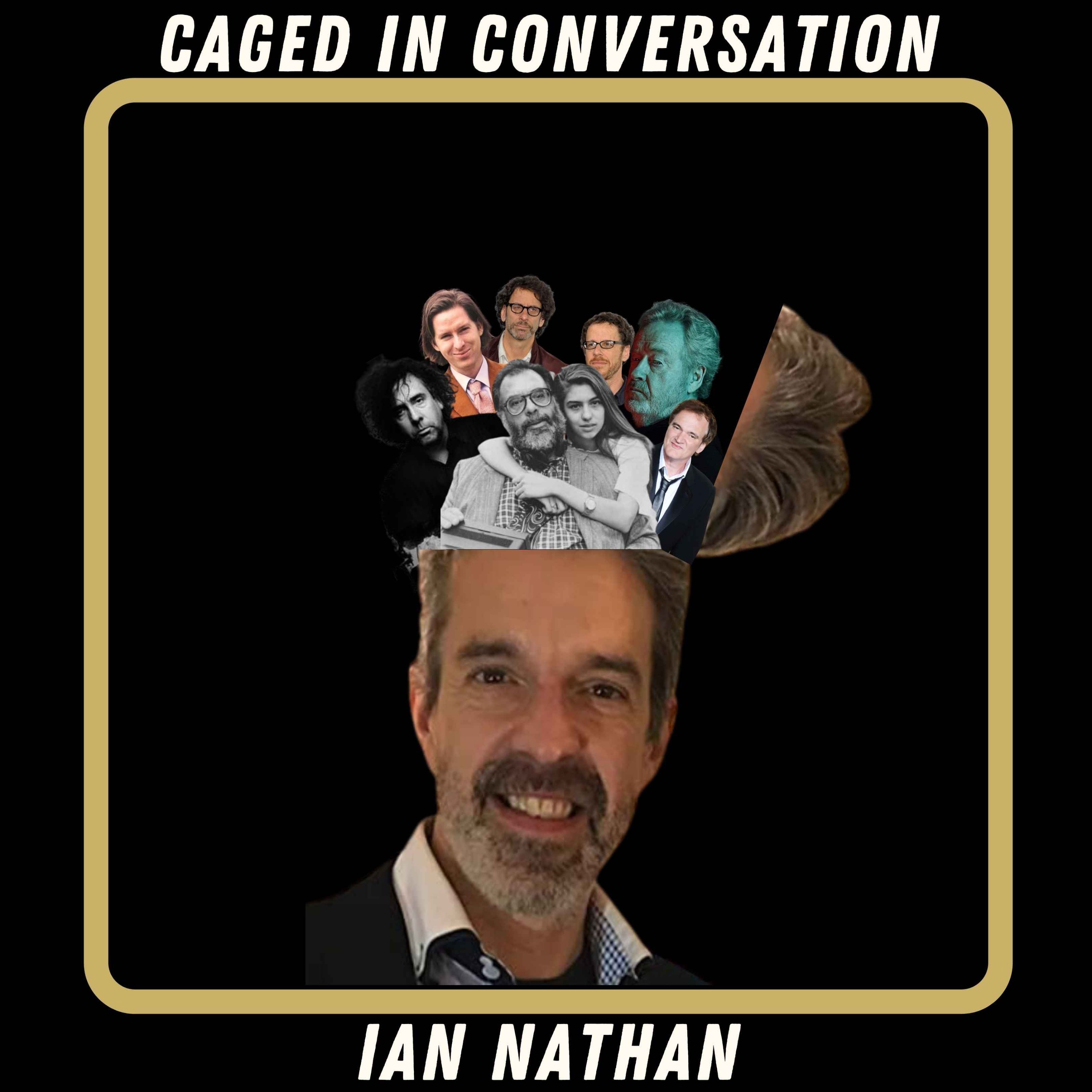
This week again, we go off the beaten path to look at another adjacent thing that is very important. Let's talk about the Coppola family. Is the new book by Ian Nathan, the Coppola's a movie dynasty. This is a fantastic chat.
I was lucky enough to get a preview copy of Ian's fantastic book, which is out now, in all good and bad bookshops. Be sure to buy one from the good ones. It's fantastic read. And yeah, hopefully, listen to this conversation.
You'll get a lot more of an insight and kind of the wealth of knowledge that Ian has. He's the man to go to if you know Ian's work, if you don't, he's written books. And all manner of things to do with film, whether it's Ridley Scott, Alien, Tarantino, Wes, Anderson, Gilmo del Toro, the Coen brothers, he's got all bases covered and he's a fantastic writer. And he's a fantastic guest as well.
I feel like I'm going to talk to Ian for many more hours. And I'm sure if he'll come back, I'll have him back on at some point, maybe discuss a film, maybe to discuss another book if there is, we can find something linked to the Coppola family in some way. So all that's left to do is to head to the Napa Valley, make sure that the white wine is cold and the red wine is room temperature. Make sure that you've got a nice part of Bolognese sauce on the boil ready for the family to enjoy.
And have a conversation about the greatest film family of all time as we make some Coppola connections. As a fledgling Coppola scholar, I'm thrilled today to be joined by the real thing. A man who has quite literally written a book on that subject. As this podcast argues, the greatest film family of all time.
It's of course, journalist, documentary, talking head blogger and writer of many books, including aforementioned The Coppolas in movie dynasty in Nathan. How are you today? I'm very good. Thank you.
It's very nice to be talking about the book now. It's out. So it's quite exciting. I mean, you're living ahead for a long time when you write a book and you have no outside force to come interact with from sort of the relatives you bore.
So it's kind of, it's a great release when the book finally comes out and you get to talk about it and it becomes more real and a strange way to your life and it's kind of speaking to people who actually read it. One of the things like, I guess I really wanted to know, especially when it came to writing a book about the Coppola family is like with a wealth of kind of stories and almost like books out there, was it a daunting prospect to kind of tackle what what yeah, as somebody who kind of almost have a collection, whether it's like Michael Schumacher or Peter Cowie books that kind of like dedicated to certain films, was it was ever daunting to you to kind of like tackle that subject as well? Absolutely. The first place you get to is daunting.
It's my subject as big as Coppola that you're almost dissuaded from your past. It's like great minds have been there, great writers have been there. Coppola himself is a wonderful self-wilgifer, every interview he's ever given and documentaries and all the kind of this stuff that's out there sort of makes you fear. And he's going to be treading in other people's footsteps.
I'm going to be telling the same old stories and you have to kind of get beyond that and use sort of certain kinds of minds to do it. So I, one of them is that no one is read me on the Coppola. If we're good or bad, this is my take on them. There hasn't been a fresh book on them outside of the academic circles.
I believe you may know better, but I believe for a number of years now. So it was a chance to bring them up to date and look back on through many great films from today, from 2021 in the world, we're now in and the movie world, we're now in. So that kind of gave me some freedom and working with the publisher and they should take some credits. They were much more driving force behind doing the family and very much doing Sophia alongside Francis and looking at them from the idea of brothers and daughters and generations and Zuset.
It's incredible filmmaking family and trying to give it a theme and the theme is the very obvious way. He's got the Coppola. It's his family and he's made films about it. It's been the driving force of his life and it's very much the driving force of Sophia's life and career as well.
So I think hopefully I've kind of come out of a slightly unusual approach and sense of trying to interpret the life and films through that idea of family and connection and where it's taken them. How did you go about narrowing it down? Because there's somebody who has started a podcast looking at the entire Coppola family. The start of your book has the family tree and it's almost like looking at it is again a daunting prospect because you start going, right?
So you've got Tally Ashai, you've got Nicholas Cage, you've got however you want to look at it, you've got Jack Swartzman, you've got Jonathan Swartzman. I think of it as a thing of I really need to keep it focused on this kind of core group and not look at it all then for the breeze. Well, something that's practical. You're given a certain amount of latitude by a publisher, but they're not going to give you endless pages and endless words.
There are limits to what you can write. So you have to be disciplined at the level and the sense that discipline then shapes your writing and your approach. I kind of knew from the outset simply because I was really into them both that I wanted Francis to be the backbone of the story because that's where the films lie. That's they are directors and since I'm better at writing about directors than I am actors and other kind of artists.
And then I thought, you know, in my head at the beginning, I was going to do lots of stuff on the family, huge amounts, sprawling saga. But it became quite quickly apparent that you got to write the story of the Godfather and tell Nicholas Cage's life story. You need about four different books at work. You know, it's really hard.
So I had to kind of program the book along certain lines and define it. And then once you were telling the stories, those other characters, the other family members, sort of almost naturally folded into the main story. So Talia is obviously there a little bit of beginning because she's a sister and she's in the family, but she really comes into the book in terms of the Godfather and you try to get into our brothers film. And he didn't want to run it and all those stories.
So that's the ideal place to introduce her. Then obviously Nicholas Cage comes into it with Cotton Club and the point he sort of joins the circus and his relation. And then, you know, Jason Schwartzman, you know, those later on with Sophie's work. So it was a natural way of doing it in the end that I would concentrate in France's and Sofia.
They were my story, but you would feed off. And I hope you can keep it a little bit. There's actually the other main character in the book is Eleanor. Yes.
Although she's kind of a ghost in a way, because it doesn't sort of tackle her head on. For me, she's almost the hero of the story because I think she has done more than anyone and then George more than anyone to hold it all together and to keep the engine going and to deal with Francis, which alone is a lifetime's work. But also, she's her own person, her own artist and has been frustrated, I think, along the way and fought against it. And I found her stories very moving.
And she's again, you talk about sources and books out there. Her diaries are probably the best biographies there are on both Sophie and Francis. She's a wonderful writer and really precise and detailed. I loved all that.
It's always beautiful to see as well that Eleanor would have like shot a lot of like behind the scenes, like beaches for a lot of, like, even if it's like Sophia's, I think it's a very gentle net. Like she's got a kind of like documentary that runs alongside it. And it always comes back to that thing. He said it comes back to family.
And I think that is like the perfect angle to take on a book about about. Yeah, I always make the joke on the podcast that it's basically like this crime family is this kind of thing of like, and you do have that like Michael Corleone moment, almost of Francis handing over the baton of the kind of like the family dynasty to Yeah, to Sophia in the late 90s. And I think there's there's that amazing clip at the Oscars, I think, when she won for last in translation, you kind of see the ecstatic joy on his face. Like how he was just just bowled over like one of the things I want to get your opinion on is obviously is the idea of nepotism in the Coppola family.
You want to believe that it is like this dirty thing or is it that kind of, I don't know, like almost you just want to see your children and your family succeed. It's an interesting point. And I kind of saw it as you say, it's a little bit like they are a crime family. And this is the family business.
Yeah. And it's almost like she had to become a director. She had no other choice. She's brought into the family business.
That's what you did. And that's what Roman has done. And you can't escape it. Also, I think art runs in jeans.
I think the talent, the carmin was very talented and back. And the grandfathers were very talented, the grandfathers, grandfather. And it came down into Sophia and Roman, extraordinary talented and talent will out, you know, it has to get out and do it. And obviously having Francis for Coppola as your father is a good thing.
If you want to get into the film industry, it's helpful. And his name and so, you know, produced her films, produced Romans films and helped with Eleanor as well. So yes, that's certainly true. I think nepotism sells it all short.
I think it's almost like an instinct that they kind of had to do this. And family is important to Francis, that even the shooting of the films were not family enterprises. You brought in the children at very early age. They were running about the sets as toddlers almost.
And literally all they could run about the sets. Godfather parts, there's young Sophia scampering around. So, you know, it's a world you can't even escape from. What would be more surprising?
I think it's Sophia had gone off to become a physicist or a doctor. And did she? Is that what we got? What the hell's going on?
And she's so different. And this was very clear in doing the book. She's so much her own person. And she escaped the daddy's girl thing very quickly.
I think she could see it ahead of anyone. She worried about it. I think she always just put off. But the fact everyone will call her daddy's girl is the only way you got to pick up a camera.
And actually very quickly, version suicides, inter-lossed in translation. We forgot. We kind of went, oh, she's our own filmmaker. And she's doing her own thing.
And a very different kind of filmmaker too. How would you like kind of describe those differences? Because there is that core like thing that you mentioned. Again, it comes back to family that they both have these and somewhat like whether it's that story that Gene Hackman's character has in the conversation about being a sickly child is like lifted straight from France's life.
And then you look at Sophia's films and they all just feel autobiographical about what they've kind of been through. But yeah, where do you see like that kind of, you know, the differences in what they do? Like, and again, both amazing kind of adapting like books or kind of other works. Yeah.
And yeah, you're right. On that level, that's the main subject of both their films themselves to a degree. They kind of think, I think France is especially would say that is as it should be. Every artist gives off himself to the work.
And yeah, incredible historical thing that he didn't want to make the godfather that he resisted it hated it when it's absolutely an outpouring of his own heritage and ideas and textures. And everything about it speaks of Francis Coppola that you think, okay, how did that kind of shows you what an artist is? Yes. And with Sophia, certainly, I think she's in a way even more personal a filmmaker.
She's even more sort of identified with her characters and you know, she lost in translation. It's a very autobiographical film. This is a version so as a matter of its marriage and to an end. I think all of her, certainly her first space of films are about hotels, living in hotels, which obviously she did for a lot of her life and the world she lived in, which was both privileged and very lonely.
And I think that comes out. I think also, and I hope this comes across in the book, I think a lot of her characters are based on her mother and her mother's loneliness. I think the scholarly Hanson character in Lost in Translation is both Sophia and it's her mother to a degree. Things that maybe she was not conscious of, all artists are subconscious, not on many levels, where they differ Francis and Sophia is obviously male and female, comes into it.
There is a male tendency in Francis' work. There aren't many female characters in his films, making some of these who got married and a few others, but he's a male dominated world and Sophia is the opposite. Also, she likes harmony in terms of the textures and also in terms of how the films are made. There's no one she was action by a Sophia couple of films.
No, it's too loud. They just get going. You can only shout if it's required by the script. No one else is going to raise their voice.
It's going to be a harmonious world. Whereas Francis, it's just, you know, if he's not making a film in a literal storm, he's going to make a film in a self-induced storm. Yeah, yeah, yeah. And the chaos creates the art and it feeds into it.
So, apocalypse now became a masterpiece because it was this kind of Vietnam to make. And he self-generated a lot of that. And then even onto like one from the heart where it's like, he had this opportunity to make this small contained thing. It still came like spiraled out of control and became this like ridiculous thing where he's making the Las Vegas strip on a soundstage at Zombi Trope Studios.
And I find all of that fascinating, this kind of like, he feels like a director who needs to be like all chips on the table. We could go in for broke otherwise it's not going to happen. And obviously recently we've just had the news that what he's self-financing is kind of passion project that he's had for like the last however many years. And it's like he's still got that spark in him at the age of like 82.
Yeah, I mean he's marvellous in terms of, you know, he directs out, he's a marvellous character and he's a marvellous subject to write about because he is the fury of the artist out there. But he's the Italian man who wears his heart and his sleeve and his all passion. So, in a way, you know, he's thought she's incredibly different from him. And he'll go into any project probably with the ideal of doing something small and contained.
And the passion wells up and the opportunity wells up and the gambler in him wells up. That if he's not taking the biggest risks on the biggest stage, he's not himself. I don't know, the great historical stories of him and George Lucas, you know, couldn't be more of a pose. He became great friends.
And Lucas, it's like control, discipline, you know, store the money, you know, small increments, do things that are commercially sensible. Francis is just charge ahead, let's do it. They spend money we haven't got. Let's risk the whole family enterprise risk though, that they're kind of the houses and the business to create the art.
And it's kind of a mance in that. As you say, A to T is old, he's still doing it. Make a lopless. He's going to put everything on the line to make it, you know, the hards and I don't know.
He's like, excuse me, Brian, is he sure that is. It's wonderful. And I hope, you know, if I understand it's a huge idea about building new token society and the forces against that and he wants to build his own version of New York using CGI. So I mean, I do hope he gets to do it.
And it sounds incredible. It's also that kind of thing that one will never get to make. It's always just ahead of it. It almost feels like he's got that same spirit of packing his family up in a car and driving across like America to make the rain people right.
Like it's still like no matter how famous and like the kind of accolades, car that like yeah, he's got he's got that spirit in him is a beautiful thing to hold. So I wanted to like rewind a bit and where like, yeah, where did the kind of germ of the idea of this book come from? What made you tackle it? As it's several things come together, different ideas.
One was, I got into writing books, I've been an empire and I moved into it to being a film author and sort of staked out a territory of doing directors. As I said earlier, I find it easier to write about the marriage of the technical side, the artistic side and the personal side as well, the seem to appeal to me. And a certain amount of it comes from practical decisions, your publisher talks to you about potential subjects into the future. And they will know things about the marketplace as well.
So they will come and say, well, X or Y will sell very well in Spain and France, foreign sales report. You know, it's kind of like a boring kind of element to it finances. So that was part of it as well. Really, I think I got very engaged with the idea once we started talking about doing Sophia and Francis together, like you said at the beginning, doing Francis alone worried me.
I kind of, I thought, well, this is guys, you know, there are some brilliant biographies out there. I read them and I thought, how can I better them? And I didn't want to do a kind of definitive Francis biography book, because, you know, years in the making and all those things. And there's kind of where it's about how much involved him and his state and clearances.
So once we got this idea of putting Sophia and Francis together and doing the family, it made sense to me. And that's when I got excited. And that's when what you do is energy proposals together and have a chapter breakdown and you write a couple of chapters. I think my samples were on a bit of a pocket.
It's now and I did a bit of loss of translation. I could show them both. And of course, they changed completely once you get it. The samples are completely transforming as you're writing it.
And what was a very interesting thing with this book, as opposed to any other book I've written, is that very early on, I got a voice for it. And there was a slightly more novelistic voice than perhaps the stuff I've written in the past. It was very much a story, and that makes sense. And that came from the couplets.
That came from the inside outwards. The ones you wrote about this passionate Italian family, you had to apply a kind of passionate pace to it, to give it a sense of world unfolding as quick as it can possibly unfold. And that was very freeing. Once I got that voice, I knew how to write the book for good or bad.
You have to then keep it going. The difficulty with Francis is once you've done everything up to rumble fish, they're all fantastic stories. You kind of get into, obviously Cotton Club is a great story and Peggy Sue. But once you're in Jack and things, you're like, how do you keep this all going?
And he's just mainly doing things for the money. But it wasn't a problem. Because I had this tone of voice because I had Elinor and all these other subjects as part of it. It seemed to come quite easily.
And I guess the thing that your book is fortunate about is obviously doing a just a biography of Francis Ford Coppola, going through that career. It can somewhat end on a whimper, german, to kind of go from somebody who came out the gate. And even later on, there are still interesting stories, like we've kind of touched on one from the heart. That kind of saga feels like it's, again, it's something that could be a book or to itself, like that kind of idea of he finally made the studio and then kind of gambled it all on this one film.
And then I think it was Boyd Hilton when he was on this podcast said like, it feels like Francis Ford Coppola never really recovered from that period of his life, like creatively or kind of personally to some degree of just like kind of achieving the dream and then losing it also quickly. So what does the research for a book like this look like for you? It looks quite dull, because it's actually a lot of reading. And obviously I was writing during a pandemic, so I couldn't get to some of the libraries that I've used in the past, this library in California and other places.
So that was all kind of a little bit off the table. And actually thankfully a lot of the places I do use and have used in the past and different things had opened up a kind of an online facility to sort of get around the pandemic, Robins. And there are fantastic libraries of sort of newspaper cuttings. So once you've sort of done the shoemakers and the cowies and you've read all those books, once you've read Alan's Diaries, and that became a very important resource.
Obviously you watch all the films again. Then you kind of go into the newspaper articles and the reviews and things of the time. And there's a kind of, I don't know, a sort of way you sort of expand outwards. So you really want to interview and it suggests another interview.
And you get sort of weird tangential things that bring riches that you hadn't expected. And that's one of the challenges. When you come to subjects like the Godfather or Apocalypse Now, and even lots of translation Marianne's were there, there's so much being written, terrific things written and great detail things written. So you're looking for the tangential element to throw in, just sort of throw it open and to bring it different.
So I read Sam Wassen's book on the Making of Chinatown. And that's got a lot of fantastic things in it about that time and Robert Evans and Paramount that I could then sort of tuck back into the couple of other things. So Evans became a very important character in the book too. And then through that emerged an idea of, some textually almost that it's a Hollywood story.
And what you hopefully see is how Hollywood changes. It goes obviously from the great sort of movie brat era and all that kind of chaos into the 80s and 90s where the studios were asserted themselves and it was the era of the blockbuster. Francis was sort of an alien to all that. Then into the early 90s, into the 2000s with the indie scene and the new generation of filmmakers of which Sophia was part and parcel.
And right at the end, although it's only just what started streaming sort of happens on the rocks was an Apple film. And that money was just sort of changing. You see what Roman is doing. There's kind of a move into a different kind of thing.
So it was almost a subtext, but I read quite a lot on just Hollywood history through those times. And then you pick up where Lucas was and how Finnean's rainbow was made and all that kind of backstory. And then so much I wasn't aware of. Yeah, I always like to look when like it's somebody's birthday to see if there is obviously with the podcast's copel connection.
See like is there is there a connection to that person? Just so I can like I don't know we have a happy birthday to Jack Nicholson. And I think on that I found out that like Francis Ford Coppola had done like uncredited rewrites on like a Roger Coleman film that stars Jack Nicholson or something like that. He did he actually shot, he finished it for a common habit of starting a film getting up and shooting three quarters of it going off and starting the next one.
The next lump of money and he would leave his sort of second A.D. behind the finish it. That was Coppola on the name of it. But it's a kind of I think it was Jan Nicholson in the Pacific surface shooting up a big sir and Nicholson tells his story I said the book about about he felt he was being drowned by Coppola as he gets growing back in for another time.
So Roger Coleman was in this form of regalia with a kind of saber and all this kind of stuff. The copster just goes, oh he's just grouching he's just being like an old Mona. It was no one risk but they did they did make a film together and there were times I mean Nicholson was one of the people who were in the frame for the godfather. A bit of Michael Corleone maybe.
The thinking seemed to be it was more likely Tom Hagen at one point that's making red for it. I don't think it's a case of he nearly got it. I think there were a lot of people reading and a lot of names in the hats at that point. But he does circle the world Nicholson.
So yeah I mean you're absolutely I mean Coppola is so present in film from about 1968 really to the end of the 90s. Maybe kind of bit early on that he sort of becomes more of an other statesman but he's connected with everything that was going on. Spielberg, Lucas, all of that. Yeah he's sort of a star wars.
I mean he's intimately connected with the creation of star wars. So I always post this question to a lot of my guests on the podcast will be deep dive into a film. And it's a really throw away kind of silly question but is that thing of like if they had to pick someone from the Coppola family to kind of like keep their filmography and get rid of it. And then like always get rid of the rest of the family's filmography.
We always kind of like so many times have had that conversation about the Francis Ford couple of us being the next point of cinema. And like if you kind of take him out of cinema history you don't get star wars perhaps because it's kind of like there's that great story of how I think it was like George Lucas won a competition right at UCLA to go on set at Warner Brothers and that's like Francis Ford couple of like here's another guy who's under the age of 50 on set who's bearded. I like the look of him like come and join me. Do you want to like join this kind of ragtag band of people like I've stolen a load of film.
We're going to shoot this movie across America. Do you want to do a documentary? I'll find out a way for you to get paid. Right.
That is like that is the birth of George Lucas as a filmmaker right then right. Absolutely and without Coppola being the driving force. None of that really happens. I mean I think certain things would have happened.
You know free kid and those were all operating separately. I mean in true terms Coppola isn't a movie brat but he's first generation. Movie brats came in with a sort of second wave and Coppola was first. He was already working in studios.
He's got a lot of opinions, rainbows when Lucas walked in and watched him at work. He's pretty damn musical. And I mean he's the catalyst in all of that. And if you take him out then I don't think you can get Spielberg or Scorsese to the same level.
Maybe they would have happened but he was such a driving force in wanting to change things. And the godfather was so important in terms of it was a commercial success. If it had been a flop you don't get the movie brats. You don't get the alter era.
It would have folded because the godfather was a hit and all the studios went we need some of that. We got to bring in these talented young guys to create films like the godfather. And yes it's as well to a certain extent but it was absolutely the godfather that drove that. And it was called George Lucas who forced Coppola to take the godfather.
He didn't want to do it. He was just like I'm an artist. I want to make personal films about my life. And there's Lucas going they're locking in the gates of the company.
The way lifts are coming. You've got to take the job for us. Yeah because it's not like ill-fated is it like the directors company that was supposed to be Francis Ford Coppola, George Lucas, William Friedkin and Peter Bock. No, yeah it's the free company comes slightly afterwards.
That was again a bit of product of the godfather and the star spot. That was Friedkin, Danovich and Coppola. And that was a paramount idea. He was thinking well if we're going to have all tours doing it, let's have our own little stable of all tours.
We'll give them a load of money and they'll hopefully come back with these kind of independent style films that will become great hits. Because all these companies that they formed were disastrous. Because they're all ego artists and filmmakers and artists. And all these people that had the original Zoetrope, which is a fabulous story.
It's almost like a novel to be written about that first era Zoetrope in San Francisco. It's a wonderful documentary. I thought you'd probably say it a really good documentary about the craziness of what they were doing. People were sleeping under the desks because they were homeless and all these kind of mad things.
I love that the focal point of that is that they had a cappuccino machine. That was the most state-of-the-art thing that they had and put them head and shoulders above every other studio. I was like, they're making cappuccinos over at Zoetrope. They saw the future, they went to coffee.
No, it's kind of wonderful. It's chaos because in the end, you've got the inmates running the asylum. And they're all wanting to pursue their wonderful visionary projects. But no one wants to run the accounting department.
They want us to run the kind of thing like a studio. And that's why the studios reasserted themselves. Because they had the business acumen. They needed the money.
These guys, they had all the ideas, but they had no money. Because Francis kept spending it on cappuccino and making editing suites and swimming pools and all sorts of nonsense. But without that, though, what was wonderful about that whole era and his story is the mix. It's you get that incredible ultra spirit and drive and passion mixed with these vulnerable studios who needed content and needed something to happen.
And because they came together, then you've got the godfather right through to apocalypse now and heaven's gay but all kind of collapsed. Like, what is some of the more kind of off the beat, not necessarily the highlights of the book, but the stories that you kind of go like, I'm proud I kind of eat that out, like stuff that really excited you when you came across it. And one of the things I mentioned was definitely Alan's story and trying to pull that out and to keep her present. Because the more I read of her and the more I read about her, I got very sympathetic to her and I thought she was very important.
She wasn't just the mother and the wife. She is a guiding artistic spirit. I loved and it really gave it a godfather feel was going backwards and finding who the grandfathers were. And the stories of immigrants coming in, which obviously are replayed in the films, the LS Island sequencing godfather part two is a homage to Coppler's own grandfathers, both who came in for Italy.
So that connection was wonderful. Obviously, one of the central threads of my reasoning was I think defining the event in his life is the polio and being basically bedbound for a year. And that's when he becomes the director to come. I think that was fantastic.
Then he's just getting into down the line because once you sort of get past doing the godfather and do the conversation, another part two in Apocalypse Now and trying your best to bring freshness and figure out those stories, which are very well told and coming at it with an excitement. It was then looking at the later films and sort of trying to understand him in the prism of those films. I very much enjoyed writing about Peggy's who got married, which I think is a really great film and a different film from him. And then he sort of denied it a bit.
He says it's a studio job, but it really is one of his films because it's about an era. I think that's here's era and he's doing a different thing about history and memory. I love those things. It's his one of like the, you know, like a lot of those directors, like a lot of the eight youth directors were doing their 50s film, whether it's like Bob Zemeckett with the Back to the Future and stuff like that.
And like, yeah, I love that Francis is a bit weird and he let Nicholas Cage do that voice for one. Like, do you know what I mean? It's like this time travel, like almost, and it feels almost like a kind of 60s, like 50s film, like a Disney film, somewhat, like a kind of freaky Friday style stuff. I love, I've got a real soft spot for 80s Copola.
I'm kind of like, yeah, the outsiders and Rumble Fish. I think they're fantastic and stuff like that. But yes, it's a real, I think that stuff's just just as interesting. And like you were saying, we're kind of being worried to write about like that that shunk of the 70s stuff.
Like as a podcaster, I get that daunting feeling. And the reason I've kind of put off covering apocalypse now, that run of films is the thing that what can be said that hasn't already been said, basically, is that's why I'm more excited. Let's talk about one from the heart. Like nobody really talks about that film.
And it's probably like just as interesting a story as a podist now, like it's instead of, I don't know, kind of being out in the wilderness and going mad. Then becoming almost this agrophobic, maniacal man in a trailer trying to direct a film like that. And it's like that hangover from making apocalypse now made him go the complete opposite way. Yeah, very much.
The outdoor storm to me completely. Anyone can miss that. I love the, it's a great, I mean, I'm trying to give you a teaching sort of sak eggs, but yeah, there's a great story in pre Godfather Coppola. The story from Korman through to rain people.
It's so wonderful. And he's done so much. I mean, he was almost invented with the godfather. And I said it's not on a larger scale.
He was. But actually, he won an Oscar already for Pat for the script of Patton, which has been given his job. Yeah, he wasn't an expert on Patton. He was just not because he written on Paris's burning and gone to Paris.
It's terrible, bloated. I don't know how to watch that. I wouldn't recommend that. He's only one of the screenwriters.
It's a great bloated thing. It's a good bit in it, but it's kind of, it's not a great movie. But he means sitting in Paris and writing this terrible Hollywood historical drama. It came back and studios are so short-sighted.
Look at his CV and go, oh, he writes about military stuff. I mean, do you want to write Patton? Because now I don't want to write Patton. They go, here's $50,000.
You go, OK, all right, about that. And of course, he does a brilliant job with Patton. He brings on these kind of meta ideas about the hawkish general. Wonderful opening with the film, Georgie Scott, kind of just talking to the audience.
And that's all Coppola. It's all him. It comes up with that. And I kind of really enjoyed that.
That's the stage of the career, where he's sort of, you're a big boy now. He's such a, he's got a French new wave film. And he's just out there. And if something's about that, I didn't realize that.
It was kind of on the loose in New York shooting it. And there's a whole sequence in the department store. And they had no permission apart from it. How did you talk lunchtime?
But they weren't going to keep the customers in. They weren't going to tell the customers. All the cameras were in carrier bags and things. And they're doing a chase sequence, running down stairs.
They kept bustling into kind of poor old customers, New York department store. And apparently a fight broke out. And they kept it. And they're going to like, it's a fight back.
They're just shooting. I'm sure a couple of love to all that, kind of freshness and vibrancy. But I think that really kind of intrigued me that, you know, it's like you have to do the big elements. You kind of avoid them.
You're kind of not the barnacles off those stories and go into the God's options and tell it. But to just sort of tell the other side of the story and to tell people what, you know, how we got to the God's Father, what had already happened, what he already knew, was already driving him. I think it's really important. And it was really kind of exciting because you sort of find out who he is far more, I think, through the past.
Yeah. And he always suffers from that like Kubrick thing when people don't take in the thing that, like you said, like Kubrick is known for the Warner Brothers years and it's kind of anything pre that. It's like, well, that will pass a glory. Like, what's that?
Like, even like Spartacus. Yeah, it's part, yeah. Yeah. Kind of like, I mean, it's almost like it's not seen as a film to Kubrick.
It's kind of like, yeah. And it's, I think I think I think Farnus for Coppler and that era. And you're a big boy now. Roman Coppler who plays like the baby in like some of those scenes as well.
I love vaguely remember reading that somewhere. I think it must be Gio, the old one who died because of the ages they are. I think Roman is born in Paris when he was writing Paris's burning. So Roman, and there's always been some very European about Roman.
The films he makes in the kind of person he is hanging out with Wes Anderson and doing their quirky films. And obviously the fact that he was born in Paris, sort of a strange influence on the kind of, you know, artist he became. Well, one of the things I love about like looking through like the other books you've written is there is this kind of like, it's almost, and it kind of tickles me that like, no matter who you've kind of written about, there is always these kind of connections to the Coppler with a lot of them, whether it is Wes Anderson. And like, I think Roman Coppler is like a big part of like, of what Wes Anderson does.
And obviously like, his second film is the breakout film for Jason Swartzman. It's like, one of the most like, personal and like moving films off his career is co-written by Roman Coppler. And like, it's done a lot of like second AD stuff, whether it's the Life of Quack Steve Sizzo. Or, yeah, all you've got to do is look at the Darjeeling Limited and realize that Adrian Brody's character is basically playing an avatar for Roman.
And it's almost like, when you look at the Coppler family, there's a lot of like, three siblings a lot of the time. And it kind of like, you can see that thing of that story is siblings wanting to live up to the memory of their father, in this case like, dead, but like, you could imagine like, yeah, like Roman and Sophia definitely probably having conversations. And even Jason Swartzman to some degree, like, we're trying to make our way in this kind of acting and movie business. And we got that, we got that hulking giant like, losing a promise.
I'm sure there's a university, for example, you could set film studies about how much is Bill Murray and Avatar of Francis Coppler in the work of Sophia Coppler. And because he kind of is, his presence, something on the rocks, you know, that's very consciously version of the father. He drives the same car that her father had when he was a young man. So there are kind of very like connections.
I love that the story that the wedding when she married Spike Jones, they had the Napa Valley vineyards. And, you know, it's a bit like the opening of the godfather, all the family are there. But there are these generations of filmmakers. So there's going to David O.
Russell, and my Zandas, you know, milling around with George Lucas and Coppler and all that. What a mix. What were the conversations they had over kind of wedding cake and wine and then they got, you know, what are you guys doing? What camera do you do?
I never do that. Yeah. It's kind of a wonderful, and I think with Wes Anderson especially, Wes Anderson is a real, you know, a homage kind of guy. And he pays such a homage to the movie about generation in his work.
Obviously, in Rushmore, you see the version of Apocalypse Now, that was what his character does on stage, the Vietnam film. And there's a great reference to the godfather as well, when Max Fisher is getting kicked out of Rushmore. He says to like the Dean, like, can you not let me, like, can you not let me co-spy this time? Can you not let me off the hook?
Which I think is like a paraphrase of a line that someone says to Hagen in like God, just before he's about to get whacked. And like, I love like that idea of Wes Anderson and Owen Wilson kind of like rubbing their hands together going like, we've got a couple of kids in this and we're going to make some cheeky references to his uncle's films. It's kind of entangled world that you start to realise. It's like, I don't even be watching Fargo in the television series, but season five of Fargo has Jason Schwartzman as the head of a mafia family, but it's an overbearing brother.
And it's all crumbling around him. And it's such a play within the world of Fargo on the godfather. They've even taken shots from the godfather, they're parodying within it. And it's Jason Schwartzman doing it, doing a version of Francis.
It's fantastic. And that connects you back to the Coen brothers. And they're kind of, you want things, they're play on things, what you weighed 18 million crossings, a pastiche of gangster mythology. Yeah, and obviously you've written a book about the Coen's and obviously there's that connection to Nicholas Cage and like Ridley Scott again, Nicholas Cage, which a film that I think is like, I find it interesting with Nicholas Cage with the directors he's worked with, because he's kind of like checked off some of like, I guess what a lot of people would argue like Hollywood's biggest directors, whether it is his own uncle or Brian de Palma, Scorsese.
But a lot of the time it feels like he has worked in their in between films to a lot of people. I guess I'm a a lot of people with like, I mean, kind of skip over that one is like that is like the one for me kind of film as opposed to the like the studio film by Ridley Scott stuff like that. Yeah, I don't think Ridley would sit that way. I think he's very proud and I think interested in what he did with the matchstick man.
I think he did it because he really wanted to break and to test himself in an arena that he wasn't confident or necessarily confident in, he'd done all these huge films and then he knew the epic and he knew science fiction. But here was a almost kind of a new wave comedy drama crime movie that harken to a little bit like what was going on in the early 90s with Tarantino and that kind of force that had come into Hollywood, obviously Tarantino who I've written about dated Sophia couple of little while there's that little entanglement. And I think where a matchstick man came and he just wants to do something a bit European, although it's set in America, there's sort of bits of Jacques Taty in the performance Nicholas Cage gives is that kind of weird European comedy feel about it. I really like it.
I think it's very underrated. And actually very moving. I've really kind of seen at the end in the carpet shot. I find very touching that in the end it was a father-daughter thing that mattered to him.
The money didn't matter. It was the connection and that's what broke his heart. Yeah, I don't well, yeah, that is the thing like obviously for the directors, it's not a case of it is like an in-between film for them. But I think it's like the public perception a lot of time because I guess like bringing out the dead is like for me, like really like when people talk about that amazing run of Nicholas Cage in the 90s, it's one that kind of gets skipped over and it's like it's fantastic.
It's like it's kind of like it's Scorsese and Schrader really getting back to that kind of dark underbelly of New York but told through this weird story of a guy who's like a paramedic and stuff like that. Yeah, it's actually terrific film though. I actually saw it in New York. She's great place to watch the Scorsese film as you can.
It's trying to see the Scorsese film in New York. When you come out, you're like, oh my god, I'm here. It's a fantastic feeling. I love that film.
I think it's one of Scorsese's best. And it is, as you say, it's a companion to Taxi Driver in the sense that the lost soul on the streets and seeing the ghosts people couldn't save. I mean, he's different characters, Travis Bickle. But he's incredibly intense.
And it's Cage's, I think these days we get caught up a little bit in the kind of Cage's quirkiness and what kind of crazy thing he's going to do next and how crazy is the film going to be around him. And we forget how subtle he can be and how moving he can be and how he can be absorbed into the film around him. If you watch Bring Out the Dead, there's no doubting. It's a Martin Scorsese film and incredibly intense.
And it's not like Cage comes in and turns it into the Cage show. He doesn't talk. He absolutely fits in with the world that that movie creates. And yeah, I think for him and Frusco says he's one of the best films.
To kind of bring it back to the wider copler family is like you look at adaptation, a film that like kind of arguably wouldn't have happened without that Sophia and Spike Jones connection. It kind of very much again felt like that. I feel like Sophia, do you think your cousin like might star in my film? I always love that story of how and it's something I always joke about is like there is no Spike Jones as we know him without Francis Ford Coppola passing on the script for being John Malkovich, right?
Oh yeah. You have to say how much is Coppola shaped that the movie you have surrounded? Yeah, he got the script to Malkovich. He made that happen.
He can't film that Malkovich. That's impossible. And he said it's all. And he got it as well.
I think what's brilliant about that story is that Coppola understood what Spike Jones was trying to do. He understood this kind of perverse humor and this sort of post-modern way of approaching film. And I kind of got it. He was excited by it.
And yeah, he's done a lot behind the scenes. I think we don't really sort of credit him for. He's been on the board MGM at one point. It wasn't particularly successful at that point.
He was around influencing what was going on there. So he's had this incredible career in the sense of, yes, we always talk about the classics as it were and we think of those understandably. But actually it's many stories his life. And once I started chipping away the wine, the vineyards, that's extraordinary.
They were doing that. It wasn't a working business. It's a poor vineyard where they bought it and they turned it around. And suddenly it started really making money.
It started making more money than the films. And he became this kind of a man of Napa Valley who was growing these incredible grapes and launching all this kind of wine on the world. Family business. And then he put the filmmaking into the lap of that and he had his offices there and they had screening rooms there.
And the family would come. And it's always wonderful stories that I said, prepared any film. He would bring the cast up to Napa Valley to do the rehearsals there. In the evening, they'd drink wine and he'd cook them dinner and just talk about the world.
This was the way of creating the family of the film before they started. Yeah, I love those DVDs, I think it's on a Miramax release, like two disc edition of One From the Heart. And there's all this footage of Tom Waits at the Napa Valley house, kind of like talking about how Francis wanted the songs and stuff like that. And it really warms your heart and you hear these stories of Francis cooking like a big, like, holidays for everyone, like on set and stuff like that.
And it's like, I don't know, you can throw away all those ideas of nepotism and this guy who cares about money. Because when you kind of peel off the layers of it, it clearly doesn't care about money. Because he's made so many gambles to the fact that he could have taken the easy route and he's gone fuck it. I won't let Jeremy, I'll spend, I'll finance it myself and I'll spend however long in the Philippines trying to make your pocket lips now.
Yeah, I think you're actually right, he doesn't care about the money at all. He spends it so easily. He's controlling it. He's like, why don't you care about the money for answers?
You've got to put them away. He loves luxury. He loves big houses and swimming pools and parties and living the life, buying art and games, it's extravagant. That's all part of his personality.
But absolutely, he wanted to spend the money to gain control between ownership of the films, to be the kind of the mogul figure who's driving the creativity. The problem with that was always loved that he couldn't be both things, he couldn't be the kind of vibrant, difficult artist, the Michelangelo and the Pope Judas at the same time. He couldn't be the two figures. So it was one from the heart.
His great nightmare was the guy who owned the studio had to deal with director who was making the film and they were the same person and it all got muddled. So he forgot about being a mogul, was a runaway director, but his boss was himself and this was what was going wrong. Yeah, I recently found out a fact, an intern or a runner at the Zoetrope Studios was David Fincher and I always love that kind of like there's a seed that, there's no future without copelate. The more I kind of dig and even though I feel like I'm a pastnish of myself because obviously I've gone into a podcast guy, the copelate is the greatest film family of all time.
Let me prove it to you. As much I'm saying that tongue in cheek, I keep looking back to him. There is a lot of connections to say that they've done, do you know what I mean? They've done, they've done, they've done, they're kind of proving it.
So like, is there any latter day, hopeful of films that you do enjoy? Is there kind of stuff that you would recommend people check out to know it kind of gets lambasted a lot of the time? Yeah, I think there is. I think you have to sort of qualify a little bit, when you talk about second phase copelate, it's like post-rainmaker copelate.
After he had sort of a 10, nearly a 10 year hiatus where he didn't make anything and then came back with youth without youth, Tetro and Twix. Twix I would leave. It was designed to be a sort of experiment with live editing and that didn't work out and it's, so there's a great visuals in it. It looks like Sin City in a way, he's sort of dallying with computers but it's like horror movie, it doesn't make any sense at all.
It's kind of an oddball thing. But I think both youth without youth and Tetrope have a lot in them that's worth seeking out. Youth without youth is very strange and it's based on this recent European of valor and it's all shot in Romania. It has a lovely look to it.
It looks like the godfather has that kind of rather sepia tone. It's all about resurrection and man and giving forever and it's a weird story but has a certain kind of eloquence about it in wonderful moments. But I think Tetro is the one, again, has strangeness in it, a dream stuff, but it's family, it's brothers and it's all sort of a bernizari, but it's the family. It's a copelate family story replayed within the textures of this kind of new family, which the younger brother looks up to lead this kind of difficult older brother and complications arise with a play that he'd written once.
So it's about the artistic process and the marriage of that with family. I think it's a great meeting. One of the things I noticed in the book is you touch upon, like, not just, obviously, Sophia and Francis' films, but in the later chapters you look at Roman's films and even Robert Schwartzman or Gia Cogla's films. Were there any films that really jumped out to you?
Like, oh wow, these guys don't really get talked about apart from like maybe in passing off that happened to be related to the couple of things. Yeah, definitely. She is fascinating. She's sort of a mix of Francis and Sophia.
The granddaughter, if you're unaware of that, she is Gio's daughter, and then he was killed before she ever got to meet him. So there's a strange legacy with Gia, and she grew up in the embrace of the family and herself as a young child on the sets of her art films, it's an interesting legacy being handed down. So it was natural she too become a filmmaker. It's part of Easter isn't it?
Palo Alto. Palo Alto. It's an intriguing film. It's flawed.
It's intriguing drama about teens that often gets lumped in with it's a kind of a Sophia film, but I don't think it is. It's got a kind of darker, stranger, you know, tensor quality to it that Sophia's films have. Robert Shoresman, he's an outlier of the whole scenario, because he sort of operates a bit more autonomously. He's in a couple of the very good looking guy, and he's in a couple of Sophia's early films, his inversion suicides, another role around.
And he's the brother of Jason, and he's been in the band and the band is very successful, and he's kind of other life. And he's made three films, which are which are great actually. He has to track them down a bit. They're not widely distributed, and they're very indie, but he makes a kind of quirky social commentary comedy, along the lines of the graduate a little bit.
So again, it's his own man, his own sort of style of things. And he's a guy who's also setting up companies rather like Francis. He just did a film, and work out new ways of playing the system. So yeah, I think Sophia Francis do have the stand out careers in terms of the output, which is not a radical thing to say.
But there's really interesting undercurrents beneath that. Your devotion to Nicholas Koeber is really admirable, because that's an extraordinary career. And I really would love to have the space and time to explore that more in relation to the fan, how much is he trying to break away and doing a different thing, how much actually can you see elements of the family in his choices? Yeah, yeah.
I always joke about the fact of like he broke away by changing the surname, but was happy to like kind of make a slice of the family pie when it was like he got a small part in Rumble Fish, and then got the kind of like almost like second lead in Peggy, so he got married and stuff like that. But like he's fascinating because, and it's been said on this podcast, I'm fantastically said by film producer Daniel Noah of Spectre Vision, who worked on Mandi and Conrad Space, who said that Nicholas Cage is like a garden hose, that depending on whether a director can like either let that garden hose run wild in the garden, like it will just go everywhere, or if they hold it correctly, it can like you can you can water your garden and have beautiful flowers looming by the spring, because that is the thing. I think he is like a guy who is like got these fascinating ideas and like everyone I've spoke to has ever worked with him, as these like stories of no matter what the budget is, he will come on day one guy and I know the script back to front, I know everyone else is lined as well, and I've got this list of things I want to do with the character, and in colour at space, his thing was like each member of the family has a different like reaction to the colour, and his is like a thing of smell, so for other films like Fox, he can smell that so as ranted, he wanted to wear a clothes pay on his nose, and like yeah Daniel Noah and Elijah Wood who were like producers on it were kind of like, and the team who worked on that film were like hey Nick, that's probably not a good idea, do you know what I mean? Like and the fact that he makes all these films, it very much, it feels like he's got that spirit of his uncle in a way, of that kind of like let's go for broke, like Jeremy, and he likes a lavish lifestyle, Jeremy, it's very famously out there that he kind of, so some squandered money on like haunted mansions and pyramids, dinosaur skulls, so yeah I think he's very much a part of that lineage that his uncle put out there.
Yeah he is, and you actually right, I think he has that passion, and he has that craziness that's only Francis, far more because August Nicholas's father was, you know, his academic and the right from literature, and it was very different from Francis, I think the gene came down because the one that gone through Francis and passed on to Nicholas Cage was like a wildness, artistically especially that yeah, and you look at the performances with Francis, it's really out there, the beginnings of the kind of the crazy Nicholas Cage are there in the kind of these cobbler films, a little bit of rumble fish, but it's definitely there in Cotton Club, he's doing almost a cartoon version of gangsters, and it's there in the squeaky voice performance, where in his head it was a cartoon world that had been created, so he was playing a cartoon character with a cartoon voice, so absolutely, I think you can really see the links with, and the frustrations also because he wanted more work from Francis, he got to that thing, that he is a cobbler and he can't escape it, but he wants to or not. I'm not sure how much steam there is in this, but like it might have been I'm D.B. trivia, so it might be totally bullshit, but that somewhere is somewhat based on like there are elements of the Stephen Dolph character that are borrowed from Nick Cage, like he I think he at one point had a tenure at staying at the Chateau-Mam and stuff like that, and if you kind of look at that character it's kind of part Francis Ford cobbler and part Nicholas Cage in a way of a kind of like a guy who was massively successful and has fallen on these like more than I don't know like yeah like down times and stuff I love that aspect of the family that they kind of like they draw in or from each other like that yeah I think that Stephen Dolph role could have easily been played by Nicholas Cage like maybe it's like ten years I don't know I've been to a cage of warman's like whipping about the sports car and kind of being this woman. If you think about it and you do it on the money movies make, the most successful member of the cobbler clan is Nicholas Cage, he's made more money than any of the including Francis, he's been on it for 60 seconds and Conair and all the kind of the films he's done, you put it all together and actually he's the most successful one of the, of course he's sort of fallen into this new part of his career when he's not making block-busting films anymore but it's yeah he was a big movie star and I certainly think he's there in some way, I think Johnny Depp is a bit in some way as well, I think that they actually talked about casting Johnny Depp at one point and it sort of Stephen Dolph was another friend of Sophie's and she wanted a kind of friendship thing to play in, someone who's in her circle that kind of plays back in and of course Sophie had lived in the Chateau-Mam and so he's also stuck in a version of her in a strange way, she's both the daughter and the father, she's coming in both places but it of course it's Francis as well in the daughter-father relationship.
Especially that sequence when they go to Italy, right? For the ice cream and all that. Yeah yeah and that kind of, I think she said in interviews she remembers as a child going to some like award ceremony that kind of had this like very pantomime, hokey dance and like him like Francis kind of loving it but at the same time feeling quite awkward about the whole situation and like I love that through these films we get like a snapshot into who they are as a family and like almost in a way I don't know as much as Francis rails against like kind of cinematic universes whether it's Marvel or kind of PC and stuff like that. His family have almost created this cinematic universe of these autobiographical films are all about them.
Yeah absolutely but Francis would say well that's what Arthur should be doing, you know your own story, you don't tell these stories about ridiculous big lintites. I remember I interviewed Francis a few times I interviewed him on shortly after the dark night had come out and everyone was talking about the dark night at that point in time and Christopher Nolan and I asked him if he's a teeny-knit and he'd say sorry I saw it you know check out the head and that kind of, well this is my city, it's made all this money and you can't bear the fact that he's made all this money and he's a very talented guy, clearly he's a talented director but it's about a guy in a silly suit that's what it is, it's for children and that's how he saw it and these were guys who grew up, the movie Bratz if you want, they were guys who grew up in the 1960s, heavily influenced by, he was having him by theatre but they were all having him since I bought to I mean in Europe and in France and the ideal of a turtur ship and they grew up in political times, they grew up against an America in turmoil Vietnam, Nixon all those things so it almost became beholden in terms of who they were as filmmakers to be serious about what they were going to portray and put into their films, it was a calling and I guess the name brought their own baggage and their own style and it was Francis it's very much about family and Marcus Cossazie it was about the streets and New York and where he'd grown up and Spielberg was about suburbia and divorce and his life, the Brian DeParma I have no idea, whatever he was going on Brian Ponce said I don't know but all those things they brought into it, I suppose they would look at the current generation and think they're just technocrats, they're just guys who knew the technology and know the talent but just want to make far-fetched you know blockbusting superhero films, you know, Lucas and Spielberg certainly have a lot to blame for this kind of change in Hollywood and blow but still even Lucas I think made personal films, you know, Star Wars films his original three aren't quite personal, I always think of them as they're kind of like American graffiti mixed with THX, the style THX will walk from American graffiti, like a Venn diagram in the middle but you get Star Wars, that's going to like that kind of 60s warmth then become Americana mixed with the cold of Stihat, THX 1, 1, 3, 8, the Empire and the rebellion together against Star Wars, you know it's personal, I think that you know superhero films are very popular and can be very entertaining but I have sympathy with their viewpoints I do because I can't see Hollywood ever creating Apocalypse now again, I can't see it creation of Godfather again and maybe those historical circumstances were unique but right now I think it's going to be hard for lots of translation to get made because it's you know and Sophie's now working on a television show and so you're not going to siphon off because that's where the money is and the opportunity is and the creative freedom is, it's all in streaming and television so I do think it's a point you know I kind of hear these announcements at Marvel are making other eight films and they're all going to slot in here and they're all into all Marvelous, a little bit inside he dies and I think I would give them all, I'd take them all in every single one of them for five minutes or Apocalypse now, I would, I can keep five minutes of Apocalypse now versus all of Marvel and they can come at me and want to come with me, I would do that trade, it's a great film writer called David Thompson, I don't know David Thompson, it's a terrific he's based on San Francisco, he's written about very well, he said once he was writing about Blade Runner he said I would keep, he said I would trade in all three Indiana Jones films, three at the time for half an hour of Blade Runner, I would do that trade and I kind of get that, I loved the Indiana Jones films, they were very important films, they still are, they're filming with great joy, they're wonderfully made films, so don't get me right, I'm not sort of saying the Marvel film, but I get the half an hour because Blade Runner is so extraordinary and talks to me in so many strange ways that I need to keep Blade Runner, that's the film lodged in my head in a way that those other films aren't. Yeah definitely, well it's interesting that it moved to TV because obviously like I'm just wondering if you have a checked out Roman and Jason Swartzman like we've had a like the director of American Pi-able things and about a boy and being Flynn, they co-created this show called Mote-Star in the Jungle which was like, I got really into it last year as I started like deep diving into this and then we started three or four seasons and then got cancelled or ever like, it's yeah it's interesting, I think like Roman again it's another like because I recently spoke to Skye Elobar who starred in the greasy Strangler but like he reached out to me and was like hey like I actually starred in four commercials that were directed by Roman Coppola and I think like he's this kind of, I don't know, he's like the silent but deadly member of the family I think he's kind of like ticking underneath like thinking like owns like a company, he's basically like the CEO now of Zoetrope and stuff like that. Yeah he runs Zoetrope now and for us it's sort of handed it all on now.
Really apart from his own films that get produced on Zoetrope doesn't have much to do with the day to day operations, I'm sure he looks in the case he has a coffee from the Fine Express machine and sort of bawdles around the desk to get his own screenplays but in practical terms he's sort of retired from Zoetrope and it's fun to Roman and Roman's it was an interesting character because he isn't a natural director and I don't need to say that he can't direct because he's made two films and they're kind of quirky and very interesting CQ especially and he's the great second unit, he's been second unit on all of Sophie's films and obviously worked on a lot of Francis films, they had to kind of almost gawling job of stepping in after Gio died because Gio basically became the apprentice to his father, he worked beside his father, dropped out of school, worked beside his father in all his films and it was being trained up to be a director Gioe and then obviously tragically was killed during the making of Guns of Stone, it was a boating accident and it was Roman who had to step into that gap and become, you know, six-eyed his father in the other suites and be the technical guy by his father and I think he is, he's been a facilitator, I think he has more of his mother in him maybe and his father, you know, he's a facilitator and he's a gentle and a gentleman kind of guy, he is an absolute background to Sophia, I think he's helped a right screenplays, a very good writer, you know, you said about Wes Anderson's work, Roman's hugely important in that and runs the company and finds new ways for the company to operate, he's also someone who's interested in streaming and future, keeps all that buoyant, so he has to have a calm collected kind of George Lucas's side to him that says keep the money safe, let's not go running off, don't increase it, and so it's been very important for the family, very important to keep that going, but hasn't been the author, maybe that Sophia has become, she's got more of her father in him although she's calm as well, than Roman has, I mean, I suppose we went, we hang out on the fan, we went dinner, we looked at the mall and we'd probably see Roman, he's very like his father in it in many ways, he looks a spitting image, right? He's like absolutely, yeah, he loves to go to can and he loves the kind of side of it, so yeah, absolutely, I think it's interesting that he didn't become the director, and that was maybe that path, you know, with something he just hasn't actually wanted. Yeah, and even his writing, it draws back to the family because in Moonrise Kingdom, there's the moment when Bill Murray and Francis McBorman are talking to each other via like loudspeakers, do you mean they've got like the ballrooms like shouting to each other, and that is lifted from Roman's childhood, he's like that's how, that's how my parents would communicate around the house, and I guess it's that kind of like hangover from film sets, and they're like well that works on a film set, I mean we've got this massive Napa Valley mansion, like let's kind of round up the kids by like shouting for a ball horn like Roman, get down for dinner, like we've got a pastor. Well yeah, it's the divide between family life and movie making life is in distinct, there isn't really a divide between, you know, as we say, right, the gaming side, these kids grew up on movie sets, I mean, for godfather, the baby is Sophia, you know, she was born during the production of that film, you know, they're with Marlon Brando Blesser on the set, that's all there, so they grew up with it, so actually the dividing line isn't there, I mean one of the fabulous stories I think of Apocalypse now is just following Sophia during that time, and she was four years old, and she became five, it's been all so long, and she was at school, I mean the two boys went back to America, she goes back out to the Philippines to Manila, the Sophia was there the whole time, learned to speak, you know, the local language, and went to the local school, and that idea of the family was so present, and it's a wonderful story, a strange story of putting the books, I was appointed in the image again, there was, she got knits, you know, any school, any school, any school could get these days, she'll get knits, but obviously in Philippines it was very common, and there's a moment during the hell's storm of Apocalypse now, and this guy's brain is about to burst, where Alan says it, he was sitting calmly picking the knits out of Sophia's hair, and he was calming at the moment, she had a job to do with his child, near the torch, she would find them, and actually this brought serenity to him, you know, in the midst of the storm of this film that he couldn't figure out, and the making of it, and all those things, he was being a father, and the father made sense to him and brought him back to himself, and I think having the children around was a great force in his life, because they always brought him back to himself, the presence, the family table, the meals, and having them seeing the kids, and during the pandemic, they all came back to live on the vineyard, 23 people, 23 relative, grandchildren running around, and he loved it, I think that's what he wanted during his terrible time, he wanted the family back around, and he was like a movie set, and with balls, I'm sure, everybody ever did a giant bowl of pasta and movie club at night, and all these things, it's all, that is so him.
I hope with the grandkids, he did what he did with his children, which is a favorite story of mine is when they were young, he would do like writing workshops, and they would kind of put on plays, and like I think it's Jason Swartzman, which I very much like shows you why he was perfect to play someone like Max Fisher, is like however young he was, maybe like 10 years old, kind of wrote this one act play based on like Tennessee Williams or something like that, and then they would like they would put it on in the theatre that I have two days to work on it, and then Francis would like that's it, will stage a play like for the family and stuff like that, I hope that happened during the pandemic with the grandkids. There's a lovely another story there, it's with the grandchildren, when they hit the age of nine, which is when he got polio, he was in bedridden, he takes each of them individually anywhere in the world they want to go, he sits down with his grandchild, each one of them sits behind his old, okay where do you want to go in the world, he takes them, and he's about his own childhood, being unable to move, being trapped in one room for a year, and it's the kind of gift he's for giving back, he's saying you as my grandchild, going anywhere in the world, and that's where he's got to, and in fact that's kind of giving away, Tracy was the book, that's kind of where the book finishes, but it starts with the polio and finishes with the side of it, it takes his grandchildren, that's the arc, that's sort of the great place to have got to in your life, through all his time on the chaos, he's end of this place where he's all part of Christmas, right, I'm sure they all go Disney World, I'm not going to be talking about this one again, anywhere else, that is the world, I don't know, I don't know where they went, but it's a lovely story that that's where he does for each of them. I love that, well that feels like a perfect place to maybe leave the conversation as well, kind of come almost like full circle on it, from the beginnings of the book to kind of maybe in the end, so what comes next for you, are you working on anything at the moment like, yeah I have just finished a book on James Cameron, which is kind of very different, very different story and a very exciting to write about, in fact I started that before Coppola and the Coppola's, they're both kind of running concurrently, but we're going to do them in that order, but the pandemic also films schedules and things and you sort of publish into sort of publicity moments, so we thought we'd wait with Cameron until Avatar 2 was about to land, that I just delivered it, but it comes out next, comes out this time next year, to have collaceous, collaceous slow books move, and so it was great, he's a fascinating story, in some ways he is, he's kind of an altar, like he's very very different, but he's very personally driven and you know it was maniacally at times, and each of his comes is an astonishing story in his own right, what chaos genius that went into them. Yeah, when you start looking at like James Cameron, like what is it like making like foam that can put out fire on the water and like these expeditions that he kind of goes like self-funded to kind of explore the depths of the ocean and stuff like that, he's kind of like, I don't know as much as people laugh at him, he's another one who is trying to push what cinema can do and what it's about which like again, it always feels like a perfect next book, Arthur Poplar, is that kind of like somebody who probably would have looked at that, somebody who like was the first person over, I mean over the top, into being like, right, fuck it, let's make auto cinema that's adult, same time like, commercially viable, and that's kind of what James Cameron did with like Terminator, aliens and stuff like that.
I totally, I mean I said the book, he's like, every time he makes a film, he puts the whole industry on his shoulders, he lifts them up like Atlas, just staggers into the future with the whole industry, it's like James Cameron does, and the difference between him and Kogler is that Cameron has P.T. Barnum in him, he has a kind of genetic P.T. Barnum nature, so he's a showman, he's an artist, he's an artist, he's all about the biographical stories, they're very personal about families, even of the gangsters or the Vietnam, whereas Cameron has this kind of P.T. Barnum like, let's put on a show, yeah let's see, I'll show you, well don't about Titanic, I'm going to show you the whole shit sinking in real time, tip it up like this, and you know, I'm going to show you, I'm going to have Arnie as he's going to kill him, and that's kind of a different spirit, but absolutely right, it's going to be equally, he isn't, he isn't programmed like, you know, I'm going to do a Marvel film, he isn't a program like a blockbuster maker, he's a guy, he shifts the paradigm every time, he kind of gets it and goes, and what he's going to do, what I kind of concluded with Avatar 2, 3, 4, however many they're going to be, what he's going to do is reinvent CGI, because CGI has become monotonous and boring, and the same in every film, no longer special, it's kind of it's robotic, and he's going to come, he's going to reinvent it, that's the challenge for him, and I'm sure he knows that, he's going to do things that make the first Avatar look like the Stone Age, and I'll be sort of being straight into our heads, but before that we're in Pandora running around, it'd be some crazy, but yeah, he's been a fascinating writer, just to sort of, and you know, you're born along by him, like Francis, you're born along by these stories, so you can get it all in, I've got to get it all in.
Perfect, well I very much look forward to checking that one out when it comes out Ian, well thank you so much for coming along and talking about this fantastic, weird and wonderful family that is the hopeless. Great pleasure, I should say it's been in my head for the last two years, at least for a longer, so it's great to have got the book out and it's great to be able to get out of my head and talk to people about it as well, thank you for your interest. No worries, well, yeah, well where can people like keep up to date with you and the kind of things you write and the opinions you may have on something? Yeah, I'm on Twitter, Ian, at Ian, two, actually I've got a screen right here, gluing on me, this is me trying to teach you to figure out what Substack does because I'm going to set up a kind of blogging kind of system on Substack, which I could get up and running in the next couple of weeks, it's me trying to check out the technology out, but you know, it's keeping up with things, obviously you know, books are available in the usual places, good bookstores, go to independent bookstores, you can if not, obviously the evil overlord Amazon stocks them in their many warehouses.
And yeah, you know, it's around about your average screenings to shout out, no, I'm around, I'm there. Perfect. Again, it's been an absolute pleasure chatting to you in. Cheers, well, good evening and let's begin soon.
A massive thank you once again to Ian for coming and chatting to me about his fantastic book and another little reminder to you guys as well, to pick up a copy, I'll be sure to drop a little link in the show notes to show you where you could buy it, but if you can remember, buy a nice local bookshop instead of that bald evil man who's shoot himself into space and feeling like he can get into the public's favor by shooting William Shatner into space as well. We got no time for you, Jeff, boy. Say as for next week on the podcast, I will be joined by writer, comedian and podcaster, Molly McGinnis to talk about the 1994 hostage comedy, airheads starring Adam Sandler, Steve Buscemi and the great Brendan Frasier, which was lensed by our boy, John Swartzman, making it our Copa connection. It was a really fun chat.
I recorded it just earlier this afternoon, the time I'm recording this, giving me a little insight into how the podcast works. So yeah, it's a lot of fun. So be sure to check out that one next week. If you would like to get in touch with the podcast, I would love it if you do.
It's fun fun to engage, have a chat, have a chat and a chat about all things, Nicolas Cage, all things copa, all things film in general. It's kind of been a weird one for me at the moment. It seems like Twitter is awash with James Bond and June chat and something about it. I'm just not interested.
So I'm kind of taking a back seat at the moment, trying to be trying to be like, I don't want to just have an opinion for the sake of it because I'm just not interested. But yeah, you can find me on Twitter, Instagram, Facebook and Letterbox, all at caged in pod or if you would like to have a little bit more of a deeper conversation or you've got a lot more to say to me or there's something you want to say that you don't want on a social platform. That's cool. DM me or send me an email at agedinpod at gmail.com.
If you're listening to this, can you know what? I would really love to support Petros and everything he's doing with this podcast. You can. You know what you can.
You can sign up to patreon with his patreon.com forward slash cagedinpod where soon, soon, soon, soon, soon, there will be a new bonus season of the podcast just for patreon's called the movie, brat bros and season one will be diploma rama. We'll be looking at the films of Brian department and seeing how they work in relation to the career of Francis Ford Coppola, e g in 1974 did Brian department do a better film than the godfather. You're gonna have to listen to the podcast to find out. So yeah, I've still iron out the details on how much that tier is gonna cost, but it's not gonna be much guys.
Four pounds if that four dollars who knows it's gonna be it's gonna be cheap cheap. That's gonna be hopefully fortnightly. Obviously, whatever I decide the price will determine that. Yeah, whatever decides to schedule the price will be determined by all of that.
If you just want to buy me a coffee as well, you can. You can go over to kodashfi.com forward slash cagedinpod. We can just buy me all a little cup of coffee, all the money that goes into there goes into making more fun stuff for the podcast, whether that is merch, whether that is just helping me. I don't know if there's equipment that's been a bit ropey and needs to replace it.
I'll get it or with your help. Or if you don't want to give me your money, that is absolutely fine. If you enjoyed this and still want to support the podcast, you can rate review on Apple podcast, ACOS or wherever you're listening to this right now. Whereas I mentioned the socials, you can give me a retweet, you can give it a share.
You can tell people about this goddamn podcast. Just tell them. Tell your mum, your dad, your brother, your sister, your enemies, your friend, whoever. I don't care.
Just get them on board the cagedin train. So as always guys, I have been Petros Patcidovus, your guide through the crazy world of the Coppola family tree. So remember to keep it cagedin and I will catch you next time. This podcast is presented by the breadcrumbs collector, home of the Podgehall Santa Cast, cagedin and Coppola connections, a trip to Lymry Maine, franchise and many more to come.
Our shows are all presented ad-free and made possible by listeners like you. Please support our shows by subscribing, leaving ratings and reviews and becoming patrons at patreon.com. If you'd like to learn more about breadcrumbs, head over to breadcrumbscollective.com. Breadcrumbs is more than a podcast network.
It's family.