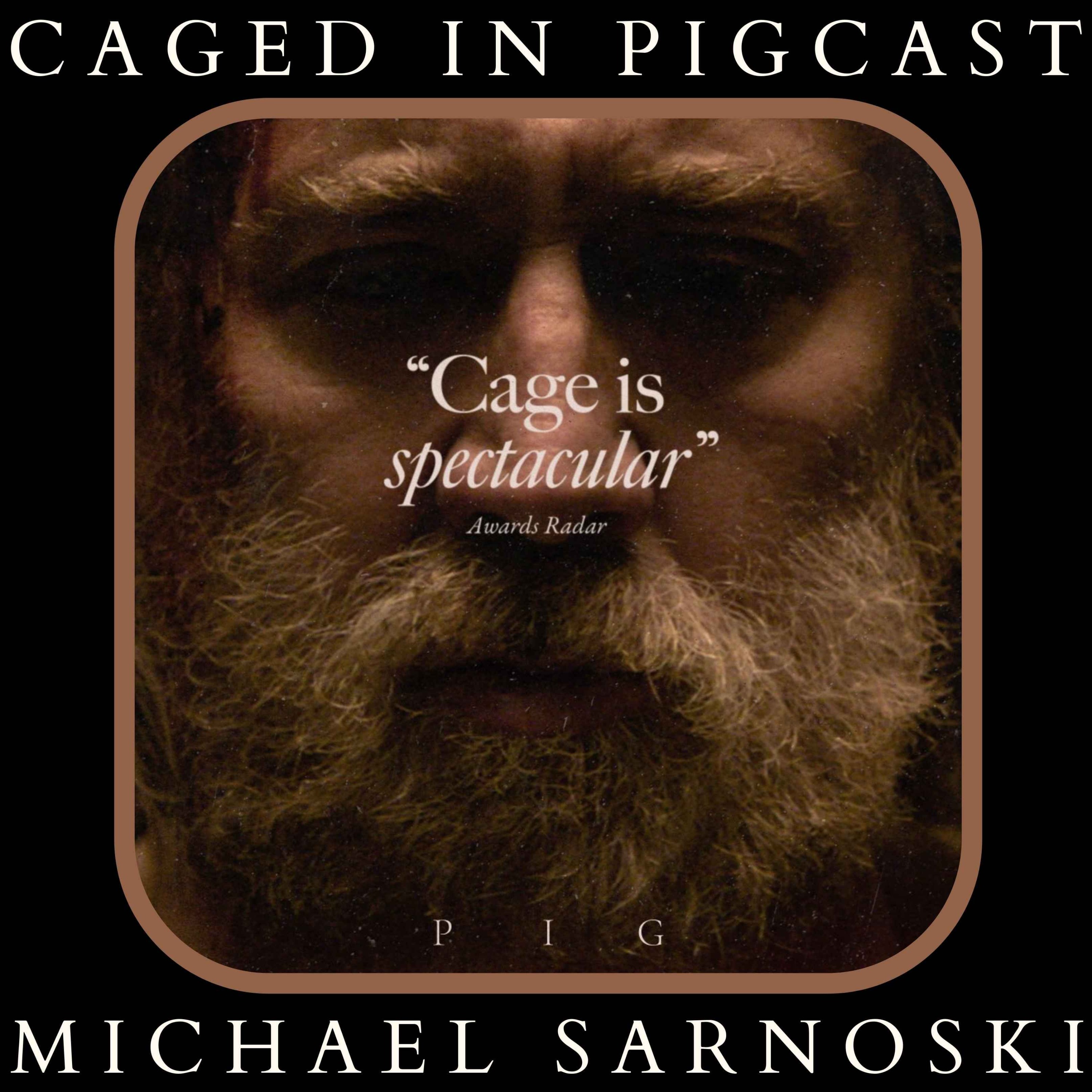
Hello and welcome to a very special episode of the Cagedin podcast, brought to you by the Breadcrumbs Collective and hosted by me as ever Petros Pat Silvers. I thought seen as it is Cageduery the first month of the year where we get to celebrate Nicholas Caged for a whole goddamn month. I would resurrect a personal achievement of mine, which was the Cagedin Piccast, which I released throughout July last year, 2021, around the release of the Nicholas Caged vehicle Pic. Fantastic, fantastic film directed by today's guest, Michael Zunoski.
It's a big one. I've got a resurrected scene that's celebrating all things Caged and I've got Michael on board to come up and chat with me about how this film came to be, his story of making it, the research that went into it, where this idea came from and what it's been like since, what it's been like living with this film since July and having it in the bank for all that time as well. This film was sat on for a year by Neon and they really wanted to put it out in cinemas, so I'll hear Michael say, as well as hearing some amazing news. I think I got it from Michael's mouth as the world got it in there is, that he will be directing the quiet place, free slash spinoff.
And yeah, so hang around to hear that at the end of the conversation, but this was a fantastic conversation with Michael Zunoski and I very much hope you enjoy it. Before we go into it as well, I think relatively this chat is spoiler free. I would always recommend though, if you haven't seen the film we're talking about, don't check out Piggas readily available to to buy on all places you buy films, you can buy on physical media as well as a Blu-ray, which you can see Nicholas Cage in the kitchen with previous guest Chris Larneki learning how to cook, so that's always fun. Yeah, so watch Pig but I think we avoid spoilers much of a muchness and just kind of talk about what it's like working with Nick Cage, Alex Wolf and making this kind of beautiful poignant film.
Again, enjoy this episode with Michael Zunoski. Today I have the absolute pleasure of being joined by Pig's writer, director Michael Zunoski. How are you today Michael? I'm good, I'm good, thank you so much for having me.
How are you doing today? I'm doing very well as I said to you off mic and I've kind of stayed on my guess. It feels appropriate to be in the setting I am right now, I kind of kind of woodland shack talking about all things Pig. Yeah, we should have just shot there.
Perfect setting. I didn't have to build the shack. I don't know if suburban Crawley is the shooting location that you would. The green screen outside the door, the entire olive pig is just green screen that we shot on in the studio and just put Portland in the background.
Yeah, I mean I love that shack though, I the production designer Tyler Robinson, if they build that was like a one set that we could afford to build. Basically we pretty much put all the production design budget into building a shack and they really just built like a functional shack in the middle of the woods and didn't have brick walls or anything. It was just this shack in the woods with a garden and a little bit of a green spot there. I was so sad that they had to tear down at the end for insurance purposes.
I was like, can't you just like leave it, it was in a state park, but they were like, no, someone went there and just cut themselves or something, we would get sued for a bunch of money. So I was sad to see that that's checo because they did a really good job with it. Well, let's kind of talk about the location because it seems like the location of Portland and like the kind of surrounding areas. I mean, it's kind of hack and cliche to say about a lot of films, but like it feels like a character in itself.
So how important for you was it that kind of Portland was at the center of this film? Pretty important. I mean that came pretty early on in the screenwriting process. I had never actually been to Portland until after I wrote the first draft, but I just did a ton of research on it.
And then once I had a basic draft down, I started taking pretty regular trips up there with Vanessa Block, the producer. And yeah, I mean, the character of Portland is kind of ingrained in every part of it. And then a lot of it came from being there and spending time with the local chefs and spending time just kind of wandering around and meeting people and getting really welcomed into that scene there, just finding all the ways we could just bring some of real Portland into it. So there was some baked into the script and a lot of research that went into that.
And then just at every turn, we were just kind of trying to bring this whole Portland out. And it really helped because the film scene, the restaurant scene, they all really kind of welcomed us there pretty much the entire crew. The entire crew, except for the DP and the assistant director were all Portland based, most of the actors were Portland based. So it was, it's sort of the movie naturally had a lot of Portland in it.
We didn't even really have to try that hard. It just kind of just kind of worked out. Yeah, I know that David Nelson, the Darius Pierce is kind of like this Portland legend of the kind of acting scene that he's kind of like always putting on like theatre productions and stuff like that. And I think he assumed when he went for the role of Finway, he's like, oh, that's kind of Darius.
Like he's the kind of big shot around town. Yeah, no, Darius ended up being Edgar. And yeah, and then David was just an incredible Finway. I mean, we have a side Alex Wolf, Nick Cage and Adam Markin, everyone was, everyone was a local Portland person.
And there's a really vibrant, I mean, they shoot some movies there. They shoot a lot of TV shows up there. So there is a really vibrant acting scene up there. So it was cool to get to draw from that.
I mean, that's really the only place we did any sort of casting call. We auditioned a bunch of local people and found just a great gang. And yeah, everyone really nailed it, which is kind of insane considering, you know, you sit a local Portland actor down across from Nick Cage and ask them to have the confidence to perform. Like that takes a lot of grit for them to pull that off.
I mean, like what David pulled off in a, you know, an eight minute scene with Nick Cage just sitting across from at the table, just from a sheer like nervous and standpoint to be able to act in the face of Nick Cage, like he can be quite intimidating, even though in real life, he's very welcoming and encouraging of the process. But like, you know, that's a lot to pull off. Well, let's talk about that scene because it's kind of like this. It's really interesting.
I spoke to Brett Bachman about this editor and it seems to be like, he's done free Nick Cage pictures now with Mandy color out of space in this, which I've dubbed the the man of the woods trilogy, which kind of yeah, even if even if I think it is a surprise to Brett as well. She cut all three of those together in some sort of fusion film that uses piece of all of them. Yeah, perfect. You got HP Lovecraft in there, so it could all make sense in its own weird way.
Yeah. But what I found interesting is like with Mandy and Pig, they both have this kind of key central scene that kind of like, I'm not sure if there's probably people out there who've done the analytics to go that scene isn't central, like the scene with Finway, but it kind of feels at the center of the film. And but what was that? What was that day like and kind of how important was it to nail that scene specific?
Yeah, that I mean, it's you know, when you're on set, we shot this in 20 days, so it was a pretty quick shoot. We didn't have any time for reshoots or anything. So it kind of felt important to nail every scene as we were going along. But that one, it in some ways, I wouldn't say that one was easier, but it was it was a really nice scene to film because I think in the script, it was like a nine page scene.
And we really, we filmed the whole scene that day and we really just kind of got to see it play out. Like we ran it pretty much beginning to end like a little stage play. So it was it was really gratifying to shoot because you actually felt like you were watching the movie. I mean, you're always, you know, you're trying to capture something real that you could actually sit back for nine minutes and just watch this scene play out and have and it was just it was, you know, it was one of those scenes where even just watching it on the day, it was like, I'm watching the movie.
I like it. It's working cool. And so it was very reassuring to have that in the middle of the shoot as like, otherwise, you know, you're piecing a lot of stuff together. You're kind of like, yeah, I think this will work.
Like this is, you know, this angle is cool, whatever, but to just like sit back and watch the movie play out before your eyes was really gratifying. And then in the writing process, and the editing process, that scene always, you know, it is a pretty central scene. It's it's I know I talked with Brett a lot about kind of the fractal nature of films. He was really into that.
And I think that scene is a good example of that of like a single scene kind of containing the whole in a lot of ways. And it kind of it has the humor, it has the absurdity, it has the somberness and the seriousness, it has the sincerity, like it sort of has a little bit of every aspect of the film packed into that. And it kind of takes you on this journey through it. So yeah, it was always a really important scene.
And it was one of the I remember on the assembly cut that Brett put together, it was it was one of the I mean, he did a great job overall, but it was one of those things where when I watched the assembly cut, I was like, yeah, that's working. Like, we didn't really have to do a lot of work on that one in the edit. So that was really cool to see. But like you kind of mentioned that it's all like, it's all kind of, I don't know, every scene had to count.
But like as a first time director, like what were your expectations going into a film, especially like having someone like Nick on board and obviously Alex had kind of come off a bit of a hot streak is kind of after hereditary was like a I mean, it's like a name to watch was there, I don't know, was there like this sense of pressure to you that like, or yeah, what were your expectations making your first film? It's been crazy. Yeah, I mean, there were definitely moments of pressure. I think you just get so wrapped up in the doing that you don't really have time to feel that much pressure.
I mean, you know, you are kind of constantly on edge and constantly having to make these decisions. But I don't know, I think I thought I would have a harder time with that than I did. I'm sort of quiet, sometimes fearful person. So I was like, man, I'm gonna be pretty anxious on set.
But you know, there are always moments where feelings are falling apart. But in those moments, you're having to solve a problem. Like those are the moments when you have to be most focused. So you kind of just, you don't really have that much time to feel pressured about it.
And then early on when it was kind of before shooting it was more feeling like the pressure of the general idea of, oh my gosh, I'm gonna be working with Nick and Alex. And this is kind of a big deal and scary. That quickly fell away once I met Nick and Alex. I mean, they were both just so collaborative and excited about the project and just seemed like such nice guys that I don't know, it wasn't as much of a problem as I thought it would be and it ended up just becoming like, hey, we're doing this thing all together and we're gonna give it our best shot.
And day to day, we're just gonna go to set and try to make something cool. And yeah, I don't know, it's that focus allowed me to not feel too much anxiety about it. So like, obviously with Nick and Alex, one of the things that this film kind of teeters upon is that those two characters and those actors kind of have this chemistry, how was there a sense of relief when because obviously it's kind of, you see them now in like interviews and kind of press the film and they're like, they're like best friends. Was it just like when they kind of clicked?
Was that like a real weight off your shoulders kind of making yourself? Yeah, that was huge because you know, you write the script and you know, there's this element of kind of like a buddy movie with the two of them. So you need that kind of, I mean, it's like writing, you know, a romantic movie, like you plan around, okay, there's got to be some kind of chemistry there. And thankfully their chemistry was just kind of better than I ever could have hoped.
I mean, they just had such an interesting kind of beautiful friendship that developed that developed it had, you know, a camaraderie, a little bit of competition, a little mentorship, a kind of big brother, little brother, a little bit of co-workers. Like I just had a lot going on, and they just grew to really care about each other and support each other. And that's the other big thing is, you know, again, Alex was 21 when we shot this movie and he's, you know, acting across from one of his acting idols. I mean, he grew up just wanting to be in a cage and that's a lot of pressure, but Nick was so welcoming and you know, he's so open to experimentation and open to the craft.
He's really an artist and he's a professional. So he made an environment that made Alex feel comfortable to explore and Alex made an environment that made Nick feel comfortable to explore. So it really ended up being just a beautiful synergy with the two of them. Perfect.
Well, yeah, it feels like we kind of like dive too into this. Like, let's kind of back up a bit. And where did this, where did the story come from? Yeah, so initially, the story started with just, I had a little notebook or like a notepad file on my computer where I write down random little, not even story ideas, just snippets of things that I find interesting.
And I think years ago, I just wrote down Old Man in the Woods, but his travel pig. And so just, I was just kind of like, there's, there's that shot where you're kind of tracking through the trees and you see him walking with the pig from the distance. And I was kind of like the image that I had. And I didn't know what the story was.
But there was something about that image that I was like, that draws me. Like, I want to explore that. So then it became this kind of thing of unpacking that when I finally decided to kind of dive into writing the script. And it became this real thing of asking questions about that image, trying to figure out, you know, what is this person's backstory?
Why are they here? And then, yeah, and then so a lot of the story stuff developed naturally from that location is profession in the past, what happened to him, why he's in the woods. And then it became, I was sort of at a place in my life where I was, I, my dad had passed me when I was a kid. And in my late 20s, when I wrote this, I was kind of at a place where I could pick a step back from that loss and sort of see how it had shaped me and my family.
And so that sort of exploration of grief ended up kind of getting baked into the story as well. So yeah, I mean, you know, that's the tidy explanation. I mean, really, but mostly just me pulling my hair out and trying to figure out how the hell to tell story and all that stuff. But now that's looking back, that's kind of the progression that happened.
Perfect. And how did the collaborative process in writing this with Vanessa work? Was it kind of, did you, how do you, yeah, you just throw your ideas back and forth? Or how did that kind of collaboration work?
Yeah, so we had Vanessa, the producer on the page, she was, we had a co-story by and then I was the solo writer. So it was, I would kind of, I would write drafts of it and then send it to her and, you know, she would give me notes and we would talk about it and brainstorm some stuff. And then I would go off and do another draft. I, yeah, I'm a pretty like, when I get into my writing mode, I kind of like to shut out the world.
I'm sure my friends can tell you that it's a little weird and annoying. I definitely go into like her mode. So once I, once I'm kind of doing a draft, I sort of isolate and just go into it. And then I would kind of, you know, come up for air and be like, here's something.
What did I do better? And then we would go from there. Was there ever a version of this where he wasn't a shuffle? Was that kind of hard baked in from the start as well?
That was pretty hard baked in. It always, even from the very earliest stuff, it always kind of was this chef film noir like that. That kind of always was was the thing. Because the chef thing just came, I mean, just both of those things came very early on from asking questions about that image because the question was just, why is this guy out in the woods hunting for troubles?
And the answer is because he's, you know, he had a history in the culinary industry. So that just seemed kind of obvious. And then, you know, then the kind of film noir cowboy come to town stuff came very naturally from, okay, just piggystaking and he has to track her down and then he has to go into the city that kind of naturally follows some of those classic beats. And so yeah, it really became, okay, let's tell a chef cowboy come to town story where instead of shooting and stuff like that, he's cooking food for people.
Yeah, that's something that's like beautiful about the film. And one of the things I love about it is obviously when you give people that elevator pitch of what the film is and you kind of say that Nick Cage is attached to it. I know a lot of people I told were like, I don't know what this movie is going to be. Do you mean they kind of have this expectation of what Nick does?
And were you like aware of that when obviously like you were talking to Nick or were you kind of put it put it to one side like I know the movie I'm making it. Yeah, I mean kind of both of those things. I was aware of it. And you know, there's a part of me that was like, are people going to be able to look past this?
But then once I sat down with him and talked about the character in the script, I was like, okay, he gets it. He knows the character he needs to play. Who cares about all that other stuff? Like, we know the movie we're making.
We know who Rob is. People can bring whatever baggage or assumptions they want to it. But as long as you know, we just approached it as you know, we're making this character study and we're trying to make something that's emotionally authentic and explores this character and explores this world. You know, whatever people want to bring to it, you know, I think I was pleasantly surprised that that ended up kind of being a feature not a bug.
Like people were excited by that and pleasantly surprised by that. But you know, it could have gone the other way. It could have been there. Definitely were some people who were like, he doesn't beat anyone up in this.
What's going on here? But you know, in general, people seemed pleasantly surprised. So that was cool that it went that way. I wasn't sure it was going to, but I kind of had separated myself from it and was just excited by what he was doing and seeing him bring this character to life.
Well, somebody who's kind of entrenched in the kind of Nick Cage filmography. I kind of like, I enjoy the film as it is. But then I also love this kind of metatextial level. You can look at it of the character he's playing or something who's like been, I don't know, exiled from mainstream societies it were and then kind of this film for a lot of people.
And it's a bug bear of mine. They say like, isn't it Cage doing something great again? It's like, he's been solidly doing some great stuff throughout that time. But like, yeah, I kind of, I don't know.
Yeah, I think I think the readings of it, the amount of people like the trailer dropped, you saw the kind of it's John Wick with a pig and stuff like that was that stuff as well that you were kind of like, again, we know what we know we've got here. Like this stuff will kind of like die in the weeds. Yeah, I mean, I think the John Wick with a big perception still lingers and it doesn't bother me that much because I kind of knew that was going to be like, because also the movie kind of knows that that's what it's playing with because the first half hour of the movie, it's kind of about, I mean, the whole movie's about kind of slowly deconstructing that and peeling that away and then getting it out to something more core character than emotional. So it's, it's baked into the movie to carry you from expecting kind of violence and action and all that stuff to something else.
So, yes, I wasn't overly worried about it. You know, I was anxious to say, okay, does the movie do its job as far as carrying you through that? We'll have to wait and see. So, you know, it didn't totally surprise me that people saw it that way.
But it, I did like the, even when people went in, I mean, I've got a lot of reviews that were like, you know, I went in expecting John Wick with a pig and I'm so happy it wasn't that. And so, you know, in some ways, I think it worked out the movie's benefit. So, you know, I mean, I'm nervous about everything in the process. I'm always like, oh, no, have we made a terrible miscalculation, but but overall, I kind of, you know, that worked out well, I wasn't too too worried about it because I felt like the film carries you through that.
Well, how has the kind of reception to the film been for you? Because obviously, like, as we're talking, not so long ago, Barack Obama put it on his kind of end of the list. And it's kind of, it's getting almost like, I don't know, those, you would think there's kind of like awards chatter about the film, whether it's Nick, I know that like, one of the things I noticed when he did the Hollywood Report Around Table is like, all these other guys, their films are kind of quite fresh. Like, pig came out in July, you know what I mean?
And it's, yeah, it's an interesting. Yeah, it's been interesting to see, because, you know, a lot of the awards movies come out in December, I mean, pretty much pretty much all of the movies that are being talked about for the big awards are months that dropped in the last month. So it's been, it's been really sweet to see that somehow pig is kind of stuck around, because yeah, we came out in theaters in July, which is not an Oscar bait sort of the year. So it's cool that it hits some sort of nerve and like, people are still kind of talking about it.
And you know, it's a small movie, we didn't do like a ton of marketing for it. So I think we didn't really expect that this was even an option, but somehow Nick's sort of remained in that conversation. It's mostly been that best actor conversation. And, you know, there's, there are a lot of movies this year, a lot of really big movies, but, but you know, he's really been climbing and people really adore his his performance.
So it would be awesome if he got the nomination. I think he absolutely deserves it. But yeah, that's that's also just been a really pleasant surprise. And then I try not to get greedy.
Like, I wasn't expecting any of this. And then once you start expecting, you're like, well, why can we come that one? And then what's that thing? And like, so, but no, it's very cool.
It's cool to see that like somehow the movie is stayed kind of relevant and interested people. And yeah, no, it's been really wonderful. Well, it felt like the perfect film for the time it came out as well. So like, obviously, we're kind of in the height of like the coronavirus and stuff like that.
And there's this film that's just so beautifully and poetically kind of plays upon our memories of whether it's like family or like a nice cook mill or like, you know, that means family. And yeah, like the kind of the reception, like looking on Twitter and stuff like that is, it's amazing how many people reacted to it. Was that like, yeah, how did that feel for you? Or do you kind of not tend to look at what people are saying?
No, I look probably more than I should. I mean, initially, I remember Alex Wolf has only told me he was like, just don't read any reviews. And then I think after a few days of getting mostly positive reviews, he was like, you can read the reviews now. So I started reading them more.
And you know, but then inevitably, once you start getting more positive reviews, then I just read the negative reviews because those are the ones that are really thinking. But no, I tend to skim most of them. And no, I mean, it was really cool to see people respond to it. I mean, it was, it was, it sort of hit at this weirdly specific time that that worked well for it.
It was, I mean, neon, the distributor had thankfully, they were willing to sit on the film for about a year before releasing it. So we shot it at the end of 2019, finished it in like June 2020. And then neon was just kind of waiting for a window, because they wanted to do a theatrical release. And that kind of came about in July, like right before Delta hit.
And they, I mean, they really jumped on that like within a few weeks, it was like, this is going to be our window, let's do it, let's make it happen. They did it. And we had a couple weeks where Delta wasn't too bad yet, and people actually got to go theaters and see it. And that was cool.
And then it's been this kind of consistent process of then people discovered on VOD and then came out on Hulu in November. And it's been cool to see kind of like the waves of people rediscovering it. And yeah, it was, it was, it was very cool. It struck at a perfect time with the pandemic and dealt with a lot of the stuff that people were going through, clearly, totally unintentionally.
I did not know that there was going to be a global pandemic. And but yeah, no, it's been, it's been pretty surreal. I think because of the pandemic, it's also weird because still my life is just kind of like me in my apartment on Zoom meetings. So like, physically speaking, my life hasn't, it's infuriates changed a lot.
And it's very exciting. But I'm also kind of, it's a little disorienting because I'm just kind of like, oh, I'm, I've made a movie that people really like, but like the world doesn't really exist outside my apartment anymore. I'm just kind of isolated myself. So it's been a weird time to kind of grapple with what my life is now.
Yeah, I can imagine like this kind of, I don't know, almost like movie like imagining of what you would think like having a hit movie or like, I mean, yeah, a well received movie would be like, I don't know, like you get out the back of a limousine and people know you and then it's kind of like, yeah, there's gonna be like, okay, or something. I know cocaine. So it was, it was, yeah, I mean, we had a great, thankfully we managed to, my mom is listening, I don't do cooking. And I mean, we, we thankfully got to have like a proper premiere where that was when, you know, it was like this brief moment when like people didn't have to wear masks anymore and things were looking up.
Little did we know that that was not going to stick around for too long, but you know, we got to have like a, the, like a premiere and theaters and people came and we got a red carpet and, and that was cool. And, and then that was pretty much it. That was like the only major in person event that really do. But, but it was really fun.
So, well, yeah, going back to obviously like how it was like Portland was such a big part of it. I remember David now telling me that like, he was just about like, when we chatted was just about to go to a like casting crew screening, like of the kind of Portland native. Do you manage to attend that? What was the kind of aspect?
That was probably my favorite screening that. So the, so we had the LA premiere, which that one was wonderful. So it was Nick and Alex were there. My mom and sister flew in and that was really fun.
And I got to have my local friends come out. And, but then the Portland one was really great, because that was the day after I think Vanessa and I flew up to Portland the morning after the premiere, which was, that was fun. And, and then yeah, we got to, there was this like little kind of arts theater in Portland and all the local casting crew came out and it was, that was, it just sort of felt like a family reunion. Like it was, you know, all the people that we made this movie with getting back together and then getting to share this thing with them where they, you know, they liked it.
Like, that was exciting to feel like people felt like they worked on something that they really cared about. I mean, they were kind of playing things that they care about, but you know, it was just like a nice thing to be like, Hey guys, remember we made this and hey, it turned out pretty well. It was just like a very warm experience. And also it was just like a reunion because we hadn't seen these people since shooting because of the pandemic.
Probably would have gone up there again, in between that time, it hadn't been a pandemic. So yeah, that was a really wonderful screening. I imagine it's nice to go back to Portland and see that they're like, bakeries kind of selling salt bagels, like inspired all that. That's the bakery.
That's the bakery we shot. Amazing. That was, that's because that's Helen Bernhard Bakery. That's one that is the oldest bakery in Portland.
And that's where we shot that final bakery scene. And they already they sold a shortbread cookie. That was the cookie that he shares with Amir was an actual that's one of their specialties. And it's really good.
And then they started selling this alter baguette as well, which I saw a little sign for that. I thought that was wonderful. They were really sweet. I loved them there.
Yeah, I imagine the research was a lot of fun, right? Kind of getting used to the. Yeah, it was all just an excuse to eat a bunch of food around. I mean, those were the early trips.
Like when Vanessa and I would go up there to scout locations half the time, it was just us going around to different restaurants, trying meals. And then if we like the vibe, we would like ask to speak to the chef and then say, I mean, some of this was even before Nick was involved. So it was just these two random people being like, Hey, we would love to shoot a movie at some point here. We'll keep you posted.
But you know, the local community really welcomed us and these restaurant owners were like super generous. Because yeah, we didn't have a huge budget. So a lot of the places we got to shoot were pretty much just from the grace of these places letting us like shoot there. And we could spend thousands of dollars that we didn't have to try and get some of these locations.
But most of them were just like excited to help out this kind of small film. And it was very cool. Amazing. So how did Nick get involved on the project?
So he after Mandy, he had just moved over to WME agency. And so they were looking for some new projects for him. And yeah, he was we had endeavor content who was kind of they're not part of their sort of that and WME are like an entity kind of endeavor content handles more of the production stuff and foreign sales and all that. And they had become interested in pig and they became real champions of the project.
And it was sitting on with them and meeting with the different content WME that they suggested Nick, they just kind of threw him out there. And we hadn't even considered him. And it was kind of just one of those like, do you think he would want to do this? The kind of movie he would want to do.
And they were kind of like, let's see what he thinks. So they sent him the script. And he very quickly was like, this is absolutely the kind of movie I want to do. And yeah, it was surprisingly easy, I guess is the answer.
WME was looking for new stuff for him. He was excited to try something different. And I think it just hit at a perfect time. Yeah, it was pretty surreal.
What was that first meeting like Nick? Because I know that he said that in that Hollywood round table, Hollywood report a round table that like he ended up explaining to you like a dream he had had or something like that. Yeah, but it's Kat Merlin. Yeah, that first meeting was we got like brunch together downtown.
And and I mean, it was both amazing and also pretty straightforward. Like I gave him a comic book and we sat down and we shatted about the script. And it was kind of quickly like clear that we were both on the same page of the script. So then we just kind of started shooting the shit and talking about pets and love of food and Italian heritage and all that kind of stuff and just kind of enjoying the food.
It was, I don't know, it was quickly apparent that, yeah, we know what we're doing around the same page. It sounds good. And yeah, I mean, it was surprisingly low stress. Yeah, other directors, I've spoken to you work, Nick.
Always say that like he kind of when he comes to a project, he has the script learned backwards forwards kind of. Oh my God, he knows everything. He knew it better than I did. Like he, I mean, not just his dialogue lines, he knows the action lines, like word for word, like I, it's pretty incredible.
I don't know how he I mean, I guess he's been doing it for a long time. So he's very practicing it, but I was very impressed with that. I mean, he's, you know, you think of Nick as this rock star and he is, but he's, you know, he's an artist and he's extremely professional. Like if you're going to get to the point, he's out in his career and do the number of movies he's done.
Like he knows how to operate on set. He knows how to be respectful to people. He cares about what everyone's doing. He knows that all of these jobs on set are super important.
I mean, he was just just a pro on set. I mean, he was so kind to everyone always early, always down to sort of the extra mile on things. Yeah, I, you know, I think people assume that he's probably like bonkers on set and hard to work with, but it was the total opposite. Well, you know, as I said, everyone, I've had the good, fortunate to speak to have said like, comes, we're not only just knowing the script he kind of has like these notes and kind of like, what kind of he knows the character himself in it.
Yeah. And what's really heartening about it as well, it's speaking to people who their budget for their movie is three, five million dollars and he's still giving that same level of respect on that then he would then I imagine he would do I mean, doing a, doing a Jerry Brooke by the movie for Disney forever. So yes, it's really heartening to hear that. And I know that is it true that he took everyone to see Parasite while she was filming the movie?
No, there was like a small group of us that all went to see Parasite. And that was, yeah, that was like the weekend before we started shooting, or maybe it was into a weekend to it. I can't remember. But yeah, there's a little theater in Portland and we went there and watched it.
Yeah, that was pretty cool to be in like six of us just sitting in a row together. And yeah, that was really fun. And nice level of kismet as well, right? That neon eventually was that was a painful circle.
It's a great film. So it's always good to watch an inspiring movie going into something. But yeah, no, I mean, working with Nick was wonderful work. I mean, everyone was, you know, this was a small movie.
It's a weird movie. It kind of filtered out for good people that cared about it because no one's going to sign up for this movie if they don't love it because they know there's not a ton of money in it. And they know it's pretty specific and strange. So the people that wanted to do it really cared about it and saw something that moved them.
So I feel like just in general, we had a nice tight knit family on set. It was very, very gratifying. Yeah, somebody who's like a massive champion of the film, I remember, like, as it was coming out, because I was fortunate enough to get a screener from neon. But like, even when it was coming out and cinemas, I was like, I'm like, trying to find the nearest place to go see it when and saw it.
And I don't know why I took it upon myself to kind of like, just tweet out everywhere kind of in the UK, you could go check it out. Because a lot of people going, my local place isn't showing this. I'm like, where about do you live? Like, did it like?
Thank you. You were a fanmark. We did everything. But thank you for doing it.
Yeah, yeah, yeah. I'll send an invoice to out a tube. Just a couple of more things on it. One of them is, I'm not sure how true this is, but it's kind of written out there that the original length of this film was a bit longer.
Was that your intention to have a longer film or kind of this tight night? No, I think that's kind of a misconception. I know where that comes from. It's just, I think what people are saying when they say that is, the assembly cut was like probably like two hours and 20 minutes.
But that's like, there was no kind of functional cut of the film that was that long. It's just the assembly cut is kind of where you just dump everything in. It's tons of stuff that you know you're going to cut out, but you kind of just want to have it all in there to see how it plays. And then you sort of trim it down from there.
So anything that wasn't crazy, I mean, there are assembly cuts that are like four hours long. So, you know, two hours and 20 minutes isn't that crazy for an assembly cut. So we really, you know, we've cut like probably 45, 50 minutes out of that. But it was all stuff that needed to go.
I mean, honestly, you know, there are a couple of little scenes that I wouldn't mind that, you know, we trimmed down for pacing, but I wouldn't have minded bringing back. But I don't think they would amount to more than like two minutes or something. Yeah, yeah, that classic director's cut with six, six minutes extra in every scene. It's got a couple of seconds added back up.
So yeah, you obviously touched on Nick and Alex getting on really well. But when it comes to like working with actors, do you tend to give them other films or kind of materials to look at to kind of, this is the tone or the vibe we're going for with this film? And what was that on pig? A little bit.
I mean, I think my biggest form of directing is the writing. Like, I think it was the script was pretty specific about the tone and the vibe of certain things. So I think that was most of the battle. There were a couple little things I remember.
I mean, it was, you know, I said Nick some books. I mean, I still don't know if he's read that comic book, but that gave this graphic novel, the stereo's pile up that I think had some elements to it. And then I gave him a copy of Devil in the Kitchen, Marco Pure White's book, because there's a lot of Marco Pure White in this movie. He was this chef that I don't know if you're familiar with him, but he was this Jimmy Sillis chef, but he was this three Michelin star chef that gave up all of his Michelin stars, because he was just kind of done with the industry and went and like lived with his family in like a home out in the country.
So he was very inspiring for this. So I give some of that. I mean, like movie references. I had a couple things that I didn't really talk to Alex Wolf a little bit about a couple movie references, just not even really for his performance, he was kind of curious, I think.
And there was a movie called Rivanche that I think is Austrian movie. I think it's an Austrian movie that was kind of inspiring for pig. So I remember you watched that and really loved it. But it was just such a specific tone that really the best way to get it across was through the script.
So there wasn't a lot you could kind of be like, there's like a little co-any. It's a little jarmy she sometimes is a like, like, there wasn't anything cleanly enough. Like this is what it is. So mostly it was just kind of the script and then having conversations with them.
I think that's what's quite beautiful about the film is I know it's very easy to sell films. And I guess it's laziness on the part of movie fans lot of time. It's ex meets ex and you get this movie. What's I don't know, you could be lazy and do that with pig but I don't do the film.
I don't think justice to be like, it's I don't know, it's John Wick meets Rata Tui. Like, yeah. Of course, of course, of course. Yeah.
Yeah, absolutely. And I think a lot of that credit goes to producers and financiers who were willing to yeah, I to do this movie off of, you know, I hadn't done a movie before and I also I didn't really had to pitch it. Like, usually it was a short script. It was only 84 pages.
So I would send it out. People would read it and they would either love it or not or just be like, what is this, leave me alone. So I rarely, I rarely have to sit down and say like, so it's this, there's this pig and he's like, I didn't really have to do that for some reason. I somehow managed to avoid that.
So yeah, it was, it was very cool that they just kind of had bacon off the script and that we executed, hopefully. Well, mentioning the pig. How was it directing the pig on your first film? They say never worked with children and animals.
I did both. And children and a lot of driving. And yeah, it was, I mean, I would say you don't really direct a pig, you just kind of hope for the best because we couldn't afford a trained acting pig. So Vanessa and I just drove around different pig farms outside of Portland and just found the pig that had the best look and personality.
And her name was Brandy. She was a cooney cooney pig. And yeah, she was a very sweet pig and very beautiful. She had very localized.
But we had an animal trainer work with her for like a week, but that was not enough time to like really do that much with her. Because I think a big part of it is just getting animals prepared to perform on set when there's a lot of noises and lights and movement happening. And that was just overwhelming for her. So mostly it was just about being quiet and kind of calm when she was around and just trying our best to like get her to look at a certain spot and we'd clapping off camera and that sort of stuff or sneaking food in spots.
And then the other useful thing was just having Nick feed her a lot. So she just kind of knew, okay, if I go to him and Phil feed me. So I was just, you know, holding her off camera. And then when he comes in, he just releases her and she's like, Oh, boy, I'm gonna go to the guy who gives me food.
So yeah, it's just kind of figuring it out. No, you have to suddenly try to get into a pig's psyche as you're trying to make a movie. There's so many weird little jobs with directing to figure out. It was definitely a stroke of genius who ever came up with the idea to give Brandy a character poster for the film.
I remember like, Oh, yeah, when that came out. This is for that. This is a real pun intended chef kiss of a marketing move. So yeah, as we start to wrap things up, I'm not sure if you did this intentionally, but did you know that you kind of added to the tradition of Nicolas Cage stealing bikes in movies?
No, I didn't even know that was a tradition. This is new. This is, I haven't even heard this. So there's the rock he steals a motorbike off of somebody.
There's the wicker man where he like commandeers a bike off of one of the islanders. And now there's pig, obviously he kind of gives a guttural scream at somebody. Was it a man of a bicycle or motorbike? A bicycle.
Yeah. Yeah. So it's kind of too. Yeah.
I know that. That's amazing. I'm honored to be to be a part of that tradition. Yeah, the bike was actually a budget choice because initially there was a scene where he rides the light rail there and the ticket taker was supposed to ask for a ticket and he was there was this like mini altercation, but we just couldn't afford to shoot on the light rail.
So I was like, I was just feeling about kind of a competition thing. So we did that. I like that it's kind of out there in the ether like that that happens by mistake and it kind of creates this tradition because I was a see on Sono film that Cage did that came up last year. Again, it feels like something that feels like it's referencing that but probably isn't.
His character has given the choice of a sports car like to go accomplish his mission and he takes a child's like bike instead. And it feels like there's this kind of running theme throughout Nicholas Cage's career where he's always commandeering bikes to kind of write a book on because you see all the patterns that everyone else does because they haven't seen all these movies to make these connections. You see the Matrix. So it's like a beautiful mind up in here.
So the other side of this shack is just filled with like red thread and photographs and pictures of bikes and your conspiracy in a age. Well, yeah, I am definitely a Charlie Day in that episode of It's always something for you to figure out on the go. Yeah, this bike says this. So yeah, I'm for a let you go.
What's next for you Michael? I imagine like you said, you're just in your apartment, the Hollywood lifestyle isn't as you expected it. But yeah, what have you got on your plate next? Yeah, I mean, I've got a few things I'm working on that I'm really excited about actually just today, literally while we're on this podcast, I just got a bunch of texts.
I guess it came out that I'm going to be writing and directing the Quiet Place spinoff. Like John presents these Quiet Place movies. They're doing another movie in that universe. And that just sort of came out at the end of the year.
And John was just so wonderful. And we've been kind of throwing ideas around. And so that's cool. I guess I'm allowed to talk about that now.
I mean, I think that's probably all I'm allowed to say. But I hope I was allowed to. But that's one thing. That's something that's happening.
But I have a few other things that I'm working on. So yeah, just trying not to get cripplingly overwhelmed. And I tend to be a fearful person, like I said, so my initial instinct whenever I get some sort of author is like, no, I shouldn't do that. I can't do that.
That's a bad idea. I'm afraid. Like, I won't be able to do a good job. So I'm trying to not listen to the little insecure voice in my head and just enjoy making cool stuff.
Well, yeah, imagine there's a thing that you see a lot of directors kind of direct something really interesting and personal for their first film. And then they kind of get swallowed up into the Hollywood system somewhat and kind of, I don't know. Yeah, I'm trying to avoid that. I mean, that's what I liked about this Quiet Place thing was that they seem super open to doing something kind of unexpected and different with it.
So, so that was that was really refreshing to be like, oh, you're saying I could do something in that realm that I that's on. I shouldn't be saying I don't know what I should be saying about this. But I'm excited that it didn't feel like the studio system is following me up. I know what you mean.
I know that you spoke on the movies made us podcasts and about Logan and how obviously James Mangold kind of got to make a James Mangold movie kind of movie that isn't kind of a part of this structural thing and didn't have the slot into this stuff. And yeah, it's nice to know that that's hopefully where it's going with this Quiet Place movie. Yeah. That's amazing, those man.
Thanks, man. Well, Michael, it's been a absolute pleasure chatting to you. Thank you so much. Before I let you go, as I ask all my guests, I must ask you, which is your favorite Nicholas page film?
I know you've got a horse in the race, but pigs discount. Besides big, I want to pick only one or could I say like a few? You have some other dimensions. Yeah, we can we can we can we can we can we can we can we can one.
I mean, there are so many I love, but one that has is a special one for me is I really liked Moonstruck. I hadn't seen that. And I watched it right before we shot pig because I was kind of trying to catch up on one that hadn't seen. And I don't know, I'm half Italian and I my family moved out to Wisconsin when I was a kid.
So I never really got to see that like East Coast Italian family and be a part of that world. Like there were a couple times where we would go out in the visit and have you speak Italian dinners and I was like, wow, I really missed out on something. And I remember watching Moonstruck and it was just kind of like a fairy tale of what my life might have been if I'd been around more of my Italian family. So that that was very special.
And he was just amazing in it. So that one has holds a special place in my heart, but there's tons of really good one. Yeah, I always find that 1987 is a really interesting year for Nicholas Cage's career because Moonstruck raising Arizona. And I know he shot vampire's kiss like that time didn't get released to like a year or two later, but that's crazy.
What a year. Yeah, it kind of gives you every kind of stroke of what Cage can do. Right? It's kind of the nexus point of the rest of his career.
Yeah, that's very true. Man, you got to write this in a cage book. You got to write it. I know there's a lot of Nick Cage books out there.
I just got to find my angle. Well, that's an absolute, yeah, that's a lovely sentiment. What is your favorite? Do you have a favorite?
Um, it kind of fluctuates. I'm like, I have a lot of recency bias. So I recently watched Red Rock West again, which is a John Dahl neo noir from 1993 starring Cage, Lara Flynn Boyle and Dennis Hopper and JT Walsh. And it's if you haven't seen it, it's kind of I haven't seen it.
I got it much. Yeah, it feels like a movie that wouldn't be made today. And like, I don't know, everyone's firing on all cylinders. It's just it's perfect.
It works as it works as an old school noir, but it's kind of got this Wyoming setting, but feels like a Western vibe to it. And it's it's kind of my alley. Yeah, yeah, yeah, it feels like it would make I think a good double bill with pig kind of this. So Red Rock West is more about a man who gets in over his head in kind of a situation.
It's that perfect thing of I guess the way to liken it's the way that Breaking Bad did that thing where every episode you're like, how the hell are these characters going to get out of this situation? Yeah. It's like Red Rock West is that for 90 minutes, just like Cage's character kind of things get progressively worse and worse. And then I was thinking about that with breaking shows basically just you being like, well, that's it for these characters.
Yeah, yeah, yeah. There's no way out of this. Yeah, it's how they're going to get out of this one. You always like want to kind of freeze frame and the red rock message is that and then half hour 45 minutes into the movie, the late grade Dennis Hopper gets thrown into the mix and things get wild.
So yeah. Okay, I got to watch this to my neck. Okay, well, Michael, thank you for the recommendation. No, thank you for coming and chatting about this film.
This has been a course, a bucket list chat to tick off the list. So thank you so much for coming. Thank you for having me. It was such a pleasure.
And there we have it, Guy. The lovely Michaels on Oscar. What an absolute I don't mind blowing the tone of events to me. You're probably hearing my voice in that chat that kind of, as he mentions about the quiet place thing and it's kind of like, there was a moment where I is this a scoop of I got like a, oh, have I, have I, have I been told this early?
And I don't know. Yeah, I love that conversation. I very much hope you enjoyed listening to it again. Michael, if you're listening, thank you so much for that.
It was an absolute peach of the episode. I very much enjoyed it. If you enjoyed this one, please do go back and listen to some of the conversations that I mentioned in this or just all of the conversations in the pick car series. So that is Brett Buckman.
You can go back and find that. We talk not just about pig, but about color out space and Mandy as well. There's Vanessa Block, the co-story writer of this film and producer who has some amazing stuff we kind of touch upon the kind of the female spirit that runs through this film kind of, yeah, there may not be many females on screen, but they were very, very, very, well, they found it important to make sure that there were women behind the scenes, a lot of studio, no, it's not studio department heads, well, female and there's not a female crew and I know we talk about, yeah, we talk about the kind of, I don't know, the female heart beating at the center of the story. There is Chris Arneki, the chef at Talk Nicholas Cage, how to look like a chef.
So that's a really fascinating, interesting conversation. There is Philip Klein and Alexis Kannapseus talking about the music for pig, which again, it's a fantastic, fascinating, if not awkward conversation, but that is entirely my fault. There's the fantastic David Nell interview as well. As we touch upon in this episode, he had that one killer scene with Nicholas Cage and Alex Wolf playing chef Finway.
And if you send the film, you know how deliciously vital and great that scene is. So that was a fantastic chat. And then my kind of deep dive into the film itself where I was joined by Andrew Pope to talk all about pig, all things pig, in a regular cageding episode. So do be sure to check all of that out.
As for next week on the podcast, I will be joined by writer, comedian, musician Jordan Gray to talk about the 2005 Nicholas Cage Arms dealer, thriller, drama, Lord of War. I'd really look forward to talk about this film again, because one, I think it's a great film. And it makes me think I'd love to see Ethan Hawke and Nicholas Cage star in something together. This is very much a film of cat and mouse, so they get a lot of screen time together.
But yeah, those two heads ahead would be fantastic. All kind of side by side, should I say, there's kind of, yeah, co leads and something would be amazing. And get to kind of maybe kick the stick the boot to Jared Leto a bit in one of his probably early films where he's doing an atrocious accent. If you enjoyed this episode or any episode of the podcast, please do be sure to rate, review and subscribe on Apple podcast, ACOS, Spotify, wherever you are listening, give us a brand spanking five stars.
Yeah, a little rating reviewed. That would be fantastic. I know every podcast says it, but really does help to get this podcast in more people's ears, shoot us up the charts and kind of, as I always say, this could be somebody's favorite podcast. They're kind of a cage curious, they're copular curious, or they're just a bit of a film head or kind of, I don't know.
Yeah, if you enjoy this podcast, I'm sure someone else will as well. So do be sure to spread the word. If you'd like to have a bit more of a serious commitment to the podcast and part with some cash, you can head on over to k o dash fi dot com forward slash cagedin pod to find me a little digital cup of coffee, which helps keeps the lights on over here at Cagedin Towers, or you can head on over to patreon.com forward slash cagedin pod. This week, this first day, we have the first ever episode being released of the brand new exclusive Patreon series, movie brat bros, which is kicking off with its first season to Palmer Rama, where we're looking at the films of Brian De Palmer, and how they relate to the filmography of Francis Ford Coppola.
So for instance, 1996 Mission Impossible came up also in 1996 for Francis Ford Coppola, Jack came up, who had the better year, or listen to the podcast to find out, but we'll be kicking off this Thursday, looking at the 1974 Brian De Palmer musical comedy drama, absolute kind of a go go go go go go Go go go go go go go reed, Frisbee's video from Chukka, this year, while I'm doing this, it's an insider and revolutionary trip. So as always, guys, I have been Petra Spats like this, I have been caged in, you have been amazing, and I'll catch you next week. Here's a little treat for you guys who listen right to the end, before me and Michael really got into conversation and kind of a little prerecord, we have HIT record really interesting. I'm sure Michael won't mind me sharing this.
We kind of talk about Nick Cage and he's kind of flabbergasted at the fact that I've seen every single Nick Cage movie. So yeah, here's a little bonus treat for you guys who listened right to the end. Enjoy. The morning before we shot so the mushrooms that Nick is cooking in the movie are actually just mushrooms they like found in the woods.
And then after he had Nick had diced everything up and it had just been sort of propped stuff. But they he took it and just like cooked up this incredible mushroom risotto just for the leftovers and just fed it to the crew at like in the middle of the night when it was called out in the woods. Yeah, he was wonderful. Yeah, I think Chris said like one of the takes that are like yeah when he saw Nick cutting at one point he was kind of doing it a bit like too wild and he's like I hasn't listened to what I told him and then saw the film and he's like oh no, he knew exactly what he was doing.
Oh, I was very nervous all the time about Nick because we also was using the scary thing was the using a mandolin like the thing to slice the potatoes and those it's like very easy to cut the tip of your finger off. So I was constantly worried that we were just going to have to take a week off because it was going to slice his finger off. But yeah, he managed to not hurt himself which was great. And yeah, he really I mean I think we don't have to get into all this now but I think Nick just you know it's impossible in a week to suddenly become a professional chef like to look like that but I think what Nick did was he learned the basics and then he just put so much like care into what he was doing on screen with the food that you just kind of felt like he loved the food and got it so it didn't really matter if like you know he couldn't chop his fast as a normal chef or like he just you just felt like this guy loved what he was doing and you just feel it through his hand.
I think that's one of the joys of Nick Liscaje on screen right is that I often having watched all of his films and kind of talk to people. Have you seen all of every single ever? Yeah, yeah, yeah, yeah. I mean I guess you have to have caged in pocket.
That's incredible. Yeah. How many are there at the level? What's he had like a hundred?
Close to like 97 I think with like stuff that's kind of on his slate and it's it was kind of that interesting thing to see like the pandemic slowed him down slightly but then soon as the kind of shooting started again it's like he's got three or four films like two out. I don't know if it's him and I'm exploding down that much. I think he shot like five movies last year he is he is he is in endless energy. This podcast is presented by the breadcrumbs collector home of the Panchal Cagstian and Copa connections, Adript on Limerick Maine, franchise and many more to come.
Our shows are all presented ad-free and made possible by listeners like you. Please support our shows by subscribing, leaving ratings and reviews and becoming patrons at patreon.com. If you'd like to learn more about breadcrumbs head over to breadcrumbscollective.com. Breadcrumbs is more than a podcast network.
It's family.