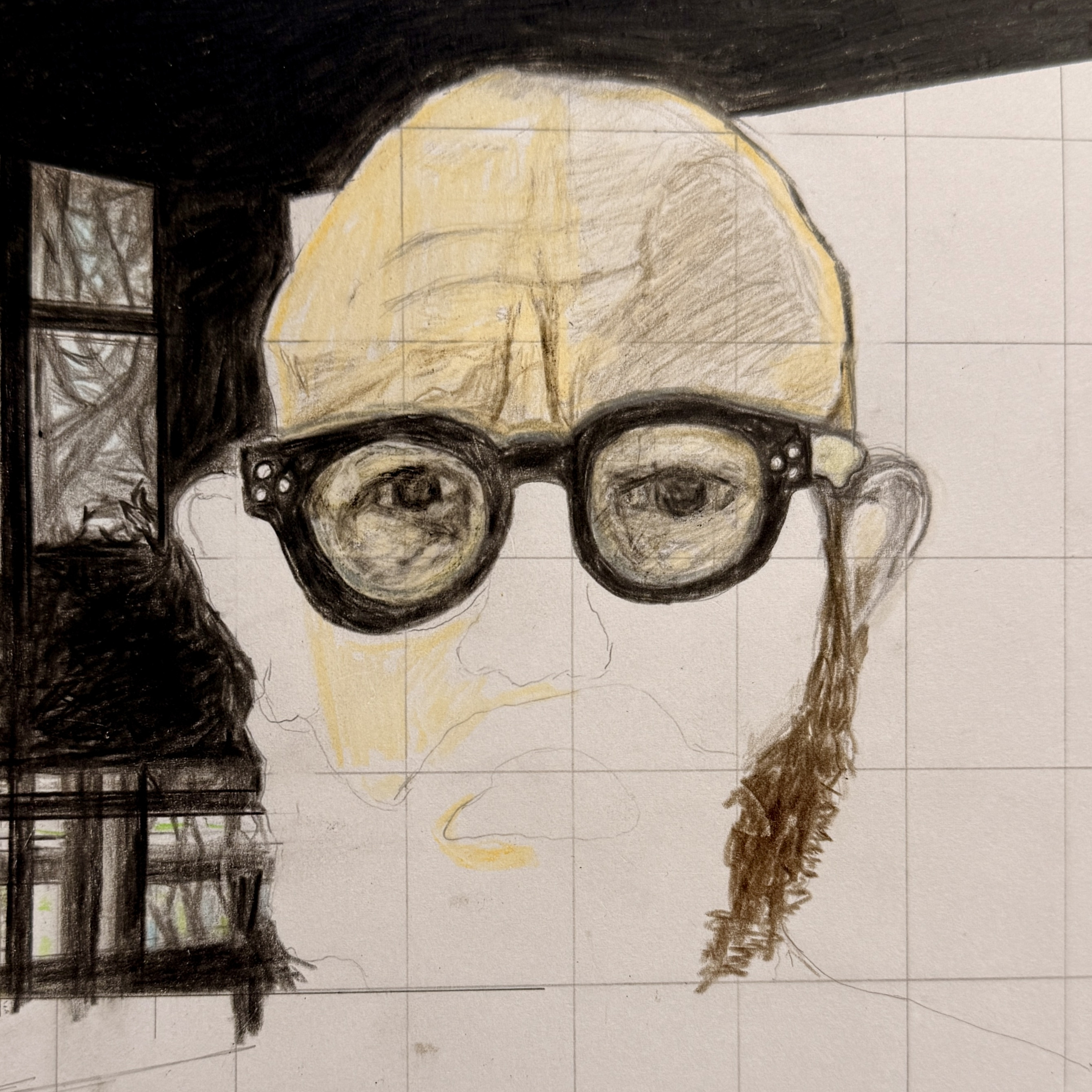
Can AI Become a Genuine Third?
from What Are Days For Hosted by Fernando Pessoa
* Steve reflects on one of therapy’s unique strengths: because it unfolds largely within the symbolic and imaginary realms, seemingly accidental ideas can suddenly become transformative organising principles. The therapist’s role often involves recognising these serendipitous structures and using them to create entirely new ways of thinking. * A session with Richard illustrates this perfectly. Discussing grief over his father’s death and the impossibility of expressing its finality, Steve spontaneously introduces Lacan’s triad of the Imaginary, Symbolic and Real. The framework allows grief to be explored not merely as emotion but as something rooted in the inexpressible reality of embodied mortality, while language and imagination provide the only available shelters from it. * Steve experiences the paradigm not as intellectualisation but as a new game board. Once the threefold structure exists, therapist and client can move around it together, discovering insights that would have remained inaccessible without the framework itself. * This leads into a much broader reflection on AI as a therapeutic tool. Steve explains that he routinely records sessions with explicit consent, generates detailed factual notes, and increasingly uses AI to produce an additional reflective piece called “A Second Look”, intended to offer perspectives beyond the session itself. * He recalls being formally investigated by the BACP after using GPT with a client years earlier. The complaint centred not on therapeutic content but on sharing her first name without explicit permission. The experience left him convinced that the crucial ethical issue is transparent informed consent rather than avoiding AI altogether. * The current workflow deliberately separates descriptive notes from interpretation. Session notes aim to function like nonviolent communication, tracking what occurred as faithfully and non judgementally as possible rather than analysing or imposing meaning. * “A Second Look” serves a different purpose. Instead of documenting, it acts almost like an additional supervisory voice, extracting broader patterns and possibilities that neither therapist nor client may have explicitly articulated during the conversation. * Steve’s central philosophical question is whether AI genuinely functions as a third participant. Rather than merely remixing what therapist and client have already contributed, can it occupy a distinct perspective that notices relationships impossible for either party to perceive from within the dyad? * The attraction lies partly in reduced transference. The therapist and client inevitably become entangled in mutual projections, whereas AI stands outside that emotional structure while still having access to everything generated within it. This outsider position may allow observations unavailable to either human participant. * He likens the process to squeezing extra value from tea leaves. The session is the first infusion, while “A Second Look” may be a second brew that reveals subtler flavours still present in the leaves but not yet extracted. * Steve wonders whether this apparent wisdom is authentic or simply sophisticated recombination. Is AI genuinely contributing something new, or performing a convincing illusion by rearranging insights that already existed implicitly within the original dialogue? * He imagines replacing AI with a silent, intelligent human observer who listens without taking sides and then addresses the client afterwards. The real question becomes whether such a witness would produce recognisably similar reflections, suggesting that the third perspective itself possesses genuine value independent of its source. * The message closes on lighter ground, with delight at the return of sunshine after prolonged rain and observations of an increasingly overgrown garden where self seeded sunflowers have become strangely humanoid, creating an atmosphere that feels less pastoral than quietly uncanny.
Embed this episode
No transcript yet.