
EPISODE · Jul 8, 2026 · 1H 12M
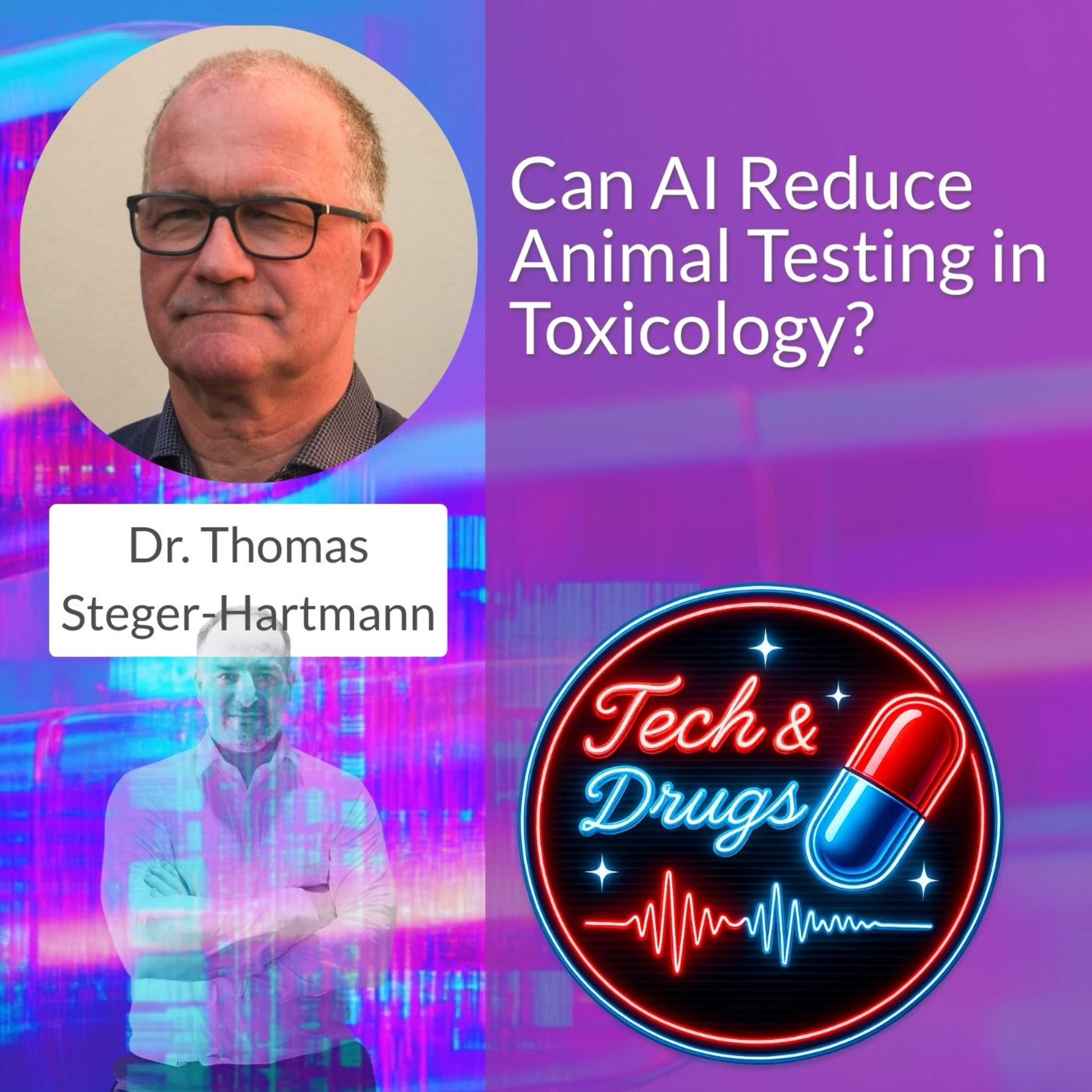
Can AI Reduce Animal Testing in Toxicology? With Dr. Thomas Steger-Hartmann
from Tech and Drugs - Podcast · host Thibault Geoui
In this Tech & Drugs episode, I sit down with Thomas Steger-Hartmann, former investigational toxicology lead at Bayer and industry lead of the VICTOR Consortium, to explore the future of drug safety.We discuss how toxicology is moving from descriptive animal studies toward more predictive, data-driven, and less animal-dependent approaches — without losing sight of the ultimate goal: protecting patients.Thomas explains why animal models are often more useful than public debates suggest, where they fall short, and how new approach methodologies, virtual control groups, organ-on-chip systems, historical control data, and AI could reshape preclinical safety assessment.A major theme of the conversation is the VICTOR Consortium, which aims to use historical control data, statistics, and artificial intelligence to build virtual control groups and potentially reduce animal use in toxicology studies.We also discuss the role of regulators, why regulatory acceptance is often misunderstood, and how collaboration between industry, EMA, FDA, and scientific consortia can help move new methods into practice.Key themes discussed:Why toxicology is central to drug discovery and developmentWhat animal studies do well — and where they fall shortThe limits of translating animal findings to humansWhy rare adverse events are statistically difficult to detectHow virtual control groups workThe VICTOR Consortium and historical control dataHow AI can help extract value from toxicology datasetsNAMs, in vitro systems, in silico tools, and organ-on-chip modelsRegulatory science, qualification, validation, and acceptanceWhy better data curation is essential for safer and more ethical R&DWhy this matters:Drug safety sits at the intersection of biology, data, regulation, and ethics. As pharma and biotech move toward AI-enabled R&D, toxicology is becoming a critical test case for how the industry can use historical data, computational methods, and new experimental systems responsibly — reducing animal use while maintaining scientific and regulatory confidence.Guest information:Guest: Thomas Steger-HartmannRole: Former investigational toxicology lead at Bayer; industry lead of the VICTOR ConsortiumCompany: Bayer / VICTOR ConsortiumLinkedIn: https://www.linkedin.com/in/thomas-steger-hartmann-b7b05a55/Company website: https://www.bayer.com/ & https://www.vict3r.eu/Tech & Drugs explores how data, AI, and technology are changing pharma, biotech, and drug R&D. Hosted by Thibault Geoui, the podcast brings together leaders, scientists, technologists, and builders working at the interface of science and technology.If you enjoyed this conversation, subscribe to Tech & Drugs for more discussions on AI, data, and the future of pharma and biotech.#Toxicology #DrugSafety #AIinPharma #DrugDiscovery #NAMs
Embed this episode
Ready to play
Can AI Reduce Animal Testing in Toxicology? With Dr. Thomas Steger-Hartmann
No transcript for this episode yet
Similar Episodes
No similar episodes found.
Similar Podcasts
No similar podcasts found.