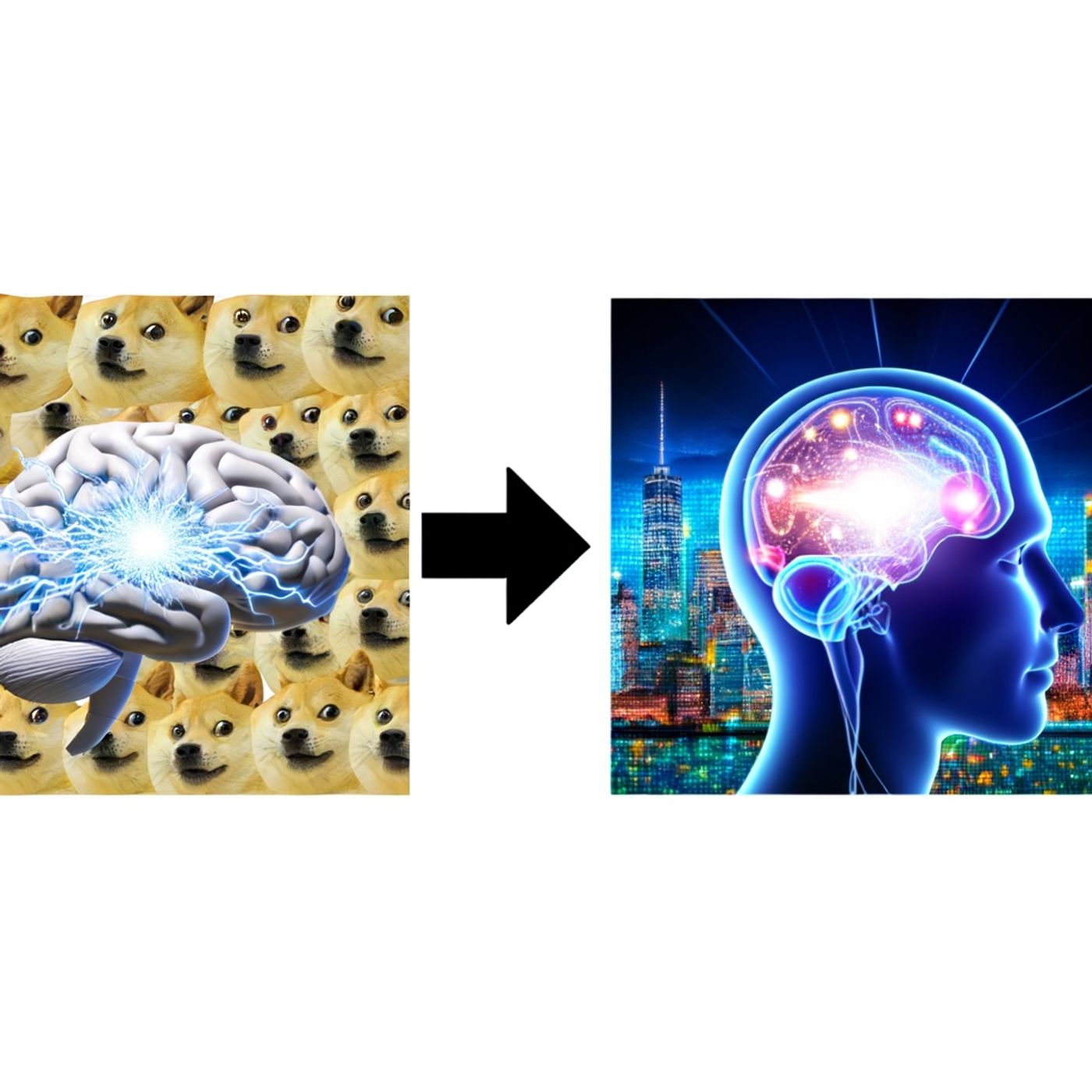
Can DOGE Thinking Make Government More Efficient and Community Driven episode artwork

EPISODE · Jun 13, 2026 · 4 MIN

Can DOGE Thinking Make Government More Efficient and Community Driven

from Gov Efficiency Beyond Meme: DOGE Thinking Work? · host Inception Point AI

A Shiba Inu smirks in Comic Sans. Much wow. Very currency. To most people, the DOGE meme is just that montage: rainbow captions, TikTok remixes, Elon tweets, and a sideways joke that somehow became a $10‑plus‑billion asset, with Dogecoin trading around eight or nine cents and still sitting among the top cryptocurrencies by market cap, according to data from Coinbase and Nasdaq. But what if DOGE isn’t just absurd? What if it’s a compressed philosophy of how groups can move fast, self‑organize, and bypass friction? At its core, DOGE is three things: community, decentralization, and rapid action. The community built around Dogecoin has kept the coin alive long after the hype cycles faded. YouHodler and other market analysts still list DOGE as a leading meme crypto largely because its community refuses to let the joke die. That same community has organized real‑world efforts, from charity fundraisers to sponsoring NASCAR cars, often faster than traditional institutions manage basic coordination. Decentralization is the second pillar. There is no central CEO of DOGE in the way there is a CEO of a bank or a government agency. According to Coinbase, Dogecoin runs on an open network where anyone can participate, and decisions are pushed out to the edges via culture, not mandates. That’s messy—but it is also resilient and adaptive. Then there is rapid action. In June 2026, DMarketForces reported that Dogecoin jumped on the heels of the SpaceX IPO simply because sentiment shifted around Elon Musk, and traders acted instantly. House of Doge’s new partnership with MoonPay, announced in early June, will enable Dogecoin payments across more than six thousand merchants and launch a DOGE‑first checkout solution called DOGE Pay. That entire pipeline from meme to live payments, rolled out through private coordination rather than legislation, is “DOGE Thinking” in motion. So could this logic make governments more efficient? Imagine government services designed more like open‑source projects than monolithic agencies. Instead of long, centralized procurement cycles, small cross‑functional teams spin up “minimum viable” services in weeks, gather public feedback in real time, and iterate—much like crypto projects ship upgrades to keep up with their communities. Dogecoin’s culture of “just do it, fix it live” is crude, but it highlights how speed and experimentation can surface better solutions than multi‑year planning documents. DOGE’s community dynamics point to another possibility: citizen co‑creation. Instead of governments only consulting citizens through rare hearings and surveys, they could treat policies like protocol changes, with open discussion forums, transparent “pull requests,” and visible histories of who suggested what. The DOGE ethos here is humility: assume that innovation can come from the edges, not just from the center. We also see DOGE Thinking in other sectors. Open‑source software projects like Linux, Wikipedia’s volunteer‑driven editing model, and even community‑organized crisis mapping during natural disasters all show how decentralized crowds can outperform tightly controlled hierarchies when speed and local knowledge matter most. These models suggest that under the right conditions—clear rules, transparent data, and simple tools—government could outsource some creativity to the people it serves. Of course, there are limits. You do not want meme‑driven governance making nuclear policy. You need accountability, legality, and protection for minorities who might be steamrolled by loud majorities. The question is not whether DOGE can replace institutions, but whether its logic can inject urgency, experimentation, and community energy into systems that are currently slow, opaque, and risk‑averse. So, listeners, what do you think: does DOGE Thinking—community first, decentralized by default, rapid and experimental—have any real potential as a design principle for government innovation? Or is it destined to remain a beautiful, chaotic joke that only works on the internet? Thanks for tuning in, and don’t forget to subscribe so you don’t miss the next episode. This has been a quiet please production, for more check out quiet please dot ai. For more http://www.quietplease.ai Get the best deals https://amzn.to/3ODvOta

A Shiba Inu smirks in Comic Sans. Much wow. Very currency. To most people, the DOGE meme is just that montage: rainbow captions, TikTok remixes, Elon tweets, and a sideways joke that somehow became a $10‑plus‑billion asset, with Dogecoin trading around eight or nine cents and still sitting among the top cryptocurrencies by market cap, according to data from Coinbase and Nasdaq. But what if DOGE isn’t just absurd? What if it’s a compressed philosophy of how groups can move fast, self‑organize, and bypass friction? At its core, DOGE is three things: community, decentralization, and rapid action. The community built around Dogecoin has kept the coin alive long after the hype cycles faded. YouHodler and other market analysts still list DOGE as a leading meme crypto largely because its community refuses to let the joke die. That same community has organized real‑world efforts, from charity fundraisers to sponsoring NASCAR cars, often faster than traditional institutions manage basic coordination. Decentralization is the second pillar. There is no central CEO of DOGE in the way there is a CEO of a bank or a government agency. According to Coinbase, Dogecoin runs on an open network where anyone can participate, and decisions are pushed out to the edges via culture, not mandates. That’s messy—but it is also resilient and adaptive. Then there is rapid action. In June 2026, DMarketForces reported that Dogecoin jumped on the heels of the SpaceX IPO simply because sentiment shifted around Elon Musk, and traders acted instantly. House of Doge’s new partnership with MoonPay, announced in early June, will enable Dogecoin payments across more than six thousand merchants and launch a DOGE‑first checkout solution called DOGE Pay. That entire pipeline from meme to live payments, rolled out through private coordination rather than legislation, is “DOGE Thinking” in motion. So could this logic make governments more efficient? Imagine government services designed more like open‑source projects than monolithic agencies. Instead of long, centralized procurement cycles, small cross‑functional teams spin up “minimum viable” services in weeks, gather public feedback in real time, and iterate—much like crypto projects ship upgrades to keep up with their communities. Dogecoin’s culture of “just do it, fix it live” is crude, but it highlights how speed and experimentation can surface better solutions than multi‑year planning documents. DOGE’s community dynamics point to another possibility: citizen co‑creation. Instead of governments only consulting citizens through rare hearings and surveys, they could treat policies like protocol changes, with open discussion forums, transparent “pull requests,” and visible histories of who suggested what. The DOGE ethos here is humility: assume that innovation can come from the edges, not just from the center. We also see DOGE Thinking in other sectors. Open‑source software projects like Linux, Wikipedia’s volunteer‑driven editing model, and even community‑organized crisis mapping during natural disasters all show how decentralized crowds can outperform tightly controlled hierarchies when speed and local knowledge matter most. These models suggest that under the right conditions—clear rules, transparent data, and simple tools—government could outsource some creativity to the people it serves. Of course, there are limits. You do not want meme‑driven governance making nuclear policy. You need accountability, legality, and protection for minorities who might be steamrolled by loud majorities. The question is not whether DOGE can replace institutions, but whether its logic can inject urgency, experimentation, and community energy into systems that are currently slow, opaque, and risk‑averse. So, listeners, what do you think: does DOGE Thinking—community first, decentralized by default, rapid and experimental—have any real potential as a design principle for government innovation? Or is it destined to remain a beautiful, chaotic joke that only works on the internet? Thanks for tuning in, and don’t forget to subscribe so you don’t miss the next episode. This has been a quiet please production, for more check out quiet please dot ai. For more http://www.quietplease.ai Get the best deals https://amzn.to/3ODvOta

NOW PLAYING

Can DOGE Thinking Make Government More Efficient and Community Driven

0:00 4:53

No transcript for this episode yet

We transcribe on demand. Request one and we'll notify you when it's ready — usually under 10 minutes.

That Hoarder: Overcome Compulsive Hoarding That Hoarder Hoarding disorder is stigmatised and people who hoard feel vast amounts of shame. This podcast began life as an audio diary, an anonymous outlet for somebody with this weird condition. That Hoarder speaks about her experiences living with compulsive hoarding, she interviews therapists, academics, researchers, children of hoarders, professional organisers and influencers, and she shares insight and tips for others with the problem. Listened to by people who hoard as well as those who love them and those who work with them, Overcome Compulsive Hoarding with That Hoarder aims to shatter the stigma, share the truth and speak openly and honestly to improve lives. The Field Priest Methodius Chwastek The Field is a place of cultivation and of battle. In the Church, we learn to cultivate a life pleasing to God. This life is shaped in the spiritual battle. This series examines, chapter by chapter, the Christian classic The Field, by Saint Ignatius Brianchaninov. Please join me as I explain this great work in terms the modern Orthodox Christian can understand.  Humanizing Change Tremendousness Join us each episode as we talk with innovators in their respective fields about their unique journeys and how they humanize change in their own work, right here, on Humanizing Change. Tao Te Ching by Laozi (Author), Stephen Mitchell (Full Audiobook) Laozi Lao-tzu's Tao Te Ching, or Book of the Way, is the classic manual on the art of living, and one of the wonders of the world. In eighty-one brief chapters, the Tao Te Ching looks at the basic predicament of being alive and gives advice that imparts balance and perspective, a serene and generous spirit. This book is about wisdom in action. It teaches how to work for the good with the effortless skill that comes from being in accord with the Tao (the basic principle of the universe) and applies equally to good government and sexual love; to child rearing, business, and ecology.Stephen Mitchell's bestselling version has been widely acclaimed as a gift to contemporary culture.

Frequently Asked Questions

How long is this episode of Gov Efficiency Beyond Meme: DOGE Thinking Work??

This episode is 4 minutes long.

When was this Gov Efficiency Beyond Meme: DOGE Thinking Work? episode published?

This episode was published on June 13, 2026.

What is this episode about?

A Shiba Inu smirks in Comic Sans. Much wow. Very currency. To most people, the DOGE meme is just that montage: rainbow captions, TikTok remixes, Elon tweets, and a sideways joke that somehow became a $10‑plus‑billion asset, with Dogecoin trading...

Can I download this Gov Efficiency Beyond Meme: DOGE Thinking Work? episode?

Yes, you can download this episode by clicking the download button on the episode player, or subscribe to the podcast in your preferred podcast app for automatic downloads.
URL copied to clipboard!