
EPISODE · Jun 5, 2026 · 5 MIN
Can free AI for everyone be sustained?
from Korea JoongAng Daily - Daily News from Korea
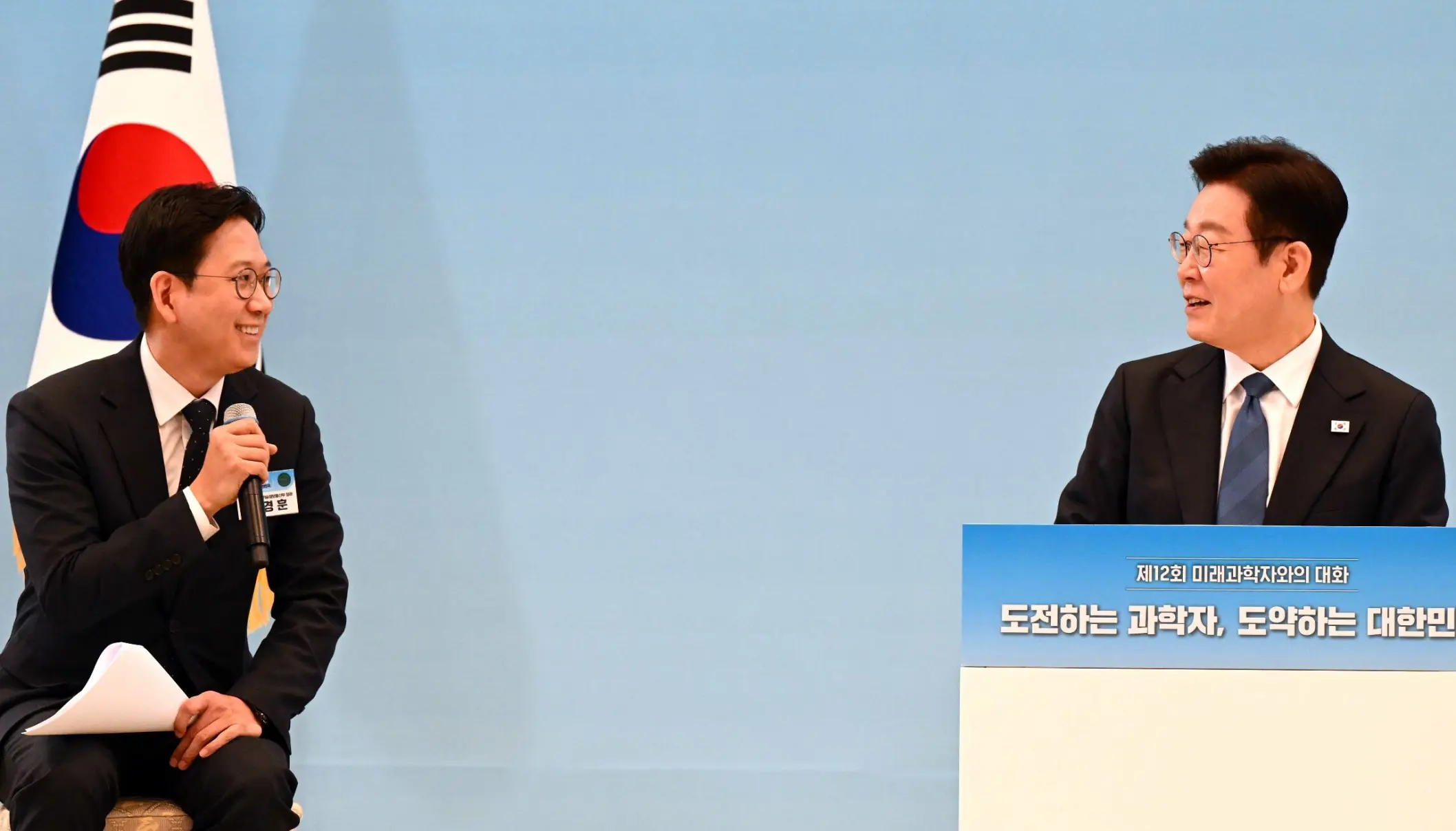
A notable exchange during a Cabinet meeting last month highlighted a growing debate over the government's proposed "AI for Everyone" initiative. The project is part of President Lee Jae Myung's campaign pledge to build an "AI basic society," aimed at guaranteeing a minimum level of access to AI for all citizens. When Lee asked about the program's progress, Deputy Prime Minister and Science and ICT Minister Bae Kyung-hoon replied that preparations were underway, with a target launch in November or December. Bae explained that the service would be provided free of charge through 2028, after which private companies would lead its operation. Lee offered a different perspective. If users are required to pay after becoming accustomed to free access, many may stop using the program, he said. While acknowledging that not everyone needs the same level of service, Lee suggested guaranteeing a minimum level of AI access for all citizens while charging for upgraded features. He also reminded Bae, a former business executive, that efficiency and fairness must be balanced. The exchange revealed two distinct approaches. Bae's comments reflected an industrial policy view in which the government creates initial demand before allowing the private sector to lead. Lee emphasized access to AI as a basic social right. As the technology becomes increasingly important in daily life, concerns about access are understandable. But the government's plans may be moving too quickly. At a press briefing last month, Bae announced a goal of providing every citizen with an AI agent. Unlike chatbots, which simply answer questions, AI agents are designed to perform tasks on behalf of users. The government also plans to offer specialized services for older adults and socially vulnerable groups. The challenge is that expanding free access does not automatically create a sustainable service model. During the internet era, user data became the foundation of targeted advertising, and this allowed technology companies to generate substantial revenue. Generative AI operates differently. User interactions may help improve services, but they do not automatically create enough revenue to offset the significant costs of computation. AI agents are even more expensive because they must understand requests, gather information and repeatedly carry out multiple tasks. Questions of quality and accountability also deserve careful consideration. For AI for Everyone to become a nationwide program, it must first provide quality responses that users who are familiar with commercial AI services find acceptable. But the program's performance and operational stability have not been publicly verified. Promising advanced agent functions before these basics are proven may be premature. The risks increase if AI agents become linked to public services. Incorrect information or inaccurate guidance could cause administrative problems. The more strongly the government promotes the program as a free national service, the more likely citizens are to regard it as a public service. If errors occur, responsibility will inevitably fall on the government. Another unresolved issue is who determines the scope of free services. Private AI providers normally decide where to draw the line between free and paid features. Under the government's model, however, public funds would support free access for all citizens. If participating companies limit usage because of rising costs, public dissatisfaction is likely to be directed at the government. On the other hand, if the government demands broader functionality to satisfy users, it risks interfering with private-sector pricing and service design. A better approach would be to foster competition among multiple AI providers while limiting government intervention afterward. Extending de facto free-service requirements beyond 2028 could distort the market and weaken innovation. The program could become dependent on government subsidies rather than competitio...
Embed this episode
NOW PLAYING
Can free AI for everyone be sustained?
No transcript for this episode yet
Similar Episodes
No similar episodes found.
Similar Podcasts
No similar podcasts found.