
EPISODE · Jun 19, 2024 · 58 MIN
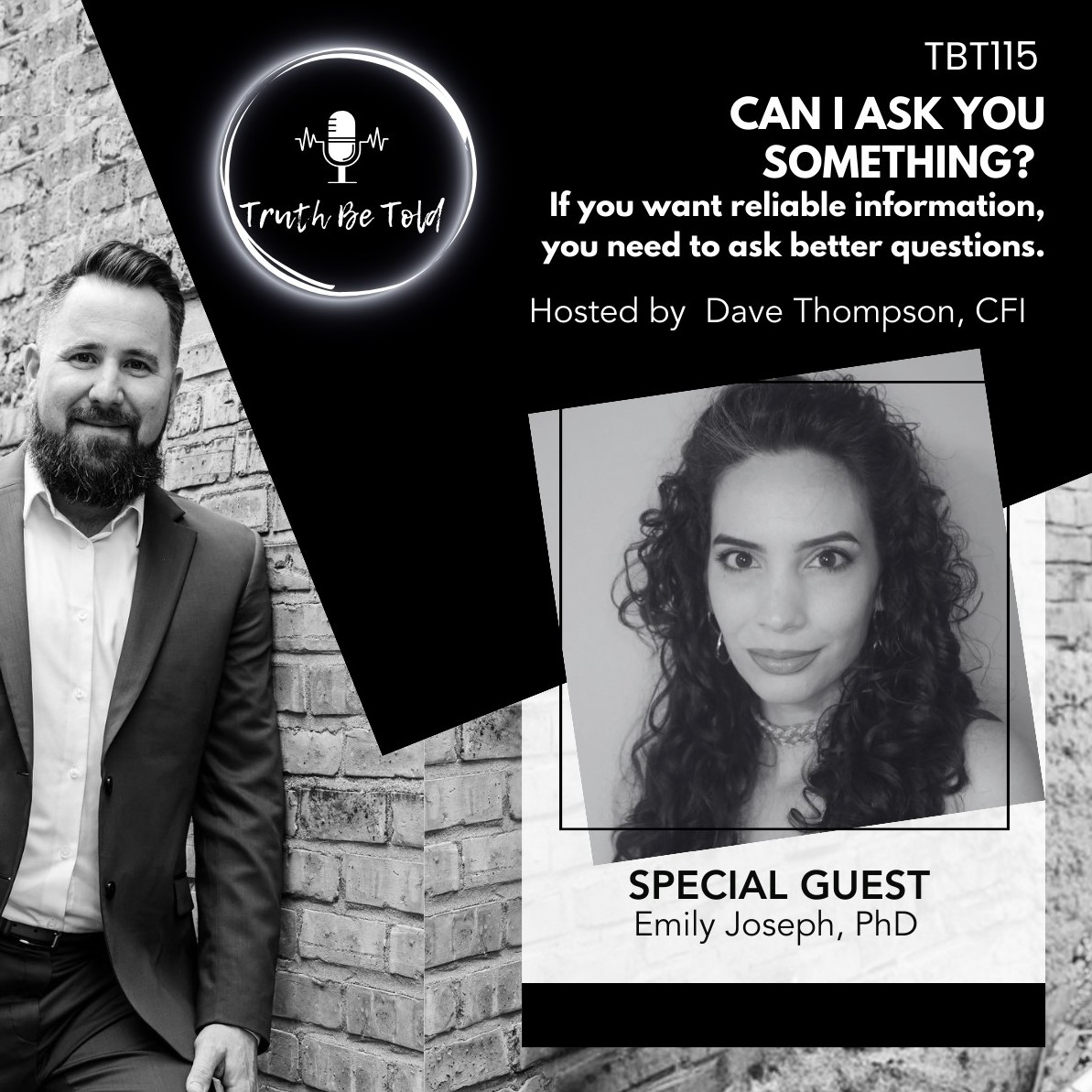
Can I ask you something? If you want reliable information, you need to ask better questions, with Emily Joseph, PhD
from Truth Be Told · host Dave Thompson
Dr. Emily Joseph, a social science researcher and user researcher for Xbox, discusses the impact of clear and not-so-clear communication on the elicitation of information. She highlights the importance of question phrasing, construct validity, and avoiding contamination of memory and responses. Emily emphasizes the need for open-ended questions, especially in investigative settings, to avoid bias and allow for accurate recall. She also explores the challenges of predicting future behavior and the significance of clear and concise questions in obtaining meaningful insights. Additionally, she addresses the misinterpretation of physical behavior and the influence of cultural and experiential factors. In this conversation, Dave and Emily discuss the importance of asking effective questions in various contexts, such as investigations, interviews, and surveys. They explore the impact of different types of questions, including open-ended and closed-ended questions, on the quality of responses. They also highlight the potential biases and limitations associated with certain question formats. The conversation emphasizes the need for interviewers to be aware of their own biases and create an environment where individuals feel comfortable providing honest feedback. Overall, the key takeaway is the significance of asking neutral and unbiased questions to elicit accurate and meaningful information. Truths: Question phrasing and construct validity are crucial in obtaining accurate and meaningful information. Open-ended questions are essential in investigative settings to avoid bias and contamination of memory and responses. Predicting future behavior is challenging, and questions should focus on thought processes rather than final decisions. Physical behavior should not be relied upon as an indicator of truth or deception, as it can be influenced by various factors. Cultural and experiential factors can impact both verbal and nonverbal behavior, highlighting the need for cultural sensitivity in communication. The interpretation of responses in interrogation footage can be biased, leading to false assumptions of guilt. Closed-ended questions can limit the amount of information obtained, while open-ended questions encourage more detailed responses. The framing and wording of questions can influence the answers given. Likert scales and other survey response options should be carefully designed to capture a full range of perspectives. Interviewers should be aware of their own biases and strive to create an environment where individuals feel comfortable providing honest feedback.
What this episode covers
Dr. Emily Joseph, a social science researcher and user researcher for Xbox, discusses the impact of clear and not-so-clear communication on the elicitation of information. She highlights the importance of question phrasing, construct validity, and avoiding contamination of memory and responses. Emily emphasizes the need for open-ended questions, especially in investigative settings, to avoid bias and allow for accurate recall. She also explores the challenges of predicting future behavior and the significance of clear and concise questions in obtaining meaningful insights. Additionally, she addresses the misinterpretation of physical behavior and the influence of cultural and experiential factors. In this conversation, Dave and Emily discuss the importance of asking effective questions in various contexts, such as investigations, interviews, and surveys. They explore the impact of different types of questions, including open-ended and closed-ended questions, on the quality of responses. They also highlight the potential biases and limitations associated with certain question formats. The conversation emphasizes the need for interviewers to be aware of their own biases and create an environment where individuals feel comfortable providing honest feedback. Overall, the key takeaway is the significance of asking neutral and unbiased questions to elicit accurate and meaningful information. Truths: Question phrasing and construct validity are crucial in obtaining accurate and meaningful information. Open-ended questions are essential in investigative settings to avoid bias and contamination of memory and responses. Predicting future behavior is challenging, and questions should focus on thought processes rather than final decisions. Physical behavior should not be relied upon as an indicator of truth or deception, as it can be influenced by various factors. Cultural and experiential factors can impact both verbal and nonverbal behavior, highlighting the need for cultural sensitivity in communication. The interpretation of responses in interrogation footage can be biased, leading to false assumptions of guilt. Closed-ended questions can limit the amount of information obtained, while open-ended questions encourage more detailed responses. The framing and wording of questions can influence the answers given. Likert scales and other survey response options should be carefully designed to capture a full range of perspectives. Interviewers should be aware of their own biases and strive to create an environment where individuals feel comfortable providing honest feedback.
NOW PLAYING
Can I ask you something? If you want reliable information, you need to ask better questions, with Emily Joseph, PhD
No transcript for this episode yet
Similar Episodes
Jun 13, 2026 ·64m
May 21, 2026 ·79m
Apr 22, 2026 ·87m
Apr 14, 2026 ·104m
Apr 10, 2026 ·64m