Support for the show comes from CrowdStrike. It's not a huge stretch to say that AI is the next major computing platform. Every platform shift changes the way we build software, and it changes security too. CrowdStrike is defining cybersecurity in the AI era with AI detection and response, or AIDR, a solution for seeing, monitoring, and securing AI across the enterprise. Learn more about how leading companies are turning to CrowdStrike to secure AI and secure their business at CrowdStrike.com.
Slash Decoder. More. Bomba. Everyday Comfort. Worth obsessing over.
Visit bombas.com.com. Audio and use code audio for 20% off your first purchase. That's B-O-M-B-A-S dot com slash audio. One purchase equals one donated. Always.
U-S voters abroad. Have you got your ballot yet? All states are now sending ballots to overseas voters. So if you want to vote this year, you should request your ballot right away. Go to votefromabroad.org and click request my ballot as to receive it by email.
Questions? Ask our support team directly. Don't miss this chance to shake the future. Don't delay. Votefromabroad.org.
Hello and welcome to the Coder. I'm your app to tell editor-in-chief's version to coders my show about big ideas and other problems. I'm talking Bloomberg's Mark Gurman, who's the world's best sourced Apple reporter. Earlier this month Apple hosted the annual iPhone event. Virtually every detail which was reported ahead of time by Mark.
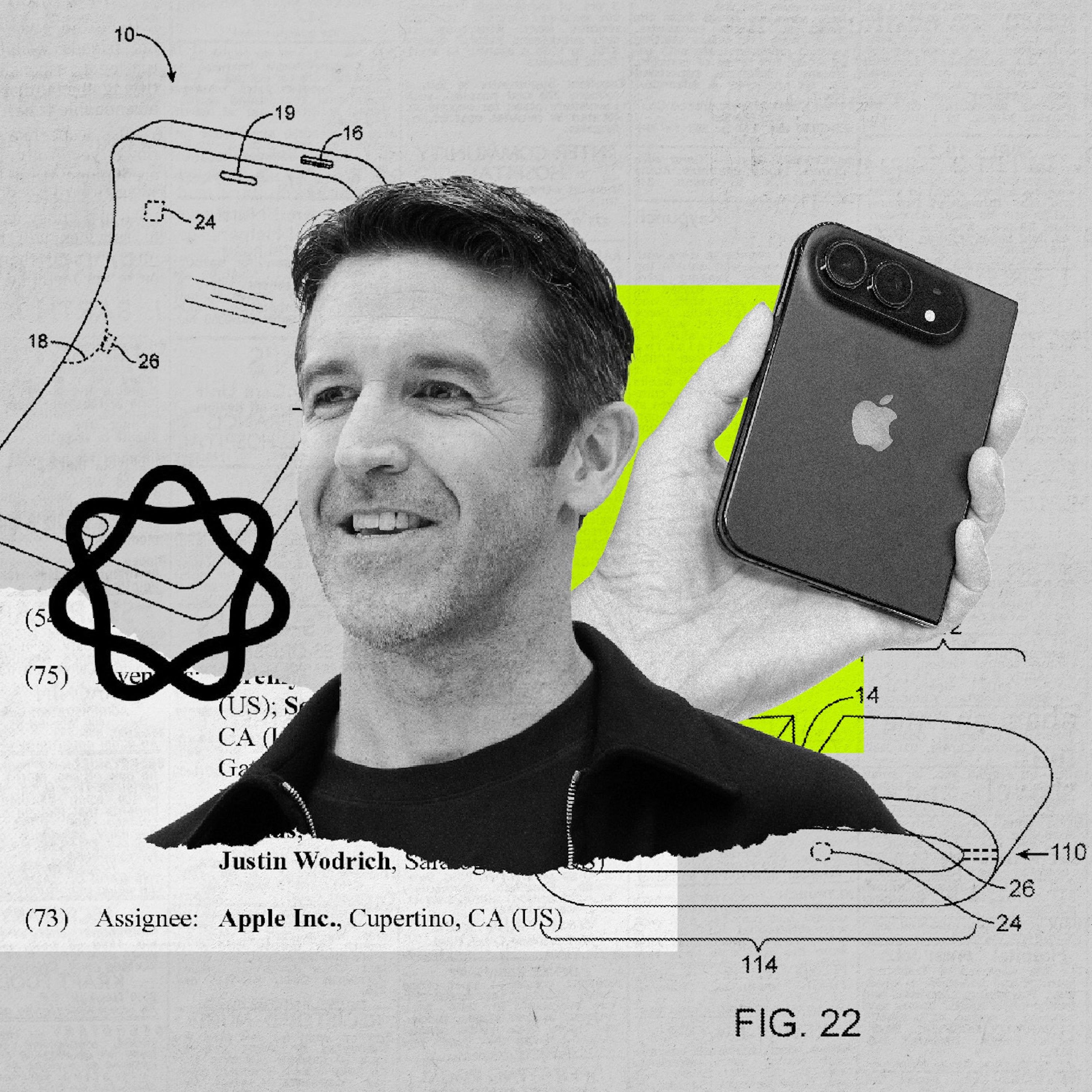
But this event was special for a number of reasons. It was New Apple CEO John Turnis' first product launch since taking over for Tim Cook less than two weeks prior. It was also the debut of the iPhone Duo, Apple's first foldable smartphone. The timing of those two things was not at all coincidental as you'll hear Mark explain. Apple takes these events and the stories they tell extremely seriously.
And this year's story says a great deal about what's happening at Apple. How Cook managed a wholesale change in Apple's leadership ranks over the past year and how all of that might change Apple's culture. And what that tells us about Turnis' plan to navigate Apple from what you might call the iPhone era into the AI era. Okay, Bloomberg's Mark Gurman on the future of Apple. Here we go.
Mark Gurman, your chief Apple correspondent and the managing editor of consumer technology at Bloomberg. Welcome to the Coder. Good to be here finally. Thanks for having me. It's been a while.
So good to catch up on all things Apple. I'm really excited to talk to you. The team and I are talking about the Apple just had its big event. They announced the iPhone Duo. It was John Turnis' first event as CEO.
This is a decoder episode. We got a new CEO. We got a new org chart inside Apple. There's been a lot of shuffles. You've been chronicling them very, very deeply over the past few years.
I'll just start the event. I have a very basic question for you. Do you ever get nostalgic for time when you didn't know what was going to happen at the iPhone event? Do I ever get nostalgic for time? Do you ever wish that you, Mark Gurman, were about to be surprised?
I honestly never think about it that way. I'm just fixated on delivering the goods and delivering the news. People love their Apple, right? People want to know everything that's coming down to the last minute. So I'm here to provide it for them.
The thing with me, and I don't know if most people know this about me, but I hope people know this about me. I'm a huge Apple fan through and through. I've always been. I'm so lucky to be able to cover a company that I love and a company that I am obsessed with. A company whose products I use, there are so many people who cover companies that they couldn't care less about.
That's not me. And so I do what I do because I love Apple and I love covering Apple. I love the community around it. I love talking about it. It's always fun to get a peek at the future and help keep knowing myself informed, but people informed around me.
That actually leads me to a lot of things because I've known you forever. We've been working in and around the same spaces forever. You got your start as an Apple blogger at the Apple rumor site. There's a whole culture around Apple that has grown up and changed over the years. And you can kind of trace them to different eras of hardware, to different CEOs, to different sizes of the company.
This was the first event with John Turner as a CEO. They announced a big new product in the iPhone Duo. Do you sense that community is changing? How do you think the community has changed over the years? Do you think Turner is going to lead to a difference in what that community feels like?
I have to say, this event really didn't feel much different than a Tim Cook event. If they felt pretty interchangeable, it could have been Tim up there introducing it. It could have been Turner's up there introducing it. The one thing I will say that did feel slightly different is that Turner's came out swinging with a point of view on AI. The first thing he came out was about the intelligent personal hub.
Now, here's the big difference between Tim Cook and John Turner's in terms of their management style. You're inside Apple, you're executive. He's a developer, he's working with him with an idea. He'll come to a point of view point, a decision and his own opinion. He'll just papper you with more questions.
He won't make a singular decision in many cases. It's very much communal decision making, collaborative decision making. John Turner, you want him to make a decision. He'll make a decision. He'll have an opinion.
Now, you may hate his opinion. You may completely disagree with him. But he has a viewpoint. That's the big difference talking to people about Turner's and Tim. Turner's talking about his view on AI.
I may disagree with it. intelligence at WWDC in 2024. And it's been a mishmash of things. They haven't really come out with a very strong narrative and viewpoint, and they finally did it. And so like I said, whether you agree with it or not, they did do that.
And I thought that was a really interesting way to kick off the keynote. All right, we're just going to get into the weeds of Apple and they're disagreeing about things. So I sat through that event. And I appreciated the same thing that you saw, which is, oh, we're telling a story. John Turnis is on the stage.
And the first thing he is doing is telling a story about this product and how it fits into the universe of technology. And then I took a beat. And I was like, oh, but they're also just making sure that he's successful at his first event by playing Apple's greatest hits. Because Intelligent Personal Hub is just a replay of Steve Drop saying the iMac was the digital hub. And at the very end of the event, he said there's one more thing and there's the F and duo.
And there was just a part of all of that that to me felt like Apple saying, look, our new CEO can put on the clothes of the old CEO. Like, you can do this exact same dance that you're expecting. And underneath it, what I felt was, to your point, I don't buy the story about the Intelligent Hub. No, I don't buy the things we're seeing AI do happening in clusters. It's the same thing that Metal launched in use, right?
And you can feel what you want about Metal Machine News. But they've marked off as giving everybody gigs of storage and gigs of RAM in the cloud. And music can go do a lot of things that AI and iPhone absolutely cannot do at this point in time. And I just felt like there was a part where they're playing it really safe with John by having him basically show up in the new lead singer of Journey, right? You can't get it wrong if you're going to do lights.
If you're going to show up on stage and you don't stop leaving, you're going to be fine for a minute. And it's all this stuff that comes after that's going to really show his real personality. But it sounds like you thought that that's his point of view. Well, it's a couple things. At a very high level, Apple's going to tell a story around what they have, right?
If Apple invented Chachypeti, they would have told a good story about that. Apple has gone as far as it's able to, at least for now, on AI. So it's telling the story, the best version of the story they can, what they have to work with, right? With the bird they have in the hand. So that's the one thing.
And then I agree with the only intelligent personal hub, how that compares to the iMac back in 98. And it feels like they're trying to sell this pivot from the Mac was the center of everything with the peripherals around it. Then you got to iCloud, right? In 2011, the center of everything with the peripherals around it. And now it's this intelligence right at the center with everything around it.
But what's so fascinating is Apple held a major product launch event in September of the year 2026 and did not introduce a single notable new AI feature. The first 15 minutes or so of the keynote was simply a replay, a re-narrativization of what they introduced over the past two years of Apple intelligence. And so they tried to just tell that story in a more concrete way. And then the other thing is they don't have any AI devices at the very core. And so they need to prop up the iPhone as their AI device because they don't have an alternative.
But of course, they're only going to do that until they have that killer device. And then they're going to change that whole narrative. So it's a very narrative, VR marketing driven company. And I'm not saying that to be critical. I mean, if I ran the company, obviously, I'm going to tell what I have.
I'm not going to veer from that. But it is interesting how they're playing this. And I agree, they did play it very safe. There's nothing safer than John Turn is introducing a new iPhone. It's like the safest thing you can do.
No major new AI products, no smart home hub, nothing in the spatial space, just straight down the middle. And it seems like that next wave of smart home products, which we're expecting later this year. And I say we're expecting, because that is something you have reported. I'm expecting it. Yes.
Yeah. Mark Erman is expecting new products, Apple. That is the first cut at some truly AI native devices. Because you have Siri AI, and it is functional now in a way that it previously was not functional, you can try some new classes of devices. There's about a half dozen AI native devices coming in the next year and a half or so.
The first will be the smart home hub, which is basically an Amazon Echo Show, but Apple style a square screen, an entirely new operating system. The idea is, what would a Siri AI operating system look like? This is that intercom, video conferencing, proactive intelligence. So you walk up to it, it recognizes who you are, and it will show content personal to you. It will know who is speaking.
Obviously, the Amazon Echo can do that, but Apple's doing it in its own apply way with AI based face ID. They're working on a home security system. They're working on another version of the smart home hub that I just talked about that is attached to a robotic arm. So you put on your desk, it can move around. It's actually a category that's pretty popping in Asia and in China right now.
And then you've got the wearables, the smart glasses. I still believe those are going to be introduced in ship in 2027. So not too far from now. Trust me, you'll be wearing them within 365 days. You will be wearing them and have video hands on you wearing them at the Steve Jobs Theater.
And if that is not the case, either something went horribly wrong for you or something went horribly wrong for Apple. And then you'll also have the AirPods with cameras. That's an interesting thing that we should talk about, but they'll have the AirPods with cameras and then a few other wearables that I won't get into. So this is what I was talking about when I said there were eras of Apple and people's relationships really changed for the company. The Steve Jobs era was defined by devices.
And in particular, Steve Jobs himself getting up and doing a keynote and famously putting out pictures of all the existing smartphones and saying, well, these all suck. And here's the reasons they all suck. And here's the iPhone and here's why it's better. And that created one kind of relationship between Apple's enormous community of fans. It's leader in the products.
And I think that was very successful. I think that Tim Cook era has been meaningfully different. I think it is largely a story about scale, to some extent it's a story about values. To a huge extent, it's a story about privacy. Apple's marketed itself as the privacy company.
It's fought the FBI to keep the iPhone encrypted. There's a lot there with Tim Cook's version of the company. But it's more corporate. It's certainly just a vaster company. It's safer.
It's not as rough around the edges as the jobs Apple. But it wasn't as device-based. I don't think Vision Pro has the same kind of mainstream cultural impact as even the hockey puck mouse than Jobs. There was a thing that he could do with products that Tim Cook Apple could not quite do with products. And that just feels really different to me.
I'm going to correct you on that. Because every time I put an article or a post out about the Vision probing, I'm like, support, I get what amounts to basically a notch or two below a death threat from dozens of people. So people are passionate about it. Well, I think that it is, is that people have created businesses around spatial computing and apps. And they're just pissed off that they've invested all this time money on a category that's probably going to die out.
And then if consumers spend $4,000 on this product, and they're like, I saved up for this thing. I'm living with this thing. And I'm pissed off to hear the realities. But I agree with you. No, I think it's in there.
I think it's good. People have invested in it. They care deeply about it. The comparison I'm making is the relationship people have to Apple in the Cook era is as an institution. It's just this big thing that spans the globe.
It has massive scale. Yeah. And in the Jobs era, it was all about really, really innovated new products that redefined categories over and over again. You're just driving a whole bunch of new products that came up in the Cook era that John Turnis is going to launch. How do you expect the culture of Apple to change around its products or its relationship to the culture to change as we go from one C.O.
to another? But think about what they did. You've got the coolest new iPhone and Apple product in maybe 10, 20 years introduced one week after 10 Cook steps down. And then for the next 12 to 18 months, you've got six or seven new product categories. You've got 25 pretty breakthrough things.
And so Tim Cook made a decision that even though his 10-year out of product company was pretty limited in major new things, the Apple Watch turned out to be a success, even though it started as a complete doubt as you remember. The AirPods are sort of a unique beast in which they're an accessory, but it's not a platform on its own yet. It's going to get there. And the Vision Pro is a failure. Tim Cook could have ended his 10-year CEO with the iPhone duo.
Could have just waited. Typical transitions at Apple. They happened mid-October. They happened mid-April. They happened January 1.
It was a specific decision that was made for John Turnis to be the one to introduce the iPhone duo. And it was a specific decision made for John Turnis to be the one to introduce this whole new product roadmap. Even though, as you know, because of the length of hardware development cycles in R&D, these things run the oven for five to 10 years. And so it's really interesting that this decision was made to let Turnis be the face of this whole new era of products, rather than allow Tim Cook to take the credit for it. And I think that's to your point where they're trying to draw the line of the sand of this new era.
If Cook is already going to step down in the next three years, let's just do it now. And let Turnis take the credit for everything. Support for the show comes from Upwork. The most successful business owners don't do it all themselves. They know how to delegate.
Upwork lets you build a team of highly skilled specialists for every function your business needs. Upwork gives your business fast access to highly skilled specialists. So you can feel critical skill gaps, launch projects faster, and scale support up or down without committing to full-time headcount. You can browse profiles, review past work, and get help scoping the roles that you can hire with confidence and get started quickly. Upwork also has Business Plus, which lets you access the top 1% of talent on Upwork.
With AI-powered shortlisting, you can get matched to the right freelancer in under six hours. And when it comes to things like contracts and payments, Upwork can help there, too. Plus, it's free to sign up and posting a job is easy. Visit Upwork.com right now and post your job for free. That is Upwork.com to connect with Top Talent ready to help your business grow.
That's up-w-o-r-k-dot-com. Upwork.com. Support for the show comes from Shopify. Things don't happen by chance. If you want something, you have to take that first step.
And when it comes to starting a business, you can take that step with Shopify. Everything you need to start selling is included and ready from day one. Shopify powers millions of businesses worldwide, from household names to small businesses just getting started. Their templates and AI tools help you get a stunning site up and running fast. No coding needed.
If questions come up, Shopify's build and AI assistant sidekick is ready to help you build, troubleshoot, and keep moving. The best part is that all Shopify's tools are immediately located in one, easy to use platform. And because Shopify handles a setup and checkout, you have more time to focus on growing your business and the tools to do it. If you're ready to hear the sound of your first sale today, head over to Shopify.com slash decoder to start your free trial today. That's right.
You can start your free trial at Shopify.com slash decoder. That's Shopify.com slash decoder. Support for the show comes from CrowdStrike. AI is already fundamentally changing how companies build products and run their businesses. If you listen to the show, you probably already know this.
But while AI drives innovation, every new model and agent also creates new cybersecurity vulnerabilities. That's why CrowdStrike builds AI detection and response or AIDR. AIDR helps organizations discover where AI is being used, monitors AI activity at runtime, and helps teams detect, investigate, and respond to threats involving AI systems. As companies adopt AI, security has to be built in from the start. More than 70% of the Fortune 100 trust CrowdStrike to protect their businesses.
Now CrowdStrike is helping secure the AI era. You can learn more about AI detection and response at CrowdStrike.com slash decoder. You've obviously done a lot of reporting. I think you were the first to break the news that Cook would be searching for a successor. I think among the very first to break it would be Turnis.
Tell me about that process. This is a big decision Cook is going to play a huge role at the company. It has a massive compensation program tied pretty much to having to talk to Xi Jinping and Donald Trump. It seems like that's his job. For 47 years, I would talk to Trump and Xi Jinping on the phone every day.
I would need at least 50. That's just me. That's his job. I used to go do politics. Much the same way that Eric Schmidt at Google was in charge of governments after Larry Page became CEO.
There's a whole pattern here of CEO Brad Smith, Microsoft, even though he wasn't CEO. He's the president of the company. Yeah, there's a parallel here. Tell me about this decision of Tim Cook wanting to elevate of making John Turnis the face of the product side of the company in this new role. There's 23 roles around and Tim Cook starts every executive team meeting, all high level meetings with people at Apple, the executive levels.
We need to start taking succession seriously. We need to start thinking about who the next people are. At that time, there was a strong realization that many of the people at the top of Apple, either they have half a billion in the bank or their billionaires, that this era is going to start to age out really quickly. Tim Cook knew that he wanted to take a step back. Jeff Williams, the COO knew he wanted to retire.
The CFO, Lupo Main Street, he wanted to retire. The General Counsel, Kate Adams, she wanted to retire. They were all about the same age. Give or take a few years. They basically came up with this plan that we'd go one by one over the next few years.
It started with the CFO, Duka, Repires, very end of 2024. He's replaced by the new CFO going to Brett. Then 2025 rolls around. They have Jeff Williams, the COO. He retires replaced by his deputy, South Econ.
Then into 2026, they have the transition from the General Counsel. They got a great replacement for her from Nita, Jennifer Newsted. Then end of 2026, the big one, Tim Cook to John Turnis. They played this out very, very slowly. What Tim Cook has done, and I do think this is going to change in the Turnis era as we progress here, is he came up with this strategy that I call Hotel California.
You never want to leave. Tim Cook, he's staying around as executive chairman. The General Counsel, he had her stay around the next six months to run government affairs. Jeff Williams stayed around three, four months after stepping down to COO to just oversee the design team, the watch team, and health teams as part of the transition. The CFO, Lupo Main Street, his CFO role, the vast majority of it went to successor, but he kept three things.
He kept oversight of information systems and technology. It's basically like your IT department, corporate information security, which is security for the organization, and corporate real estate. There's a lot of people who have been in the office of the CFO campuses and retail stores, and facilities, and what have you. It was kind of a BS job. I'll be honest with you.
It was more so keeping him on the payroll and keeping him around in case things hit the fan. They had a financial issue, and they needed the adults or the grandfather in the room to take the bull by the horn and fix things as they transition to the new guy. But now, Lupo, he's still there, still getting paid, and he's teaching a class once a week at Apple University. So he's a professor there now. I'm not sure how much longer that's going to run for, but he's still there.
All these old school Apple guys are either retired or semi-retired or a notch between semi-retirement retirement. He's a regular, who the same week that turned us to go over to CEO, I reported that Schiller is leaving his remaining responsibilities of running the App Store, running Apple events, and he's at Apple now for the next little while working on special projects. They're not saying what that is, but he's there. He's reporting to Turnis. He's still on the Apple leadership website, and he's around and he's needed in sort of an advisory capacity, and we'll see how long that lasts.
But really, this is just a gigantic end-to-end change in the Garden of Apple. It's the biggest executive overhaul I've certainly seen in my career reporting on Apple. Don't forget, when Tim Cook took over for Steve Jobs, there was no overhaul. Many of the guys under Cook were the same guys under Jobs. A lot of them have been there for a while, so this is definitely a new era, a new generation, and you're going to see more changes, right?
The head of marketing, the head of retail, some of the other people, they're in their mid-60s almost. They've got hundreds of millions of dollars. They can't do this forever. They're talking internally about retirement, so you're going to see another wave of changes in the next few years as well, I believe. You mentioned Schiller, who I've known for ages of Apple because I'm old.
He's transitioning out of his role running the App Store, and you had a piece of reporting that suggests part of it is because John Turnis and Eddy Q want to extract even more money from developers. They want to keep that Apple-tax high, they want to find more ways to have services revenue, and Schiller wasn't interested in that. Schiller famously has always thought that Apple was squeezing its developers too much. There's reporting, there's emails from some of these lawsuits. What's going on there?
Yeah, it's very interesting. Obviously, one part of it is that Schiller is 66. He wants to spend more time with his family, but for real, when it comes to him, he wants to do more philanthropy. He's been involved in all sorts of stuff in that regard. At the same time, it's a new era for Apple.
Eddy Q has a firm grip over all Apple services now, really for the first time in a while, and John Turnis, very close with Eddy Q. They are looking at new ways to make more money on the App Store, whether that's additional advertising slots, whether there's additional subscription opportunities. Obviously, there's going to be a reinvention of the App Store coming in the next few years to make more use of AI and to fill in to Siri AI as well. And Phil Schiller, according to my reporting, believes regulators are still on Apple's trail. Developers are still unhappy with Apple, and as they go into this new generation, he wants to distance a little bit from it.
But he still loves Apple more than anything. He's still part of Apple here for the foreseeable future. And to be clear, there was no big blow up or anything between Handedity Q and Turnis or anything like that. Just with all these considerations felt like a natural time for him to step off. And he's also stepping away from Apple events, right?
So it's not just dropping the app towards dropping his two remaining responsibilities, which was a lot, right? He was part of the Hotel California crew. But he had the most responsibility between the App Store and Apple events. Those are big things. And more noting, he's not wrong with the regulators.
So an outstanding Department of Justice antitrust case against Apple regarding the apps in CarPlay and all this stuff. It was started under the Biden administration, and it's not done away in the Trump administration. First of all, surprising that it hasn't gone away under the Trump administration, given the alliance between Donald Trump and Tim Cook. It's not always been shocking to me. I thought that was going to get blown up a year ago.
And then the other thing is nobody knows any of this more than Schiller, because he's the one at the center of every meeting. He's the one doing the depositions. He's the one on the stand. So if anyone has the pulse of these governments and the pulse of developers, it's him. The big decoder trope is that the structure of a company is connected directly to its culture.
If you tell me how your company is roughly organized, I can tell you where about 80% your problems are. And the other 20% of the magic. And then right now, again, I get pushback on this from CEO. It says, no, no, it doesn't matter. It's all about the people.
And I feel like Apple is both. Right? The structure of Apple has been the same for a long time. Steve Jobs used to call it the world's biggest startup. And then you just had these people who had been there forever.
They're just the same cast of characters, undercooked as they were under jobs. And you could probably shuffle them anyway you wanted. But it was the same people. And so of course, the culture persisted. You're just grabbing a wholesale turnover at the top.
And then it also seems like there's some structure changes happening underneath John Turnis, right? Johnny I was the chief design officer of the company, which always taught to me like part of that hotel California strategy. Oh, that was it's own. That was like hotel, who pertain. I mean, that was it's own level.
But they were afraid of him leaving because he was so tied to a jobs era and then they managed to work him out of the company. We can talk about it open a bit. Johnny Sruggi is a chief hardware officer now. That's not a title Apple has ever had before. That also feels like potentially transition to the title of some type of thing.
We talked about that. We talked about Sruggi's term in it. Right now Sruggi is the second most important person at Apple. He created Apple Silicon, which let's just face it, you cover the whole industry. I cover the whole industry.
That's the key differentiator. That's what allows him to do different stuff. That's the competitive advantage. Letting this guy walk out the door would have been a nightmare scenario, especially right now. Last year, last fall, late summer, early fall, he goes to Tim Cook tells him he's done.
This is right when planning for Turnis taking over is kicking into high gear. Tim says, I need you to stick around as part of the transition and have you go elsewhere and have you go to a video or wherever he was thinking about going. Certainly not retiring. This guy's not ready to retire. I don't think.
Here's what we'll do when Turnis becomes CEO, only you chief hardware officer. So you're going to keep your existing team and then you're going to get all the Turnis stuff and then you'll be the second most important person at Apple. Sruggi agrees, takes a new pay package I'm sure. And now is in that chief hardware officer role. I do not believe that is a long term thing.
I think that he's already back to wanting to transition to something new. Transition out of Apple, he has really not a lot left to do. He conquered the Mac, he dumped Intel, he dumped Qualcomm. What's left? This is a guy who wants new challenges and new things and he's done it all at Apple and there's no next thing to go after.
They've really done it all. So it'll be interesting to see how quickly that happens I think a year or two. And then when that happens, this recombination of the hardware engineering teams into one group, they're going to have to break that up again because there's no successor to Sruggi who has that industry clout and that leadership capability to be a singular hardware figure head of the company. If you have managed to acquire Intel's disastrous modem business and fix it, what worlds left are there to conquer? Exactly.
It was the hardest thing you could have possibly wanted to do. And he did. Those modems are shipping in the new phones. No complaints. If I were to place a bet with you two years ago, how is this Apple modem thing going to go?
I would have guessed it's going to be a disaster. Well, they didn't have to slow down the Qualcomm modems to make their modems look fine. There's some stuff in there for sure. But I'm talking about articles, people's calls dropping, not being able to load web pages and whatnot. All things considered pretty seamless.
Sure. So this is the question that I'm really getting at is we're talking about a lot of new people and inside of it, a return to form in terms of what that leadership page looks like. There's no chief design officer who's a legend in his own right. You're saying soon there won't be a chief hardware officer who's a legend in his own right. The heads of design listed on the page, Alan Dye left and went to meta.
Now they're just vice presidents together. Not even SPPs have designed, but they report to John Turnes. They're headed back towards a more functional Apple. They got into some kind of divisional structure as they try to keep all these powerful people. What do you think that's going to do to the company or is that just going to be more of the same?
You know, so interesting. You look at the number of things and how to stuff that each of these reports that John Turnes has, it's a lot. And I also think you have a problem where there are vice presidents, so it's here below the SVPs who want to grow. But you have these senior VPs who are going to be there forever, right? Like Eddy Q.
He's been there for almost four decades. And you've had people under Eddy Q who've left to newer jobs and big things outside of the company because they wanted to replace Eddy internally, but they know that he's never getting right. They knew that he was going to stick around for a long time. And so you're losing good people at the VP level. So I think eventually you're going to see an additional layer, right?
I think you're going to see this chief hardware officer idea become some new thing they're going to try. Like, for example, could they make Craig Federico on software like chief software and AI officer or something at one point and then elevate some of the people under him to that senior VP level, give them more responsibility, give them more money to keep more people around. So I think that leadership structure is going to be in flexor a while, so they figure out how to do this. I mean, the old Apple, they had VPs, they had senior VPs, they had executive VPs. You could imagine they're going to play with these things that are to keep people because I think one of their biggest problems over the AI at this point is retention of key players.
I actually would draw the connection between retention and AI. Not having that bench of younger people with new ideas or disruptive ideas, I think prevented them from seeing AI for what it was. It's a really good point. I think about what came to be known as the Cook Doctrine, where Tim Cook would often say, we want to own and control every foundational technology that goes into our phones. And this is really just a statement of Apple's own paranoia about being chained to Intel for a long time or whatever it might be.
They couldn't see a way to own a controlling AI because it's just massive investment. They had just blown a bunch of money trying to make a car and they kind of missed it, right? They don't have a model of their own that it competes to the frontier. And so they've distilled Google's model. And this feels like a pretty big jump away from the Cook Doctrine.
Do you think they're going to have to compete in AI by making their own investments on the frontier? Do you think they're happy where they are? It is one of the craziest things that I've ever heard is Greg and these other executives and these interviews over the last year saying that we never own search. We don't need to own AI. First of all, two completely different things.
Second of all, to your point, they have spent so many tens of billions, hundreds of billions in talking of their mouths off of owning something as simple as a cellular modem. And when I say simple, I mean something is commoditized as a cellular modem. I mean, billions to buy trying to fix the Intel modem business. So you're willing to do that to own something like a modem, but you're not willing to own AI. It's ridiculous.
And that's why they tried to own their AI and hold it from the ground up. They ran into a wall and they had no choice but to partner with Google and fixing up their models. The idea internally has always been that we are going to work with Google as they stop the absolution until we're able to do our own models from the ground up. Okay. Let's put that aside.
At the same time, I've seen absolutely zero evidence that they're actually working on that planning again. And I've seen no evidence that they're hard at work on building fresh Apple made models from the ground up. I've seen no evidence that they're running around to make big AI acquisitions. I've seen no evidence that they want to start throwing huge pay packages at AI researchers for meta Google and Thoropik and open AI. And so right now it feels like we are at a standstill.
It feels like they want to see how this Google deal and how working with third parties goes for the next several months and then they'll make a decision if they want to go back to sort of building and competing with the other guys. I think they want to see helping play out. I think they want to see the anthropic and open IPOs. I think now with all the news about AI safety, they want to see how this all plays out and maybe they'll make a decision in six months of where they want to build up. As of right now, I've seen no evidence that the transition of moving back to in-house stuff is happening.
And to be fair, it's an advantage that there's no chance that Siri will kill us all. It simply is not capable enough. Again, they fell backwards into that. It was not a strategy. This was not Apple's current AI products was not the result of good work.
It was the ultimate failing upwards. Let me ask you about that. Because right next to that, I mentioned Johnny Ive. He's obviously working with Sam Altman. They're going to build some set of products and open AI.
A lot of Apple designers have gone over to open AI. There's a very contentious lawsuit between the two companies. Apple heaves his open eye of stealing internal information and product plans. Open AI says this is just the normal course of business. We're just having conversations and job interviews.
We'll see how that plays out. The threat is that Ive will design the next class of products using natural language input as the next generation user interface the same way that the multi-touch screen was the next generation user interface on the iPhone. And that will disrupt all the old paradigms. And I know that that's what he's thinking because when he made his very romantic launch video with Sam Altman, he described the phone in the laptop as legacy devices, which was a very powerful thing for him to say given that he designed the paradigmatic examples of those things. And Apple makes the best legacy devices.
And they don't want that to be their final chapter. They want to make the best new generation AI devices. And here we are, they're trying to make the best legacy devices, but they really need both. So I see it two ways. One, Apple has to get ahead of the curbsum out.
And if they don't have the frontier AI model, they can literally listen to anything you say and do anything you want, then what are they going to make this device out of? And then on the other side, you have open AI. And if they don't have an Instagram app, everyone will still carry their iPhone with them. And then they will just use their iPhone because it has a big screen and potentially unfolds into an even bigger screen. And so they're kind of pointed at each other, each missing the thing the other one has.
How do you think that gets resolved? Okay. So I think Apple is terrified of whatever open AI is building. And we can talk about that. It's a hoppy, puck-sized AI computer type of device that you talk to without a display or whatnot.
I think Apple is terrified. In fact, the latest development in the lawsuit is Apple wants the court to show them and give them access to the upcoming device so they can analyze if it has any of their materials. And so good luck to them on that one. At the same time, I do think Apple has the ability to fast follow anything opening I does. Like if OpenAI puts out some remarkable product and it gets to hit steam, Apple's just going to copy this thing and follow pretty fast.
Unlike the smart glasses where they're coming five years, seven years after everyone else, I think if this donut or hoppy puck thing is a successful Apple will follow them just immediately. I think the models are getting commoditized to a point where they could fast follow and have a very effective product. If Apple goes to Enthropic and says, you want to copy this OpenAI device and obviously they're not going to give us their secret sauce models, will you partner with this on this? Yes. If they come to Google, we need even better models.
Will you partner on this? Yes. Right? Google has no legitimate hardware business that's going to be destroyed over partnering with Apple and hardware and Enthropic has no hardware business. Apple can get this done.
So yes, they're afraid on one hand on the other hand. I really don't think they need to be that worried because if it's a success they can just copy it. I don't know what they're accusing OpenAI doing from the beginning anyways. In terms of the lawsuit, it is very clear that OpenAI employees have done some shady things. I'm surprised that the iPhone engineer or former iPhone engineer at the center of the lawsuit, this is the one we did accused of taking material with him and sharing it with people.
I'm sure that OpenAI has not copied on him and moved forward. I think their fear is that they can't be on this guy and employees are going to revolt. How could we trust working on a company like this if you are going to get sued by Apple, even a company that big and you're just going to copy on someone, right? So see what happens. We'll see what happens.
They've done shady things but a lot of the stuff like you said is common business practice, stuff that Apple probably even does too. It's very notable to me that none of the filings in the case so far have any mention of Johnny Ives. Neither company wants to point out that Steve Jobs number two is at the center of all this because he's leading the design of this product. Do you think that's notable? I think it's by design.
I think it's notable. And I even think the origin story of this lawsuit is Johnny Ives himself. I think Apple's point of view is that Johnny Ives was on Apple's payroll for half a decade or more post the Apple Watch. And during that time, basically destroyed the Apple design team from within and took everyone with him to build a competitor to the products that he developed at Apple, right? That is Apple's viewpoint.
And I think there's a lot of anger towards Ives at the very center of this, particularly from Tim Cook and some of those other players there. I think Johnny Ives perspective is that all the Apple products today, they are direct siblings of everything Johnny I've developed there. Even the iPhone Duo, you can see Johnny Ives working there, right? It's all part and parcel with Johnny Ives. I think that he believes that he created the product portfolio that's the basis of this three four trillion dollar company.
And he was tired after carrying that company, posting jobs and very sad about Steve Jobs death and wanted to move on. And that him and Tim Cook came to an agreement that he only needed to work at Apple for a few days a week, right? And so if he wants to eventually leave Apple and build something new and have people follow him, that's up to that. So I think it's two very different sides of the same story and you can side with whoever you want to side with. But I think it's really unfortunate that things did not work out for Apple and for Johnny Ives together in this instance.
And I think he saw AI as the new core technology that he can develop something really cool around, like the iPhone was developed around the cool technologies back then of the App Store and multi-touch and what have you. You know, it's really interesting about that. And this is a whole different podcast is all of Ives best products are designed around limitations, right? The iMac was designed by the limitation of the CRT display and so on and so forth. And AI doesn't have any limitations because it always just tells you can do everything.
And I'm just dying to know what he identifies as a limitation that makes the magic of the next product. So that's a whole different podcast. But it's just on my mind is I think about what might he do to make this more than just a hockey puck that's listening all the time. I'm psyched to play with it and to see it. And I think this screenless idea is about the blessing and curse.
I think that we're going to really see how effective AI is when we're using it without a screen and having it in the background. But at the same time, there are things about displays that are not replaceable with screenless devices, gaming, massive market, video conferencing, massive use case, watching video, another massive market and use case. And I just don't know how open AI takes over the world with the device that can't video chat, can't do gaming, can't do video. And we've seen historically that being an iPhone companion, that's just doesn't cut it. Support for the show comes from Framer.
There used to be a dilemma that most businesses encountered when they were building a website. You could use a one size spits all template that didn't differentiate you and didn't really do what you needed it to do. Or you could build something for scratch, but it was expensive and the process was slow. Framer gives you a third option. Framer is the AI website builder that helps creators, teams and businesses ship production ready sites faster than ever while getting every detail right.
Prompt, inspect, edit, and publish in one place at a whole new pace. Agents and humans work in tandem. Agents bring speed and scale. People bring tastes, judgment and control. That's why leading brands like Perplexity and Miro build their websites in Framer.
Learn how you can get more out of your site from a Framer specialist or get started building for free today at framer.com slash decoder for 30% off our Framer Pro annual plan. That's framer.com slash decoder. Rules and restrictions may apply. Support for the show comes from Pipe Drive. Sales teams spend up to 50% of their time on admin work rather than selling building relationships and closing deals.
They could really use a tool that covers all the admin stuff. That way sales teams could actually focus on the work they were hired to do. That's where Pipe Drive comes in. It's an intelligent AI powered sales CRM loved by growing sales teams. Their new meeting intelligence features like an AI note taker are built right into the CRM.
Pipe Drive automatically pulls deal history, email records and previous conversations. You can walk into a call already briefed. During meetings, Pipe Drive's AI note taker records and takes notes. Then it turns those notes into accurate auto drafted CRM updates ready for you to review and approve. The end result?
Less admin or selling. Switch to a CRM built by salespeople, four salespeople and join the over 100,000 companies already using Pipe Drive. Our link gets you an exclusive 30 days free instead of the usual 14 day trial. No credit card or payment needed. Just head to pipedrive.com slash decoder to get started.
That's pipedrive.com slash decoder. You can be up and running in minutes. What if we told you there was one thing you could eat to reduce your risk of death by about a quarter? Interested? And what if we added that this magical substance can dramatically lower your cholesterol, improve your mood and keep your weight stable?
No, it's not protein. It's actually fiber. The least sexy, most overlooked nutrient of all. But what is fiber? How could one nutrient do all those amazing things?
And how can you get enough? Is it powder you stir into some water going to do it for you? All that plus the strange tale of the Gorilla poop obsessed, father of gorn plex in the latest episode of Gastropod. Find Gastropod and subscribe wherever you get your podcasts. Actually, you mentioned the AirPods of the camera.
AirPods are a success because they have a huge attachment to iPhones. People buy iPhones, they buy AirPods. People buy iPhones, they buy said AirPods. There you go. You got a huge business.
Out the gate. And then you lose them every six months. You got a great company. You got a buy new one. So you mentioned that adding a camera to AirPods might turn them into a platform unto themselves.
That would obviously compete with some of these screenless devices or these AI-native devices. How would that work? Okay. So these AirPods basically have the visual intelligence feature that you have on your iPhone. You could point at something.
You could take action on it. You can get more information. It's open to the AirPods. It's no different. It's just your computer and your phone.
I want to add some of my camera. I just point my iPhone camera at my email and I say add this to my calendar and it adds it to my calendar and parses all the links. The AirPods can do that for you now. You can tell your AirPods when I get to the pasta aisle at Whole Foods, stop me when you see the tomato sauce I'm looking for. And it'll do that.
When you're walking around a city and you ask it to get directions to the nearest Walgreens, instead of telling you turn right in 40 feet, it'll say turn right by the blacks of Dan and parked at the corner. So using visual information to provide you context to help you throughout your day. It's a game changer, I think. And I think it's going to be a really sought after product. And I think that the changes we saw with the AirPods 5 at this Apple event, where now you're getting really solid ANC, even though it's not, you know, in or here, with some pro features, like the Blame Swipe at about 150 bucks, right?
That's a really good product at a really good price. I think that's setting the stage for needing to make the AirPods Pro that much better. And that's where the camera's coming is that core differentiator. So this brings me to the last thing I want to talk to you about, which is Apple and privacy. The things you're just writing out with AirPods are science fiction ideas that have been around forever.
I tried Microsoft HoloLens 10 years ago and they were doing augmented reality demos that are very much the things you're trying to do. They had me change spark plugs in an ATV. I'll never forget doing this with a big solid glasses on my face. And the problem has been one, the technology, right? It's very hard to shrink that technology and have the appropriate battery life.
And then the other problem is, well, you've got a camera pointed at everything around you all the time and people don't like that. I'm always joking that I think the killer app for Metas Glasses is facial recognition, right? If you just gave me a pair of glasses that would tell me everyone's names and faces at events, I would be the single greatest politician in world history. And the problem with that is that it requires a worldwide surveillance database and everyone taking each other's pictures all the time. And that is probably not an appropriate tradeoff for me to be the greatest politician in the world.
I think that product would be cool for my personal benefit. The social cost would be too high. This is Apple's brand is privacy. And they're up against people calling the Metas Glasses perfect glasses. They're in a world where people hate flat cameras and all that surveillance is tapping on mine.
They're doing watch was 27 with an always on listening feature that just does transcripts that doesn't record or store any audio. Still a surveillance device. I can't believe it. I'll be honest. I can't believe it.
It's just listening and you can double click it and I'll show you transcript the last 15 seconds when someone said to you without their performance. It doesn't even light up. No, I know. No, that's not true. It does light up.
But read the room. I was told it doesn't light up. I was not the Apple event for obvious reasons. I haven't been at once in 2019. I didn't know it was going to happen.
I didn't have the briefings. According to the literature on their website, when you're doing that feature, it lights up with a microphone icon and you do the live rewind. Maybe it doesn't light up for the Siri recaps. I don't think it does. The all day listening.
But the last 15 seconds, it supposedly shows a microphone. But you know what? Is this one? I'm working Apple Watch. Can you see anything on my screen?
No. It's crazy. I can't believe they did that because really you're going to take a backlash like this and then do it again with the visual intelligence six, nine months from now. And then you're going to do with a pair of short glasses and you're going to walk into all the details like Apple knows that there's a next generation of user interfaces coming. There's AI power that requires an amount of ambient capture, whether that's just listening so you can talk to it or whether it's visual so you can see the world around you.
And they haven't solved the social privacy. Nope. There are white papers about how they might have solved the technical database privacy aspect. They've got private cloud compute and they're going to encrypt the data. They're not going to store this and that.
And I don't think any of that's going to overcome the social privacy aspect. They didn't do a good job on articulating the social aspect of it at all. They could have showed more demos. They could have discussed it a bit deeper. They sort of just thrown it.
I know they only have a limited time in the keynote. I don't think they spent enough time breaking things down here. I quite think they did not do a good job rolling this feature out. I asked myself, but I'd be comfortable using this feature. Yeah.
But then I tell everyone around me the last week, hey, I've been recording you the whole time. They're going to freak out and they're not going to trust Apple. Right? So it's a really interesting one. I'm pretty shocked they did it.
What is the net new Apple watch buyers because of this feature? Like what is the bigger challenge doing this feature or not doing this feature? And I think that doing this feature is a bigger drawback than not doing the feature. There's no here. There's no cost of not doing something.
Well, there is a cost if you think there's about to be a wave of AI devices. They're doing always on transcripts and meeting recordings and opening eyes going to do something. I mean, we have seen a wave. We're not there. Yeah, right.
You can just close it. This is like Microsoft stuff. Here's a preview of a feature. Don't even consider that stuff. Eventually this will get good.
And you've just foreclosed the competitor. Well, the other thing is they had nothing else for the watch. So they had to kind of just do something, right? This is the weakest Apple watch update we've seen in a long time. And they're kind of lost to what to do next now.
They're sort of recalibrating it. They're going to have a major watch revamp at the end of next year and so forth. But they had to do something. If it were me, I would have ripped off the bandit at the same time with all the audio, post-visual intelligence stuff next year. Do it all together.
They'll all really go here in privacy story. But do you think that stuff is compatible with Apple's reputation for privacy? This is a real question I'm getting at is they might not have told the right story about the watch. They're going to have to tell the right story about AirPods with cameras in them in a world where people are shooting spray foam at flat cameras because they don't want them in their communities, right? There's a connection between these two ideas.
And it doesn't seem like Apple knows how to tell that story. Well, clearly not because they haven't done it. But here's the story on the AirPods. They can't record actual video. They can't take actual pictures.
They have an extremely low frame rate. I'm talking about a few frames per second. And the actual data that gets input into them, it's like, have you ever used a room bill and you look at the app kind of what does the room see? It's like wire frames of the environment. It would not be able to tell you and me apart, right?
It just would see. But then how can it do that brands are tomato sauce in the aisle? Well, in terms of non-people, it would be able to do that. And it could read text so it would be pretty heavily reliant on reading text and seeing color and whatnot. But being able to differentiate two people, right?
It would be very difficult for it. It's almost like a fake reproduction of what's around you. I don't have a good explanation for it. But I'm sure if they wanted to, they'll give you one. I'm not sure they're going to break it down.
They might just say, just trust us, we're Apple. It's not taking pictures of something video. It doesn't know what it's saying to some extent. So we'll see how they play. But I would have done all this stuff together, ripped off the bandaid, and spell a lot of time.
There was no need to do this all-you-an-teletions feature at the end of 26, when you could have done at the end of 27 with everything else. Unless you're just trying to slowly boil the frog, right? You're going to get people mad about this and then you're going to do the next one the next time. We'll see. I think Apple is a society.
People are really mad about meta-glasses. They soil the water for Apple and a lot of other companies. Meta being the first mover on this created an industry-wide problem. I think even though Apple has such a strong privacy stance, there's people who don't believe them. There's people who don't care what they have to say.
There's people who are going to be angry about the Apple glasses and whatnot. I think Apple, to some extent, is on such a high force with its privacy message that it came away surprised that there would be some backlash to Apple doing this. They think I believe that people are overblowing it when it comes to Apple. Everyone should just be focused on that. Just because Meta is on a poor job, technically, people's privacy doesn't mean we're going to.
So we'll see what happens. The one thing when I talk to folks there, they never make the connection between Apple and Meta in the sense that Meta's apps run on Apple's phones. People are mad about Meta and they still think the phones, Apple's phones are listening to them and they can't quite make that connection because it undoes a lot of their own messaging. If you believe your iPhone is listening to you, that's not just Meta's problem. It is also Apple's problem.
They have to actively ignore that relationship because otherwise everything else falls apart. I think that's why there's this blind spot. If people should watch us start generating transcripts, it's exactly the same relationship as my iPhone is listening to me and that's why I saw an ad for a vacation that I only talked to my friend. I'm curious what they're going to do. I have a feeling I'm just going to bulldoze her way through it.
They're going to just try to tell a good story. They're going to do a ton of PR briefings about it. They're going to do a ton of white papers about it and get as nerdy in depth as they can on this stuff. They're going to throw out a lot of comparisons. I even heard Pernesti do this in one of the interviews and Apple's statement on some of these features.
I could totally imagine say why is it any different recording from store classes if you could just hold your phone up and record people. By the way, it's very funny you just mention that because that is exactly what Mark Zuckerberg just said to our friend Alex Heath. That's funny. He literally said how is it different? I felt like this is the industry's approach.
The answer is before I can see you doing that and I feel very comfortable telling you to stop. There's something different about that. The other thing, I didn't even realize that someone pointed this out to me the other day. It's like your Apple watch has sent the voice numbers app for eight years at this point. Who stopped anyone from recording their whole day with the voice numbers app on Apple?
Anyways, this is just a more privacy-centric version of that. Apple is solving a problem here. They're not creating one. It just depends on how you look at these things. I think they'll bulldoze their way through it.
It's going to be a problem, but I think they'll be fine. All right, last two before I let you get out of here. We've talked around the iPhone duo a lot. We've mentioned it a lot. It's the thing that just came out.
I think it's incredible. I think, and this is a bold take, I think foldables will become the new normal within a decade. If you look at the market share of smartphones, and in 2006, smartphones had like 6% of the market. Now they have 85% of the market. It went over 50% of the market after five, six years.
The iPhone itself was not the source of that, but the iPhone got everyone into the smartphone game. I think the iPhone duo is going to do the same for the phone market. I think it's going to become the new normal. Even though they're a late mover to foldables? Yeah, I think the Apple brand is that strong.
I really do. I think the fit and finish the software integration is going to get people really excited about this category. Apple upgrade eventually, that's the releasing program will expand internationally. I think that's going to get people in it. I think that's going to stop advertising, sticker prices, and focus on monthly prices.
They're going to get people locked into this thing. They're going to have a family of iPhone duos over time. You'll see every phone maker just transitioning to foldables. Samsung half the line is already foldables. Very soon, the candy bar style is going to become legacy.
That's a big prediction. Although I will say their iPhone handoff feature, we can move a number between phones seems to point to a future where I, for example, have the folding phone for work and then a much smaller lighter phone for the weekends with the family. You can see that vision taking shape only because it's not easy to port a number between devices, just whatever you want, which I think is incredible. Last question. We talked about Apple.
It's culture. It's set of products. What do you think its biggest challenges are in the new era under John Turner? What do you think it's biggest opportunities are? I would say I think the biggest challenge and the biggest opportunity are the same thing.
Turnis is Apple the next three to five years is still Tinko's Apple. That's just a reality. He's going to still be there in the background. He's still going to be in the large and the product pipeline is still going to be coming out of an era that started under Tinko. But in five years from now, they are going to need to start thinking of what actually replaces the iPhone as the next thing.
The Mac to iCloud to AI as the center. What is Apple's new thing after the phone? What is Apple's new thing after the current generation of AI? And Turnis is 10 years CEO, I think will go down as a success if he's able to find that next new centerpiece. It's got a few years before he starts cooking on that.
I'm talking about something that can be in development for five to 10 years. Tim Cook never had the opportunity to have his new centerpiece of the company. He never had the opportunity to put his stamp on products of the company for two reasons. Both things that he tried to do as his centerpiece failed spectacularly. Obviously, the vision pro with the car, right?
That was Apple's multi-trillion dollar market opportunity and they just blew it. Turnis will need to successfully hit that. I'd actually put a third thing on that list. It was the very beginning of the Cook era, Jobs, literally on his deathbeds. He'd figured out TV and Cook had to spend however long pretending he knew what that meant because I don't think it had been solved.
And so there was this first wave of Apple's going to redefine TV because the last page of the eyes is called biography. He had that Jobs quote. They haven't even done a new Apple TV box in four years. That's a long time. It's funny because you don't need one.
It never occurs to me that I need to upgrade this thing. But maybe there's going to be some AI features that I can't look at that. Well, Siri, I've been waiting for the Siri I update and this could be a whole other podcast, but Siri AI has been the gate to all of these new product categories. The AirPods were supposed to be on already, Apple TV, the HomePod, the Smart HomePod. All these devices were supposed to come.
It couldn't do any of them until Siri I now, Siri I is here. Flungates are open. All right, well, Mark, we're going to have to have you back on the show to talk about those fun gates and all these new products very soon. I can't believe you haven't been on till now. Thank you so much for being on the show.
Yeah, and obviously I'd love to have you on my new podcast, Power On Podcast launching very shortly. So thanks in advance. Thank you, Frank. We'll be looking out for it. Thanks, Ben.
I'd like to thank Mark Gurman for taking time to join me on Decoder. And thank you for listening. I hope you enjoyed it. Talk about this new episode. Really, anything else at all?
Drop us a line. You can email us at decoderatheverge.com. You really do read all the emails where you can hit me up directly on threads or blue sky. We're also on YouTube. You can watch websites at DecoderPod.
We also have a TikTok and Instagram. They're both at DecoderPod as well. They're a lot of fun. You'd like to go to please share with your friends and subscribe over at your podcast. Decoder is a production version, partly the podcast network.
Decoder is producers of Greg Ock's and Nick's stat.