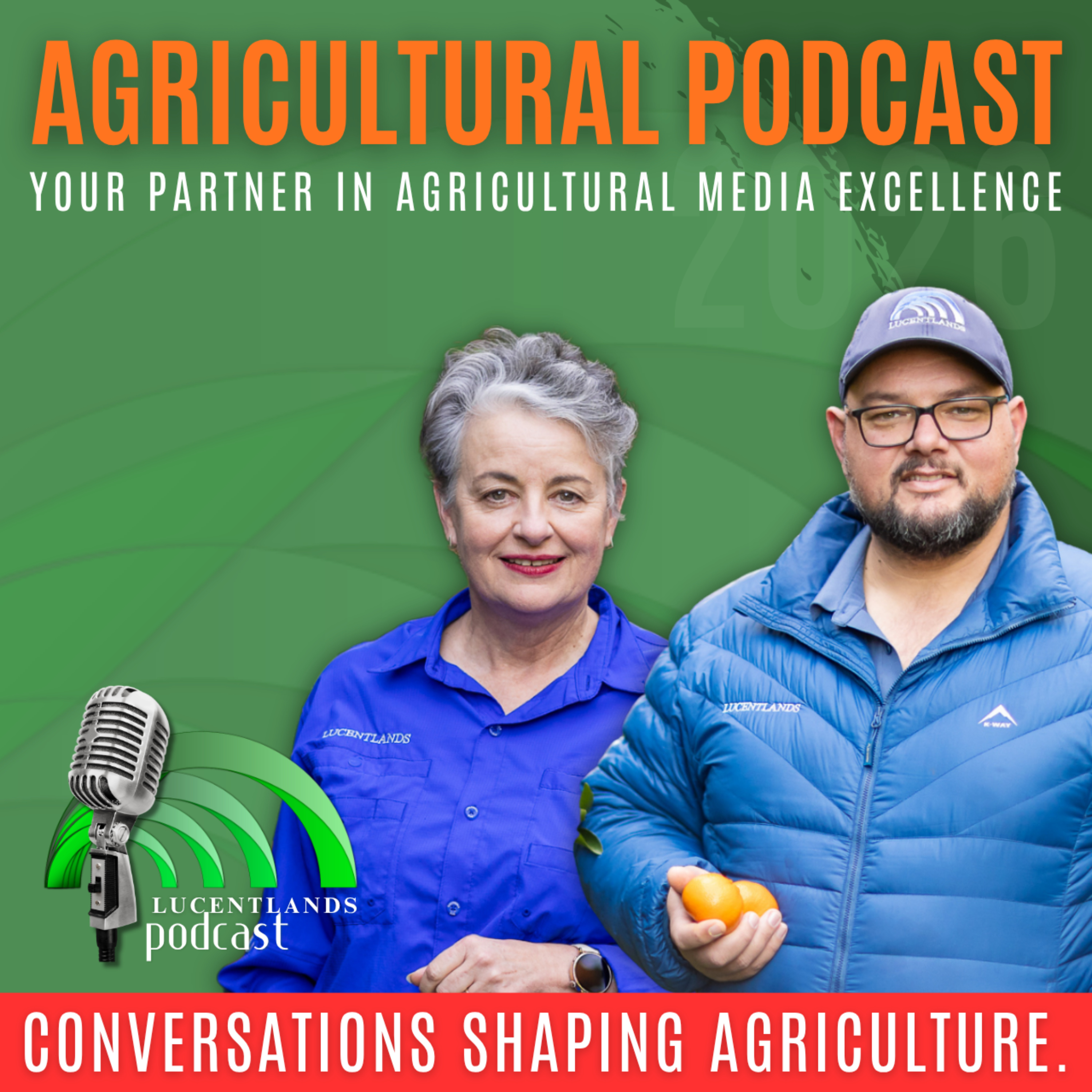
Can South Africa Save Its Beef Industry? | Ep. 121 episode artwork

EPISODE · Feb 20, 2026 · 54 MIN

Can South Africa Save Its Beef Industry? | Ep. 121

from Lucentlands Podcast | Harvesting Agriculture Knowledge · host Lucentlands

This podcast is proudly sponsored by Agrarius. Find out more: ⁠https://www.agrarius.co.za/?ref=recR9vP8u5CYfEOek&utm_source=lucentlands&utm_medium=referral&utm_campaign=LucentLandsPromo⁠Visit our agricultural stock site: https://lucentlands.smugmug.com/In this episode, hosts Dewald Kirsten and Louise Brodie speak with Roelie van Reenen, Director: Supply Chain at Beefmaster, about the realities of South Africa’s red meat industry, market access, exports, and the ongoing foot-and-mouth disease crisis.Beefmaster is one of South Africa’s leading vertically integrated beef businesses, with operations spanning feedlots, primary production, abattoirs, retail, and international exports. With the company licensed to slaughter up to 1,000 cattle per day and employing over 1,200 people, Beefmaster plays a significant role in the national value chain.Roelie shares the story of how the company was founded in the early 1980s, how deregulation reshaped the industry, and how strategic vertical integration positioned Beefmaster for growth in local and international markets.The conversation then turns to exports — including the Middle East, Mauritius, and China — and why even a small export percentage (around 5–6% of national production) is absolutely critical to the economic sustainability of South Africa’s beef industry.A major focus of this episode is foot-and-mouth disease (FMD):•How FMD impacts farmers and feedlots•Why it is an economic disease, not a human health risk•How day-zero protocols work after vaccination•Why vaccination has historically been state-controlled•What has improved since the 2019 and 2022 outbreaks•How industry cooperation is essential to regaining market accessRoelie explains that while FMD does not pose a health risk to consumers, it severely affects trade and pricing structures. Without export markets, product values collapse — and the entire value chain suffers.The episode also explores:•Halal exports and compliance for Middle Eastern markets•Logistics: frozen, shipped, or air-freighted beef•Value-adding through boxed meat instead of swinging carcasses•Utilizing every part of the animal — from leather to gelatin to pet food•The importance of strong relationships between producers and processors•Why emerging and communal farmers need better structural supportRoelie’s closing message is clear: industry collaboration, biosecurity discipline, and responsible livestock movement are critical if South Africa wants to remain competitive globally.Key Takeaways:•Exports are economically essential, even at just 5–6% of production•Foot-and-mouth disease does not affect humans — beef remains safe to consume•Strong biosecurity and disciplined movement control are critical•Vertical integration creates resilience in volatile markets•Relationships across the value chain determine long-term sustainability•Emerging farmers present enormous untapped potentialConnect with us:Website: https://lucentlands.co.za/Instagram: https://www.instagram.com/lucentlandsmedia/Facebook: https://www.facebook.com/lucentlandsmediaLinkedIn: https://www.linkedin.com/company/lucentlandsmedia/Support this podcast by buying us a coffee: https://buymeacoffee.com/lucentlands?new=1

This podcast is proudly sponsored by Agrarius. Find out more: ⁠https://www.agrarius.co.za/?ref=recR9vP8u5CYfEOek&utm_source=lucentlands&utm_medium=referral&utm_campaign=LucentLandsPromo⁠Visit our agricultural stock site: https://lucentlands.smugmug.com/In this episode, hosts Dewald Kirsten and Louise Brodie speak with Roelie van Reenen, Director: Supply Chain at Beefmaster, about the realities of South Africa’s red meat industry, market access, exports, and the ongoing foot-and-mouth disease crisis.Beefmaster is one of South Africa’s leading vertically integrated beef businesses, with operations spanning feedlots, primary production, abattoirs, retail, and international exports. With the company licensed to slaughter up to 1,000 cattle per day and employing over 1,200 people, Beefmaster plays a significant role in the national value chain.Roelie shares the story of how the company was founded in the early 1980s, how deregulation reshaped the industry, and how strategic vertical integration positioned Beefmaster for growth in local and international markets.The conversation then turns to exports — including the Middle East, Mauritius, and China — and why even a small export percentage (around 5–6% of national production) is absolutely critical to the economic sustainability of South Africa’s beef industry.A major focus of this episode is foot-and-mouth disease (FMD):•How FMD impacts farmers and feedlots•Why it is an economic disease, not a human health risk•How day-zero protocols work after vaccination•Why vaccination has historically been state-controlled•What has improved since the 2019 and 2022 outbreaks•How industry cooperation is essential to regaining market accessRoelie explains that while FMD does not pose a health risk to consumers, it severely affects trade and pricing structures. Without export markets, product values collapse — and the entire value chain suffers.The episode also explores:•Halal exports and compliance for Middle Eastern markets•Logistics: frozen, shipped, or air-freighted beef•Value-adding through boxed meat instead of swinging carcasses•Utilizing every part of the animal — from leather to gelatin to pet food•The importance of strong relationships between producers and processors•Why emerging and communal farmers need better structural supportRoelie’s closing message is clear: industry collaboration, biosecurity discipline, and responsible livestock movement are critical if South Africa wants to remain competitive globally.Key Takeaways:•Exports are economically essential, even at just 5–6% of production•Foot-and-mouth disease does not affect humans — beef remains safe to consume•Strong biosecurity and disciplined movement control are critical•Vertical integration creates resilience in volatile markets•Relationships across the value chain determine long-term sustainability•Emerging farmers present enormous untapped potentialConnect with us:Website: https://lucentlands.co.za/Instagram: https://www.instagram.com/lucentlandsmedia/Facebook: https://www.facebook.com/lucentlandsmediaLinkedIn: https://www.linkedin.com/company/lucentlandsmedia/Support this podcast by buying us a coffee: https://buymeacoffee.com/lucentlands?new=1

NOW PLAYING

Can South Africa Save Its Beef Industry? | Ep. 121

0:00 54:52

No transcript for this episode yet

We transcribe on demand. Request one and we'll notify you when it's ready — usually under 10 minutes.

No similar episodes found.

No similar podcasts found.

Frequently Asked Questions

How long is this episode of Lucentlands Podcast | Harvesting Agriculture Knowledge?

This episode is 54 minutes long.

When was this Lucentlands Podcast | Harvesting Agriculture Knowledge episode published?

This episode was published on February 20, 2026.

What is this episode about?

This podcast is proudly sponsored by Agrarius. Find out more: ⁠https://www.agrarius.co.za/?ref=recR9vP8u5CYfEOek&utm_source=lucentlands&utm_medium=referral&utm_campaign=LucentLandsPromo⁠Visit our agricultural stock site:...

Can I download this Lucentlands Podcast | Harvesting Agriculture Knowledge episode?

Yes, you can download this episode by clicking the download button on the episode player, or subscribe to the podcast in your preferred podcast app for automatic downloads.
URL copied to clipboard!