NPR. Trivia time, Darian. How old is the actor Paul Rudd? I do not know off the top of my head, but I'm going to ask Google. How old is Paul Rudd?
57, according to the AI overview. Okay, 57. Do you want to maybe look at one of the websites below the summary? Yeah, that could be a hallucination. Let's double check. Okay, Wikipedia, IMDB, all are verifying. Oh, and People Magazine, all say 57. Okay, you've done your due diligence here. But the fact is, nowadays when people want answers from Google, they don't click through all the websites. They are just looking at the AI summary. And this is a trend that has been termed the zero-click internet, because you don't have to go to a website to get the information you want. And this is arguably an existential threat to the economics of a lot of the internet.
This is The Indicator from Planet Money. I'm Darian Woods. And I'm Adrian Ma. Today on the show, how the zero-click internet descended on us, what it means for web publishers, and what some are doing to fight it. The 2026 midterm elections are upon us. On November 3rd, voters will determine what the next two years of their local leadership and the balance of national government will look like. Listen to the NPR News Now podcast for all the updates you need ahead of and after November 3rd from NPR News.
Midlife brings a lot of changes. Your Turn with Alison Aubrey is a new podcast to help you navigate the twists and turns. From health and relationships to creativity and purpose, we can help steer your next chapter. With Your Turn with Alison Aubrey. Find it on the NPR app or wherever you get your podcasts. Big news stories don't always break on your schedule. But with the NPR app, news, culture, and podcasts are ready when you want them. In your pocket. Download the NPR app today.
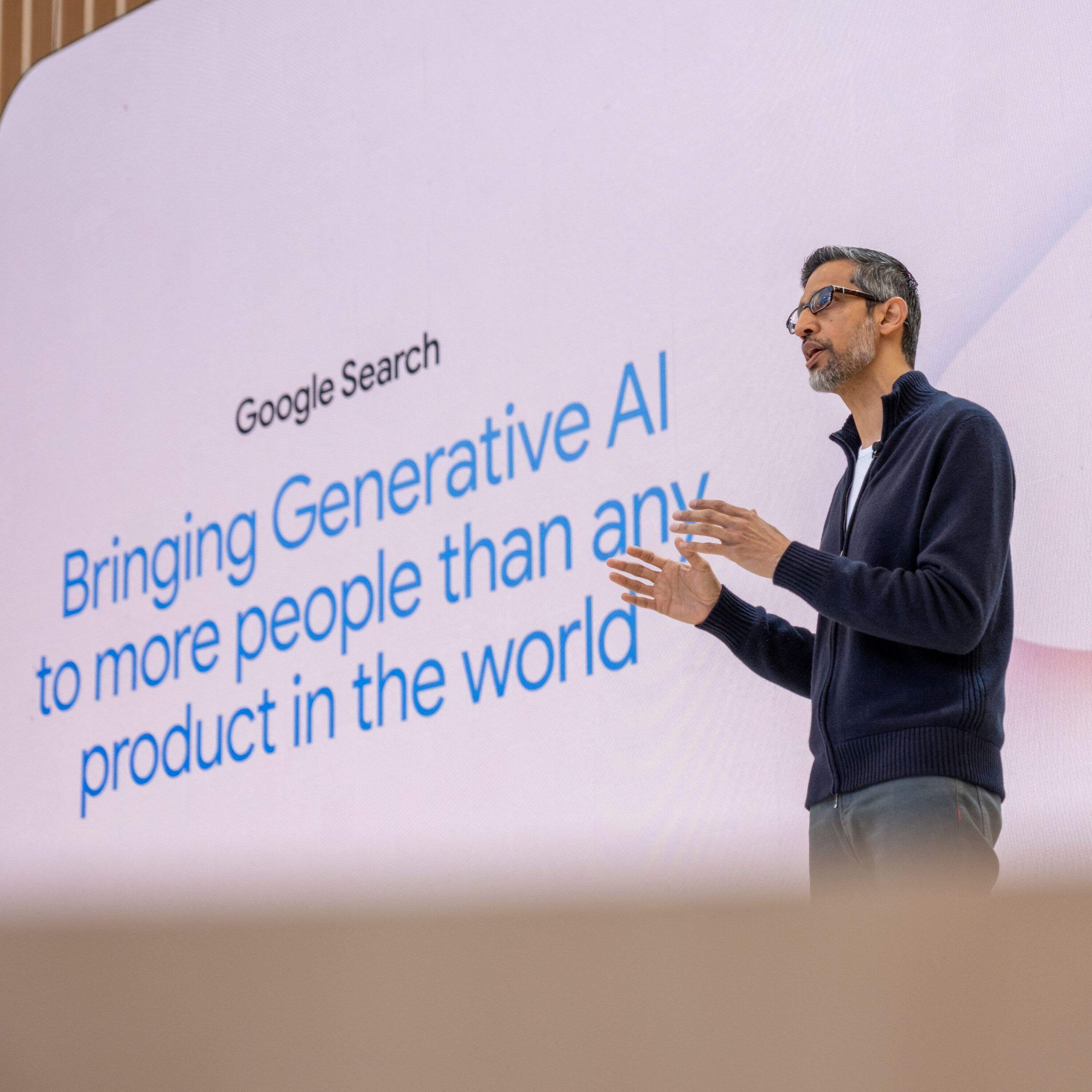
In the early days of the web, people had this metaphor for the internet, the information superhighway, a vast world where people happily roamed between big cities, small villages, and quirky roadside attractions. But over the years, the internet has shifted to looking less like a vast open landscape and more like a series of walled gardens, a world where our most popular apps and platforms do their best to keep you inside their walls, so you never have to click away to an outside website. Amanda Natividad works in marketing for a company called SparkToro, and she's co-author of a forthcoming book called Zero Click Marketing. She says the zero-click trend has actually been in the making for years now. platforms discovered they could capture more value by owning the answers, by owning the audience and the niche and giving less and less for the rest of us. That's why certain social media platforms might make it hard for users to share links to external websites. It's also why Google started serving summaries at the top of its search results. And this dynamic has been supercharged ever since it introduced AI summaries a couple of years ago. Now, 68% of all U.S. Google searches end without a click. That's a big increase from a decade ago when it was just 45%.
And Amanda says this trend towards what some also call Google Zero is accelerating. And by the way, Google is one of NPR's financial supporters. Oh, and we haven't even mentioned chatbots yet. You know, they are certainly adding to the zero-click phenomenon. I mean, who wants to spend their time sorting through various websites when you could just type your question into Claude or Gemini or ChatGPT? So if somebody asked you, hey, Amanda, is AI killing web traffic? Your answer would be, yes. I think it's...
It's scary, right? Because Google, these AI tools, right? These things are crawling our websites, right? Essentially scraping our content and putting it more and more into their platforms. Granted, Amanda says this to many people is just a better user experience. Yeah. I mean, how easy was it to find out that Paul Rudd is 57? Easy to read, hard to digest in process mentally, but yes. But the reason this zero click phenomenon is concerning to her is that it disrupts what has been one of the essential economic bargains that helped grow the open internet into the sprawling universe it is today.
Sure, a lot of garbage, but also a lot of quirky, wonderful stuff. And that's because a lot of websites made money by showing ads or through affiliate marketing. That's where a site links to a product. And if a visitor uses that link to buy the product, the site gets a commission. And the fact that even the tiniest bare bones website can make money this way is the reason you don't have to be a big company or even sell a physical product to make a living online. You could be like Nikola Bouillon. When he moved from Canada to Germany about a decade ago, Nikola found himself running into a lot of challenges.
Some of them are gigantic and difficult, like dealing with the immigration office, but some of them are also really small. Like, where do Germans put their eggs at the supermarket? And no one really takes the time to explain these things to you. Yeah, on the shelf and not in the fridge. I didn't know you could do that. Well, in Europe, all kinds of things are possible. Anyway, Nikola started a website called All About Berlin, a guide for people new to the city and figuring out where their eggs should come from, among other things. And after a few years of working on it, the site was drawing enough visitors and he was earning enough on affiliate marketing commissions to make it his full-time job.
It's a very rare event diagram, this combination of something that pays well, makes me happy, that makes other people happy, and that generally solves a social problem. Things were going great until 2024. That's when Google introduced AI summaries. And since then, Nikola says traffic to All About Berlin has dropped about 75%. Every month is the worst month of the website since two years. Jeez. So this is the thing I stopped looking at. It's like looking at your bank account balance. You don't want to see those numbers.
To make up for the dropping traffic, Nikola says he's tried to renegotiate the commissions he gets from his affiliate marketing links. That way he gets a bigger cut. And while it's helped, his income is still down about 30%. And we should say here, the zero-click web is not just a threat to small publishers like Nikola. Large publishers are also taking a hit. Not only is this new, but it is rapidly changing at a pace that I don't think we've seen before. Mark Howard is the chief operating officer for Time magazine. And how is Time trying to adapt to the encroachment of AI? Well, he says a few ways. For one thing...
Time has joined other publishers in blocking a lot of AI crawlers from their website. But it's also struck partnership deals with companies like OpenAI. Time shares its content in return for access to OpenAI's technology. And Time has also taken what seems like a pretty novel move for a media company. It's creating a whole different version of its site just for bots. Humans continue to come to the site the way that they always have and the way that you experience time.com if you go there today. But the AI bots go to what we call a markdown page. A markdown page. Essentially a stripped-down, bot-friendly version of Time's website.
So we've taken all the visual design cues, all the HTML off the page, and all it is is the actual content itself with the metadata that supports the content on the page. And we route the AI bots directly to those pages. It requires less computational power by them. We're making it easier for them to actually get to that content. Mark says the idea is that all these efforts will hopefully help time journalism surface more readily in AI search. And when we asked whether it was making a difference, his response was basically, it's early days. In the meantime, he says he's optimistic about some of the other ways companies are trying to rebalance the scales with AI.
For example, publishers like the New York Times are suing AI companies for allegedly training their models on their articles without permission. There's also companies like Cloudflare developing tools that would allow publishers to put up basically a bot paywall so that if a bot wants to crawl their site, it will have to pay. I see those marketplaces being built right now. And there's no doubt that when we have this conversation in 12 or 24 months, it'll be a totally different world in terms of how publishers have navigated this transition. Although it is a legit question whether some websites seeing their traffic go down the tubes will even be around in 12 to 24 months.
Nikola, who runs All About Berlin, says he will get by, but he's worried others won't. And it means that we are slowly going to lose a lot of websites, but we won't even notice until they're gone. And the interesting thing is this is actually in the AI company's interests. They need some kind of content to generate their chatbots. Right. But what happens when all of the quirky websites that are getting the information can't hack it economically? I don't know. Why don't we find out? What's the solution to the zero-click web? Oh, we have an AI summary.
Apparently, it's stop chasing raw website traffic and focus on building brand authority. They would say that, wouldn't they? Easier said than done. Before we go, a quick plug for a virtual event for NPR Plus supporters. We're doing a live Q&A with Redfin Chief Economist Daryl Fairweather. She's going to help us understand what's going on with the U.S. housing market, and she's going to answer your questions. I'll be there. Whelan will be there, too. It takes place on July 23rd at 3 p.m. Eastern, noon Pacific. For Plus supporters, check out our latest bonus episode in the Planet Money feed for details. And if you haven't joined Plus yet, there is still time. Just go to plus.npr.org. This episode was produced by Corey Bridges and engineered by Jimmy Keely. It was fact-checked by Sierra Juarez. Kagan Cannon is our editor and the indicators of production of NPR.
This election season, let the NPR Politics podcast save your time and your sanity. We'll help you understand key races, which polls you can safely ignore, and what might happen if power shifts in Congress. Our short daily episodes come out every afternoon so you can spend less time scrolling through each chaotic news cycle. Make NPR Politics your hub for midterm election coverage. Follow our podcast on the NPR app or wherever you get your podcasts. Midlife brings a lot of changes. Your Turn with Alison Aubrey is a new podcast to help you navigate the twists and turns. From health and relationships to creativity and purpose, we can help steer your next chapter with Your Turn with Alison Aubrey. Find it on the NPR app or wherever you get your podcasts.
Support comes from NPR sponsor AARP.