NPR. This is the indicator from Planet Money. I'm Adrian Ma. And I'm Waylon Wong, and it is Jobs Friday, the day of the month where we check the latest jobs numbers and spotlight trends in the labor market. That's right, and according to the Bureau of Labor Statistics, the unemployment rate in September ticked up a 10th of a percentage point to 4.2, so not much of a change there.
And the economy added 29,000 jobs. Also the numbers for July and August will revise downward, so July actually turned from positive to negative with minus 10,000 jobs. Meanwhile, the rate of annual wage growth has continued to slow down. It was 3% in September. Compare that to inflation, which is around 3.4%.
But while the job market is kind of moving sideways, people's pay is not keeping up with rising costs. So those are the headline numbers. Now let's turn to the focus of today's episode. On Jobs Friday, we talk a lot about the labor force. But today, we're going to talk about retirement.
The retirement force? That's a good ring to it. I would like to join that force. Sign me up. We're focusing on retirement because one lawmaker recently introduced a bill to change Social Security.
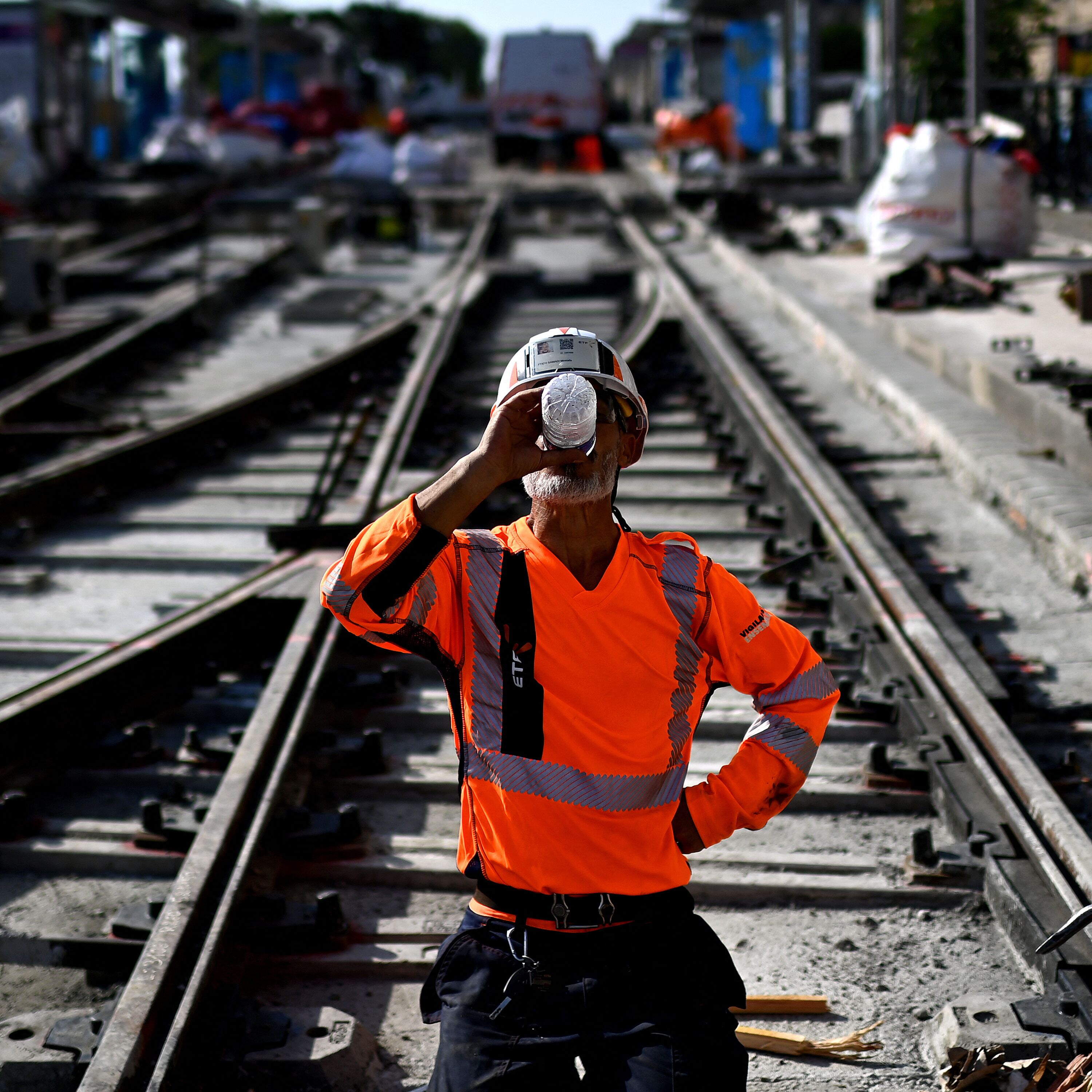
The proposal would allow people with a history of working physically demanding jobs to collect full Social Security benefits at age 60. That's instead of age 67. It would be a big change and one that proponents say would make Social Security more fair. But what even counts as a physically demanding job? And is paying retirement benefits sooner for some people a good idea when Social Security is running out of money.
We'll get into it after the break. This week at NPR's Newsmakers, Hassan Piker, he's a leading voice of what he calls the insurgent left. Although he denies being a leader at all. I've never said I'm a kingmaker. The media keeps saying this, but I don't think there can be a real kingmaker in socialist politics.
This is mass politics. Hassan Piker talks with Layla Fodel, this week at NPR's Newsmakers. You can watch or listen wherever you get your podcasts. Midlife brings a lot of changes. Your turn with Alison Aubrey is a new podcast to help you navigate the twists and turns.
From health and relationships to creativity and purpose, we can help steer your next chapter. With your turn with Alison Aubrey, find it on the NPR app or wherever you get your podcasts. Support comes from NPR sponsor AARP. This message comes from the NPR Wine Club, which is generated over $1.75 million to support NPR. Whether buying a few bottles or joining the club, learn more at NPRwineclub.org must be 21 or older to purchase.
The proposal to lower the retirement age to 60 for workers with physically demanding jobs comes from Congresswoman Haley Stevens, a Democrat from Michigan. The bill she's proposing is called the Blue Collar Social Security Fairness Act. In current law, most people cannot collect social security benefits until age 67. She argues her bill would make social security more fair because people who've spent years or decades in manual labor often have health issues that prevent them from continuing to work in their 60s. But what counts as a physically demanding job under her proposal?
Well, Stevens gives as examples construction, roofing, nursing, and manufacturing. And I mean, her district is right outside Detroit, so probably auto workers. Makes sense, but this would actually go beyond that. Her bill calls for the government to come up with a list of physically demanding jobs and updated every three years. Then, depending on how old a person was when they worked one of these jobs, they would have put in around 10 to 20 years in order to qualify for full retirement benefits at age 60.
Nari Rhee is director of the retirement security program at the UC Berkeley Labor Center, and she thinks this is a good idea. Workers and physically demanding jobs do deserve to retire sooner. And we want to make sure that people get to retire in dignity and that we're not forcing people into working until their bodies break. Now, Nari says social security is a fairly progressive program. For example, it's set up so when lower income workers start receiving benefits, they get a bigger percentage of their pre-retirement income than high earners do.
The overall progressive impact is also kind of blunted by the fact that more educated and richer people tend to live longer, so they collect social security benefits for longer. One study by the National Academy of Sciences found that people in the top 20% income-wise live an average of about 13 years longer than people in the bottom 20%. 13 years, that's a huge difference. Yeah, that's really, really stark. And of course, low income is not synonymous with blue collar, but when you look at the BLS wage statistics, the lowest paying jobs tend to be the kind we'd consider blue collar.
And in addition, blue collar workers start their careers, they're working lives at younger ages and white collar workers. Blue collar workers typically start their working careers after high school. Nari thinks that allowing blue collar workers to retire at 68 would help offset the fact that they start work sooner and tend to die at a younger age. And there's data to suggest that most Americans might be okay with that. A survey by the National Academy of Social Insurance should a majority of people think workers who have a history of physically demanding work and who are in declining health should be able to access their benefits sooner.
So for all these reasons, Nari likes Congresswoman Steven's proposal. By contrast, another social security expert we spoke to sees it differently. I think that the social security structure to deal with this problem is not a good idea. Alicia Manel is founder of the Center for Retirement Research at Boston College. She says, for one thing, deciding which jobs are physically demanding would be complicated.
Now, the Bureau of Labor Statistics literally has a detailed system that catalogs the physical demands of various jobs. It's used to determine whether a worker qualifies for disability insurance. But Alicia says using this to determine which workers can collect full retirement benefits before everyone else, let's just say that would be politically difficult. I think it would not be workable. To get agreement on it, I think would take forever.
And it's not a productive way to go. It might be obvious that a construction worker has a physically demanding job, but somebody who works as a bar recently might also say, I have a physically demanding job. And I must tell you during COVID, I helped at our ice cream place downtown and was talked from off. And that was exhausting by the end of the day. Just like lifting those like five gallon drums of ice cream.
Yes, and just being on your feet that long. I feel like a lot of restaurant and hospitality jobs are super physically demanding. You know, are like housekeeping staff at hotels or dishwashers at restaurants. I don't know if those make it onto the BLS list. The kinds of jobs where sitting is actually like one of the things you do the least.
Exactly. Yeah, yeah, you're just on your feet all day. Yeah. Alicia's other concern about Stevens's proposal is financial. Currently, workers are putting less into the Social Security Piki Bank than retirees are taking out.
And the main trust fund the government draws on to make up that shortfall is projected to run out by 2032. If that happens, all retirees could see their benefits suddenly cut by more than 20%. Alicia says, allowing a select group of people to start collecting benefits at H60 would drain funding from a program that's already on shaky footing. One of the statistics that I cited in an article that I read about it was that according to the BLS criteria, they had estimated nearly 40% of people would have a job that would be considered physically demanding. So if you allow like a good chunk of the public to collect early, that would just- And it's not just claiming early, it's claiming at full benefits.
Oh, right, right. Yeah, I mean, so it just would be- it's going in the wrong direction. She thinks a better way to help blue collar workers who are getting older and can't physically work anymore is to make it easier for them to qualify for Social Security's disability benefits, which are different from Social Security's retirement benefits. And unlike the retirement trust fund, the Disability Insurance Program is actually on solid financial footing. Congress has dipped into that fund in the past to help pay for retirement benefits, and it could do that again.
That could affect the Disability Fund's financial stability. In any case, Alicia thinks there are better ways for Congress to shore up the system and make it more fair, which folks like her have been trumpeting for years and years. So there are a number of things Congress could do. It could raise the payroll tax a little bit from 6.2% to 7.2%. Lawmakers could also eliminate the current cap on payroll taxes.
Right now, income above $185,000 a year is not taxed for Social Security. And they could also reduce benefits for retirees who already have higher incomes. In that survey we mentioned earlier, a majority of Republicans, Democrats, and independents said they would be okay with these reforms if they close Social Security's financing gap. I guess now we just need Congress to stand up and say, hey, let's raise some taxes or let's cut some benefits. Oh wow, very politically popular stances.
I'm sure people will be lining up to do that. This episode was produced by Corey Bridges and engineered by Quacy Lee. It was fact-checked by Ciara Juarez, taking candidates, our editor, and the indicators of production of NPR. This week on sources and methods, President Trump's diesel deal with Russia? Would it help with shipping costs and would it even be legal?
The United States produces more diesel than it consumes. There's no real need to bring more diesel into this country. Plus, we dig into claims from Ukraine that the US cut access to crucial military satellites. Listen now to sources and methods from NPR. Hey, how are you feeling right now?
Exhausted from the summer? Overwhelmed with the new school year? Restless? Inkshis? LifeKit is here to help.
Consider us your mental health accountability buddy, with episodes on navigating social anxiety to unlearning perfectionism. Listen to the LifeKit Podcast in the NPR app or wherever you get your podcasts.