
EPISODE · Sep 22, 2025 · 41 MIN
Can we sense magnetic fields?
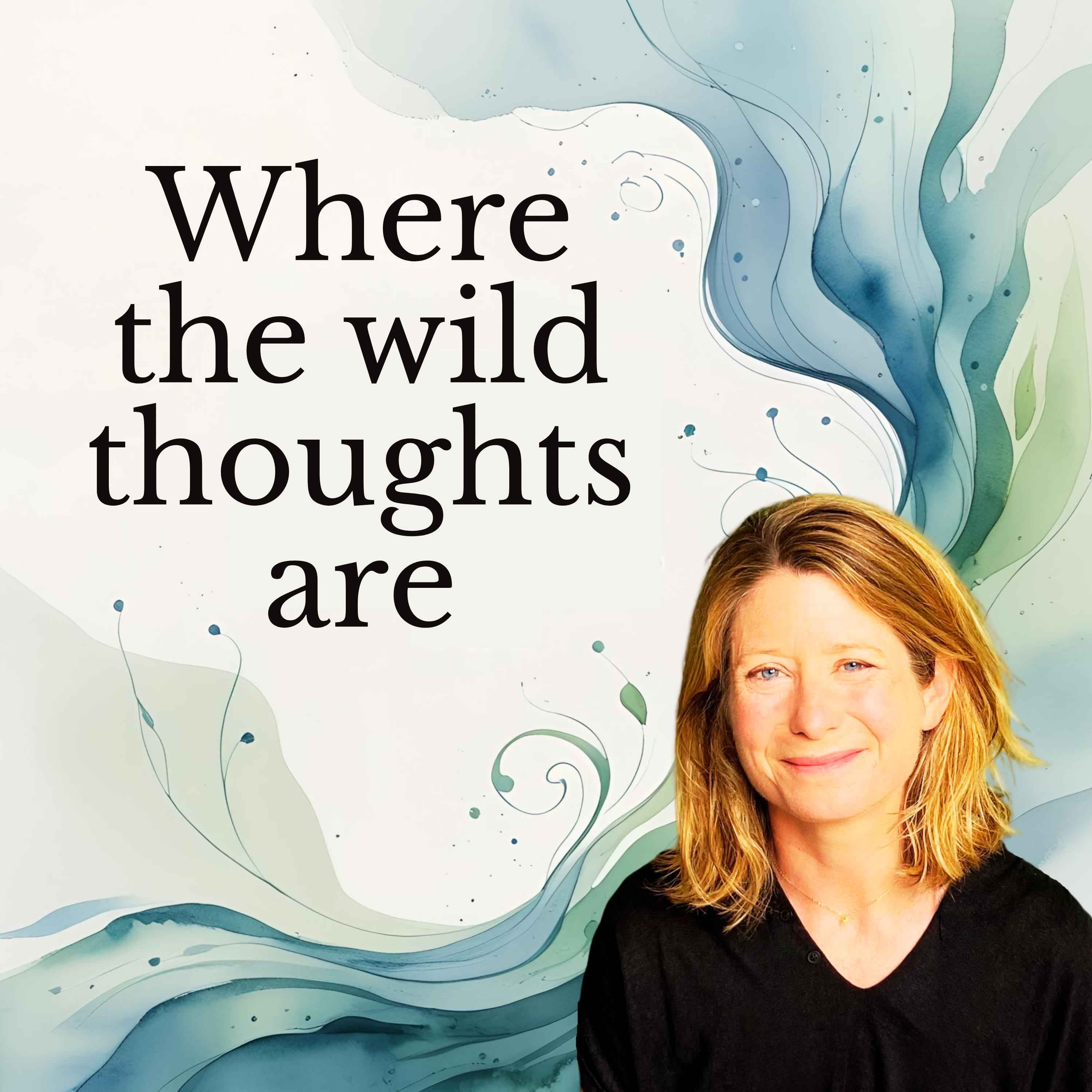
from Where The Wild Thoughts Are
We're digging into how living creatures – including us – sense and respond to magnetic fields with quantum biologist Margaret Ahmad of the University of Sorbonne in Paris. For decades, biologists knew about striking examples of species apparently navigating by Earth’s magnetic field, from monarch butterflies to loggerhead turtles to racing pigeons. Yet for years, many physicists said any ‘magnetosense’ was impossible, insisting the Earth’s field is far too weak to affect any biological processes within living cells. And yet, life really had found a way, and Margaret was one of the key researchers who showed how.Back in the 1990s, she discovered a blue light receptor in plants, part of a mysterious family of proteins called cryptochromes, and she has since has pioneered research showing how these receptors don’t just sense light but magnetic fields, too. Through quantum physical effects, these proteins magnify impossibly weak magnetic signals into measurable biological responses in a cell. For Margaret, this connection with the magnetic fields around us is a fundamental characteristic of all life, that should transform our thinking about everything from bird migration, to plant growth, to health effects in humans – and might even lead to revolutionary medical treatments. I spoke to her about her research, what it’s like doing science ‘out on a limb’, as she puts it, and what to do when the evidence leads you off the beaten track… Margaret Ahmad at Sorbonne Universityhttps://www.ibps.sorbonne-universite.fr/en/ibps/directory/17216-Margaret-AhmadHypersensitivity to man-made electromagnetic fields: 2024 case reporthttps://pubmed.ncbi.nlm.nih.gov/39108419/2024 review on cryptochromeshttps://pubmed.ncbi.nlm.nih.gov/38495372/ New Scientist story I wrote about Ahmad’s work in 2020 (£)https://www.newscientist.com/article/2251835 2021 review on the bird magnetic compasshttps://www.frontiersin.org/journals/physiology/articles/10.3389/fphys.2021.667000/full Roswitha Wiltschko’s labhttps://www.goethe-university-frankfurt.de/47093824/Physiology_and_Ecology_of_Behaviour Some bacteria sense magnetic fields via magnetite crystals. It's possible these play a role in other species too, maybe even humanshttps://www.eneuro.org/content/6/2/ENEURO.0483-18.2019.abstract *** To support us, please rate & review the show!*** Subscribe for new episodes every Mon*** Follow us on Instagram @wildthoughts_pod*** Edited highlights on YouTubehttps://www.youtube.com/playlist?list=PLhB4lyBDyjTliuz_h5oHwN6H8HoxS7qWL Where The Wild Thoughts Are is produced by Julian Mayers at Yada Yadahttps://www.yada-yada.net/ Hosted on Acast. See acast.com/privacy for more information.
Embed this episode
Ready to play
Can we sense magnetic fields?
No transcript for this episode yet
Similar Episodes
No similar episodes found.
Similar Podcasts
No similar podcasts found.