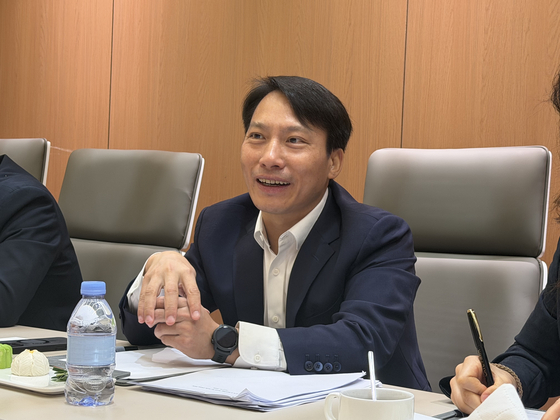
CATL batteries to power Hyundai’s EREV, hybrid push in China episode artwork

EPISODE · Apr 27, 2026 · 4 MIN

CATL batteries to power Hyundai’s EREV, hybrid push in China

from Korea JoongAng Daily - Daily News from Korea · host SARAH CHEA

This article is by Sarah Chea and read by an artificial voice. [INTERVIEW] BEIJING — CATL will power not only Hyundai Motor's EVs but also its upcoming plug-in hybrid (PHEV) and extended range electric vehicle (EREV) models for China, the Chinese supplier's president said, as the Korean automaker deepens the partnership in a bid to regain traction in the market. The new models will also be rolled out globally, with sales expected to extend to Australia, Southeast Asia, Latin America and the Middle East. "We are already in deep discussions regarding the EREV and PHEV, and in the future, you will definitely see our cooperation continually expanding into more new vehicle models and broader regions," said Akin Li, executive president of the overseas E-Car Business Division at CATL, during an interview with the Korea JoongAng Daily on Saturday in Beijing during Auto China 2026. "Hyundai Motor is a very important global partner for us." Hyundai has already said it will fit CATL batteries in the Ioniq V, its first China-dedicated Ioniq EV unveiled at the exhibition. The official launch is slated for the second half of the year. The Korean automaker announced that it will introduce 20 new models in China over the next five years, including the Ioniq E, a PHEV and an EREV, with a target of reaching annual sales of 500,000 by 2030. If achieved, China will make up 9 percent of Hyundai's target global sales by 2030. CATL's deepening alignment with Hyundai is considered a strategic pivot aimed at diversifying beyond China, while U.S. President Donald Trump continues to keep China in check and restrict Chinese industrial expansion to global markets. In fact, CATL Chairman Robin Zeng visited Hyundai's unveiling event at the exhibition on Friday, where he reiterated to Vice Chairman Chang Jae-hoon the need to advance global cooperation. Zeng had also previously met with Euisun Chung, executive chair of Hyundai Motor Group, in January in China to discuss broader collaboration. In a similar approach, CATL has signed a technology licensing agreement with Ford, allowing batteries to be indirectly incorporated into American-made vehicles. Under the arrangement, Ford will retain full ownership of the plant while paying intellectual property royalties to CATL. Ford withdrew its previously planned joint battery investment with SK On in Kentucky last year and is expected to replace it with production based on CATL technology. "The licensing deal with Ford is a highly creative and innovative cooperation example for us," Li said. "U.S. consumers also absolutely need EVs and batteries, and we will continuously strive to find ways to help them within the framework of laws and legality." CATL has also stepped up outreach to Korean shipbuilders, pitching its batteries for electric vessels. The Chinese battery maker officially established a local subsidiary in Korea in the second quarter of last year. "If there is demand for electrification from Korean shipbuilding clients or the market, we are highly willing to gladly participate and cooperate closely at any time," Li said. "We already have a dedicated subsidiary that exclusively handles ship electrification business, and we have successfully completed the electrification of hundreds of vessels in China." CATL displayed its latest Shenxing lithium iron phosphate battery at this year's Auto China, capable of charging from 10 percent to full in just 6 minutes and 27 seconds and operating even at minus 30 degrees Celsius (minus 22 degrees Fahrenheit), surpassing BYD's previous nine-minute record. While last year's slump in EV demand dealt a sharp blow to Korea's major battery makers, CATL defied the downturn by posting a record 72.2 billion yuan ($10.6 billion) in net profit in 2025, a 42 percent increase on year. Li attributed CATL's remarkable growth in the global market to its sustained investment in research and development (R&D) coupled with a deep bench of engineering talent. "We have invested over...

This article is by Sarah Chea and read by an artificial voice. [INTERVIEW] BEIJING — CATL will power not only Hyundai Motor's EVs but also its upcoming plug-in hybrid (PHEV) and extended range electric vehicle (EREV) models for China, the Chinese supplier's president said, as the Korean automaker deepens the partnership in a bid to regain traction in the market. The new models will also be rolled out globally, with sales expected to extend to Australia, Southeast Asia, Latin America and the Middle East. "We are already in deep discussions regarding the EREV and PHEV, and in the future, you will definitely see our cooperation continually expanding into more new vehicle models and broader regions," said Akin Li, executive president of the overseas E-Car Business Division at CATL, during an interview with the Korea JoongAng Daily on Saturday in Beijing during Auto China 2026. "Hyundai Motor is a very important global partner for us." Hyundai has already said it will fit CATL batteries in the Ioniq V, its first China-dedicated Ioniq EV unveiled at the exhibition. The official launch is slated for the second half of the year. The Korean automaker announced that it will introduce 20 new models in China over the next five years, including the Ioniq E, a PHEV and an EREV, with a target of reaching annual sales of 500,000 by 2030. If achieved, China will make up 9 percent of Hyundai's target global sales by 2030. CATL's deepening alignment with Hyundai is considered a strategic pivot aimed at diversifying beyond China, while U.S. President Donald Trump continues to keep China in check and restrict Chinese industrial expansion to global markets. In fact, CATL Chairman Robin Zeng visited Hyundai's unveiling event at the exhibition on Friday, where he reiterated to Vice Chairman Chang Jae-hoon the need to advance global cooperation. Zeng had also previously met with Euisun Chung, executive chair of Hyundai Motor Group, in January in China to discuss broader collaboration. In a similar approach, CATL has signed a technology licensing agreement with Ford, allowing batteries to be indirectly incorporated into American-made vehicles. Under the arrangement, Ford will retain full ownership of the plant while paying intellectual property royalties to CATL. Ford withdrew its previously planned joint battery investment with SK On in Kentucky last year and is expected to replace it with production based on CATL technology. "The licensing deal with Ford is a highly creative and innovative cooperation example for us," Li said. "U.S. consumers also absolutely need EVs and batteries, and we will continuously strive to find ways to help them within the framework of laws and legality." CATL has also stepped up outreach to Korean shipbuilders, pitching its batteries for electric vessels. The Chinese battery maker officially established a local subsidiary in Korea in the second quarter of last year. "If there is demand for electrification from Korean shipbuilding clients or the market, we are highly willing to gladly participate and cooperate closely at any time," Li said. "We already have a dedicated subsidiary that exclusively handles ship electrification business, and we have successfully completed the electrification of hundreds of vessels in China." CATL displayed its latest Shenxing lithium iron phosphate battery at this year's Auto China, capable of charging from 10 percent to full in just 6 minutes and 27 seconds and operating even at minus 30 degrees Celsius (minus 22 degrees Fahrenheit), surpassing BYD's previous nine-minute record. While last year's slump in EV demand dealt a sharp blow to Korea's major battery makers, CATL defied the downturn by posting a record 72.2 billion yuan ($10.6 billion) in net profit in 2025, a 42 percent increase on year. Li attributed CATL's remarkable growth in the global market to its sustained investment in research and development (R&D) coupled with a deep bench of engineering talent. "We have invested over...

NOW PLAYING

CATL batteries to power Hyundai’s EREV, hybrid push in China

0:00 4:22

No transcript for this episode yet

We transcribe on demand. Request one and we'll notify you when it's ready — usually under 10 minutes.

No similar episodes found.

No similar podcasts found.

Frequently Asked Questions

How long is this episode of Korea JoongAng Daily - Daily News from Korea?

This episode is 4 minutes long.

When was this Korea JoongAng Daily - Daily News from Korea episode published?

This episode was published on April 27, 2026.

What is this episode about?

This article is by Sarah Chea and read by an artificial voice. [INTERVIEW] BEIJING — CATL will power not only Hyundai Motor's EVs but also its upcoming plug-in hybrid (PHEV) and extended range electric vehicle (EREV) models for China, the Chinese...

Can I download this Korea JoongAng Daily - Daily News from Korea episode?

Yes, you can download this episode by clicking the download button on the episode player, or subscribe to the podcast in your preferred podcast app for automatic downloads.
URL copied to clipboard!