
EPISODE · Sep 26, 2024 · 14 MIN
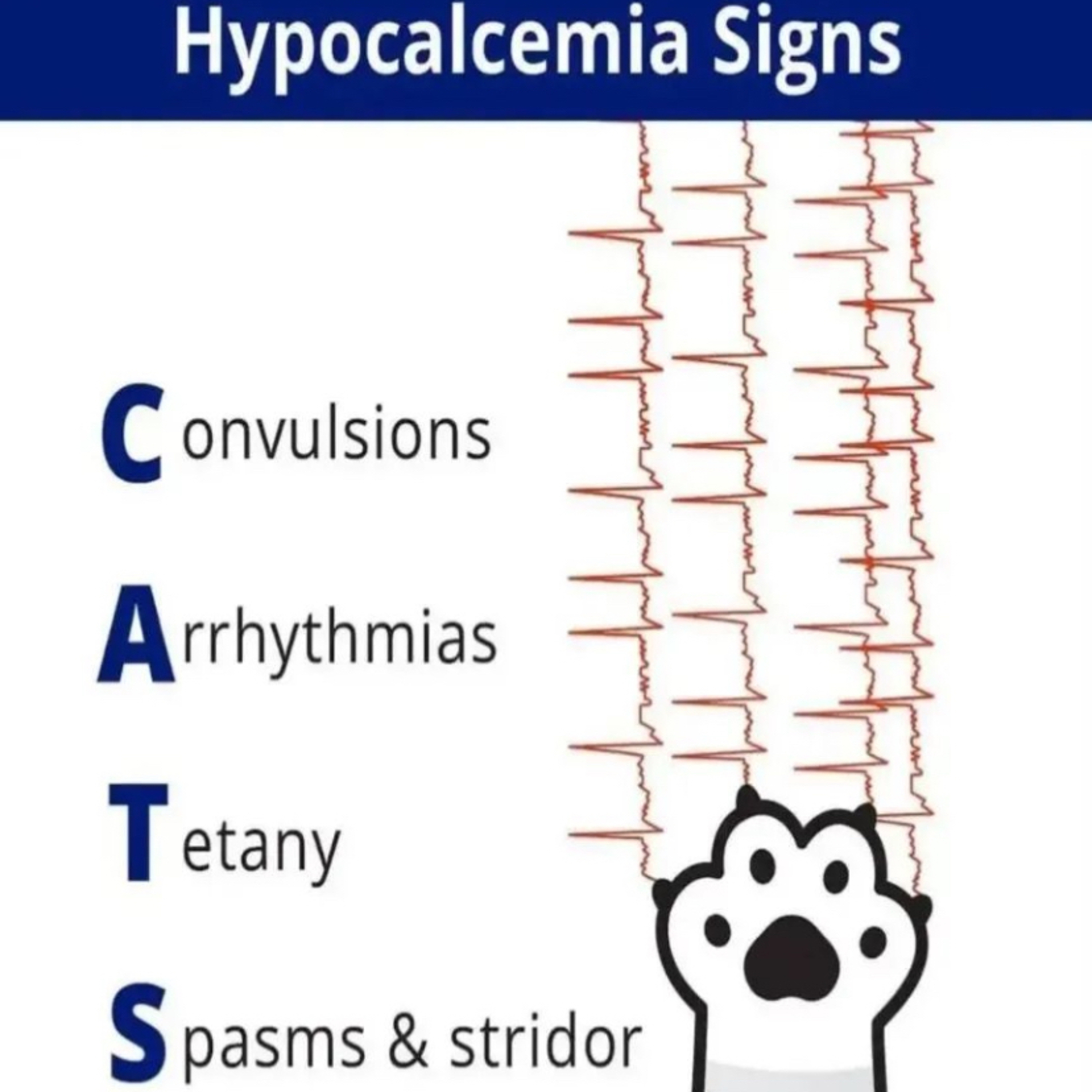
CATS Hypocalcemia Signs and EKG mnemonic (Southern California cool cats)
from Emergency Medicine Mnemonics · host Aaron Tjomsland
This is the CATS mnemonic to remember the signs for hypocalcemia.### **Causes of Hypocalcemia**- **Hypoparathyroidism**: Often due to surgical removal of parathyroid glands.- **Vitamin D deficiency**: Impaired calcium absorption.- **Renal disease**: Reduced conversion of Vitamin D to its active form and poor calcium reabsorption.- **Pancreatitis**: Fat saponification binds calcium.- **Hypomagnesemia**: Leads to impaired PTH secretion.- **Medications**: Bisphosphonates, loop diuretics, phenytoin, etc.### **Clinical Presentation**- **Neuromuscular Irritability**: - **Tetany**: Involuntary muscle contractions (e.g., carpopedal spasms). - **Paresthesias**: Numbness, tingling around the mouth, fingers, and toes. - **Seizures**: Can be a presenting symptom.- **Chvostek's Sign**: Facial twitching when tapping the facial nerve.- **Trousseau’s Sign**: Carpal spasm when inflating a blood pressure cuff above systolic pressure for 3 minutes.### **EKG Findings in Hypocalcemia**- **Prolonged QT Interval**: Due to delayed ventricular repolarization. - Risk for **Torsades de Pointes** if significantly prolonged.- **Bradycardia and Heart Block**: May be seen in severe cases. ### **Management of Hypocalcemia**1. **Asymptomatic or Mild Hypocalcemia**: - Oral calcium supplements (e.g., calcium carbonate). - Vitamin D supplementation (if deficient). 2. **Severe or Symptomatic Hypocalcemia (e.g., seizures, tetany, prolonged QT)**: - **IV Calcium Gluconate** or **Calcium Chloride** (more potent but more irritating to veins). - **Magnesium Replacement**: If low magnesium is present, replace it to aid calcium levels. 3. **Monitor for Cardiac Arrhythmias**: Especially if administering IV calcium.### **Associated Conditions to Remember**- **Hypoalbuminemia**: Can lead to low total calcium, but ionized (free) calcium may be normal.- **Renal Failure**: Leads to high phosphate, low active Vitamin D, and thus low calcium.- **Pseudohypocalcemia**: Low total calcium but normal ionized calcium, usually related to hypoalbuminemia.Understanding these clinical features, causes, and management strategies, alongside the EKG findings, is crucial for emergency medicine board preparation and practice.
Embed this episode
NOW PLAYING
CATS Hypocalcemia Signs and EKG mnemonic (Southern California cool cats)
No transcript for this episode yet
Similar Episodes
No similar episodes found.
Similar Podcasts
No similar podcasts found.