Hi, this is Sarah Koenig with News About Our Latest Podcast from Serial Productions and The New York Times. It's called Metro. Well, technically it's called Metro with Sarah Koenig because the show is supposed to be by me, but I prefer the name Metro, so let's just go with Metro. Stories about New York City and its most fascinating raw material. New Yorkers.
Each week on Metro we bring you investigations. Don't tell them you're gonna go to jail if every talk about this last night. Personal stories. I don't think this is the word dump when you're talking about your death session. Essays and interviews.
Are you a fan of them, Mayor? Yeah. I don't hate them. Stories that take a bigness of New York and make it human scale, and relevant, no matter where you live. See, I consider myself a citizen of everywhere.
So come along with me, you two Jersey, and let's hang out with the best talkers in New York City. Metro, wherever you get your podcasts. Hey everyone, it's Natalie. If you're not yet a time subscriber, I have some news for you. You can enjoy full access to the Times without a paywall for 30 days.
All you have to do is download the app to get your first month completely free. And if you're already a time subscriber, thank you, thank you, thank you. Okay, here's today's show. There's a classic moment in every selindian concert that everybody in the room is waiting for, and it's when she's doing all by myself. Oh, bye.
So we're all waiting for it. I may be projecting my own feelings, but there's really a con performance anxiety. Is she going to pull off that note? That note that we were waiting for? Oh, bye.
You could feel the arena just holding its collective breath. And she does it. And then she lets out this very visible sigh of relief. It looked like she surprised herself. It was just a fantastic moment, and the people around us were screaming and crying, and when I talked to the woman who was sitting behind me afterwards, and she said, that's when I knew she was back.
From the New York Times, I'm Natalie Kitroff. This is the Daily on Sunday. Last month, selindian, widely considered to be one of the greatest singers of our time, made a triumphant and emotional return to the stage. It followed years of uncertainty about whether or not she'd ever be able to perform again, after being diagnosed with a rare neurological condition called Stiff-Person syndrome. My colleague Elizabeth Finchintelli was there to see it, and today, she'll tell us about how Dion found her way back to her voice and to her fans.
Also, I love her so much. Can I say that? It's Sunday, October 11th. Elizabeth, welcome to the Sunday Daily. I'm very happy to be here.
I want to start by proposing a theory about why this selindian comeback is so compelling. She has clearly captivated so many people all around the world, and I think it's because her fans have this very special relationship with her. Like, not just her music, but her personality, who she is as a person. She is a diva, yes. But unlike most divas, she somehow feels very accessible.
Like, she lets us into her world. She's vulnerable. She's extremely quirky in a way that feels unusual for a person of her status and fame. And I think that all of those things have made us, myself included, deeply invested in her return to the stage. What do you think about?
Well, selindian is an interesting case because on the one hand, she has all the signifiers of the diva. She lives in a gated community in Las Vegas. She has a warehouse of clothes, literally a warehouse of clothes. She's always very well put together. And yet, you get that very deep-seated feeling that she has not changed.
She comes from a very hard-scrabble family in Quebec. She's the youngest of 14 kids, and her parents were running a little cafe piano bar. And there is a feeling that she is still that person, that underneath everything, she has this very unique way to connect with people. And in that sense, to me, she really is like Deli Parton, who's another superstar who you felt, you really have this very intimate conviction that she has not forgotten where she came from. They are people who really connect.
They're background, they're bringing with who they are now. And regardless of how many bazillion albums they have sold, I mean, Vegas presidencies, there's still that sense that they are of the people. And it's a very rare quality. And you can't acquire it. In her case, there is really the sense that under the deor and the couture, there is still that same person.
Right. I love that comparison to Deli Parton. Let's talk about your relationship to selindian. When did that begin? Well, technically, I mean, I was kind of not really paying much attention until I was dispatched to review her first headlining concert in New York.
She was in 1994 at Town Hall. It was a lot of Canadians in the room. She at that point, she's already famous. She's very famous in Canada. She's famous in France, but not super star famous in France yet.
And in the US, she already has two top 10 hits, right? You know, power of love and beauty in the beast. She really is not an unknown, but it's a first headlining show. And I went in pretty much neutral, not particularly interested in beauty in the beast, but okay, like Lacey the phenomenon. And also, you know, I'm a struggling freelancer.
I won't go review anything. You throw at me. Okay. And I remember writing that she showed a very commendable restraint, which is a retrospect. It's just like the funniest thing I could ever do.
That is one thing she's not known for. It's true, it's true. But also, at the time, I'm listening to like Bikini Kilo. I was a huge grown fan. And so, so, like, that is not your style of music.
No, it's not. And like, at this point, I'm listening more to like New York, Noisrock, pretty world stuff in general. It sounds like you were impressed with her technically, but you weren't necessarily going to go home and turn on Celine. I did not go home and turn on Celine. So, you have to remember the 90s is really the decade when Celine Dion becomes Celine.
That's the decade when she goes from slightly gawky little awkward, Kbequagirl, who's well known in the French language market. That's when she morphs into the sleek superstar. She basically means she does not drop her last name, but she might as well drop her last name. She really becomes that kind of person. And there's some kind of big moments, you know, it's all going back to me now.
There were nights when the wind was so cold. Oh, by myself. Oh, by myself. Oh, by... And then of course, 97.
My heart will go on from Titanic, which becomes this kind of... Like the... Huge worldwide hit. My heart will go on. And the disdain for her is just as strong as the popularity for her.
She's usually explaining that. You're saying she's having all these hits, but there's a lot of things. There's a really strong critical. This is before the quote unquote, optimist moment when it becomes okay to reevaluate the way puppies perceive. This is really the peak.
We're in the post-grange era, and her brand of just straightforwardness and negative emotion does not go over well with critics. So words that come up a lot in reviews from that time are schmaltzy, bland, and loud. There's the sense that she works too hard on it. She works so hard at singing so loud. And people like the sense that you're not trying.
God, it comes to you naturally. And she just tries so hard. What is it seen as cool? Exactly. She's really the epitome of the unquote.
Also, there's the sense that she's not staying in her lane. Really, there's this moment in the 1998 taping of the first VH1 Divas live. And there's a moment when she's perceived as trying to upstage Ereta Franklin. That's so funny because I remember that and thinking maybe it's just in hindsight, but that it was this incredible, beautiful showcase of all these power voices. And now it sounds like it was contentious.
At the time it was, really it was. Like some people were like, who is this? And also a Canadian. Who is this Canadian trying to tell us Americans who know all about power belting? Like what to do?
There's this really this sense of that. So another thing that she does at the time is that she's the first one in the modern era to have a residency in Vegas. Like she goes to a room, a venue that is tailored for her show in 2003. Now, now this seems completely obvious. Of course, Dell is doing it.
I mean, everybody loves a Dell. At the time, this is seen as like, oh my God, this is where Talon goes to die. Vegas, Talon goes to die in the desert. This is a part where I have to come out as a lifelong Celine Dion fan. My mom's from Montreal.
I have been listening to Celine forever for as long as I can remember. So maybe I just feel defensive of her, but people were showing up for these shows, right? I mean, the critics may not have loved her, but the people did. Right, but she's dismissed by the critical establishment as, oh, that Canadian belter who can, yeah, she has good parts. She can sing, but you know, she's in Vegas and then all those hicks can go see her.
I am kind of neutral on that. I don't really follow her career. And then in 2008, she finishes a run in Vegas and she goes on tour because she's a workaholic. And I catch that tour. I catch a stop at Madison Square Garden.
And that's really when I became a convert. That show blew my mind. And you have to understand, I'm really, I'm not a fan of arena shows. I don't like, I don't like watching it on the screen, which often happens. Yeah, that show blew me away because she made me forget I was with 20,000 people.
That's the first time when I saw for myself her personality. I had not been aware of that. And her ad living on stage or off the cuff comments, the weird little dances that she breaks into her banter between song, like some of itself completely like what? Because it sounds like what you were seeing was this really kooky side of this person, where it's like, okay, her image is of a schmaltzy, you know, kitschy belter, as you said. But in reality, what you saw was this weird, really funny person is with a real personality because she had always been presented a little bit like the singing robot.
Oh, she can really hit all this stuff. She's like singing and Roy, like she's almost not human. But like, what is the feeling? I mean, that, and in recent like, it's such a ridiculous accusation because she's full of feeling in mind, I'll be your way to express feeling. Her way is very sincere.
Right. She's just herself. And whether that's true or not, I don't know, I don't know what Celine Dion, maybe she's not like that at all. But I really fell in love with the stage Celine that night. And did you have the sense at that time that you were seeing something that other people just hadn't, that your fellow critics hadn't, and that maybe if they did, their impression of her would change?
I really did feel that. I felt, well, first of all, I felt like there was some, like, it was a humility moment for me too, because I thought, oh, well, her fans really the ones who go to her shows really, they already knew this. Why am I so late to this? So it's always a very healthy feeling for critic, I think, to have that moment. But at the same time, my friends and peers were like, oh my God, you want to see Celine Dion that is crazy.
Like, the tide has not turned yet. But it's about to because we really at the moment when YouTube is about to explode and YouTube was very, very good to Celine, because what starts appearing on YouTube are videos of her appearances on talk shows, for instance. You know, I love singing, but I love to talk too. I'll be the 14th child of the family. When I have a chance to talk, I talk.
Her personality is in those appearance, on the daytime talk shows. Are you trying to have a baby? Are you pregnant? I am not pregnant. OK.
Yeah. But we're working on it, and it's going fantastically well. I was not aware of that. There's a completely like blind spot. And then YouTube appears, and a lot of others discover her because suddenly we start seeing those videos of her appearances on talk shows.
They're super cuts of her cuckiest interviews, and there's many of them. Yeah. And we live in a material out there. It's great. It's time to make it out.
It's time to make the dough to show that I quit. You can be the docket doughnut person. Imagine. And we realize she is an eccentric. Let the dogs out.
Whoop, whoop, whoop, whoop. Let the dogs out. There's a real person behind the pipes, so to speak. I really think YouTube and the clips of her appearance really helps change the tide. Do you think also, Elizabeth, that what was cool started to change at the same time?
Because you were talking about this period of time when irony was the thing you wanted to kind of embody. But as we start to get later into the arts, it sounds like maybe some of the more has changed there, too. Yes, I think the cultural context is changing. But what's remarkable is the context that changes, because she doesn't change. And she switches from the daytime talk shows to the late night ones.
And that's a big difference. You didn't want to do that, son. My heart will go on. I'm sorry. I think very telling his appearance on the carpool karaoke with Jim's cordon that he should in Vegas, which is the best.
Classic. It is a terrible classic. She makes fun of Titanic. She goes on a boat with Jim's cordon. I mean, it is an act of self satire.
And everything that leads up to that moment to when they're in the car. And even he seems stunned by her. I've watched this one more times than I should admit. It makes me laugh every time. If you feel down, I would say, listen, go watch the Celine young carpool karaoke with one point he makes her give out some of her shoes.
And the way she plays this out is incredibly funny. She has great timing. You got to feel good. You OK? I need alcohol.
That's good. Because she's also making fun of herself for being a little bit of a diva and having the largest shoe collection known to me. Yes. People realize that she has a great sense of humor. And she can also make fun of herself.
And my third time seeing her was in Brooklyn at the Barclays Center in February 2020. I saw that show. And that was a very good show. It was amazing. None of us in the crowd knew that she was already ill.
I know. I think about that all the time. Please don't cry. No, I won't. But I do think about that all the time.
No, I know. And she said in a recent interview actually that she had had symptoms for 17 years before the official diagnostic, which had been leading to abrupt cancellations and things like that. But they could not figure out what was going on. So very rare disorder. So they could not figure it out.
Right. And then in 2022, she makes a very dramatic announcement. Hello, everyone. That she has been diagnosed with a neurological disorder called Stiff Person Syndrome. Which affects something like one in a million people.
It's a very rare disorder. And frankly, nobody really knew what it was. Right. I always give 100% when I do my shows. But my condition is not allowing me.
And then she kind of disappeared to look after herself. Okay. I want to talk about what we learned about what Celine is up against and how exactly this disease affected her voice. We'll do that after the break. We'll be right back.
I'm Redrong. I cover climate and the environment for the New York Times. I recently spent eight weeks on a research ship going to Antarctica. The planet's getting warmer. Ice is melting away.
The level rise is going to change our coastal cities. It's one thing to read about what scientists have discovered when they write papers. But it's another thing entirely to be there with them. This is what we'll do at the New York Times. We want to bring you closer to the biggest stories that matter for how we all live in the world.
If you'd like to support this work, you can become a subscriber at nytimes.com slash subscribe. So I think like a lot of people had never heard of this disease, Stiff Person Syndrome, before Celine's announcement. Because it really is so rare. So can you just explain how this disease affects the body? So basically what happens is that you get this severe muscle stiffness and very painful spasms that really kind of lock you.
And you become steady. You have a heart and walking, for instance. And it affects many things in the body, including the vocal cords and the singing. As far as I know, I don't think there's any treatment. You can manage it, but you can't cure it.
So in June 2024, there's a documentary that comes out called I Am Sring Dio. And it's filmed almost entirely in her house. And we see her pottering around and doing stuff with her two younger sons and making coffee and she's in her sweatpants. And one of the things that the documentary covers is how this affects her voice. My lungs are fine.
It's what's in front of my lungs. That's so rigid because of Stiff Person Syndrome. This is her instrument, right? This instrument, she can't do what she loves doing. And by all accounts, she loves singing.
She breaks into song all the time. And she can't do it. It's like I know you. That's what happens. It's like I know what I want to do.
And now you can show me. Yeah. She's a huge perfectionist. And she has no control on what she is doing when she's singing. She could start croaking.
She could just, like, the notes won't come out. And that's what happens. And it's very difficult for me to hear about. And to show this to you. That is devastating.
Yeah. It's so raw. I mean, you can almost hear her heart breaking. So in the film we see her going through the studio, working on songs. You don't have to find the answers to the same child.
Trying to sing, trying to reconnect with her, the voice that we all know. And sometimes it goes okay and sometimes it doesn't at all. And then she goes to a physical therapy session and she has a seizure. And unfortunately her therapist is there and he helps her. And she deep spasming.
It could lead to a crisis. She's laying down and she's completely, she's her face is frozen in this rectus of pain. Get on the lifting. One, two, three. There's all these merciless close-ups.
And of her, it's incredibly, I cannot believe she let that be shown. Yeah, I mean, I saw the documentary and it was almost unbearable to watch the scene. And it goes on and on and on. Do you have pain, squeeze my hand to ear pain? Squeeze my hand to ear pain.
It takes quite a while for that seizure to subside. And this is when you realize, oh my God, how long has this been going on? This is like this every day. What? It's a really awful scene.
And it's, I mean, we are, of course we are reading, she was human. But this shows a level of vulnerability that she often had been accused of concealing in her songs. Her songs when she sings come across, even when it's a plea of like, oh by myself, so by myself, I'm going to make it. Like she turns that into a statement of strength. And so her songs, even the tender ones are, you feel like this is on in control.
And the documentary shows someone who is not in control. Every time something happens, it makes you feel so embarrassing. So like, you don't like to not have control of yourself. And the film ends on this kind of question mark. Like, can she still sing?
We don't know. It feels unresolved. I would say, having watched it, that the assumption was that she may not ever be able to perform again. It was pretty bleak, which makes what happened next even more insane. OK, tell us what happened next.
Flash forward one month, a mere month after the release of the documentary. July 2024, the opening ceremony of the Paris Olympics. The ceremony of the Games of the 33rd and the Pia. And there's this wild rumor that Celine has landed in Paris. She has arrived.
Why would she be there? Perhaps she will perform. How? Where? Nobody knows.
Why do I have goosebumps when I know what's going to happen? Keep going. We're also invested in her life. And so we're watching, and I was actually part of the New York Times team covering the opening ceremony. And we don't know what's going to happen.
This is so cool. Pouring rain was so miserable. And then the opening ceremony builds up to this moment of pure glory, where it ends with the Eiffel Tower and who's on the Eiffel Tower? Celine Dion. I think I might have screamed.
I think I might have screamed. And she does a song that's everybody in France knows, Imnana Moore, identified with a D.P.F. This was obviously a huge, huge moment. But it was just one song, right? We don't know yet whether she's back to form, right?
And then nothing really happens until March of this year, when she announces a string of shows in Paris. That is not just one show that several shows. In a huge, it's the largest indoors arena in Europe. And it's a real show. It's not one song.
So what's your reaction? I've got to be there. Well, I want to hear all about that night, your response, the fans' response, and most importantly, Celine's performance. We'll be right back. I'm Gilbert Cruz.
This week on the Book Review Podcast, we have a special Halloween treat or trick or treat. Two hard riders recommend some titles that are sure to keep you up at night. I am a big fan of sentient houses in general. I think this is one of the scariest books I've ever read. Listen to the Book Review or have you get your podcasts.
That door shouldn't be open. Who left it open? So, Elizabeth, you travel to Paris, have this full circle moment with Celine. This is last month. You had tickets.
This is the very first concert of this week's long run of shows that she's doing. Take me to that night of the show. What was it like to be there? Let me live vicariously. Well, before we get there, we have to talk about the build-up to that night.
And the reason why we were in France. France is the country where she became a superstar. You might argue with it in the US, but France is really where she connected deeply, very deeply and emotionally with a really big audience. She has a huge repertoire of French albums. And in fact, her 1995 French album, Du, remains to this at the biggest selling French language album of all time.
Oh, well. The point is she has this huge, huge kind of parallel stardom in France that helps create this incredible buzz. It sounds like yes. There's posters everywhere. I went to the Celine pop-up shop at the Galerida Fayette, where they were selling the Celine Macarron assortment and T-shirts.
It's a real thing. It's a real thing. Yes, they put her face on them? No, it's a bit. No, no, please not a leave.
It's classier than that. OK, I'm American of not French. No, the kind of star pastry chef, Pierre-Mé did a Celine collection. So apparently she picked her favorite flavors. And there were some really, there were some classics, you know, like caramel, passion fruit, combo interesting.
And then there was one with like, cucumber water and like, anyway, there were some really interesting choices in there. OK, if this was in Vegas, we would have put her face on donuts. I'm just saying and they would have flown off the shelves. It sounds like it was a classy box. OK.
And 38 euros, by the way. Oh, OK. It's not a cheap Macarron. So she's everywhere. The CD has organized a public karaoke battle.
That was really hilarious. So she's everywhere. Like the coverage is so intense. There's actually on French public radio, there's a daily debate at noon. It's called a noon debate.
And one day, the question was, is Celine the greatest singer of all time or not? And they had a pro in a con. Celine, you're definitely going to be more comfortable. It's not quite as usual. Well, I feel like the pro was better, but I would be biased.
Just to give you an idea of the expectations. OK, so incredible buzz leading up to this thing. It's finally the night of the show. What was it like to be there? I went to the arena with my brother.
So we're pretty much very excited as we walk into the arena. And then we have to wait for almost an hour. And of course, my mind is racing to some backstage drama where she's collapsed. I mean, I'm having flashbacks to the documentary. We don't know what's happening.
I would have thought the same thing. It could be jitters. It could be some kind of intervention. I we don't know. But she's very late.
Do you think other people thought that way too? We're worried in that way. I don't know that anybody could have seen the documentary and not think that. Like it must have been in the back of everybody's mind. Right.
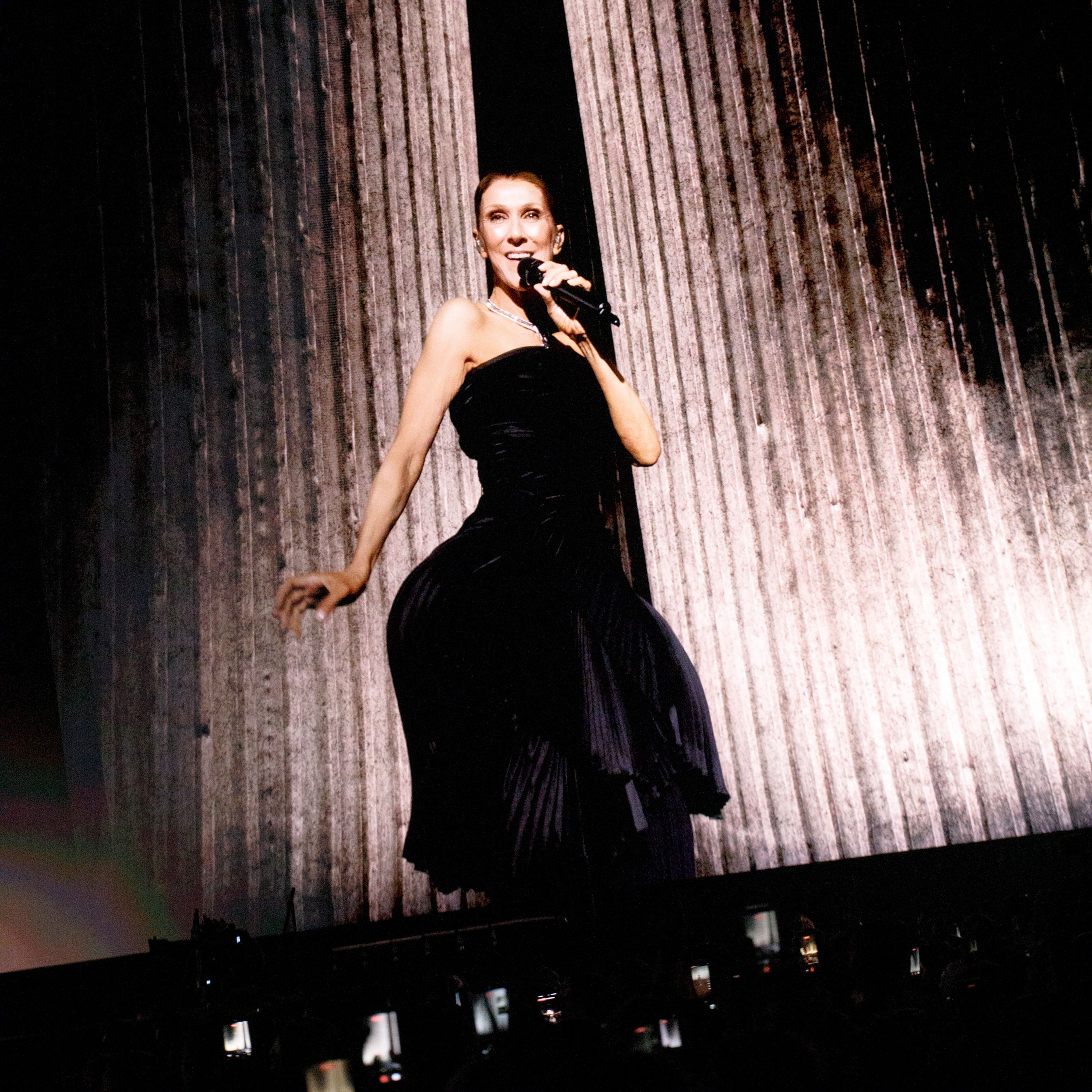
And finally, the lights go down. And she walks out and of course, the crowd erupts. And there's this moment where she just kind of soaks up the applause and the love that's emanating from the arena. And then we hear the intro to the song called On the Shangebao, which means we do not change. It's I think it's just a fantastic song.
And it's a very, very emotional song because it really is one that is drawn very directly from her life. And she has to stop singing. She's crying. I'm tearing up just talking about this. It's great.
She literally stops singing because she's crying. Yeah, she's just she has to pause. And she's just like really verklempt. And everybody's kind of like roaring and applauding and trying to like will her to continue. And frankly, I had that little bit of anxiety almost the entire time.
Even when I was like, OK, we're home free. She's good. I still couldn't help myself thinking, oh my god, what's next? So how long did she end up singing for? And just describe what that was like.
Well, the set was really masterfully built because it started very slow with slower songs but that are not belty songs. You could tell us who her voice was warming up. She looked a little tense at first. And yes, nervous. I had not seen her look nervous possibly ever.
Then she started doing faster stuff. I feel loved by Donna Summer, which merged into I'm Alive, which was a great, great segue. She did another huge French hit, which is a duet with one of her backup singers. You do this all the way. She'll go to your heart.
I'll go wherever you go. You do that all the way soon. Or something that is appearing in your life, French weddings. And towards the end, my brother said it looks like she has de-aged. He said, look at her face.
She looks 20 years younger than when she started the show. And he was right. Her face had completely relaxed. Like the lines of tension had disappeared. It was wild.
She has been completely rejuvenated by this. She had regained her confidence. You said... Can I just ask how this is possible? How Celine managed to do this?
Most of us left her in the documentary at a point where she was really struggling. So how did she get to this point? Now she's singing for hours on it. She has said in an interview that basically it was a mix of vocal therapy, physical therapy. She's mentioned immunotherapy.
And also regular pilates, ballet classes. So it's a mix of working on the voice, working on her body, working on her movement. Physical therapy, I think, is really important. And we could see that in the documentary. She worked very closely with her physical therapist.
And I think it was being able to take the time off and work on herself in a house that's clearly has been probably modified and has the space for her to do what she needs to do. I really don't think she would have committed to it, not just one, but a string of shows. And then there's more in the spring where she's not convinced 100% sure that she could pull it off. What was the quality of her voice? I mean, what's your assessment of that?
To be clear, her voice has changed. This is not the pristine, crystal clear, clarion, loud voice of the 90s. And that's two things. One is natural aging. A voice changes with age.
Right? That's just going to happen. And then you have the effect of the illness. And I think we all are aware that, no, she's not going to sing like this to lean from 1995. But I'm not sure that she's quite ready to fully embrace that yet.
I think when she starts dropping all by myself or my hard work will go on from her set list, I think that's when she will embrace the new voice. This is completely guesswork on right part there. But I think that is where she needs to go if she wants to have a career, the career that she can have. Right. So to show that I think she clearly pulled it off and to be clear, it's a mix of vocals and also this dramatic presence.
She still has it. She still has it. Yes. Being a stage animal is a very unfair situation. You have it or you don't.
So how did the show end? Listen, it's all a blur, frankly. It was such a blur. There was this sense of like, oh my God, like we did it. I made a promise.
I made a promise to come back and to be back on stage. So here I am singing for you and singing for me, singing life. And I mean, we, we did it. There was this sense of like we carried her through this. She did it thanks to us.
Like I'm totally petting our collective back there. But no, but I think it's a testament to her deep kind of ingrained sense of connection to all of these people that everybody felt that way. Yeah, no, it's absolutely true. So we left the arena and we headed back to the subway and it was really packed with people. And there was this spontaneous sing-along to one of her biggest French hits with the crowd just sang along as they'd walked to the subway.
And when that song was over, they just did it again over and over. And this was obviously the first of many shows. This has now been going on for weeks and weeks. And the fan reaction to her has been maybe the biggest story in all of this next to the comeback, right? There has been just video after video, not just of the fans adoring her, but of Celine engaging with her fans in Paris.
It was really well because of course everybody knew what hotel she was staying at. So the people were outside like reading her and she would spend like 30 minutes to an hour sometimes like talking to people, like dancing on two-poof cars, like singing along with them. No, it's been amazing because you can sense the joy in it on both sides. I think for a lot of her fans, the feeling is, it's not just that Celine is back, except we're all back with her. Well, she provides a very stable presence.
We often feel unmoored. We're unmoored by technology. We're unmoored by events beyond our control. And she has endured incredible hardship, something that really kind of attacked her very being. And she has come back.
And there is the sense that she has really not changed that much underneath the couture outfits. Thank you so very much for your support. Your patience. Celine Dion is still Celine Dion. Celine Dion would always be Celine Dion.
I am. Everything I am. Because you loved me. Well, Elizabeth, thank you so much for bringing your energy and hers to the show. Thanks for indulging me and letting me talk about Celine anytime.
Today's episode was produced by Alyssa Dudley, with help from Tina Antilini. It was edited by Wendy Doar, engineered by Rowan Nemesto. And it contains music by Diane Wong, Dan Powell, Rowan Nemesto, and Maryan Lozano. We had production assistants from Dahlia Hadad. That's it for the Sunday Daily.
I'm Natalie Kitroweth. See you tomorrow. This week on The Wirecutter Show, we're talking about face sunscreen. What do you think so far about the ones you have tried this new ingredient? I think it's sunscreen.
And I'm excited it exists. Find out how the new FDA-approved ingredient is changing formulations and whether our expert thinks it's worth it. The Wirecutter Show is on the near-time app or wherever you'd like to listen.