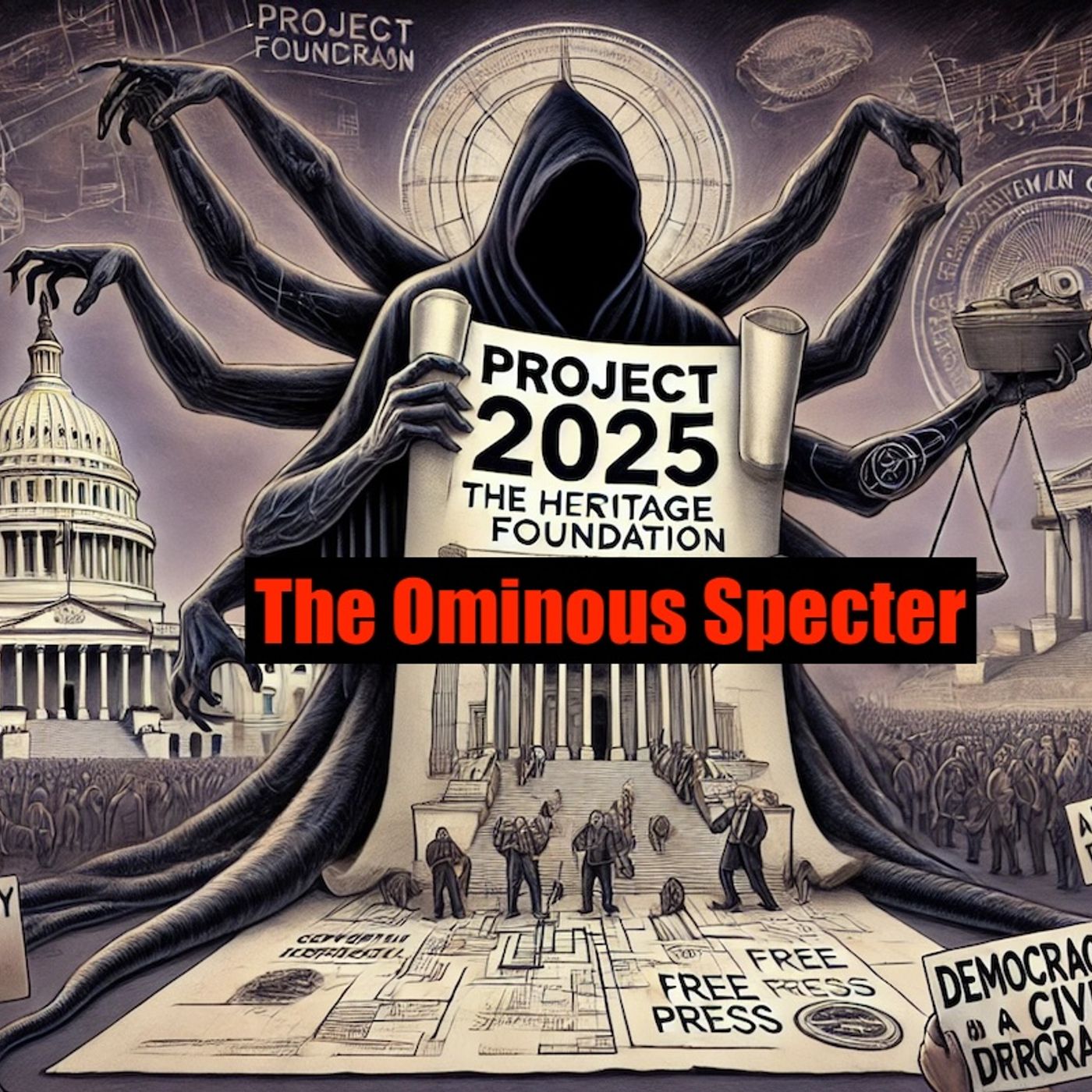
Centralized Power or Democratic Decay: The Looming Threat of Project 2025 episode artwork

EPISODE · May 18, 2025 · 5 MIN

Centralized Power or Democratic Decay: The Looming Threat of Project 2025

from Project 2025: The Ominous Specter · host Inception Point AI

As I delve into the intricacies of Project 2025, a sense of unease settles in, not just because of the far-reaching implications it holds for American governance, but also due to the sheer ambition and controversial nature of its proposals. This initiative, spearheaded by conservative organizations and thinkers, aims to fundamentally reshape the federal government, centralizing power in the White House and challenging long-standing principles of checks and balances. At the heart of Project 2025 is the unitary executive theory, an expansive interpretation of presidential power that seeks to place the entire executive branch under direct presidential control. This vision is not new; it has roots in the Reagan administration and has been bolstered by conservative justices, the Federalist Society, and the Heritage Foundation. However, the current iteration takes this concept to unprecedented heights. As Kevin Roberts, a key proponent, has stated, all federal employees should answer directly to the president, eliminating the independence of agencies like the Department of Justice, the FBI, the Federal Communications Commission (FCC), and the Federal Trade Commission (FTC)[4]. One of the most striking aspects of Project 2025 is its plan for the Department of State. Kiron Skinner, who authored the State Department chapter, advocates for the dismissal of all leadership roles within the department before January 20, 2025. These positions would be filled by ideologically vetted leaders appointed to acting roles, bypassing the need for Senate confirmation. Skinner's rationale is stark: she believes most State Department employees are too left-wing and need to be replaced by those more loyal to a conservative president. When questioned about specific instances where State Department employees obstructed Trump policies, Skinner admitted she could not provide any examples[4]. This approach is not isolated to the State Department. Project 2025 targets the independence of various federal agencies, which have historically operated with a degree of autonomy to ensure they are not swayed by political whims. Agencies like the FCC, FTC, Equal Employment Opportunity Commission (EEOC), and National Labor Relations Board (NLRB) are designed to be quasi-legislative or quasi-judicial bodies, shielded from presidential interference by bipartisan commissions. The Supreme Court has upheld this independence in landmark cases such as *Humphrey’s Executor v. United States*[5]. However, Project 2025 seeks to overrule such precedents, allowing the president to remove independent agency commissioners at will if they do not align with the president’s agenda. This would fundamentally alter the balance of power, giving the president unprecedented control over these agencies. The White House’s Office of Information and Regulatory Affairs (OIRA) would also be empowered to review, revise, or block rules and significant guidance issued by these agencies, further eroding their indepen This content was created in partnership and with the help of Artificial Intelligence AI.

As I delve into the intricacies of Project 2025, a sense of unease settles in, not just because of the far-reaching implications it holds for American governance, but also due to the sheer ambition and controversial nature of its proposals. This initiative, spearheaded by conservative organizations and thinkers, aims to fundamentally reshape the federal government, centralizing power in the White House and challenging long-standing principles of checks and balances. At the heart of Project 2025 is the unitary executive theory, an expansive interpretation of presidential power that seeks to place the entire executive branch under direct presidential control. This vision is not new; it has roots in the Reagan administration and has been bolstered by conservative justices, the Federalist Society, and the Heritage Foundation. However, the current iteration takes this concept to unprecedented heights. As Kevin Roberts, a key proponent, has stated, all federal employees should answer directly to the president, eliminating the independence of agencies like the Department of Justice, the FBI, the Federal Communications Commission (FCC), and the Federal Trade Commission (FTC)[4]. One of the most striking aspects of Project 2025 is its plan for the Department of State. Kiron Skinner, who authored the State Department chapter, advocates for the dismissal of all leadership roles within the department before January 20, 2025. These positions would be filled by ideologically vetted leaders appointed to acting roles, bypassing the need for Senate confirmation. Skinner's rationale is stark: she believes most State Department employees are too left-wing and need to be replaced by those more loyal to a conservative president. When questioned about specific instances where State Department employees obstructed Trump policies, Skinner admitted she could not provide any examples[4]. This approach is not isolated to the State Department. Project 2025 targets the independence of various federal agencies, which have historically operated with a degree of autonomy to ensure they are not swayed by political whims. Agencies like the FCC, FTC, Equal Employment Opportunity Commission (EEOC), and National Labor Relations Board (NLRB) are designed to be quasi-legislative or quasi-judicial bodies, shielded from presidential interference by bipartisan commissions. The Supreme Court has upheld this independence in landmark cases such as *Humphrey’s Executor v. United States*[5]. However, Project 2025 seeks to overrule such precedents, allowing the president to remove independent agency commissioners at will if they do not align with the president’s agenda. This would fundamentally alter the balance of power, giving the president unprecedented control over these agencies. The White House’s Office of Information and Regulatory Affairs (OIRA) would also be empowered to review, revise, or block rules and significant guidance issued by these agencies, further eroding their indepen This content was created in partnership and with the help of Artificial Intelligence AI.

NOW PLAYING

Centralized Power or Democratic Decay: The Looming Threat of Project 2025

0:00 5:21

No transcript for this episode yet

We transcribe on demand. Request one and we'll notify you when it's ready — usually under 10 minutes.

Frequently Asked Questions

How long is this episode of Project 2025: The Ominous Specter?

This episode is 5 minutes long.

When was this Project 2025: The Ominous Specter episode published?

This episode was published on May 18, 2025.

What is this episode about?

As I delve into the intricacies of Project 2025, a sense of unease settles in, not just because of the far-reaching implications it holds for American governance, but also due to the sheer ambition and controversial nature of its proposals. This...

Can I download this Project 2025: The Ominous Specter episode?

Yes, you can download this episode by clicking the download button on the episode player, or subscribe to the podcast in your preferred podcast app for automatic downloads.
URL copied to clipboard!