
EPISODE · Oct 3, 2025 · 21 MIN
Ceres: The Dwarf Planet That Might Have Hosted Life?
from SpaceTime with Stuart Gary · host Stuart Gary
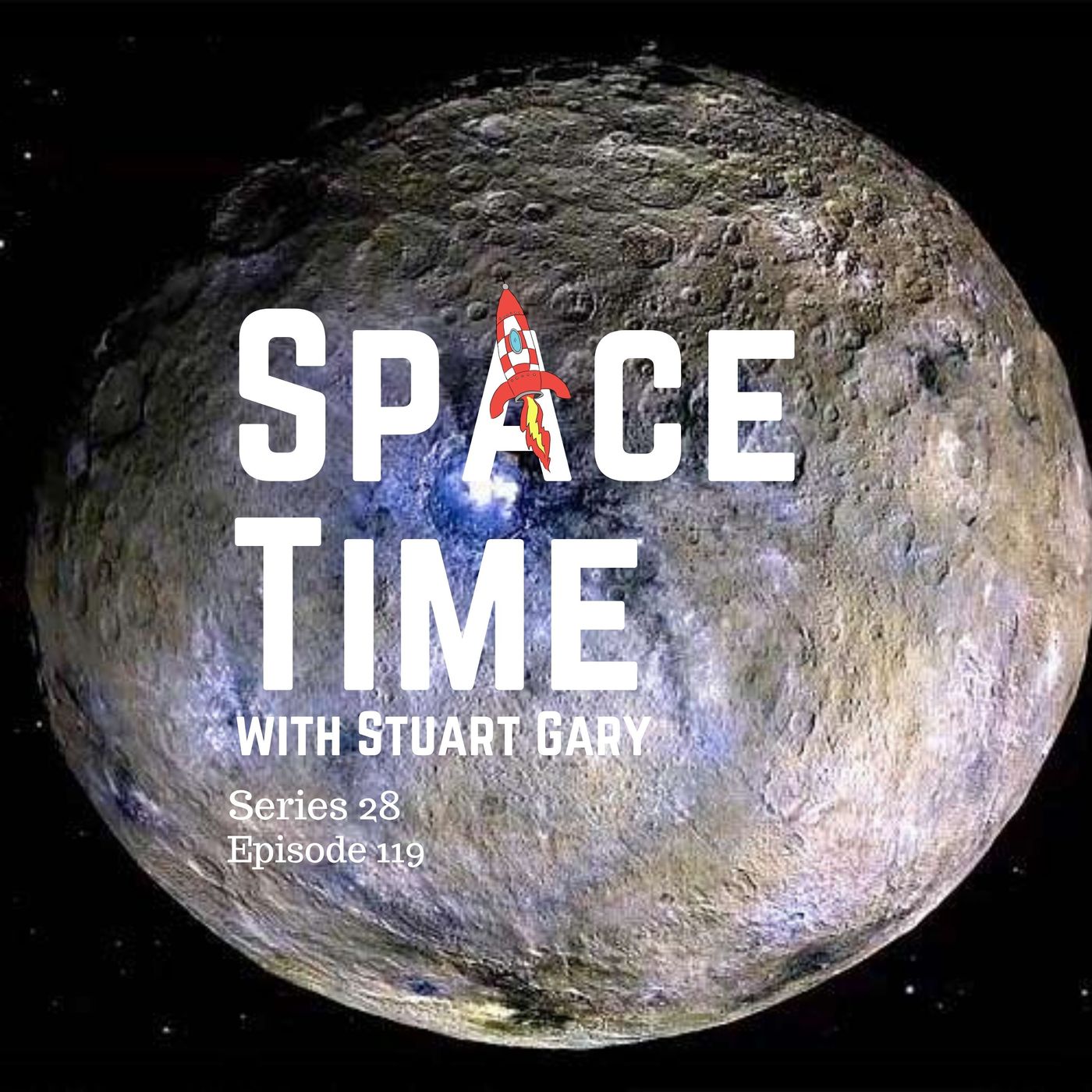
In this episode of SpaceTime, we delve into the intriguing potential for life on the dwarf planet Ceres, explore NASA's latest mission to study the heliosphere, and celebrate the achievements of the University of Melbourne's Spirit Nanosat.Ceres: A Potentially Habitable World?Recent research published in Science Advances suggests that Ceres, currently a frigid and frozen world, may have once harboured conditions suitable for life. By modelling the planet's thermal and chemical history, scientists propose that Ceres could have sustained a long-lasting energy source, allowing for microbial metabolism. While there's no direct evidence of life, the findings indicate that Ceres had the necessary ingredients—water, carbon, and chemical energy—that could have supported single-celled organisms in its ancient past.Nasa's New Heliospheric MissionNASA has launched the Interstellar Mapping and Acceleration Probe (IMAP) to investigate the heliosphere, the magnetic bubble surrounding our solar system. This mission aims to enhance our understanding of solar wind and its interactions with interstellar particles, which are crucial for assessing space weather impacts on Earth. IMAP will operate alongside the Carruthers Geocorona Observatory and NOAA's Swifo L1 spacecraft, contributing to a comprehensive study of our solar environment.Spirit Nanosat's Milestone AchievementThe University of Melbourne's Spirit nanosatellite has successfully completed its initial mission phase, deploying its thermal management system and taking a selfie in space. Launched in December 2023, Spirit is equipped with a miniaturised gamma-ray detector to search for gamma-ray bursts, marking a significant advancement in small satellite technology and scientific exploration.www.spacetimewithstuartgary.com✍️ Episode ReferencesScience Advanceshttps://www.science.org/journal/sciadvNASA IMAP Missionhttps://www.nasa.gov/imapUniversity of Melbourne Spirit Nanosatellitehttps://www.unimelb.edu.au/Become a supporter of this podcast: https://www.spreaker.com/podcast/spacetime-your-guide-to-space-astronomy--2458531/support.Ceres: A Potentially Habitable World?NASA's New Heliospheric MissionSpirit Nanosat's Milestone Achievement(00:00) New study claims the dwarf planet Ceres could once have been habitable enough for life(05:14) The Interstellar Mapping and Acceleration Probe will study the heliosphere(15:58) New study finds tropical fish are colonising new habitats because of ocean warming(18:07) Khloe Kardashian reportedly claims she's seen UFOs and experienced paranormal activity
Embed this episode
NOW PLAYING
Ceres: The Dwarf Planet That Might Have Hosted Life?
No transcript for this episode yet
Similar Episodes
No similar episodes found.
Similar Podcasts
No similar podcasts found.