
EPISODE · Jun 8, 2026 · 24 MIN
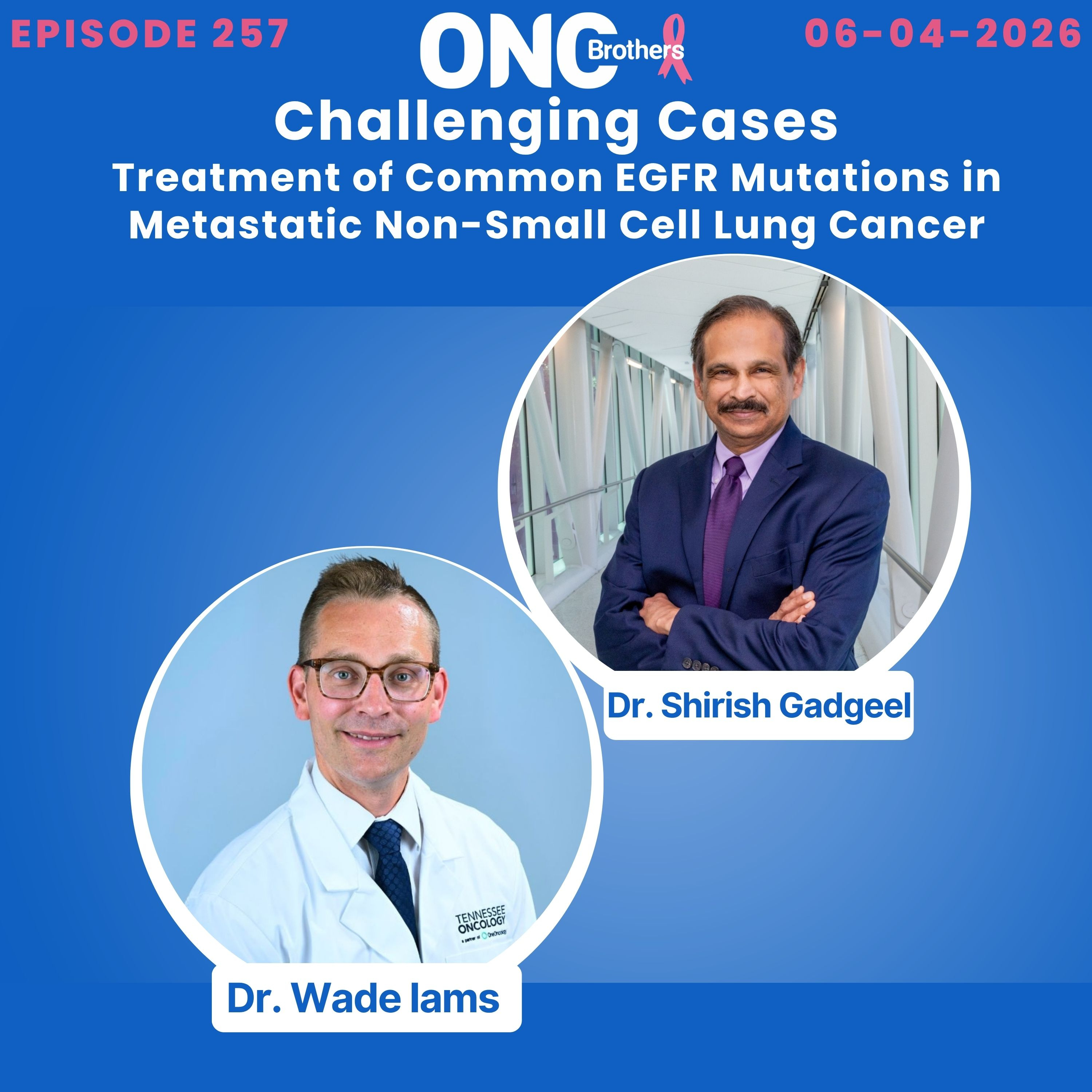
Challenging Cases - Treatment of Common EGFR Mutations in Metastatic Non-Small Cell Lung Cancer
from Oncology Brothers: Practice-Changing Cancer Discussions · host Oncology Brothers
In this episode of the Oncology Brothers podcast, we discussed challenging cases focused on metastatic non-small cell lung cancer (NSCLC) with common EGFR mutations. Joined by experts Dr. Shirish Gadgeel from the Emory University and Dr. Wade Iams from Tennessee Oncology, the discussion revolved around two real-life patient cases.The first case featured a 54-year-old gentleman with active tobacco use and diffusely metastatic NSCLC, including an isolated brain lesion. The panel explored treatment options, including single-agent osimertinib versus dual combinations of amivantamab-lazertinib and osimertinib-chemotherapy, emphasizing the importance of shared decision-making and considering co-mutations and patient demographics.In the second case, the conversation shifted to supportive care and managing side effects, particularly focusing on skin toxicity associated with amivantamab. The experts shared their proactive approaches to patient education and the significance of monitoring and adjusting treatment plans to enhance patient quality of life.Key Points:In EGFR-mutated NSCLC with CNS metastases, treatment selection between single-agent osimertinib and combination amivantamab-lazertinib vs. osimertinib-chemotherapy requires individualized consideration of age, co-mutations, extent of disease, and patient preference rather than mutation status alone.Younger patients with CNS disease may benefit from more aggressive upfront combination therapy, while shared decision-making remains central to navigating the expanded efficacy versus increased toxicity trade-off.Dermatologic toxicities associated with amivantamab requires proactive management including supportive care regimen, early dose adjustments and close patient monitoring to maintain treatment continuity.Providing the best available upfront therapy in metastatic EGFR-mutated NSCLC is critical, as sequencing options become more limited at progression.Join us for an insightful discussion on the latest treatment algorithms, the importance of personalized care, and the evolving landscape of NSCLC management. Listen us on:Apple Podcast: https://podcasts.apple.com/us/podcast/oncology-brothers-practice-changing-cancer-discussions/id1653340966Follow us on social media:X/Twitter: https://twitter.com/oncbrothersInstagram: https://www.instagram.com/oncbrothersWebsite: https://oncbrothers.com/Don't forget to subscribe for more episodes featuring conference highlights and challenging cases in oncology!#EGFRMutated, #LungCancer, #ThoracicOncology, #PersonalizedMedicine, #OncologyBrothers
Embed this episode
NOW PLAYING
Challenging Cases - Treatment of Common EGFR Mutations in Metastatic Non-Small Cell Lung Cancer
No transcript for this episode yet
Similar Episodes
No similar episodes found.
Similar Podcasts
No similar podcasts found.