
EPISODE · Aug 30, 2026 · 3 MIN
Chamber Opera by Li Zi'ao Brings Ruan Lingyu Back to Stage
from KLASSIKOM=Innovations in classical music · host Rudolph Tang
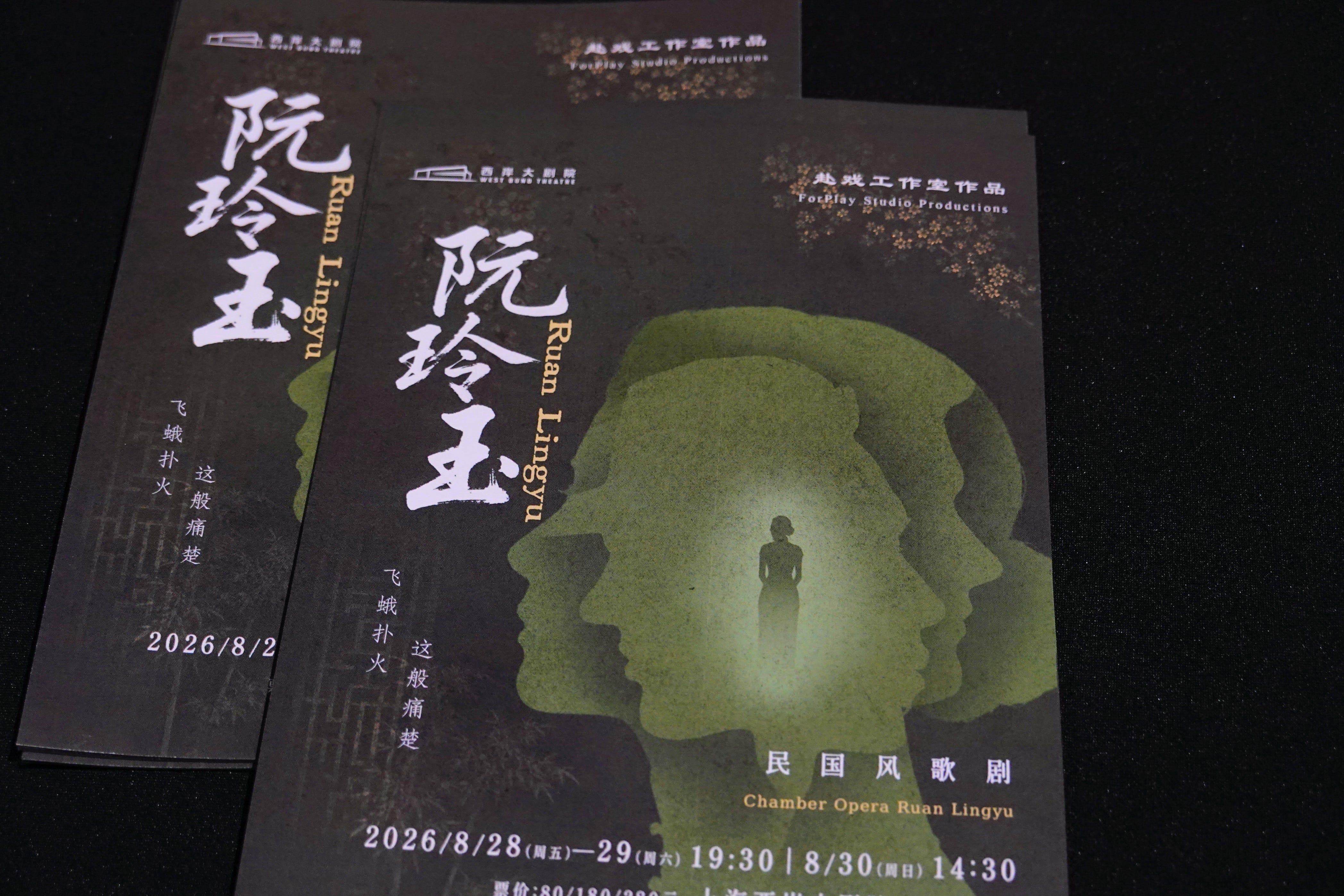
She was the most celebrated actress of Republican-era China, and she died at 24 with a note that read: “Gossip is a fearful thing.” Ninety years after Ruan Lingyu’s death, she remains an irresistible subject, for filmmakers, for biographers, and now, for a new generation of composer.Ruan Lingyu, a chamber opera composed by Li Zi’ao with a libretto by Li Xuanru — both Gen Zs — arrived at the West Bund Grand Theatre in Shanghai on 28 August, following its 2025 premiere in Beijing, and offered a portrait of the actress that was as psychologically probing as it was musically assured.Ruan Lingyu’s story is inseparable from the men who defined and destroyed her. Born in 1910 in Shanghai to a working-class family, she entered the film industry as a teenager and rose swiftly to become the pre-eminent screen presence of her era, a Chinese equivalent of Greta Garbo in emotional range and magnetic intensity. She starred in landmark silent films including Little Toys, The Goddess, and New Women, often playing characters trapped by social convention, poverty, or male exploitation — roles that mirrored her own circumstances with uncomfortable precision.Her private life was a catalogue of misfortune. Her first partner, Zhang Damin, a chronic gambler whom she supported financially for years, sued her for adultery when she left him for the tea merchant Tang Jishan. Tang, equally controlling and unfaithful, dragged her into a public legal dispute that the Shanghai tabloids seized upon with gleeful savagery. The press, which had built her into an icon, now dismantled her with the same energy. On 7 March 1935, the eve of International Women’s Day, she took an overdose of barbiturates. She was 24. Lu Xun, in his eulogy, wrote that it was not Ruan Lingyu who killed herself, but the society that consumed her.The production at West Bund’s black-box Square Theatre offered a stark contrast to the commercial bustle of the surrounding complex. The lobby was dim and airless, security desks unmanned, the building feeling more afterthought than destination. Inside the intimate space, however, a spare stage and an atmosphere of quiet tension announced that the evening meant business.Performed without interval, the opera takes two interlocking threads as its backbone: Ruan Lingyu’s relationships with three men, and her most significant film roles. The structure is tight and the psychology detailed, tracing how a woman who embodied suffering on screen was gradually consumed by it offstage. Four young singers carry the piece, with soprano, tenor, and baritone voices distributed with care across solo arias, monologues, duets, and a quartet that each find their own character. The gender geometry — one woman against three men — recalls the inverse configuration of Mozart’s Don Giovanni, in which one male protagonist is pursued and ultimately judged by three women. Here the dynamic is reversed, and the weight of that reversal is the opera’s central argument.Li Zi’ao’s score is the production’s most distinctive achievement. The libretto’s slightly schematic, stream-of-consciousness structure gives the composer room to move freely, and he uses it well. The music is immediately accessible, at times closer to musical theatre than classical opera, but the Republican-era sonic palette — dance-hall rhythms, pentatonic inflections, the ghost of Shikumen jazz — is woven in with subtlety rather than nostalgia. Character delineation follows knowable conventions: the villains are telegraphed, the heroine luminous and doomed. The orchestration occasionally overreaches, pressing harder than the drama requires. But the theatrical instinct is sound, and the dramatic momentum rarely falters.Ruan Lingyu joins a growing body of work reclaiming Republican-era women for the contemporary stage. Lin Huiyin and Zhang Ailing have both received musical theatre treatments in recent years; that Ruan Lingyu now joins them, in a form that takes her psychological complexity seriously, feels overdue. That the work was conceived and written by two Gen Zs makes it more striking still.Pre- and post-show talks, a format more common in a repertory theatre than opera, added welcome context. The audience, modest in number but attentive in spirit, seemed grateful for both. This is a public episode. If you would like to discuss this with other subscribers or get access to bonus episodes, visit klassikom.substack.com
Embed this episode
Ready to play
Chamber Opera by Li Zi'ao Brings Ruan Lingyu Back to Stage
No transcript for this episode yet
Similar Episodes
No similar episodes found.
Similar Podcasts
No similar podcasts found.