
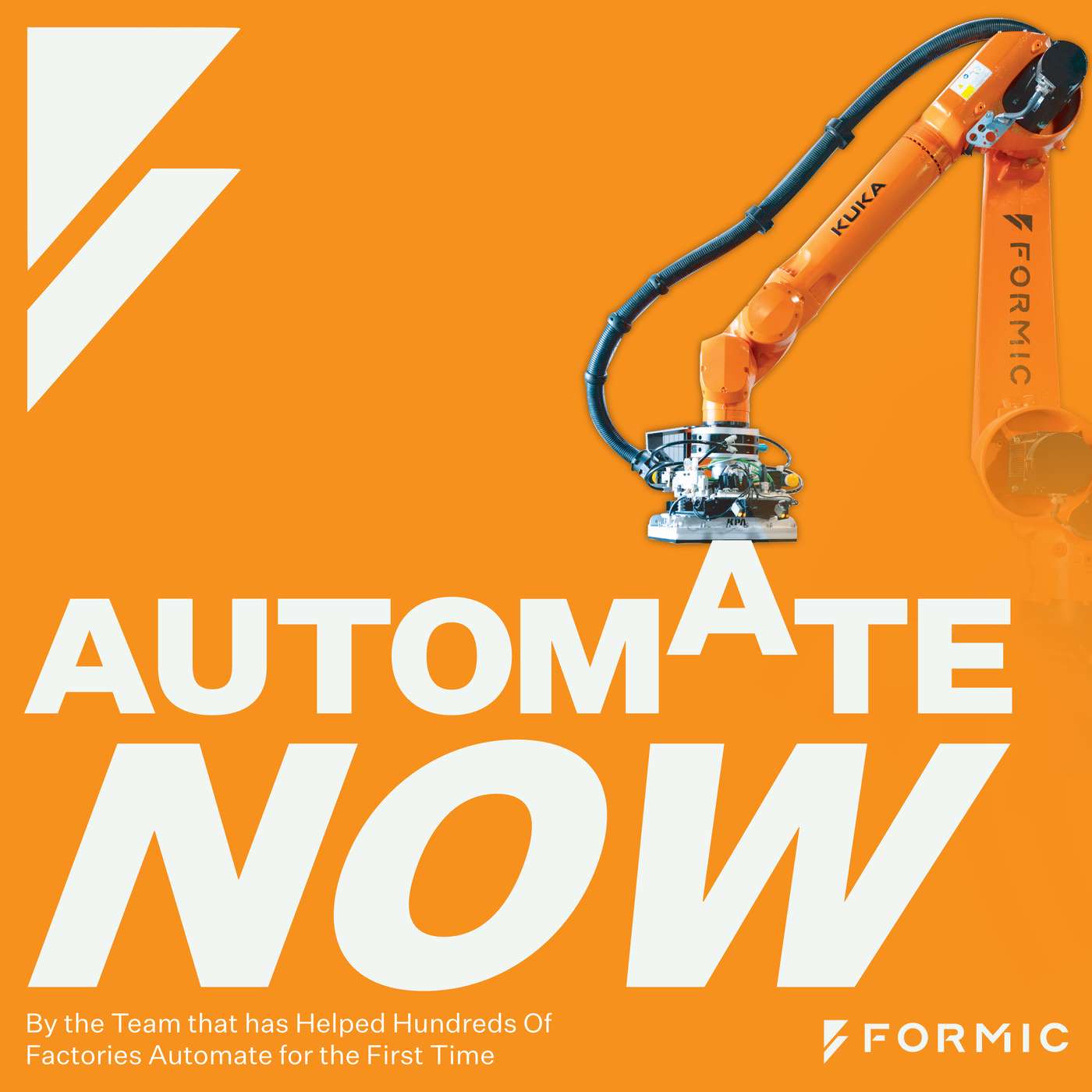
EPISODE · May 21, 2026 · 5 MIN
Chapter 15: How Automation Future-Proofs Your Operations
from Automate Now · host Formic
Automation isn't just about solving today's problems — it's about making sure your business is still standing, still growing, and still competitive five and ten years from now. In this episode, the Formic team explores five ways automation future-proofs manufacturing operations, anchored by a simple but powerful idea from Jason Glade, President and CEO of Taffy Town: let equipment do the hard stuff, and let employees do the thinking.The episode covers how automation strengthens company perception with customers, investors, and partners who want to work with forward-thinking businesses; how it builds a resilient workforce that can absorb market fluctuations, labor shortages, and supply chain disruptions without breaking down; how it improves job satisfaction and retention by removing physically punishing work from people's daily lives; how it drives consistent quality and fewer costly errors for demanding retail partners like Walmart and Target; and how higher production capacity at all three shifts creates economies of scale that lower per-unit costs over time. The COVID-19 pandemic made clear what happens when manufacturers wait for the right moment to prepare for disruption. That moment never comes. The companies that thrive are the ones who started building resilience before they needed it.Key Takeaways:Automation signals to customers, investors, and partners that your business is built for the future — not just reacting to the presentAutomated systems absorb market volatility, labor shortages, and supply chain disruptions in ways that purely human workforces simply cannotRemoving repetitive, physically demanding work from employees' daily routines directly improves morale, reduces injury incidents, and increases long-term retentionRobots don't have off days — consistent precision across all three shifts means fewer chargebacks, fewer rejected shipments, and stronger supplier quality scores with major retailersRunning at full capacity across first, second, and third shift creates economies of scale that lower per-unit costs — a structural competitive advantage over manufacturers still relying on manual processesThe companies that future-proof their operations don't wait for disruption to force their hand — they take steps toward resilience before they need itAutomate Now is written by the Formic team — Saman Farid, Danijel Lolic, Molly Garrison, Brooklyn Kiosow, and Shawn Fitzgerald — and edited by Brooklyn Kiosow. Formic helps U.S. manufacturers automate for the first time through Full Service Automation: no large upfront investment, no in-house robotics expertise required. If this episode made you think about where automation could work in your facility, start the conversation at formic.co.0:00 Intro 0:44 #1 — Boosting Company Perception 1:32 #2 — Building a Resilient Workforce 2:15 #3 — Improving Job Satisfaction 3:04 #4 — Consistent Quality 4:03 #5 — Lower Cost Per Unit 4:47 The Long Game of Automation 5:47 Key Takeaways
What this episode covers
Automation isn't just about solving today's problems — it's about making sure your business is still standing, still growing, and still competitive five and ten years from now. In this episode, the Formic team explores five ways automation future-proofs manufacturing operations, anchored by a simple but powerful idea from Jason Glade, President and CEO of Taffy Town: let equipment do the hard stuff, and let employees do the thinking.The episode covers how automation strengthens company perception with customers, investors, and partners who want to work with forward-thinking businesses; how it builds a resilient workforce that can absorb market fluctuations, labor shortages, and supply chain disruptions without breaking down; how it improves job satisfaction and retention by removing physically punishing work from people's daily lives; how it drives consistent quality and fewer costly errors for demanding retail partners like Walmart and Target; and how higher production capacity at all three shifts creates economies of scale that lower per-unit costs over time. The COVID-19 pandemic made clear what happens when manufacturers wait for the right moment to prepare for disruption. That moment never comes. The companies that thrive are the ones who started building resilience before they needed it.Key Takeaways:Automation signals to customers, investors, and partners that your business is built for the future — not just reacting to the presentAutomated systems absorb market volatility, labor shortages, and supply chain disruptions in ways that purely human workforces simply cannotRemoving repetitive, physically demanding work from employees' daily routines directly improves morale, reduces injury incidents, and increases long-term retentionRobots don't have off days — consistent precision across all three shifts means fewer chargebacks, fewer rejected shipments, and stronger supplier quality scores with major retailersRunning at full capacity across first, second, and third shift creates economies of scale that lower per-unit costs — a structural competitive advantage over manufacturers still relying on manual processesThe companies that future-proof their operations don't wait for disruption to force their hand — they take steps toward resilience before they need itAutomate Now is written by the Formic team — Saman Farid, Danijel Lolic, Molly Garrison, Brooklyn Kiosow, and Shawn Fitzgerald — and edited by Brooklyn Kiosow. Formic helps U.S. manufacturers automate for the first time through Full Service Automation: no large upfront investment, no in-house robotics expertise required. If this episode made you think about where automation could work in your facility, start the conversation at formic.co.0:00 Intro 0:44 #1 — Boosting Company Perception 1:32 #2 — Building a Resilient Workforce 2:15 #3 — Improving Job Satisfaction 3:04 #4 — Consistent Quality 4:03 #5 — Lower Cost Per Unit 4:47 The Long Game of Automation 5:47 Key Takeaways
NOW PLAYING
Chapter 15: How Automation Future-Proofs Your Operations
No transcript for this episode yet
Similar Episodes
Feb 4, 2026 ·18m