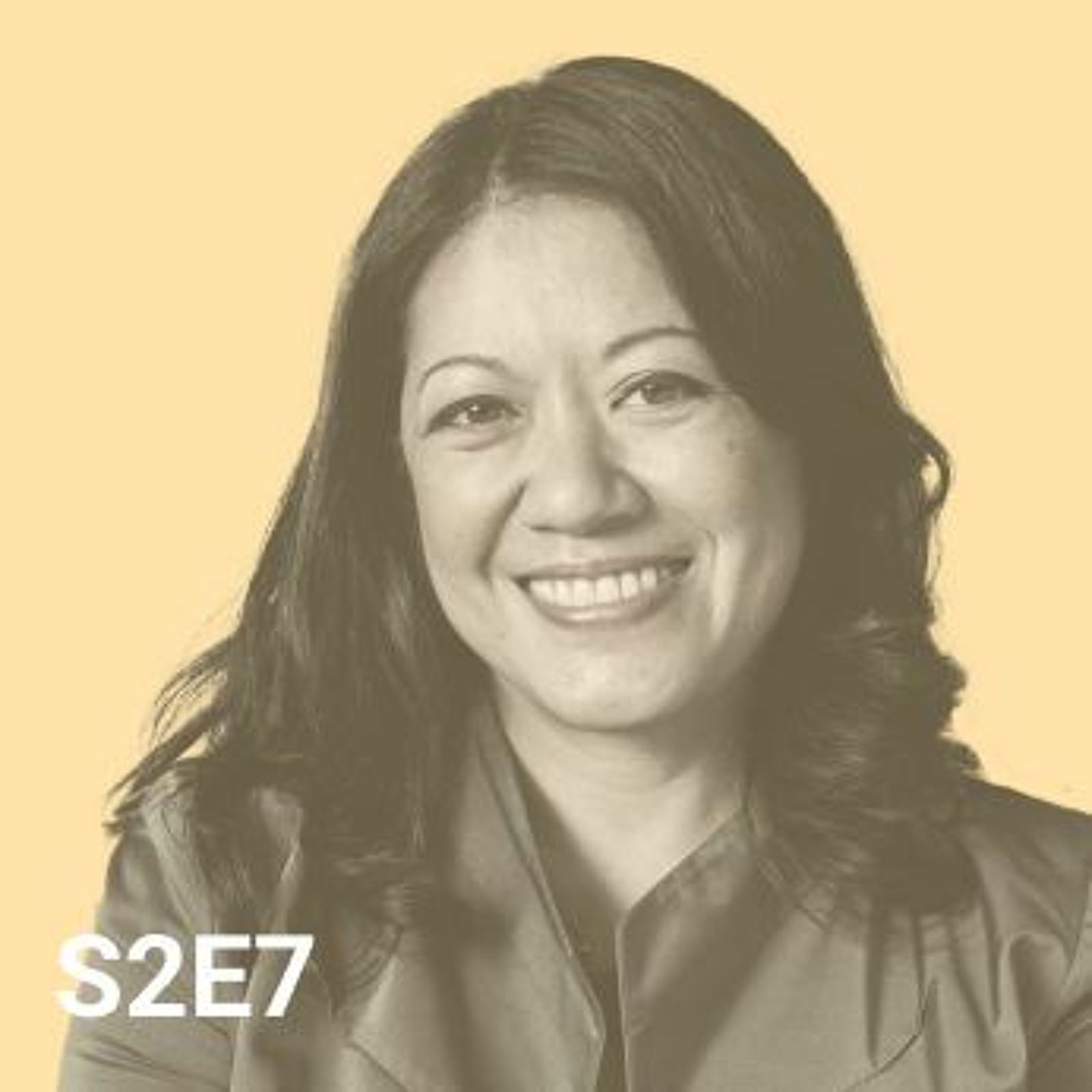
All right, welcome back to Invisible Machines, a podcast produced in partnership with UX Magazine and OneReach AI. I'm Josh Tyson. With me always, as always, is Rob Wilson. And today we are talking with Charlene Lee, who is a sought-after speaker, an advisor, a leadership coach, and also a best-selling author. She's written books such as Groundswell, Open Leadership, The Engaged Leader, The Disruption Mindset, and is working on a new book that I think she crossed our path, Rob, because she reached out to you as a source for the book that she's working on now. Yeah, she was at Forrester for a long time.
so yeah she sort of mentioned she started in 93 so she's seen like a lot of our guests she's seen it all um but in her case she was you know from 93 an intentional observer so she was observing with intention i think a lot of times some of us that were in it we weren't necessarily consciously observing what was going on we were kind of focused on our things so we could tell you our perspective but she was watching broadly this whole time um you know being in it but also being like highly present and documenting the events as they unfold it. So I think she's got a good handle on how this is different and what we should learn from the past and not repeat moving forward. It's a good chat. I think a lot of people have the stilted long view of like, oh, well, this technology is going to take over our lives and it's going to be horrible.
That would only happen if the journey there wasn't held carefully by human hands. And I think that's something that comes up a lot here and over and over again on the podcast, in the book, that this is like a human activity. This is powerful technology, but it absolutely needs human hands to guide it. And that's kind of a cool thing to get into here. You could, in some way, I think we'll look back and say it's obvious that the machines we create and their level of intelligence, using that word loosely, is to serve us. We're not creating machines.
to replace us uh everything every machine we create is at the service of making our lives better from the washing machine all the way to ai today and those intentions are not going to change there certainly will be accidents and just like there has been with machinery over the years and people will get hurt um and i'm not you know saying that that's okay or or that we shouldn't do everything we can to try to avoid that from happening but it's very hard you can't avoid it by happening effectively by just not doing it you have to Kind of just be highly observant. You need to experiment. So you could almost say that coming out with chat GPT and AI technology today and releasing it to the world, that's not the noble act. That the noble act is of companies and people adopting it in a careful way, experimenting with it now when the damage it can do is fairly minimal. And that will further it faster and make it more important more quickly for the human race.
than the actual invention of it. So to relate that to self-driving cars, it's not the invention of the self-driving algorithms that Tesla's getting that is where the true value is. It's in all of the people that are experimenting with it, turning it on, but staying vigilant so that it doesn't do any damage and teaching it to sort of align and do the right things. And so as a society, really experimenting with it, that's where the true value comes. you know, they'll be the unsigned heroes of tomorrow for sure. We're going to, you know, remember the names of Sam Altman and Elon Musk, no question. But the truth will be that it's those who adopt early, carefully, and provide that feedback that will actually put it into mainstream and help the most people. Yeah, and I think Charlene really helps us kind of visualize a roadmap to getting to that point. So I think this is a really great conversation to be sharing right now. Well, enough of us chatting. Let's jump in. Yep. Here we go.
Charlene, thanks so much for joining us on the podcast. We're really excited to have this conversation with you, in part because a lot of the conversations that Rob and I have had over the years as we're working on our book, we're kind of about the ways that the business and technology are kind of merging into one thing. And as I was listening to your podcast and kind of looking at some of the advice or some of the coaching that you provide to business leaders, you know, ideas like replacing perfection with excellence, taking a lot of smaller leaps to move forward instead of trying to take giant steps, you know, embracing failure. A lot of these ideas are very... similar to the tactical advice that we're giving to people in our book and in our conversations, that you really need...
to be embracing this kind of different mindset as you move forward to technology. And I was wondering if in your world, how much of a convergence are you seeing between business and technology in the conversations that you're having with business leaders? Well, I've been in the technology space since I graduated from business school in 1993. And that was the beginning of the internet. So that's been something that has been sort of overshadowing my career is the role of technology in business. And I have staked my entire career on helping organizations navigate the transformation that new technologies bring into our lives. And so I absolutely see the two.
interconnected with each other. You cannot even begin to think about running a business these days without some sort of technology. It is just yet another tool that we use, like machines, like steam, like gas power, and it has a transformational effect. And the big difference is that it really changes the way we relate to each other. And it has constantly been doing that with each new generation of technology. And what is a business than a bunch of people trying to work together to get something done? And so it's no question that technology and business are fully tied together. Yeah, being around since 93, we had O'Reilly on the podcast a while.
you know book publisher i didn't know this until we talked to him but um he had created the first commercial website and so um like i you know just kind of go back and you almost imagine like yep there was a first uh there was a first website you know that was commercial and had advertising on it um and then you know then we're talking to adam share from you know who created siri and he was his mentor created the first like the mouse and windows and And we were like, wow, this feels like it shouldn't be in our generation. It seems like these things we just take for granted. Somebody actually created these things. But what strikes me is over the course of years, and as Adam said, these things tend to take 10 years to adopt. They get invented, they get created, and then they take 10 years plus for anyone to start using them.
And I think there's an argument to be made that with LLMs and some of the technology that's coming around today, though, this adoption is significantly faster than things like the mouse or the personal computer. Or is it? Or is this just a facade? It seems like it is, but really 10 years from now, we're going to look back and say, yeah, it still took us that amount of time because to Adam's point, it's the human adoption part, not the invention part that tends to slow things down. Can humans adapt to this technology and implement it at scale?
And that's what takes the time. So to your point, again, the speed of adoption of LLMs and in particular ChatGPT has been extraordinary. And again, it is the reason why I think it's such a disruptive force is because it's not going to come in little dribbles and drabs. It's being adopted by consumers and people walking these technologies into the enterprise, into businesses. And leaders and organizations are so ill-equipped to be able to deal with the change that's coming at us. And the general reaction is,
I don't believe it. I mean, Naio, I don't think it can be as good. I just want it to go away. It's not reliable. So rather than see how transformative it could be and harnessing that power, it's right now a lot of head in the sand. It's not going to be as good. People are always going to be more creative and better than this technology. So it's more of a like, I have time, right? I have time. I don't have to take it seriously. How big is it really going to be? Sure, it's going to make a difference. A couple of jobs are going to be impacted. But in the end, it's not going to be that good, right?
Right. It's just like a case of like outrunning the bear versus the other campers. Like, you know, they're going as long as as long as everyone in my position thinks like I think, well, you know, I'll be fine. And as soon as I start hearing groundswell to your book, which I'll plug for you. And as soon as I start hearing groundswell from other CEOs that, oh, no, like I'm, you know, I'm not in I'm not in the head in the sand camp. I'm in the like, you know, jump in and and push the envelope camp. Does that is that what they're waiting? Is this like everyone standing on, you know, on the edge waiting to take the leap? And that first.
That first major example of applying this technology is just going to put everyone on their back heels and they're going to wish they'd be faster or... Yeah, I think what's happening is I think some people are taking lessons from the dot-com era where a lot of companies jumped in way too early or maybe in the social and the mobile space where some people jumped in headfirst, like mobile first. Everything's going to be web. And we got burned because they were looking at a technology and not looking at the business value that was going to be created. So if you keep at the center of everything that you do about how you create value, especially for your customers, and you're moving at the speed of your customers, then it's really hard to go wrong. When you get in trouble is when you're doing this because you think you should be doing it. The biggest problem I see right now with AI is that they're not even relating it to how...
the customer changes are happening. Or that I'll just sit here and when it becomes real and serious, I'll let other people take the road first, then I'll adopt it. Not realizing this is not just simply pushing a button and it plays. There is a huge human factor to AI. And that is the part that we absolutely have to prepare for right now. Understanding and preparing for it, being curious for it. Yeah, I have an interesting story on your mobile. It really, it hit me like people jumped in early. So in the early days, you know, I'd done a lot of development for a lot of companies, built a lot of apps. And Apple actually hired me to build one of the first iPad apps when they were launching the iPad.
And right after we had created that, I had a conversation with Martha Stewart who wanted to build a mobile app. So she was like, to your point of like jump right in, she was there. She wanted to build a mobile app that could operate on the iPad or the iPhone where someone could plan their entire wedding. using this mobile app. And so, you know, it was more of a consultative kind of exploratory meeting that we had. And then she kind of asked, you know, at the end, what would this cost? And there's just the design of it, right, was hundreds of thousands of dollars. Like just, I mean, come on, plan your whole wedding on an app. She, her response was, oh, I can get a college kid to do that for 15K. My experience at that time was...
they jumped in early and failed because they didn't invest enough. They didn't take it seriously enough. They hedged, right? They were like, I'll jump in, but I'm not going to spend enough that gets me in trouble if it fails. And that not enough is not enough to almost guarantee failure, right? So it was like a lack of commitment to it. Not the fact that it was early. It was the fact that they were not committed when they did it. And I have another example that actually Steve Jobs showed, which was another app that we designed for a company that...
that went all in, right? They spent a million dollars on the mobile app early on. And this was a mobile app so that doctors could monitor the fetal heartbeats remotely over a mobile app, which was one of the ones that, like I said, Steve Jobs demonstrated in one of his iPhone presentations on Apple. And Airstream was the name of it. And it was amazing, right? Because now doctors had these tools and they weren't showing up late. They could pick the right time. You could imagine how useful that was at that time to have direct immediate access to the stream of heartbeat data from the mother and the child and blah, blah, blah in real time in their pocket. So to me, it was really clear that here were two great examples. One, I want to jump in, but I don't want to commit. I don't want to take real risk. And then the other way, we're going for it.
And so then later, all of a sudden, you know, people spending a million dollars on an app, not unusual anymore. And then the quality goes up. So there's sort of like, I guess the gray area of jumping in, right? Was it that the tech wasn't ready or was it that they weren't ready to commit? fully yeah but i think there's a sweet spot for example i'm trying to build my own private chatbot that takes all of my content and i've got so much i don't even remember what i've written at this point and i want to chat back just for myself let alone all the people who would like to be able to ask me questions and um just building that chatbot again i'm not a technologist um it is hard right now it's really really hard to do it even with technologists to you know load it up into llama index to create the vectors to actually fine tune it and make sure that everything works it's just really really hard and There's a reason why most of the generative AI initiatives right now for enterprise are coming through existing platforms. I can just add it in. That's another layer on something that's already built. And so the ability to really leverage some of the power of this, the tools just simply aren't there yet to create these bespoke apps on the part of the toolkits that aren't there, the SDKs aren't there. So I think there's a point of being too early. And I know that in about three or four months, all those tools will be there. So I've got to sit here and go, do I wait three or four months?
or do i really spend the time the money the expense the time and headspace also to go and invest in that and that sweet spot is constantly moving about what is the benefit and the value that's being created for my organization for my customers versus the time and effort and the timing of that against how the market is going to develop so it is It sounds really easy to do this. And I can tell you from the very beginning when I was at the Science of American News, again, second newspaper to go online with the World Wide Web. And I was on the advertising team that helped create and helped define the standards for web-based advertising at that point. So there's a point of being too early and too late. And we decided to go early because we already had experience of doing this in AOL.
on America Online. And so we had the experience already of printing content online. It was just another foreign factor at that point and a little bit different. But if you hadn't had that experience, it would have been a huge and heavy lift to do that. So I think about the investment that Knight Rider made early on. And yet at the same time, in the end, they weren't able to push aside the stemming of the bleeding of their online classifieds. So they were early on, but they didn't make that commitment to truly embrace the online space and move fully into online classifieds because they wanted to protect their existing print franchise.
All the experimenting, all of that early effort, the millions of dollars. I mean, this is the most advanced in terms of newspapers and their commitment to doing this, but had this fundamental business model problem that they could not resolve because of these public company stakeholders that demanded a certain level of profits and they had to maintain. So they could never commit to it. Going back in time, was there a better way for them? Like, would you?
Would there have been a better way or was it just, you know, that's what happened? They tried it and that was bound to happen. And maybe it would have worked out differently if the circumstances benefited the business model better. But would you go back and say, hey, this is what they should have done? The only way they could have done it and survived as a business was to go to shareholders and go, we can't continue to return the types of returns you've come to expect us to do. This is reality. And we're going to make some significant changes. And this is what it's going to look like in the future. And they just couldn't do it. And in the end, they lost the entire company.
That's interesting because that's kind of the moment we're in now, right? Where a lot of companies, that's what they kind of need to do, at least by our estimation, to really succeed with generative AI and conversation like all these new technologies is what you just described. Like be willing to change their relationship with risk and profitability and return and take a plunge, which is just frightening on a personal level and certainly on a business level. I want to get your opinion on it. So there's a book out there by the authors of Prediction Machines. So we had on the podcast.
the authors of Power and Prediction. And that book covers, I think, a super interesting point, which is that AI point solution phase, which is what we're in, is where current products get these feature bolt-on AI add-ons, which are like improvements onto an existing product. So we have the mental model of the product. like an email client or like Word, right? And then all of a sudden we just add AI to it. So now it can generate our emails or summarize our emails or generate a document in Word. And there'll be companies that get funding that come out that beat Microsoft to the punch with that feature and get funding. But ultimately, a lot of those won't be successful because the market sort of belongs to Microsoft. And when they add that feature, those companies won't get the traction that they were hoping to get. And so betting on being early to the game will disrupt.
Usually that doesn't happen in this case. But that systemic change comes right after. So you see these point solutions, companies get this bump, right? This like a bump in the capabilities of their current products. Like our email client gets smarter and better. The spam filter gets better. And so all of a sudden these companies, you see like a bump in adoption and a bump in usage, et cetera, as they become more useful. But then we get to systemic change, which is right behind it. Systemic change is where we don't even need an email client. We don't even need to understand.
how we communicate with each other from a technological standpoint. Are you using email? Are you using SMS? Who cares? Just tell this person that I'll meet them at the restaurant at five. However, why do I need to tell you the protocol to use? We don't say, hey, I want to call this person. Wait, no, I'd rather WebRTC this person. Oh, wait, let me sip this person. We don't care the underlying protocol. We just want to communicate. And so all of this burden goes away and we don't have Word. We just go to a conversational.
UI and we say, I want to write a letter. And then boom, up pops a little text, a large text box, you know, with a pre-written letter that we can edit. And then we go send it to this person. no email client. I never saw this idea of a word processing program and then an email client. These are gone. And that's like systemic change where those point solution products get disrupted. Their business models get disrupted because so much of them are based on this UI that's like this very specific app that does this very specific thing. And now it's just part of a conversation and all that stuff is hidden from the user. I just wonder what you think of that theory that that's going to apply here. And what about all those?
those software UI companies that exist in this like narrow function that features that are grouped by the UI that are highly complex to understand how to use the UI. Like, do you know Excel? You know, oh, yes, I'm certified in Excel, like all that being gone. And now I just say, hey, you know, I want to plan a, you know, a camping trip and I need a shopping list and it creates a spreadsheet. I don't say I need a spreadsheet program. It just it just does that. I wonder what your thoughts are on that. Yeah, a couple of things. I think you're absolutely right. And this book is absolutely right. You're thinking,
The earliest technologies take what we know and improve on it. And then the next ones evolve and the other ones disrupt. And so those are the levels of progression that you have. And the problem with early ideas, some of those early disruptive ideas may exist today. But the audience, the people who would do an adoption, I just simply aren't ready for it. And level of disruption of, what do you mean I don't have an email client? I have this agent who is working on my behalf that understands my request and just puts it into whatever interface I need to be. What kind of agent would I actually ever trust to do that? In the same way, would you ever get into a stranger's car and have it take you something?
It takes a while for us to take all these new paradigms of things like Uber with a gig economy or social media. They're just such paradigm-busting ideas that it takes us a while. And for these disruptive things, they usually are the third generation that comes along that actually gets the traction. The first generation is just, again, at that incremental improvements, evolutionary stage, just teasing with the idea. But because the customers aren't clear about what they need, they usually don't sustain themselves. Second generation is learning from the first, getting more traction, getting more early adopters since the third generation that actually can make through.
You look at search engines. You look at social media. You look at mobile platforms. It's usually the later generations that actually have the sticking power because the market has been developed and trained by the early iterations. And there are very few companies that survive from first to second to third because it's the way they're wired, the way they're constructed. They have a certain way of thinking about the world that also just doesn't evolve.
Yeah, I can't help but think that's a lot of tech companies in that you just mentioned. You know, that's a lot. A lot of our tech companies now revolve around this concept of an app and an interface. And that if, you know, if we obscure that one interface for apps and that we buy applications and software in bundles of features, right, that come wrapped together. And the idea that those features get broken into parts like APIs, you know, I can't help but think of companies like Trilio, which are API based. And as much as they have hundreds of APIs.
most everyone uses send a text message and that's where most of their money comes because, you know, that's honestly, you know, mostly how people know them and all these other APIs just kind of collect dust. And, but you didn't have to buy all of those others, you know, because it was broken into pieces and used as an API layer. And, and now you just like abstract that further and say like, Hey, send an SMS on the cheapest platform out there today. Right. And, and now you're like even abstracting it further. So you have like somebody who creates a feature, not a group of features anymore. And then.
And then that's got some sort of, you know, lifetime to it. Like it's good until something else better comes. And then some orchestration systems is going to choose the next best thing. It feels like it's just so disruptive to software and technology companies as we know them that are like per user. And, you know, the whole business model, how.
How do they change and adapt? Can they? Can they adapt? Or is it like stand up a whole new company? I think it's stand up a whole new company. But again, I would not set aside the ability for these companies to adapt. They just have huge adoption curves. Just look at Threads. It was launched by Facebook Meta this past three days, I think. They're up to 30 or 40 million users, the most downloaded access app ever. And it's as competitive to Twitter. And what's interesting about it, it's a complete copycat of Twitter. It's never just Instagram established base already. But the most interesting feature about it is the Fediverse, which is the federated metaverse.
And so that if I post there, I can also have a post on Macedon. So it doesn't matter where I actually have my home base of where I read or where I publish, it will just get to my audience. And as a creator, as an influencer, that's incredibly wonderful because I don't have to do these machinations now trying to figure out where's my audience? I can't find them. They will be where they want to be and they'll find me wherever I want to be. And it's setting a parameter that if you're not part of that universe, you're going to miss out.
So I think there's going to be something very similar on these areas in that your value isn't so much that you have something that no one else has, but it's your value to be in a connected, federated, decentralized way and be one of those thoroughfares. And if you can provide more people to that thoroughfare, the more value you're going to bring. And so the value isn't that you have a proprietary set of tools. It's that you can connect yourself to more people than ever before in the most seamless way. I wonder, too, if reputation factors in, too. If we're imagining scenarios where people get more and more accustomed just to turning to a device and asking for a task to be completed, and there's that weird gray area. Maybe they're less concerned with who's handling that task. But then you mentioned, Charlene, you brought up that issue of trust. People trust Google with their email because they've earned it in a lot of ways, right? So that reputation factor feels like a huge piece. Yeah, it's called brand. Oh, yeah, there we go. Yeah, it's called brand. And these big companies have an establishment. So big companies, we often discount what they can do.
Well, these are slow-moving behemoths. You know, they don't know anything. These startups are much more nimble than them. Well, the big brands, the big established companies have reputation, they have a customer base, they have cash, they have talent. They've got everything going for them except for the fact that they have existing customers. And so they tend to display to the happiest customers rather than edge cases. And startups have one big advantage. You have no customers, so they have to play to you. And in many ways, if that edge case becomes the mainstream, then you just have the jackpot. The problem is you're going to burn through a lot of startups. Just go and look at the frockiness that's going on in Hayes Valley, San Francisco right now and get an idea how frocky it is.
And for the most part, they have no idea what they're doing. I've been to a couple of these events, done hackathons, and I'm like, wow, people have no idea what's going on yet. Like wandering around in the desert, trying to see how this market's going to be all. So it is really early on. And it is a great time for companies who want to advance themselves with these tools, to be learning, to be curious, to be experimenting every single day, to think about what is possible. I'm not investing a lot at this point. I think it's too early to invest a significant amount other than places where you know there are going to be productivity gains and where it's going to be an easy lift. Just go for those easy lifts. Show them value.
teach your leadership and your boards about how to think about generative AI as a front edge to AI and use it as an opportunity for them to get smart as fast as possible. So we have this little bit of a grace period right now. But the productivity gains are pretty easy. The downsides are not too high at this point. And it'll be a great place for us to gain a lot of traction and experience thinking about these technologies and our businesses in new and innovative ways.
Yeah, I was, I can't help but think to personal experience when you were saying there's these conferences now. I mean, you know, when I got into this, you couldn't gather enough people to have a conference that knew about this stuff, right? And it would have been a totally geeky conference. Like nobody would have wanted to go to it. It was like bots were this crazy, weird thing. And now, you know, there's conferences with a lot of people talking, but, you know, I'll have conversations with companies and they'll often bring in like their internal expert on AI.
And I'll just be honest, having done this for so long, and maybe it's just my perspective, having been in it so long, and it's not fair, but I can't tell a huge difference between what their expert knows and what they know. And so they're looking to their internal expert to evaluate and give them advice on how to move forward. And I'm bluntly looking at the blind leading the blind here going like, I think that the person regarded as the expert doesn't want to divulge like... their inability to actually truly guide them you know they're sort of flattered by being named the expert and this is their opportunity in the world um and and i feel like i'm in there trying not to do the emperor has no clothes trying to figure out how to answer questions that make no sense without you know kind of exposing this person but ultimately the company's getting let down this like really weird road of failure and and i feel to be honest somewhat helpful helpless sorry um yeah how to how to talk to them because i'm like i don't expose this person i don't want to insult anybody but at the same time like you guys know what you're doing and and not that that could be okay if you admit it right and if you understand it but if you pretend you do um and then you're sort of going off to ultimate failure now what um what like what how do you how do you stop that without you know sort of exposing somebody or embarrassing somebody in a situation i i first of all say we're all in the same boat right now no one knows what's going on and our i've been asked to come in as an expert in the space and i would just be very honest
I don't have any answers. I just have a lot of really interesting questions and a lot of curiosity. I don't know what the answer is going to be, but if we sit down and think through a set of questions that we have to be able to answer, it will start getting to some answers. But expecting that any one person or any one group or anybody has any answers at this point, it's just a fallacy. No one knows what's going on. Really, no one does. And so the most important thing to come back to are your business fundamentals, your leadership fundamentals. What are the most important drivers for your business success? Being very clear about how will AI potentially impact each of those pillars.
and say, how do we explore them? How do we run daily experiments on how AI could actually impact our business? What are the opportunities we have to pursue? What are the crazy ideas that might be interesting that we should take a look at and question? Everything that we do, do a full business strategy review and say, do our pillars still withstand a test of what we know? And what would have to change to put that at risk or to make some other crazy idea actually become possible?
I was talking to a university president and he said, no, we're past the point where we're worried about students cheating, quote, cheating with chat GPT. We're encouraging them to use it. And we're requiring that our teachers, our professors, our instructors go take the summer and think through how they will use these tools to change the way they develop and teach our students. We don't know what the directions are, but we're counting on our faculty to figure out and ask really tough questions, and we're going to be here pushing them all the way along. Do our even traditional ways of thinking about courses and credits versus testing for competencies. So competencies, of course, is knowledge, and you actually do the things that the course is trying to teach you. Again, just questioning every single fundamental thing about what it means to provide higher education to students and what are credentials they need in this world going forward. That's the kind of soul-searching I think we need to take the time for. And your AI expert is not the person that's going to guide you on doing that.
Right, right. It is not about the technology. It's very much a human problem. It is very much about your business model, how you see yourself creating value, where you see the value opportunities are going to be in the future. And here's the thing I have found in my work with leaders and organizations. People hate thinking about the future. It's fun, interesting exercise, brainstorming, great off-site activity. But on the day-to-day basis, we hate it because we can't predict it. And if we can't predict something with 100% accuracy, we don't want to engage in it. Because, well, goodness, I'll fail. I'll have made a mistake. I can't deal with that shame.
that anxiety of not being right. So there's a fundamental mindset here about actually thinking about the future that fundamentally keeps us from thinking anywhere near coherently or deeply about it. And so our ability to think about the future depends pretty much to the end of the quarter. And that's about it. Do you think there's a way to change our relationship to fear? I'm sorry, to failure on a business level?
Random thought. I wonder what if Forrester did a report that really highlighted some of the most spectacular failures in a year, but not in a mean way. And where the people who were involved with them could actually take part in explaining not only what went wrong, but what they learned. And in that sense, they're kind of becoming teachers. The stigma of having failed is somewhat lifted off of them. And then also, you're creating this venue for people who are, like you mentioned, we're all in this boat trying to figure it out. You're going to have to fail, but maybe you can fail a little less if you learn from someone else's failure in this really deep way. Well, the beautiful thing about heroes' journeys is you see the hero failing. You see them succumbing to one of the tragic flaws. Every single hero has a flaw.
we look at all the Marvel characters, they all have a flaw, right? Absolutely. And it's never a good Marvel movie unless that hero indulges in that, that part of their personality falls out on their face and has to pick themselves up and go at it again. So why don't we do that in our business lives, in our real lives to admit, wow, I really blew it on that one. And I think we have to change our relationship with failure to be really strong leaders and to be robust organizations. And I know one organization, this is brilliant on their part, they said, we just tried everything to have a better relationship with failure.
fail fast, fail smart, fail with distinction. We go to celebrate failures and it just still felt awful. So they just decided they were never going to fail again. And we're like, what does that mean? How do you never fail again? So we just couldn't find a way around it. So we decided anytime we thought of something as a failure, we would reframe it as a learning opportunity.
You would take that and go like, wait, why are you feeling so bad about this? So they directly went after the shame. All those negative feelings. Like, why are you looking at this? It's actually a really good thing because now we know what not to do. We're in such a better position being here than where we started before because we were still back there trying to avoid failure. We're still stuck there. But now we're here. We're closer to our goal. We know so much more now about what works and doesn't work. Now we have data to help us close that last bit of the gap. So why are you feeling so bad about this?
I feel bad that we didn't hit our goal. And in fact, it allows us to set and hit and aim for really audacious goals because our definition of success is no longer about hitting a goal at 100%. Our definition of success is leaving the past behind and going on this journey and getting as far as we can, as close as we can to our target, knowing that we'll probably never achieve. Yeah. One of the things we had a conversation with Don Norman, we were talking specifically about education and how this will disrupt it, et cetera. And through that conversation, we also recognize that failure is very related to competition. If you're not measuring successes and failures, how do people compete against each other within a company? How do companies compete with other companies? And competition in school, we sort of asked the fundamental question, does competition belong in school? And I think we all agree it does. Competition is a big part of what drives us.
But at the same time, how do you join this concept of failure with competition and saying, well, if failure is losing and success of an experiment is winning and we're going to... keep score because we want people to compete against each other and companies to compete against each other because competition really matters from a motivational standpoint. How can these two things coexist together? And his sort of thought out of that conversation was it should be more of a competition of ideas versus people. And if you can somehow place the idea in a competitive way and ideas can win and lose, not people, then we can allow these two things to coexist together. And I'm wondering what your thoughts on that are, if you have more. Yeah, I think it's this personalization of success and failure where.
If a project succeeds, I have succeeded. If a project fails, I have failed. Versus the project succeeded or failed. I didn't fail. I did my best. I'm uncomfortable with that. The other, and so that's where the competition of ideas, where you're taking, you separate your person from the ideas, and then make the best idea win, and we're going to go off with drinks and have each other backwards. We can forcefully disagree and compete for the best idea to come forward, and I'm going to celebrate that your idea got picked over mine. And I'm going to do everything possible to help it be successful. It is this idea of leadership principle from Amazon called disagree and commit, which I think is such a good indicator of a mature organization.
that we can disagree to the fullest degree possible. But when the decision is made, I'm going to not sandbag you, but I'm going to feel 100% committed to it. And if the idea fails, it was the idea. It was our decision-making process. Or even better, it was the circumstances. We did our best. And that's the way the chip's like. But let me go back to this whole idea of winning and losing. Because I think it points to the traditional way of thinking about things from a scarcity mindset rather than an abundance mindset. What are we competing for? Why are we competing? Because there's scarce resources? Because there's only so much of a pocket go around? Versus saying, if we actually join forces and make it a win-win,
Well, what does the world look like instead? It's limitless. It's destructively exponential in a way. And so that's why I think a relationship, experimental mindset, our relationship with failures, and an exponential mindset is required to be successful in this space. If you take an exponential mindset, you would just get rid of all the windows.
conversations that you have. Why are you functioning in a win-lose? You know, there's something in your background that makes you feel like, I'm not winning unless somebody else is losing. And I really chuckle this when I'm hiring for teams, I'm looking for teams. I'm like, if you have somebody in that, it's really hard to create a win-win team that's focused on overall raising the tide in the boats of everybody.
And the one perspective that I found to be super helpful in modulating all of this is to take it to the customer. As long as the customer is winning, we are winning. It's not about the competition. It's not about the internal competition. It is all about maximizing value for our customers. And to keep that the focus of everybody, it just modulates everything. Because that is the focus on our definition of success.
Yeah. I had this really interesting conversation yesterday where we were discussing some of the different roles that could be automated, right? And middle management came up. And we've talked about that before on this podcast. But someone pointed out to me that without middle management, does that get rid of kind of an incentive system that's built into most organizations where you know that you can kind of work your way up through middle management to this higher level in a company? And if you take out middle management and start removing the hierarchy within an organization, that could have all sorts of effects, right? But part of it might be that it softens this notion of competition.
that exists kind of within most organizations. But if you find that most organizations that are larger in scale that require management, it's very, very difficult to have flat organizations to move hierarchies. We think it's a good thing to not have hierarchies. Actually, hierarchies are very helpful. They provide order, mentorship, connection. We know that the number one reason why people stay in their jobs is to directly reach their managers. And if you don't have a manager who you feel is there for you to help provide guidance and mentorship and sponsorship, then it's hard to have a connection and have somebody who really knows what's going on with you. Because the most important thing we want from our work is to be seen and heard and understood and valued.
And again, you can do that in a flat organization, but it requires a lot of effort to be put into the structure of that flat organization. Because flat doesn't mean unstructured. It requires that other different structures come in. And if you don't have them, guess what happens? It becomes a system of preferences, of biases, of connections, of proximity, of who you feel comfortable with being. And so inclusion and diversity really suffers in a lot of these flat organizations. So they're not necessarily better. They're just different.
So the role of middle managers has historically been somebody gets promoted because they have all the answers. They know how to do the job better than anyone else. They can teach everybody else how to do that. They also become roadblocks and gatekeepers to say anything that needs to be filtered up in the organization or back down is done so in an orderly manner because communications were really hard and difficult and expensive. Well, guess what? That second reason doesn't exist anymore. You can have instantaneous communications, connections with everybody in the organization. We could potentially scale our ability to teach people. We can scale our ability to have connections with people in a very direct and personalized way, even with AI. But in the end, there's a different reason to have middle managers, and that is to facilitate, not to be a robot anymore. You need as middle managers to catch and make connections that weren't there before, to change the processes, to be able to find things that aren't working well and to make the program even better. So instead of having managers in middle management positions,
whose jobs are to maintain the status quo. What you want are middle leaders whose jobs are to change things. Because leaders create change. And if you're not creating change, then you're not a leader. So their job is to create change. Very difficult for middle leaders. I often think about the idea that in nature, like if you look at evolution, we're pack animals. Like that's, I think, pretty clear to everybody. I don't think anybody argues about that. And within like most of our evolution, leadership was a natural thing. Like we...
You know, we know that everyone's a leader from the aspect that there's never a pack without a leader. So therefore, packs could be hit by disease. 50% could be wiped out. But a leader always exists in a pack, no matter whether you're talking hyenas or gorillas or whatever. So we know that everyone's a leader at some level, or we can make that assumption. It's in them. But this rising to the top is something that we've evolved. It's very built into our DNA, right? This behavioral pattern of leadership. And then we have like monarchy level, like appointed leadership where people are being...
you know, given leadership positions, but they didn't earn it in the more evolutionary way by like being the leader of their group and the group sort of, you know, appointing them leader, but it was top down. It was somebody potentially not even directly involved with the team saying, I'm going to appoint this person leader because they're loyal to me versus like, this is who the team would follow naturally. And it makes me wonder, could AI help us kind of merge those things together where the leadership choice is more based from, again, I'm going to go like groundswell again, like bottom up. And that natural leaders, because I think once you strip away, these are the people really good at their jobs. These are the people most productive. We get to like, these are the people that connect better. These are the people that other people are motivated by. Like these are different qualities, right? Than a productivity measure. Do you think AI could help? So if that position remains, because we need that social structure, right? That we're evolutionary used to.
Could AI help us make better choices on who they should be? Yeah, a couple of things. First of all, you point to the importance of credibility and leadership. Because if you're not credible coming up, if you have not developed trust and a reputation for being a good leader that people turn to respect and trust. it's going to be just low back in your face. And the reality is people get promoted because they like them, they're comfortable talking to them. They typically look and act and have the same background as them. You know, you're an old white guy who went to school with me. And the reality is even today, people do not get promoted because of their competency. We know this from studies that said for the longest time, white men were promoted at much higher rates, even from the very beginning, the very first level of management, than the women or people of different races and ethnicities. And we know that intersectionality of women of color get promoted at...
far, far, far lower rates from the very beginning of their careers all the way to the very end. And so this is not meritocracy, even close to that. And one of the dangers of AI, interestingly, is its use in hiring and promoting people. And that you have to be very transparent. The AI Act from the European Union says there are different levels of tiers of danger, so to speak. And the highest and third tier, it includes recruitment and personnel and HR decisions. Because the impact could be so tremendous and impact people's lives and careers, you want to be very transparent about when and how AI is being used.
to decide these really crucial activities like hiring. And so while I do think it's great to do a lot to help even the playing field, I think there's a lot of concern that it will even play field. Yeah, I agree with you 100%. And I think from a technical point of view, I would say that the systems that we use that are probabilistic, essentially, that use past data. to sort of autocomplete the future decisions or today's prompts that are using historical data to inform the output. It seems like when it comes to these sorts of things, like who your leader should be, these should be deterministic. These should be algorithms that you sit down and discuss and build, not algorithms that emerge from past data, but algorithms that you actually sit down as a company, you build, you decide as human beings, as prediction machines that we are.
deciding, okay, here's the shape of our leadership team that we want to create. Let's create an algorithm that we think would get us there and let's let AI be an interface to that algorithm, but let's let that algorithm be deterministic. And then we'll measure success using AI, like did it work and tuning that algorithm. But I guess I would ask you, like, do you agree that these things should be deterministic, not probabilistic? And that's the real fundamental issue is they're mixing up. They're saying, I'm going to use the past to determine the future. When we want to create a new future, you can't look back at the past. You need to create.
an algorithm that looks backwards at what we did wrong and attempts to correct. It's sort of like alignment is, right? Like alignment is this whole effort to erase the past and create a future. But why train it with the wrong data then when all you're going to do is bend it back to what you want it to happen? Why not just create a deterministic model?
Right. But the deterministic model also needs data to go into it, too, as well. And if the way you're collecting the data, the way you access... I mean, I'll just give an example. Can we collect race data anymore, especially with the recent Supreme Court ruling? Are we really going to be able to do that? And so any sort of deterministic way to understand the full person and have that full reflection, a key part of it has just been taken away, potentially, where you can talk about it in different ways. Thank goodness we have AI tools, because it's going to be much more nuanced. It's going to be much more considered. It's going to be much more complex to understand what makes a good leader. So the inputs here...
are going to be not just the reviews and stuff that you can get from people who don't have the same background as you or think the same way as you do because you'll never get promoted if it's based on your own reviews. But it could be based on peer reviews. It could be based on customer reviews. A lot of different things that get put into the program now where you just can put in so much more data than you could in the past. It is completely rethinking everything. And you talk about deterministic, the fundamental criteria by which we advance people and the skills that we need in these middle leaders. Again, what do we want from our leaders? The things that we want from the future are going to look very different, I would hope, than what they look like. I think what you just said is super fascinating and really important to point out, which is...
If you're going to create this deterministic algorithm on how to create leadership and that becomes your IP for your company, that's part of your key ingredients to success is the algorithm you've created that's unique and delivers a great leadership team. And you're like, okay, this is part of who we are as a company now, this algorithm. It's our Coke recipe. We're not going to share this with anybody. And we've tuned it and honed it. To your point, if data can't be shared on race, but part of the deterministic model and your future creates this idea that you want diversity. So now you've got to find other ways to...
to kind of get to that answer without asking that question. We haven't really effectively done anything except just made it more difficult for these algorithms to be accurate in work. So I guess it's a double-edged sword. If people are going to use probabilistic methodologies for determining success moving forward, then you don't want the race data in there. But if they're going to use deterministic ones where your goal is to build a team that's diverse oriented, then you need that data. And so it hurts those with good intentions. And then as a preventative measure for those who
who are trying to ultimately create an all-white male executive team, maybe it helps in those cases. Would you say most companies would choose to determine this? How many companies really want to be an all-male, white, if they sat down to plan it? No, nobody wants that. But again, how committed are you to making that change? Is it a desire to say, yeah, I'm going to wave the flag of inclusion and belonging? Because diversity is just counting numbers. But the true mark of this is that if I walk into a room and everybody looks the same and no one looks like me, I do not give the same.
What does that mean? And so when you're walking in and you see a leadership of all white men, or all white men and women, or if you're talking men of color and no women of color, and nobody with neurodiversity anywhere in the company, it just starts making you feel like, wow, I may have a difference in opinion, in socioeconomic, in education, whatever it is, but I have a difference in opinion. will that be accepted? Because defense just in general is not. So I think about this as not so much just the numbers of behaviors and leadership, but also the related area of culture. Every company has a dysfunctional culture that we could improve. And so what are the beliefs and the behaviors that hold us back? And you can see the beliefs mirrored in the behaviors. And I think AI can actually help us understand when these behaviors show up or when they need to be addressed, when they're gathering steam and momentum. And you're just like, wait, we don't want that behavior and that underlying belief to be so prominent in our organization. Let's go deal with that.
Because everything we do now is electronic. So to what extent do you have the determination as a leadership team, as an organization, to say, we don't believe this, we believe that. We're going to put our capital, our reputation, our leadership on the table to make that change happen. thematically here, I was sort of thinking about, it's no secret to everybody that I'm very math oriented. I see the world in math. So when I look at diversity, I see a known, you know, a sort of known methodology that is complexity is solved by variety, right? So if you have a complex, highly complex problem, you want a variety of possible solutions. That's how you solve complexity. And I see every business as becoming more and more complex. Therefore, by that rule of mathematics, you need more and more variety. And so I believe that the truth is
The mathematical truth is that diversity makes companies better and therefore the machine will see that and that's what will happen. You just, if you don't have any data in the past, if you don't have enough data to show it the way that these models are trained, it'll never emerge. You have to, you know, sort of heavily weight the examples that people have actually tried it to tip, right? Otherwise we just echo chamber. We're just going to repeat the same data that we have. So I think...
Yeah, I guess I believe that in a designed model, it's going to be clear that diversity wins. Yeah. Well, the thing is, the data is irrefutable. that diverse teams do better. It's irrefutable. And yet, why is it still such an issue that's controversial? Well, I hear from leaders over and over again, well, I'm not sure what the data shows about that. And it's because we haven't experienced it. It's not something that we have experienced at the core of who we are. And that's why I keep coming back to the human aspect of AI. Unless we actually experience it, have seen and felt the emotion associated with what AI can do, diversity, technology, we're just simply not going to believe it. And we're going to believe our reality, which is this stuff is dangerous. It's a threat.
there's it's going to be really hurt and painful for me to change and i'm just not gonna do it i'm just not gonna do it Yeah, that touches on the methodology in our book in a sense. If an organization is going to be successful at integrating conversational AI, they need to get as many people involved in their company as they possibly can. Working with the technology, contributing to the kind of automations that are being created, sharing kind of a common vision. And that kind of ties into what Rob was just saying, diversity solving complexity. If you have a very diverse organization where people are feeling like they're included in decisions that are being made and the way that technology is being implemented, then you can create things that will benefit a much more diverse world population.
feels like a great thing. And then it's also you have this benefit of keeping humans connected to the process of implementing AI at every level so that some of the problems with bias and bad data and all these different things we've been talking about can actually be seen and handled by humans and that humans are actively involved in how this stuff's evolving. Yeah. One of the biggest reasons why we have typically how technology and what I call the inner sanctum, right? The inner sanctum of the organization is that, well, nobody really understands this. It's too complicated. We can't give it out to people. They don't understand our strategy, all these reasons. And if your strategy is so complex that you can't explain it as a story to somebody on the front lines, then it's not a strong strategy. I believe that every single organization, every single person in an organization should be asked to answer three questions. The first one is who is our future customer? Who are we trying to serve in the future?
And what's our strategy going to be to meet their needs? How are we changing what we do today to be able to meet that future? And the third question is, what is my role in making that strategy a success? Right. And we become so disconnected from those requests as employees that we lose sight of what our purpose is. So purpose-driven organizations, it's not a highfalutin thing. These are just like, who are we trying to serve in the future? What are we trying to do? And we all aligned around the same thing. We all pull in the same direction. Right. So when it comes to AI, well, guess who's closest to your customers? The people at the front line.
So if they can be the closest ones, trying these things, doing those experiments every day, and then pulling those ideas and filtering them up and across the organization. So you don't have to go up and back down. You can just go across and spread these great ideas. Well, maybe you should try to do it with this group or with this product or this business unit. Then, my gosh, the speed at which you can make change happen is unbelievable when you don't have a centralized population. I want to offer up a proof point here that it's just occurring to me in this moment, which is that...
OpenAI, LLM, like this amazing GPT-4, trillions of parameters. It is, it is a perfect, maybe quintessential example of variety solving complexity, right? Because we're taking all point of views across the internet, right? With certain mixes. So there's a certain algorithm. Like if you sit back and you say, what is the, you know, what is the secret sauce of opening AI? It's going to be mostly the amounts of data, where they source the data and the amounts of each, like how much Reddit, how much were books, you know, how much alignment. If you, if you really want the secret sauce, it's going to be not that it's just pure variety, but what was the variety? Just like baking a cake. How much of each did they use?
And then it outputs this amazing solution to a complex problem, which is how do we get machines to be able to write essays like humans or pass the bar exam, right? And it works. And so we have this proof point right in front of us of how variety, like how that actually works. And that if you fed it all super biased data, it wouldn't work the way it works today. If you fed it all Reddit data, the essays would be terrible. They'd have usernames in it, links, you know, none of it would work, right? It's so clear that...
that the new world is about crafting these algorithms. It wasn't AI that decided how much of each data to use. That's the human after we use it. That's the reinforced learning as we're tuning it after. That's the human part of it. What I worry about is the machine.
going toward the lowest common denominator or even the highest common denominator of a single form of answer and response to a particular prompt. And that is washing itself of the diversity and creativity out there. And so it's a significant danger if everyone's using the same LLM. I don't think that's going to be a problem because there will be so many different ones of these tuned to the particular biases that we want. So right now, we have one single LLM that's pretty clean, so it doesn't allow you to do certain things. But I can see something, and it's been starting to pop up, where somebody wants, I want the right way, bomb-making LLM. I want the LLM that tells me how to do nasty things to people.
I want to be completely free of any of those constraints so I get the full diversity, all of humanity, all the good, bad, and the ugly. I'm going to want one that is completely tuned towards disinformation and to optimize disinformation efforts. And so this is the state of human progress. And the optimist in me says, yeah, and that also allows for the other types of good types of elements that come up that point to the higher good that we all want to aspire to. What does that look like? I don't know. But as you said before, Rob, this is not an impartial machine. This is a machine that is with algorithms designed by humans. And how we design those algorithms and how we, even the temperature gauge inside of the chat API, open API for chat GPT, you could change the temperature to say, do I want you to work creative?
in its expression or more specific in its expression so i can change the output of how much um hallucination actually could be paid for data log or creativity i you know when you look at data sources right like you said you know garbage in garbage out right the you you put in biased data outcomes the bias and how much of that you put in and how much you can filter out um can really determine you know what that's generate what it's going to generate um and i can't help but think that If people are going to build their own, which they are, and they're going to train their own, which they are, we're already seeing it. And the best data sources, like look at Wikipedia, which does an incredible job of curating data, right? If the really good sources that represent the best of humanity are inaccessible, are we almost like relegating the crap data that has all that?
bias in it that is free? Like, are we sort of, you know, is capitalism kind of destroying this ability for us to utilize, you know, the wholesome data that's been curated by people because that's the most valuable data that everybody wants. So now it's $20 million to get it. So everybody's going to look to the sources that are free, which aren't curated. So I don't know what your thoughts are on that. Well, I would just probably use an element of Google or Microsoft that has access to that and then my own LLM and then...
together so i don't have to pay the money i just have to pay the incremental to get access to the database that's driving that llm um that would be the easy way around it but it raises a question to say you know the major reason why people are building private llms is to protect their own data from getting out into And so how good is your own data? And you look at your own data compared to the huge amounts of data outside. It's miniscule, but it's extremely valuable. It's extremely valuable because of its pertinence to the problems that you're trying to solve as a business. I mean, there's so much data inside the four walls of an organization that are being untapped, that are just not being utilized because it's stuck away in a dark corner. And using LLM to access that information to make use of it, to do analytics with this natural language. I wonder if these customers talk to those customers and if they do these things and they'll just find it wherever it is in the organization.
That's incredibly powerful. So do I need Wikipedia to harness that kind of engine to help me do the most basic analysis and help me determine, again, this unforeseeable future that gives me even an iota of greater confidence to be able to run my business and of course I'm going to invest in it. You bring up a really good point. I was thinking about this idea of companies creating their own LLMs. I don't know. I was HP CEO or something that said if HP is way back when, if HP knew what HP knows, we'd be so much more successful. And it's this idea that, you know, 99% of all the data in a company is in conversations, conversations between employees, conversations between employees and customers, customers and customers. It kind of, you know.
To your point in Groundswell, it's out there on the internet, customers talking to other people. The more this is digitized, captured, and collected, the bigger the data set you have to train this future LLM on your information. So we encourage companies to start creating what we call a communication fabric, which is like... have all your communications digitally go through one place, at least collect that information, collect that data. Unstructured is fine because we know we have tools to get at it. And what you're basically doing is building the fuel for an LLM. You may not have the data today to create or collect, I mean, to make, but then you start collecting it today so that, you know, you will have that data. And that, to your point, is more, most of the value is probably out there in the conversations that are happening versus the structured databases like your CRM system, which has like less than 1% of your company's data in it.
Richard Davis, CRM, how many people love working in their CRM? And are in it every day, entering everything into it. We hate it. We hate it. And so if I have an agent that's recording my conversation with a customer and everyone knows it's being recorded, it just summarizes results and throws it into my CRM without me having to do a look figure, how awesome would that be? Right. You know, gender race, a follow-up, everything. Again, that's all possible today.
You kind of mentioned that you were building an LLM using your writing. As somebody who's been writing for like 25 years, I've thought about that same thing. I was wondering if you had isolated some use cases, some things that you think you might use that for, if you're sharing it. I'm just curious. First of all, it would just be my second brain, so I could go ask myself questions. But also, it would start pulling together new responses. So I could ask myself, or anybody could ask myself, how do you think about the relationship, how hospitals need to rethink their failure relationship?
And so I've talked about hospitals and how we need to have change. I've talked about the relationship of failure in things, but I haven't talked specifically about those two use cases. And so we create and apply those two ideas together in a way that gives a very personalized response to that hospital leader about that particular topic. Knowing the nuances of how I think about the hospital and about the healthcare system. And then you'd be the human in the loop in that instance, like review. It would kick back this potential thing you could send to a hospital leader, then you read through it and make sure. In the beginning, it might be in the loop, but I also could do this experiment to say to my audience, hey, it's on my website. Come and track it. Give it a rating to say how good it is or not, and it'll train itself.
That's the real beauty of this, right? And then it'll send me back all the responses and questions. I mean, the best way I do my research is to get people to ask me questions. And if they would ask my thought, knowing that I'm going to see all the responses and modulate anything, moderate anything that isn't a good one, I can scale myself. And in fact, it's not just another me, it's a better me. When I saw this come out, I'm like, wow, 70% of what I do has just gone out the door. I can do all that with chat to PT now.
That's easily 70% of what I do. And so I'm like, well, why don't I use this to just get rid of those 70% so I can do more of the 30% that's unique for me and then keep working with the technology to keep adding on to that so I can do other things, higher order, more value added things that I can then keep back into the LLM. So it's truly my agent. It's truly my partner that's sitting and co-piloting with me. And that says, it's telling me directions to go into that I could never have that.
I think a lot of people get concerned with agency here, like the idea of who's in charge, and suddenly this becomes the GPS, and we stop paying attention, and it just tells us what to do. But we were talking on an earlier podcast on the healthcare issue, and we were imagining if you had a system that could help you... guide guide you through your wellness right like a gps for wellness um and and how like you know it doesn't have to be one voice it could be two like we could listen to two voices arguing with each other about whether we should eat the donut or not and and then and then we decide which opinion you know we agree with and then move forward so um giving people a sense of agency over the system knowing it's not a system it's not a singularity it's not one it's many and they have different point of views and we can listen to that argument and it's probably entertaining um the other thing that he pointed out that he that I hadn't thought of was that we also get educated through that instead of just it telling us, yes, eat the donut or no. Now we get to hear this argument. We get entertained. We get educated by listening to the different points of views. And then that actually gives agency versus takes agency away. I wonder if you...
Any thoughts on that? And the ultimate agency is my ability to say yes or no. And I have had over the time, I've done a lot of health hacking, like glucose monitoring, to actually give me indications back when I eat certain foods. It spikes my glucose levels or not. And the whole idea is to maintain your glucose levels at a steady level without any spikes. It's like, oh, I didn't know that peanuts would do this and walnuts wouldn't. And that gives me so much more agency over what's going on with my body. So it gives me more information. I see these LLMs, these incredible technologies to give you more options.
So it just gives me real knowledge and insight into things I've never had before. In the end, I still get to make a decision of what I would do or don't do. And in the process, along the way, I may actually cede some of my agency to my agent. Because I trust her to do a better job than I could. You know, I get hundreds of messages on my LinkedIn profiles and everything. There's no way. So I give it to my assistant to deal with. Because I trust her. I train her on how to respond to things. And she knows when to come back and ask me. Well, an agent could do that just as well.
In fact, she would be the first one to say, please give it to an agent because this is mind-blowingly key work that I have to do. So if I could just have an agent do this, we'd both be happier. And she could do a lot of the things that she would find more value added. So I keep going back to why do we have a concern around agency? It's really the sense of needing to be in control. And if we recognize that we've always been in control, we've never been in control. So the fallacy of control is something I've written about in my second book.
in that one of the biggest issues about being open is that we feel like we're giving something away if we are open and transparent. What are we giving away? Look, secrets are so valuable to us that we lose our sense of agency. The fact that anything, the more open you are, the more vulnerable you are, the stronger you are, it's a demonstration that you have that confidence to be able to not have to be in control, to be in command. Yeah. That's great. We really enjoyed talking to you. I know. Yeah, this was great. This was fun. Yeah, and sorry I have to wait. I got to fix my computer. Don't worry about it. Yeah. All right. Thank you.
All right, thanks again for hanging out with us right here on Invisible Machines. Thank you, as always, to the team at UX Magazine, especially Kate Timchenko, the marketing team at OneReach AI. Elias Parker, in particular, worked very hard to make this podcast great, as does Michael Litvinoff, our video editor. Please subscribe to UX Magazine wherever you get your podcasts so that you can hear new episodes as soon as they come out. If you want to watch new episodes, and I recommend you do, the video feeds are really pretty amazing, follow the Invisible Machines YouTube channel. And I think that's all I have for you this week, so let's go ahead and look forward to next week.
when we will connect again right here on Invisible Machines.