
EPISODE · Apr 21, 2026 · 14 MIN
Checking File Integrity with Hashes
from CyberGuardians · host Marcellus
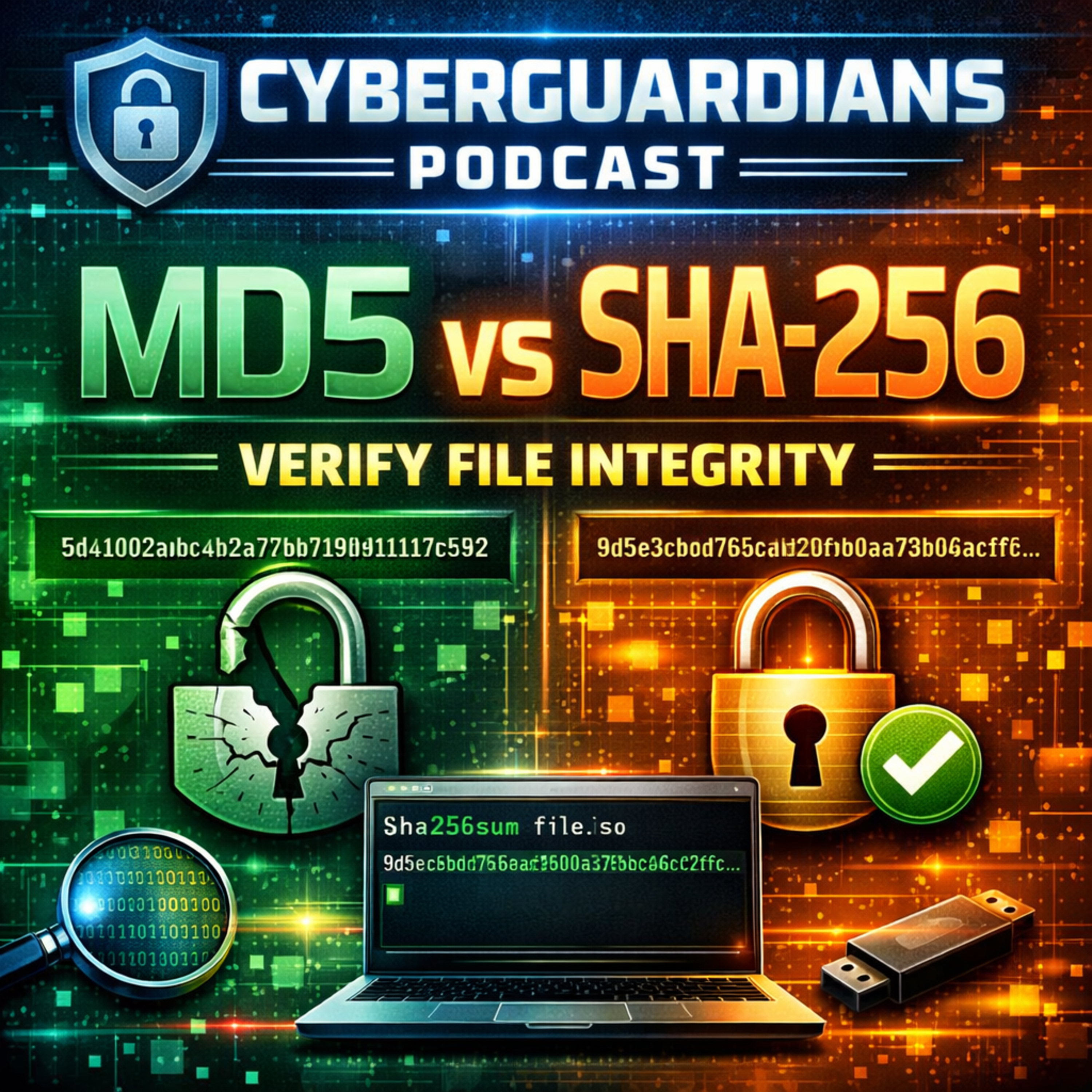
In this episode of CyberGuardians, I break down the differences between MD5 and SHA-256, including what they are, how they work, a brief history behind both hashing algorithms, and why SHA-256 is considered the stronger and more trusted option today. I also go over the advantages and disadvantages of each one, explain why hashes matter when verifying downloaded files, and walk through how to check a file’s hash in Kali Linux using simple terminal commands. To wrap it up, I demonstrate how to compare the hash generated on your system with the official checksum provided on a website so you can better verify file integrity before trusting what you download. If you’ve ever wanted a simple explanation of hashes and a practical example of how to use them, this episode is for you. Stay safe and stay secure. If you want a slightly sharper version, use this: In this episode of CyberGuardians, I cover the key differences between MD5 and SHA-256, including their history, strengths, weaknesses, and why SHA-256 has become the better standard for verifying file integrity. I also walk through a practical Kali Linux demonstration showing how to generate a file hash in the terminal and compare it to the official checksum from a website. This is a simple but important step that can help confirm whether a downloaded file is authentic and unchanged. This episode is great for anyone who wants a better understanding of hashing and how it applies to real-world cybersecurity habits. Stay safe and stay secure. Music Credit: -2020 Dyalla
Embed this episode
Ready to play
Checking File Integrity with Hashes
No transcript for this episode yet
Similar Episodes
No similar episodes found.
Similar Podcasts
No similar podcasts found.