
Report for WXAV88.3 FM and WXAV.com is being provided by Bookies, New and Used Books. Bookies is an independent bookstore located at 10324 Southwestern Avenue in Chicago. They have a collection of new and used books and accept book trade-ins and donations. More information is available at bookyschicago.com and on Instagram at BookiesChicago.
Support for WXAV88.3 FM and WXAV.com is provided by Northwest Community Credit Union. Northwest Community Credit Union is located on campus inside the Graham School of Management and offers financial services for the Sainte Xavier community. Services include student credit cards, student loans, and other financial resources. More information is available at NWCCU.com.
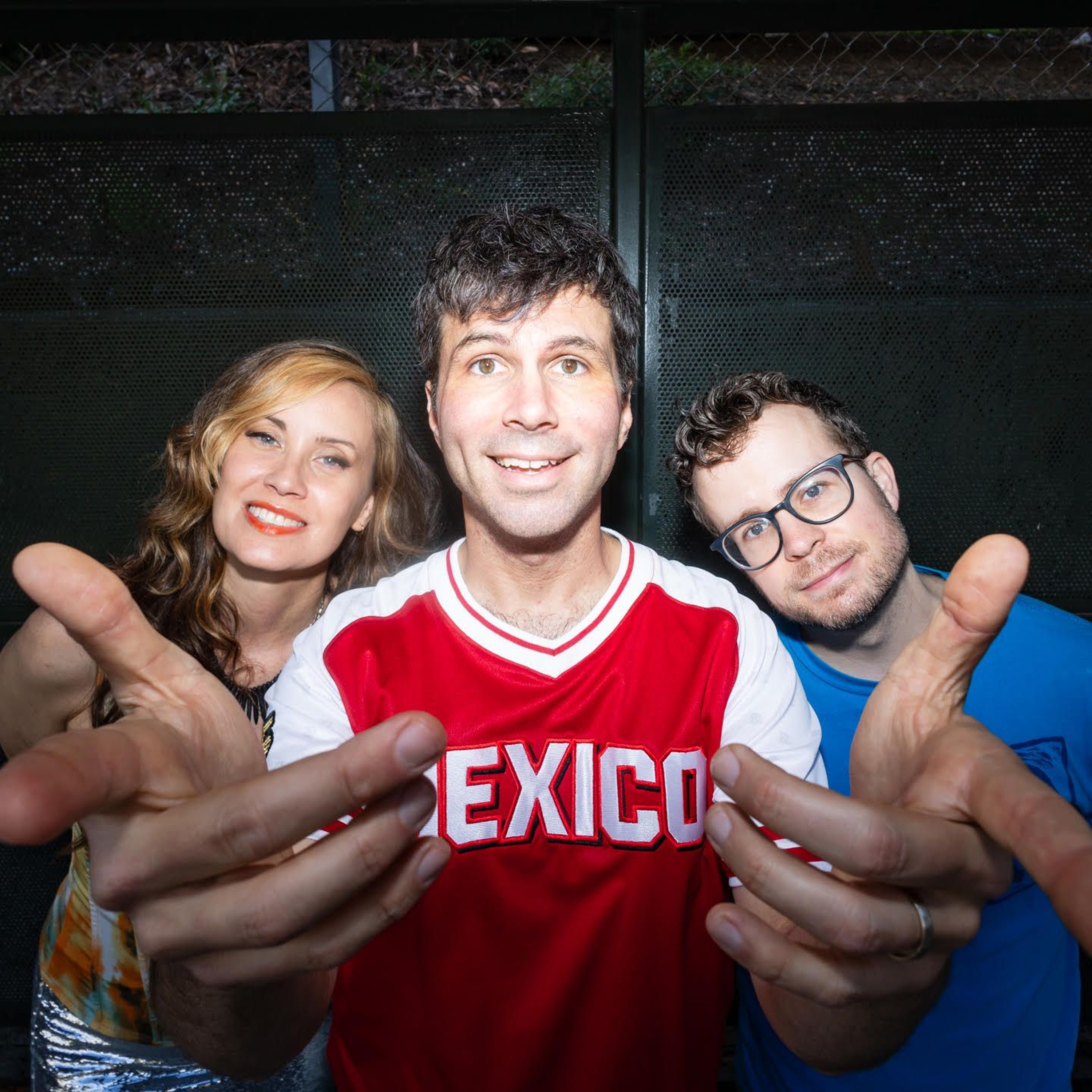
This podcast is being brought to you by WXAV88.3 FM and WXAV.com. WXAV bringing the best podcast to you. Hi, this is Peter Creighton from WXAV88.3 FM Chicago and I am so happy because I am able to sit down here with this year's Vinyl FON Ambassadors for 2026. They are America's Local Band.
They're America's favorite local band. They are cheek face and we have the entire band with us. We have Greg. How are you, Greg?
What's up? Hello, Vinyl FON listeners. We also have Amanda with us. How are you, Amanda?
Hello. Doing good. Happy to be here. And last but not least, we have Mark as well.
Mark, how are you? I'm doing great. Awesome. Guys, thank you so much for being here and supporting Vinyl FON.
I think because this is for Vinyl FON, we have to kind of go with some vinyl questions to kick us off. So we feel that Vinyl and College Radio, they're like a hand into a glove. It's the best way to listen to music and everything. You have the community aspect and then you just have the richness of Vinyl.
So I'm curious, what are some albums for you that you recommend to people that they have to listen to on Vinyl? Ooh, somebody else go first. I can go. One of my favorite albums to listen to on Vinyl is Sound of Silence by Simon Garfunkel.
I think you need to listen to that on Vinyl. I totally agree with you, Amanda. And what's really cool is I have that on Vinyl, but I have my mom's copy of that. So it's a really good sentimental tie with it.
But yeah, the harmonies love it too. Great choice. Yeah, so it has a really warm sound on Vinyl that you can't get on any other way of listening to it. Yeah, I'll piggyback off of that, both on the like, sentimental parental thing and the sound quality of my record.
We got it right here. Townshendsant live at the Old Quarter, Houston Texas. My dad gave me this. I had never listened to it before.
And it's like, it's become a huge favorite and like really like, a lot of songs mean a lot to me and just remind me of my dad. And then also, it's like, it does not sound very good. Like, you know, it's like, a lot of the record is like, the guy who's hosting the night that Townshendsant's performing is like talking about like, sorry, the air conditioning is broken. And you can kind of like hear people like, you know, like, you know, making noise, like eating and drinking in the background and even at one point Townshends, like I've never heard it so quiet in here.
And then I feel like, you know, the warm, like, less like bright listening to it on vinyl. You're like, yes, this is, I feel like I'm there. You're doing this like unique kind of not perfect. I don't know.
It just works for me. So, I love it. I'm going to say, I mean, there's so many where I pull them off the shelf, like where I'm just like, I'm going to put on the record player and I can't wait to grab this one off the shelf. One of them is definitely Swiss Movement by Les McCann and Eddie Harris, which is a live at Montreux album from 1969 has a really awesome version of Compared to What on it.
I think there's a great take of Cold Duck time on there as well. And it's just one of those records where with what the kind of music is and the type of performance and probably the process of recording at that time, like it just all really gels when you put it on on the record player. And it was also for me, it was like a dollar bin find, like it was like had a cut corner from like being a promotional copy or something. So I was like, like, Les McCann, Eddie Harris, that's compared to what it'll probably be good.
That's probably one of my most listened to pieces of vinyl ever, you know, and we love a dollar bin record. Yeah, we do love a dollar bin record. It's the thrill of the hunt, really, of just finding that that treasure and that. But no, I love the variety and everything.
So many of the stations participating in vinyl found are college radio stations from not only across the country, but from really all over the world. What is college radio meant for cheek face? Yeah, I mean, I was a college radio DJ when I went to school, I went to UCLA and did college radio for all four years that I was there, started it right away. Even before I went to college, like I had a friend who had an overnight show on the closest college station to where I grew up, which was KUCI in Orange County.
And so we go overnight and play stuff. And also like, one thing is they had like a large metal barrel that they used to put up like DJ turntable setups on, and then they'd roll it away when they don't need anymore. So we just turned the mics on in the middle of the night and hit the large metal barrel. And you know, having like a classic college radio moment, I would say.
And yeah, I mean, you know, I was a philosophy major, but I skipped a lot of philosophy classes. But I never skipped a radio show. Like I was always, you know, rocking my time slot, whatever time that was, you know, whether it was two to six AM or like, you know, whatever. And yeah, I think for me, like college radio is a lot of the sound of what I think a good song sounds like is the kind where like you can't wait to push play on it.
Because as a DJ, you're gonna hear it and also your audience is gonna hear it. And so that's like, you know, just a I was think of songs like that, like, Oh, is this a song I both can't wait to play and can't wait to share out to like a faceless audience that I don't see, but I know they're gonna hear it through their speakers and they'll be like, Oh my God, this is the best thing ever. Like what a surprise, what it's so catchy. I've never heard of this band before.
It's weird, it's often beaten path. It's not the kind of thing that most of my friends would like, but that's why I'm listening to this station is because that's the kind of music that I like. That's why I think like college radio is so special. And we're, you know, so grateful.
We got a ton of support from non commercial stations from both college stations and other non comm stations. Like we proportional to how popular of a band we actually are in the world. Like, you know, the amount of like love we get from from non comm stations is extremely heartening because there's just so much of it. You know, I think like part of that is like we grew up listening to that, that kind of subtype of weird music that's like not just off the beaten path, but like off the path that's off the beaten path.
And you know, and so that's the kind of music we like to make. And it's awesome that it resonates with the with the non comm radio community of DJs and listeners. I think that's awesome that you mentioned that because I've actually been playing you guys on my show for about a year now, which is crazy that I'm able to like say that to you. But I'm Pete calls me the station's cheek freak like over here.
It is every station has at least one. Some stations are made up completely out of working on converting him. So my main question is based on the fact that I saw you guys last year when you came to Chicago. It was my graduation present.
There was a moment during that show that my friends and I still talk about like on a semi regular basis just because of how funny it was. You guys played noodles three times in a row. When did you start playing at multiple times in a row? And what's the most times you've ever played in a row?
Okay, so if we started doing it, I want to say in 2024, like halfway through our touring in 2024, and you know, when you're on tour, you're in a van, you're living with your friends, like you're eating gas station snacks for most of your calories, your your mental well-being, I'm not going to say it decays, but it starts to fray a little bit at the edges. And I can't remember if it was me or someone else, it was just like, what if we play noodles twice a night and then everyone else laughed. And then I was like, we're doing it, screw it, let's give it a try. And then like, you know, the first we did it at the one time and then like people absolutely tripped when we played it twice in a row.
And then we were like, well, that went over pretty good. Like maybe we do it three times tonight. And everyone was like, yeah, that makes sense. That totally makes sense.
And then it was three times. And then it kind of, by the end of that tour in 2024, I think like the most we did it in one show was maybe six times. I think, okay, so from what I remember is like in the van, we're kind of like betting like, how many times do you think we can play it in this next city? And then like, it was always like, I was always like, no, we got to play it less.
We got to play it less. And then I think we ended up playing it like nine times at one point. And I was like, okay, that's like, I mean, yeah, there were definitely some that I can remember. And you know, it's setlist FM probably will give you the full story of what the noodles repeat saga.
But yeah, there's definitely some like end of tour shows like where we were doing it like four or five times in a row in the middle of the set. And then we get to like, we don't we don't do it on core, like, because we think encores are kind of pretentious and annoying. So like, we would just like get towards the end of the set and say, like, thank you, like, we're going to wrap up now. Thank you guys for coming.
And then we just do it some more times. And like, again, like, does it make sense, like, in general, maybe not, but like, when you're in your tour brain of like, the Pacifica, nothing but like, almond sleeves from the gas station, it does, it makes sense. And then, you know, it's kind of stuck as a tradition. Although we try not to, I mean, you know, you have a limited time in your play show, everyone who's working at the venue, they just want to go home at the end of the night.
So do we want to keep them there for another nine minutes of noodles? Like, I don't know if we like always want to do that every night, but for the right special occasion. Yeah, I think we landed on three for like the next tour as the like magic number. This last year's story, we did three, three to three percent.
I think maybe one or two, we did four because we were feeling frisky. I love that. I want to say it was three when we saw you. And like, the second time was like, oh, they're doing it again.
The third time was the one where we were like, what's happening? It's definitely, it's definitely fun to watch the audience reaction from the stage. Like, you get pretty used to normal, you know, you have people clapping, like, you play a song and people react a certain way. There's something about the repeats of noodles specifically that unless it's a really, a really unique reaction from the crowd.
So it's like, it's really fun for us to get to see that too, because it's not a normal reaction. Yeah, there's definitely a like, you start to understand how our brains work the second time you hear it. And then the third time you hear it, your brain starts to work that way. It did.
It actually did. We listened to it in the car on the way home, I think twice. So some really great news has come out. You guys have a new album coming out later on this year.
It's called podium and a couple singles have dropped from it came out today. It's Black Sight. And then you guys do not pull any punches at all with Black Sight and everything. Can you kind of share with us your approach to writing the song?
Yeah, I think like the first, we'll usually start with a groove first. And I think the groove we were sort of vibing on was Black and White by the DBs, which is like such a college radio classic. Although I wouldn't say the song sound that similar, but it certainly were like, I think that opening lyric of just like, I, and then there's a big space, like is also how that song starts. So I think that was probably a direct intentional ripoff.
But yeah, I think part of the writing process for me and Mandy has always been like, you know, we're living in this world. It's weird. It's stick. It's sad.
It's disgusting. It's also funny. Sometimes how sad you are about it is funny that you'll be that sad about it. So I think like, you know, we like to write a political song because we are all living in a political world.
And it feels weird to write songs that aren't political. We sometimes do write songs that aren't political, but not that much. Because it feels just disingenuous, not to acknowledge the incredibly obvious things that we are all seeing and experiencing together in like our weird, sick, decaying, angry, violent society. So yeah, I think that's like, you know, where that came from.
And yeah, I think like, you know, we were we were chuckling at the, I got sold, but I'm not Korea, Korea, Korea, Korea, Korea thing, which like, I mean, obviously it kind of crosses over to college radio bands in pavement and the killers, but like also mentioned in Korea is like, you know, that's Korea is the echo, the country of the two countries of Korea are kind of an echo of a past American military adventure that like never ended. Like the Korean War has not been officially brought to a close and the United States is still heavily involved there 75 years later. So, you know, I think as we like, I think if you're very young, you see the Iran war and you're like, what is happening? If you're a little older, you're like, I can't believe we're doing the Iraq war again, which was the era of the CIA, black sites that are referenced in the song.
If you're a little older than that, you're like, I can't believe we're doing a second Iraq war after we just did one and so on and so on backwards. And like, remembering backwards far enough, one will get to the Korea war, which like, now there aren't many who were alive when it started. And yet it continues to be an American or in military excursion. So, you know, I think all of those like, I think, yeah, that's like some of the connecting tissues, but also, I mean, that lyric was just fun to sing.
And as we like auditioned it on the song in the practice space, we're like, that's pretty fun, huh? Maybe we just, yeah, repeat it. We're all about repetition. Just like the United States military foreign attention.
Exactly. So, like one of my favorite things about you guys is that you are a political band, but not in a way that's horribly depressing, because I feel like it's really easy to get buns out about stuff, but I like laughing at it more. And that's why I love to realize this music. And my question for you is, is it harder to do that now than it was when you started cheek face?
Because I feel like the world has gotten a lot darker since then. I don't think it's gotten harder. I feel like if anything, it's easier. I think as far as like, our music and the lyrics that Greg and I are writing, it's they're a little bit more pointed.
They're more clearly political than they were before. But I think the vibe when we started, it was because Trump was not elected. And we were so confused by that and had no idea where to put our confusion and anger. And so we decided to write music.
And the idea that Trump got elected was funny to us, you know, it's led us here, you know, where we're still kind of, it's a different kind of exhaustion, I guess, and it comes out in that cheeky way. Yeah, I think when you talk about the challenge of it, one thing that I think of is we have a song called You Always Want to Bomb the Middle East. And it like, you know, experiences a new surge in kind of popularity every so often for reasons that are just totally obvious. And, you know, when we wrote it, that title I got because I was watching a PBS segment about the US withdrawal from Afghanistan.
And there was like some intelligence analyst who was saying, Oh, you know, of course, the US is withdrawing from Afghanistan, but we'll always have a presence there. We'll always have, you know, air, air power there. We have our military bases there. We'll have our drones there.
Like, you know, so we're like, we're leaving, but we're not really leaving. We'll always be there. And I was just like, this guy always wants to bomb the Middle East, huh? And then I was like, I was like, wait, like, this my whole life has been like bombing the Middle East.
And then I started to like metabolize that thought, and you know, that that line ended up in my notes. And then we, as we were writing about your songs, we felt really strongly that that was one of our favorites. And so we like booked a studio day to record just that song. We were just like, okay, this song is so good.
It's so timely. It says something we really want to say, like, let's record it right now and get it out right away. And then in between finishing the recording and releasing the song, the Russian military started bombing Ukraine, which is like a proxy war that the United States has involved in. And so I was like, I think we were all like, well, this is like, kind of a sensitive moment to put a song that like, it is kind of, it's funny in a black humor type of way.
Like, maybe it's not the time to use humor as our tool. And we put the song, we shelved the song, and we buried it at the back of that album as like track nine or something, because we were like, well, like, let's not call too much attention to this because we don't want it to feel glib. Like, we don't want it to be a single, like, right now, while this sensitive thing is happening. And then, you know, lo and behold, like, they were student more American military adventures in the Middle East after the song came out.
And you know, that song continues to like, live its life as people are attempting to process it like we were attempting to process it as we're writing the song. The song is mid process, right? I don't think the song presents you with a thesis or a resolution or a solution. I think the song is just like, ah, all of this input is coming in.
I feel really bad about it. It's so bleak. And how can we paint that bleak picture without it just, you know, being like, more as bad, more as bad, Trump is bad, Trump is bad. And to, you know, kind of connect it to the various political and social threads that, you know, continue the cycle in our society, in our country and globally as well.
And so yeah, like, I would say like, yeah, that's like one of the difficulties with the songs is like, we don't want to see him glib. But then I think about the other songs that I like in this like genre of very black humor, political songs, like, like I think of, feel like I'm fixing to die rag by country Joe and the fish, R.I.P. country Joe who just died. But like, the song, you know, the song is a, it's a joke song that sounds like it was recorded at carnival about the Vietnam draft and recorded by draft age musicians, or a draft age audience.
And like, it's completely a silly song, even though it's, it's humorous is gallows humor. And I think I look back to that and be like, well, that was like the bleakest time for the artists in a bleak place and an audience in a bleak place. And they can look at that and just be like, a funny song tells you something about this. Like, yes, where have all the flowers gone?
Also tells you something about this. But feel like I fix in the die rag is also tells you something about this and helps you metabolize and understand it. I think you're really hitting on something that we don't necessarily think about all the time. And that's really like the power of humor and music.
And I think that's what you as a band do so, so well is you can take this really serious material that's going on in the world today. And you can crack a joke about it. And they always say laughter is the best medicine. Would you say humor then is the best way for you as a band then to kind of just process all the horribleness that's going around?
It's part of it, I would say. It's not all of it. I think like, all three of us are pretty like reserved people. We're not like the class clown style people, but we love a witty joke.
You know, we need something to break the seriousness, you know. And that's kind of where I think the three of us have come together. We all agree with each other politically. We're like, you know, everything gets really kind of dark in our heads.
And that we need that outlet and that outlet is a safe outlet when there is some humor there. Yeah, I mean, I think also, you know, playing with music with your friends is fun. And I think that the natural fun that we have like playing music together as friends like gets wrapped into like the attitude of the songs, but also like music that's funny is good music. Andy Rock has, which is our genre, has moved away from things that are funny, but it's not because there were never funny things in the genre.
There used to be lots of funny bands in the genre. You know, I think like in this era, there's been like kind of a change towards like, well, indie rock is supposed to be serious music. It's supposed to be sad music. And it's supposed to be like, it's supposed to be written by a single tour with a acoustic guitar or a piano and a bottle of hard liquor and, you know, plumbing their deepest worst personal traumas.
And I think that like, I love music like that. Like some of my favorite artists are artists who do only that. But when it comes to like, what's fun for us to do as a band, as a group of people doing something together, it's fun for us to do something that's fun. That's fun to play.
That's fun to make. That's where like, we'll play it live and people will have fun listening to it, marching to it, singing along to it, whatever. That's fantastic. We're here with cheekface here on vinyl thon and to kind of change, you know, topics a little bit, you guys have such a special relationship with your fans.
I mean, you guys interact with them. They're cheek freaks. I mean, there's there's there's this great little community that you guys have been able to really build around around the country and everything around your music and the fans and things like that. I mean, for you guys, what do the fans mean to you?
It's hard to like speak on this without sounding like a total cliche, but like the fans are definitely the coolest part of the whole thing. And obviously, like, as Greg was just saying, like, we we make the music because we love making music and we're good friends. I think we'd be doing it regardless. But like, without a doubt, the band big picture would not exist without the fans.
And so it's like, it's also it's like, it's not actually a lot of times people ask us like, Oh, how do you go about getting like a discord that's like, good like yours? And it's like, I don't know that is that as 100% on the fans, the people who have found the music and found each other through it. So yes, like, it's so special, it feels so unique and yeah, it's probably the coolest part of the whole project is the community that's found itself around it. Yeah, I would say the the chief reek are are an amazing community.
You don't think that you're starting a community when you start a band, you think you're writing some songs and recording them, and then you're playing in terrible bars for nobody while the ice machine rattles. And it's been cool. But I also think at first it was shocking. And now I think about it as a fan myself of other underground music, where I'm like, when I go to a show for certain artists, I'm like, everyone in here has something in common with me.
And that characteristic is not very common in society in general. Like my mom doesn't know this artist, my sister doesn't know this artist, my cousins don't know this artist, I do. And these other people here, they know it too. And something about this connects with a small group of people.
So, you know, I think there is something to that where whether you're in at the show, in a room with us, or you're in the online community on the discord or in the chat on the questions box on Insta Stories or whatever it might be, you're like, oh, these people have something really unusual in common with them. And that's a cool thing to bind us together. And I think in society in general, we're all looking for smaller communities. We all have very big communities we're a part of and very loosely.
We have this political allegiance. And I have a relationship with everybody who has that. In America, that's 150 million people have your political allegiance. Maybe you're like, you know, belong to some faith group and you know, there's millions of people who share this faith with you.
And maybe you're a fan of some really big artists and that artist has a big fan base and you're like, okay, I share something in common with these millions and millions of people. But I think like our closest relationship to this people, you know, they form with the people who have like this the tightest, most unusual things in common with us. And whether that's like the people in your pottery class or, you know, you're weaving class, or they're the people who like this weird underground band that you love. You know, we're all looking for those like smaller communities where it's a human level, the like interaction between people.
Yeah. And I just wanted to add like with weird music, right? Like music that is not acceptable to the general public. When Greg and I started writing, that is where we really connected, I think.
Like we liked these bands that were just weird and they weren't necessarily grouped together in any way. Like, and so it was just kind of like a mixture of like Jonathan Richmond and ween like who, you know, and both Greg and I, both Greg and I are like, yeah, we freaking love them. Like, how do we make bands like that? You know, and it's just like when you have those interests together, you might not, you might be very different people and you might have different styles or whatever, but like somehow you get that weirdness and that weirdness like is your connection.
And I think that's a strong connection. I was also happy to be one of those bands. Yeah. I've definitely met people because of your music that have just been like the same flavor of what it is me and I really, really love that.
So I know, thank you guys for that. You're welcome. Where are your cheek face shirts? So you can find your friends.
That actually is a really good segue into my next question because I almost were my support your local band shirt today. I did. But oh no, I know I'm about to go home and like tear my room apart. My favorite thing is that you guys call yourself America's local band.
So how do you come up with that? And what does that mean to you? Yeah. So during the pandemic, I have hazardily tweeted out just a random thought, which was like, after the pandemic, will there still be local bands?
I think we all know what a local band is, even though it doesn't have a definition, but like just, you know, to try to define it. Like, it's a band where like they don't really break out of the hometown scene, but you see them a lot. Maybe they're opening everybody else's show. Maybe they're opening shows for big bands at the, you know, bigger venue, but like they're not, they're not the kind of band that like really has their own fans.
They have friends from the scene who kind of support them, whether the music is good or not really. And they're like kind of flawed in a way where you're like, well, I can, anyone can understand why this will never be popular. And here in LA, where we're based, like there was a huge community for that before the pandemic. Like there's a lot of bars, there's a lot of floods, there's a lot of venues, like, and you know, day in and day out, those places were open and you know, four or five local bands were playing there every night.
Of course, the pandemic just put an extremely hard stop to that. Like all of a sudden, like the 20, 30, 40 venues that had four or five local bands playing every night. So like hundreds of local bands sets a week around town were just like all stopped. And you know, we saw a lot of those bands break up.
And then also in the meantime, during the pandemic, the world flattened. And all of a sudden, like the weird music from the internet just became everyone's weird music. Like that just became, there was no space for azillion local bands. There was space for one weird band that we all talk about for a few days.
And like, maybe we talk about them again in a month or maybe we just never talk about them again. And so that was why I was thinking like, will there still be local bands after the pandemic? And right before the pandemic, shuttered everything was when it just started touring and just discovered like after playing 30, 40, 50 local shows in LA to nobody that in other cities where we'd never played before, there were a bunch of people waiting to see us. We were like, we were like, whoa, like this is crazy.
And there was I guess like a little feeling of like, will we be the last local band standing? Because we were like just kind of tipping between like being just a local band in LA and like being a band that was like gonna tour and play in other places. Like before we had considered that we would be like a touring act that was on the road, headlining every year, taking other bands we like to open for us and stuff like that. So yeah, I kind of started to feel like, well, the way the world is flattened, like maybe we'll be the last local band, maybe we'll be America's local band.
And then I think like, I, we did that follow up to like, will there still be local bands after the pandemic? And everyone was like, oh, you are America's local band. And then I was like, okay. And then we made a shirt, people bought the shirt.
And you know, so it goes. The rest is history. Well, Greg, Amanda and Mark from cheek face America's local band. And this year's vinyl fan ambassadors, guys, thank you so much for spending some time with us.
We really appreciate it. Thank you guys so much. The support of the college radio stations and non commercial stations, just it really means a lot for us like coming from that world ourselves and, you know, also being vinyl nerds who press a lot of vinyl and having fans who like to have cool vinyl, you know, we're so we're so chuffed to be invited to be the ambassadors for this year's well. So thank you so much for having us.
We just sent podium out to the final presser. So that was like two days ago. Nice. I got to ask any fun colors or designs for the album.
Oh, yeah. Nice. Nice. Nice.
Nice. I'm really excited to see it once it's done. Yeah. Thank you very much for listening to this WXAV 88.3 FM podcast.
Be sure to visit our website wxav.com for more information on your escape from ordinary radio.