
EPISODE · Aug 12, 2026 · 20 MIN
Chinese Piano Music at International Competition Stage
from KLASSIKOM=Innovations in classical music · host Rudolph Tang
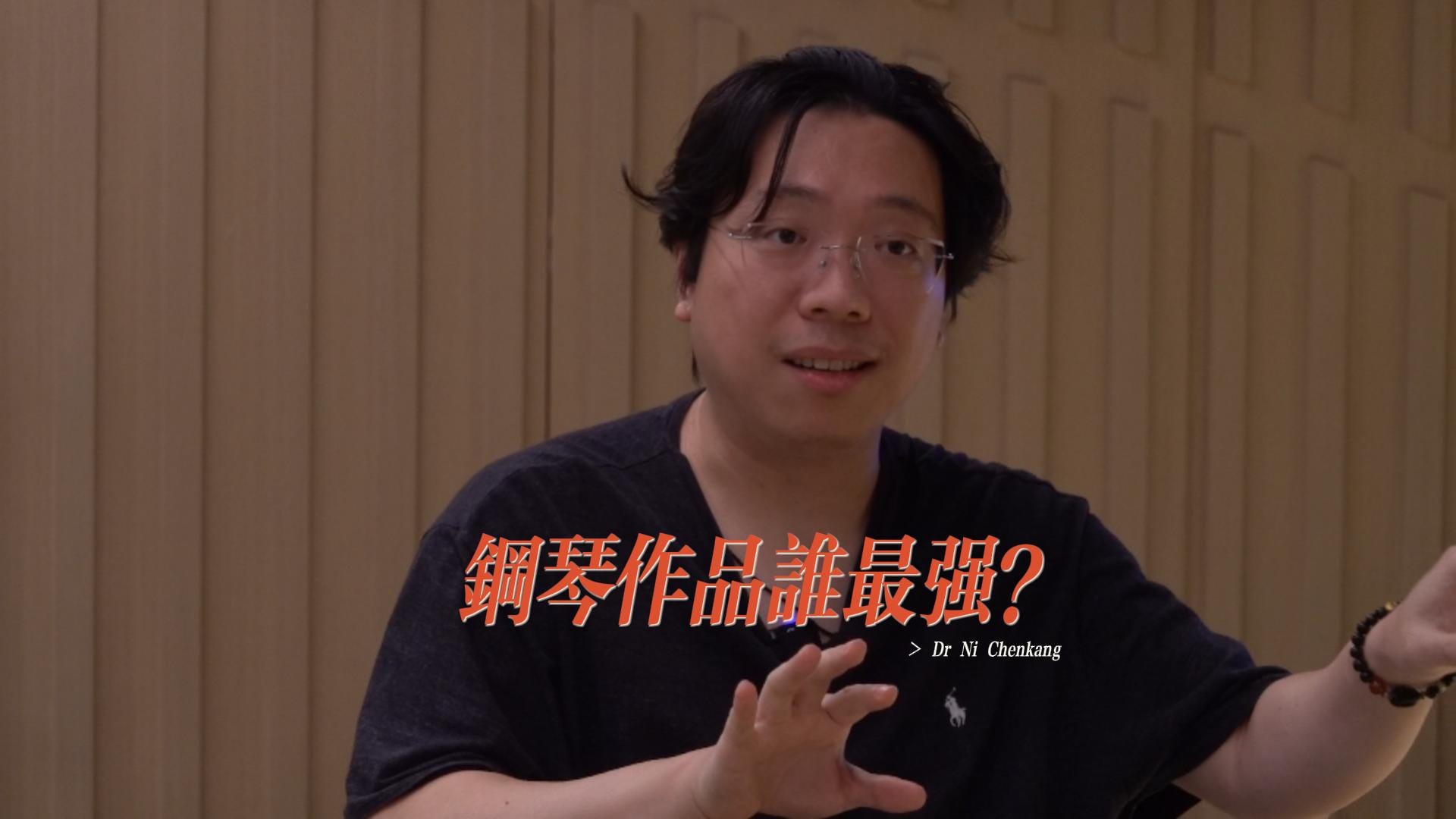
The question sounds simple enough: which Chinese piano works are actually good enough to compete at the world’s top piano competitions, to stand alongside Liszt, Chopin and Tchaikovsky in front of an international jury that may never have encountered Chinese contemporary music before?Composer and postdoctoral researcher Ni Chenkang has a clear answer. Recorded at Parsons Music in Shanghai on August 8, his conversation with Rudolph Tang cuts through the noise and arrives at two works in particular, with a precise account of what makes them exceptional and why that exceptionalism travels across cultural borders.The Filtering ProblemChina produces a remarkable volume of new piano music every year, far more than most people realise. The vast majority disappears. What survives is a small fraction of the total, and within that fraction, the subset capable of entering a top international competition is smaller still.Ni identifies three criteria any such work must satisfy simultaneously. It must achieve sufficient compositional depth, musically and intellectually. Its technical demands must be comprehensive enough to give a competitor a genuine opportunity to show everything they can do. And the score must be obtainable abroad, a detail that tends to be overlooked but represents a hard prerequisite. Against these criteria, he proposes three works: Duo Ye by Chen Yi, Nuoma Amei by Zhang Zhao, and Scent of the Green Mango, Op. 42 by Ye Xiaogang. He stops short of calling them the absolute summit of Chinese piano writing, but places them firmly in that territory.Chen Yi’s Duo YeChen Yi drew on the music and dance of the Dong ethnic minority of southern China. The work operates on two levels. At the rhythmic level, its rapid and irregular metre changes bear a clear kinship with Stravinsky’s approach in Petrushka, itself a landmark of folk music absorbed into the concert hall. Like Petrushka, Duo Ye uses rhythmic instability not as decoration but as a structural principle, the engine that propels the whole. At the pitch level, Dong folk scales introduce a melodic character that reshapes the harmonic framework from within rather than sitting on top of it. The result, Ni argues, is a fusion in which the folk element and the pianistic element are genuinely inseparable.Technical fluency is only the entry point. Above it sit phrasing, structural understanding and musicality, each demanding progressively more. And underlying all of these is something that cannot be acquired through practice alone: an understanding of how the Dong dance actually moves. Without that embodied knowledge, a performer will produce the notes but not the feeling.Zhang Zhao’s Nuoma AmeiIf Duo Ye represents a breakthrough in rhythmic and melodic integration, Nuoma Amei addresses a deeper and more stubborn problem: the harmonic limitations of Chinese musical tradition.The pentatonic scale, which underlies so much Chinese music, is inherently consonant. It generates relatively little internal tension. Orchestration can compensate by differentiating timbres and registers, but the conflict this produces is weak. What music needs for genuine dramatic tension is sharpness at the intervallic level, and the pentatonic by nature does not supply it.The solution, Ni argues, lies in going deeper into Chinese tradition rather than away from it. Regional opera forms, with their seven-note scales and specialised modal inflections, carry exactly the dramatic charge that the pentatonic lacks. Qinqiang opera, for instance, distinguishes between a bitter tone and a joyful tone, colourings with real emotional weight. This is the nourishment composers must draw on to write music of genuine dramatic range.Zhang Zhao’s achievement in the opening of Nuoma Amei is, in Ni’s assessment, a perfect solution. Chinese modal sensibility and Western harmonic writing are fused in a way that feels neither forced nor decorative. The opening passage, where harmonic layers, heterophonic counterpoint, bass and melody proceed simultaneously with independent dynamic trajectories, represents a fusion fully achieved rather than merely attempted.The Universal MeasureIf these works appeared at an international competition before a jury with little prior exposure to Chinese music, would cultural unfamiliarity become an insurmountable barrier?Ni does not think so. The qualities that make these works exceptional are not culturally specific. They operate at a level any experienced musician can perceive. When four simultaneous voices are in play in the opening of Nuoma Amei, a pianist either brings out all of that layering in its full complexity or they do not. An experienced jury will hear the difference immediately, and that difference has nothing to do with whether the music sounds Chinese or Western. It has to do with the sophistication of the musical expression, which is universal.This, Ni suggests, is what the well-worn phrase about music knowing no borders actually means. The universality does not lie in the surface character of the sound. It lies in the level at which the music operates and the level at which it is performed. Whether that combination can move a jury encountering it for the first time remains, as he freely acknowledges, an open question. But the barrier, he insists, is not cultural. It is musical. And musical barriers can always be crossed.Interviewed and filmed in Shanghai at Parsons Music on August 8, 2026.This is a Chinese language programme with bilingual subtitles. This is a public episode. If you would like to discuss this with other subscribers or get access to bonus episodes, visit klassikom.substack.com
Embed this episode
Ready to play
Chinese Piano Music at International Competition Stage
No transcript for this episode yet
Similar Episodes
No similar episodes found.
Similar Podcasts
No similar podcasts found.