
EPISODE · Jun 5, 2026 · 3 MIN
Church of San Pietro
from Modena si Mostra - Church of St. Pietro · host eArs
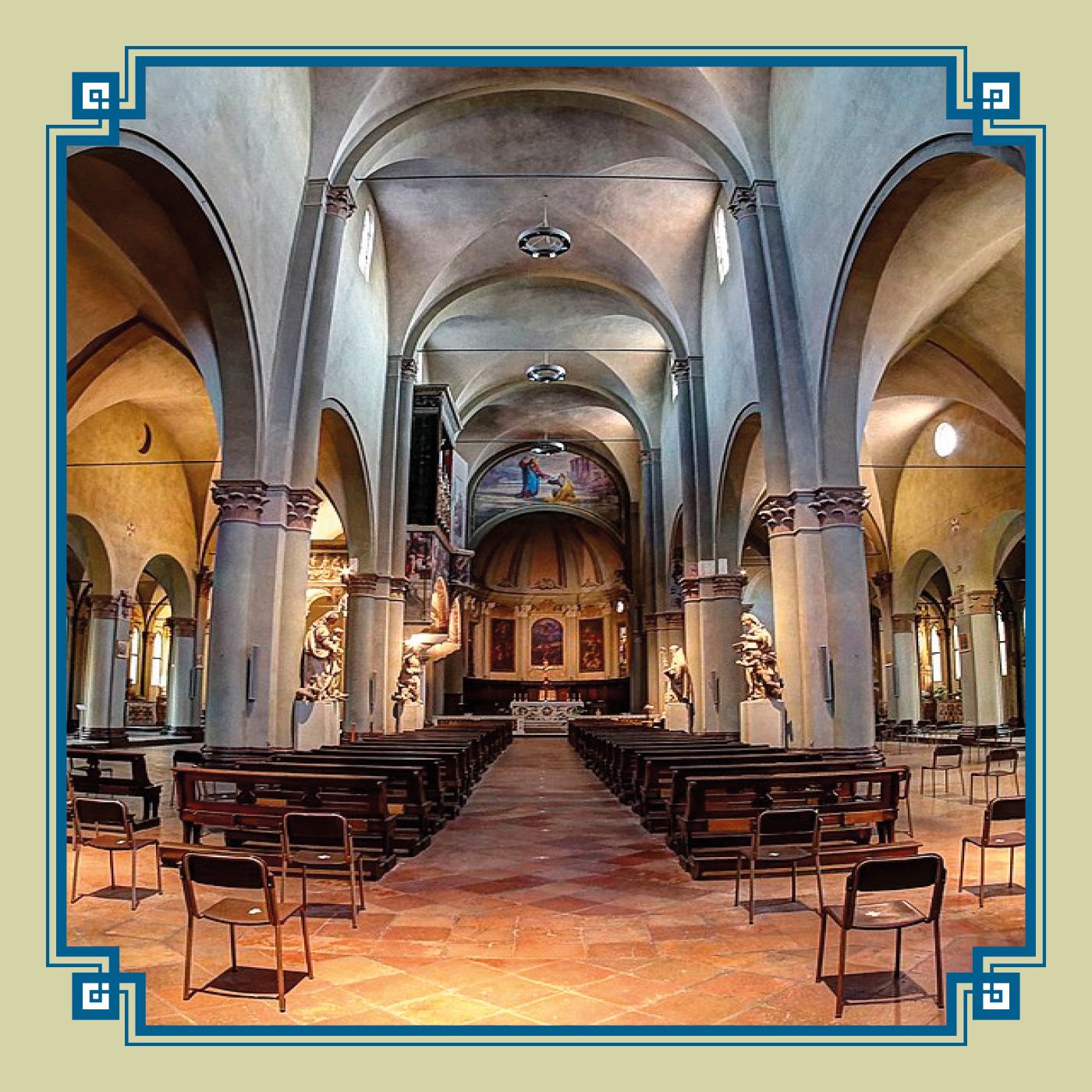
Were you already familiar with this church? Today it is not an obvious question, since it is slightly far out from the city centre and open mainly for religious services. But is a treasure really a treasure if it is not at least partially hidden?San Pietro is a focal point of Modena's history and one of its most interesting religious buildings, along with the monastery complex in which it is located. It is in fact an abbey church, belonging to the Benedictine monastery, founded at the end of the 10th century and still active thanks to the monks. The link between monastery and church is already visible from the outside, where the church façade flows seamlessly into the outer wall of the complex. The façade also stands out from the Modenese context for other reasons. First of all for its form, which has remained unchanged since its construction in the mid-16th century, offering us a faithful image of Renaissance style. We see this in the arrangement of the outer walls that follows and hints at the height of the church naves behind them; and also in the capitals with the overlying terracotta frieze of distinctly classical inspiration. The frieze also features a truly unusual and rather rare motif: chained devils being carried by sea horses.The abbey was a cultural centre not only for the monks who lived there, but for the entire city, absorbing and reflecting the artistic and intellectual influences of its time. This is reflected in the evolving architecture of the church, begun in 1476 and consecrated more than forty years later. While, as we have said, the façade is fully Renaissance in style, the interior still retains features typical of traditional medieval churches. For example, the very plan of the building is structured in the Gothic style: divided into five naves, with the outer two reserved for private chapels.This layering of styles not only reveals the influence of the monks - constantly up to date with artistic trends - but also the construction practices of the time. In those days, different craftsmen worked side by side on the same building, not guided, as today, by the single vision of an architect, but rather by patrons and craft traditions.Now, as you walk through this architectural journey, let us turn to Antonio Begarelli, the 16th-century sculptor who… but no, let’s stop here for the moment. To learn more about him, the next audio guides dedicated to his sculptures await you.
Embed this episode
NOW PLAYING
Church of San Pietro
No transcript for this episode yet
Similar Episodes
No similar episodes found.
Similar Podcasts
No similar podcasts found.