
Wait, you're listening to Radio Lab from WNYC. Hey, man, how are you? Very well, yourself. So Aaron set this up.
Who we about to meet? So this is Skip Sherry. He lives in Brooklyn. And that is, we should say, Aaron Scott, he's a reporter, we turned his own skip.
And Aaron met up with Skip because he had this experience. That's coming to a lot of people who moved to New York City. Just tell us where you grew up. I grew up in the country outside of Athens, Ohio.
On 54 acres of wooded land, that would work all day as a kid in the heat. Howling and picking strawberries, Hopping water, planting trees, he'd play in the woods. I loved the woods. But as he got older, he knew he couldn't stay in Athens.
Why not? Well, he's a musician. He wanted to make a living at it. So he bounced around for a bit, and finally at age 30.
There was no place to go except for New York. Was it no matter that you wanted to live in New York? No, I didn't. It was my last option.
And he hated it. It was ugly to me. Like, too many humans, too many. Too much concrete.
One thing about autism is that the things that come into an autistic kid's brain all have equal value. They don't know how to sort through it. And when I first came to New York, it was really... I decided to leave, for sure.
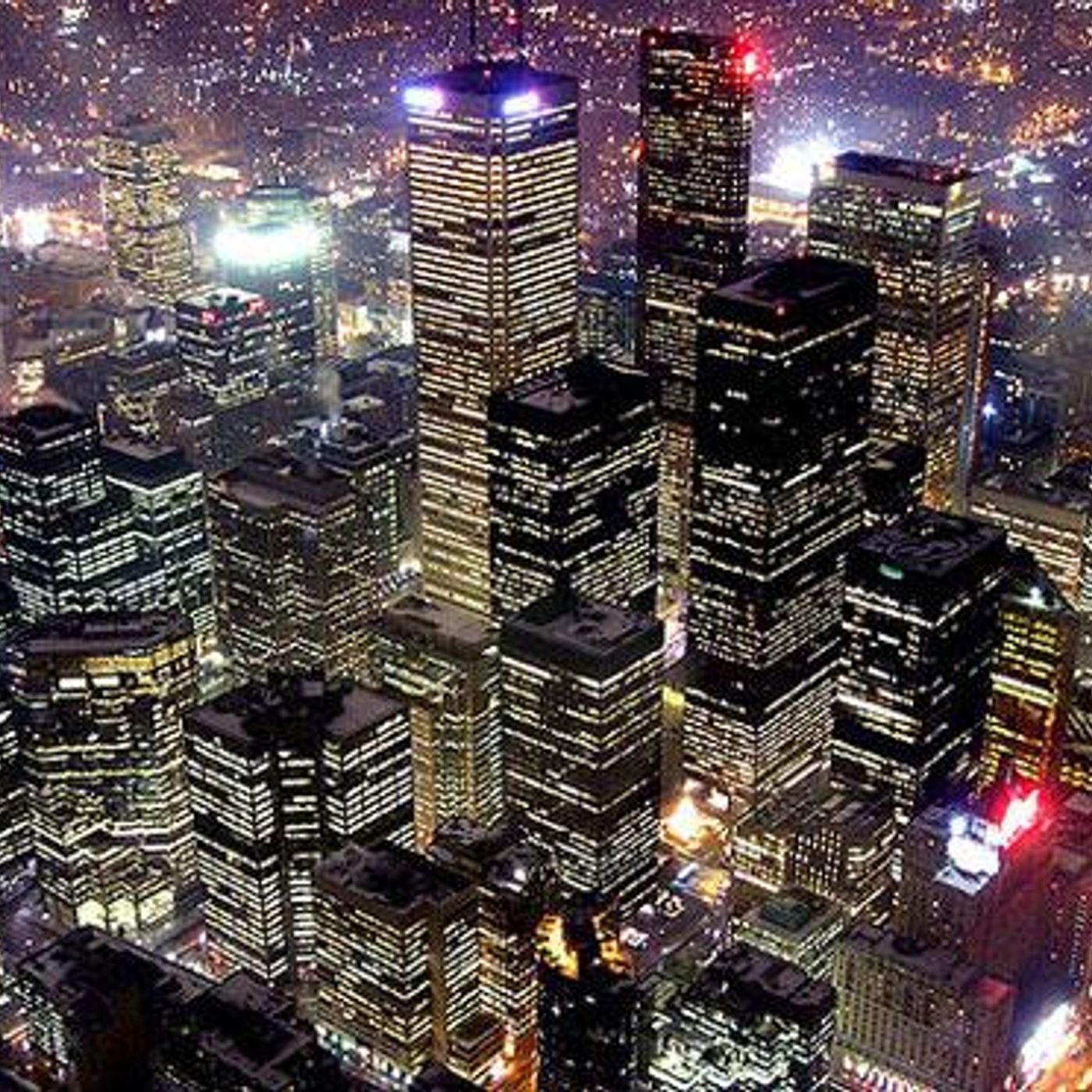
But then, take us to the roof. I was lucky when I first moved here. So he's staying with a friend who lives in this big building in Brooklyn Heights. Right across from the Twin Towers.
And his 36 stories high. And he decides one lonely night to go up onto the roof. And there's this intense fog. In the Twin Towers, the bottom of them was covering the fog, but not the top.
So it was like they're floating. There's a little, like, a cuticle sliver of moon in the sky. And the fog ones are going, and the boats are slowly moving. And there's this breeze.
And I had this brass penny whistle that my father had given me. And I was standing there, I was playing it. And I was really suddenly something clicked. I was like, oh!
That must... Those are all the bridges. That's Williamsburg Bridge. That's Manhattan Bridge.
There's the Brooklyn Bridge. That's New York. It's small now. And I'm looking at the Statue of Liberty.
And my grandmother, Anastasia Panti, came from Albania. And I went to Ellis Island. I could see my history there, too. And I was suddenly hitting you like, oh my goodness.
This is like a coral reef. You can't see the people. But look at this beautiful structure they have created. And that fog and that air.
It was just the whole city was breathing. The whole nature was breathing. Everything was breathing. It connected on a spiritual level to the city for the first time.
And so, Skip decided to stay. For a while. All over the world, people are now moving. Of course we know this from the country to the city.
At this point, the world two years ago crossed this extraordinary benchmark. That's physicist Jeff West. Where more than half of the planet is now urbanized. 51%.
Not made us wonder. How do cities work? Is there some deep, organic logic that holds all these people together? Or is writer, general, and what's it?
Are cities just these tumors of people on the landscape? I'm John Appu-Ron. I'm Robert Kowich. This is Radio Lab and our topic today.
City. Cities. I love them, but I don't know why. Alright, so in talking about cities, it's kind of hard to know where to start.
Because every city has its own DNA. Yeah, it's own unique feel. Like, for instance, let me just give you my own stupid example here. So every time I go to St.
Louis to visit my mom, I'm on the plane. I'm on the plane. I'm in my own groove. And I step off the plane into the airport.
And it's just like, with the first step, you just hit this wall of something is different. Like you feel the difference in your bones. That's the question. So is he there?
I'm here. What gives the city its feel? Oh, is this Mr. Bob Levine?
This is Mr. Bob Levine. Mr. Bob Levine is a professor of psychology.
California State University. And he thinks the answer to that question is time. Time. That each city warps time in its own unique way.
My city's on my subject. He studied this idea for the past 30 years in all kinds of different ways. We looked at things like percentage of people wearing watches. How long does it take?
Bank tellers need to change a $20 bill. Yeah. And then we looked at talking speed. Really?
Yeah, we get on the phone and call post offices and that seemed like something that would be available every place and make a standard request. Would you tell me the difference between regular mail, certified mail and insured mail? Okay, certified is when you just need someone to sign for us. Then he says they calculate the number of syllables per second.
Regular mail to go there mail. The data Utah. Salt Lake City Utah. 2.73 syllables per second.
Then if you want to be trying to take out of the back of your house. Springfield Mass. 3.45 syllables per second. And this one?
Certified is when you want. Not really sure where it's from because it's a tape loss, the ID. It could be natural. Prove of failing if anyone else wants to return receipt.
And if it is natural? 2.65 syllables per second. Slow. Well, Springfield is like, phew.
But the whole talking thing was just really a prelude for Bob. It got him into what I think he's known for. And what we find most fascinating. We actually looked up at walking speed.
Walking. Yeah. Well, what I would do is I would get into a new series. I am in Mumbai, India.
After Islam. When I was in a city, I'm wearing a tie-lamp. We actually put out a call to radio listeners everywhere. Yeah, we're in the again in Liberia.
I'm running really loud. I'm recording from Dublin in Ireland. Downtown also. COVID Hagen.
I would get into a new city. And I would scope out main business in Chappanera. I'm in the Hooke Stavain. The middle of Hooke.
Top of the street. Step two. Get out. Some street.
A roll of spring. I read string. 60 feet long. Many meters.
We're here with the succeed. Step three. Use that string to measure out the distance. Now I just have to roll out the screen.
You take the one end to the sidewalk. I would just make a mark. Step four. Get in a carter.
Be cool. You know, act like a arena paper. Or waiting for somebody. Alright, found myself a discreet place.
Are you working? Ready? Are you ready, Bo? I'm ready now.
Start walking. And I look as quiet to my heart. I want to start. This experiment was actually harder than you would think.
I'm much harder. I'd be a lot people. This is not very easy to do. Timing was an issue.
People tried to sell you stuff. No, no, no. I don't need a sushi. I'm looking at my corner.
I just don't count. No, no. Are you ready, Bo? I'll pick up the now.
Start walking. Step. Step. Step.
Step. Actually, it didn't sound like that at all. They weren't in sync. As you can imagine.
Every city had its own beat. B. Step. Step.
Step. Step. Step. Which on level we knew?
It's the range. It was pretty amazing. Top. 12.2.
Odd. 14.4 seconds. 27 seconds. You can't.
Librarian. 13.8. Wayne is there. 12.13.
Next to go. City. 10.1 seconds. Copenhagen.
21.5 seconds. 14.5 seconds. 15.5 seconds. Just to break it down.
On the high end you've got. Step. You can't. You can't.
Librarian. Step. Step. Step.
Looking around. Something on the head. You've got a teen. Pink blouse.
Whose walkers covered the same distance in about 21 seconds. 21 seconds. So if you want to think about it in football terms, by the time the Dubliner has scored a touchdown. The guy from Buchanan, Liberia is somewhere I guess around midfield.
And the spooky thing. According to Bob Levine, if you do these under the same conditions same place, you will get the same time. These times don't change. Dublin is always about this.
Step. You're on it. Step. Step.
Step. Step. Step. Step.
Step. Step. Step. Step.
Step. Step. Step. Step.
Step. Step. Step. Step.
Step. Step. Step. Step.
Step. Step. Step. Step.
Step. Step. Step. Step.
Step. Copenhagen with the Oslo. Aaron Scott, Portland, Oregon. Harry Censin at Cho, Thailand.
Grant Fuller. That day, one of the D.S. Mexico City. Chitadia N.
M. Mumbai. Mark M. Noden.
I'm Dublin at Ireland. Props also to Daniel Esterin and Anastasmin. Why? Because they didn't say their name.
So we put them in there. OK, so getting back to that question I asked a second ago. Why is it that cities develop particular beats? I mean, is it because the city does it to the people?
Or the people do it to the city? Yeah. And we ran into a couple of guys who may at least have the start of an answer. Yes.
A couple of physicists, Ali Maf, named Jeffrey West and Luis Betancourt. This is Jeffrey and there's Luis on the other side of the table. That's not cool. They're the Santa Fe Institute in New Mexico.
Lots of bases. That's not. Nothing like the cities we just visited. It's almost biblical and it expands.
Yeah, the blue skies are just going to make you brave. Let's have another good thing. Brave enough, in fact, to claim from their high desert birch that these beats the meter of every city that we've just been to actually has underneath it a kind of logic. If you tell me the average speed of walking in some city, x.
Sick of Rochester, New York. Where people walk at about this speed. 60 feet in 12.67 seconds. If you don't tell them, Rochester, you just tell them the number of beats, then we'll tell you.
The population is maybe one and a quarter billion people. Actual population, 1.03 million people. And the average wage, about $16,000 a year. Actual average wage, $15,588.
Wow. Bit hot. Let me ask you a precise question. Are you 100% correct?
Are you 80% correct? No, of course. Some things you would score close to 100%. Other things, 80%.
But if you start with just the number of footfalls per unit of time, they can tell you all kinds of other things about the same place. I can tell you how much crime there is in the city. Income, wages, GDP, number colleges, restaurants. Fancy restaurants.
Number of theaters, police. A number of patents are being produced here. Cultural events per capita, number of theaters. The number of AIDS cases.
It's going to have this year. Really? Really? All of these things are correlated in a quantitative and are used the word predictive fashion.
Wait, are you saying that just from the number of footsteps per given time that you can tell me how many libraries there are? Yes. Can you tell me how many you should expect? How many things can you count when you're in a family?
You know, an infinite number. But it's limited by the things for which there are data. They've got data from the US Census. That's Jonah Lehrer.
He's written about Luis and Jeff. And he's the one who kind of got us thinking about all this. Japan, from Japan. In China.
Data from sociological surveys. Some later on cell phones. And when they put all these numbers together, they discovered a deep pattern. It's called comes from the fact that- No, not the footsteps.
What do you mean even the footsteps? A reflection of this deep and fundamental pattern that governs everything. Just one fact. What is it?
You really want to know? Yeah, what is it? Size. Size.
How many people live there? Size matters. Size is the largest determinant of all characteristics of a city. Right.
They would say, tell me the size of the city. And I can explain the vast majority of all these different variables that we can measure. Right. As a city scales up, they say.
100,000 to 200,000. A million to 2 million. A five million to 10 million. Everything about it.
All those things that they've been measuring, they scale up too. But they scale up. According to a very simple mathematical formula, it does not matter that New York has big skyscrapers and is on the ocean. And that Boise is in the Rocky Mountains.
That San Francisco is on San Francisco Bay. Wait a second. Wait, wait, wait, wait. That can't be.
I was with you right up until that last point. I mean, you go to the Midwest and it's landlocked. And then you go to a report city. And it's on a park.
I mean, that's got better. It matters. But these actually are superficial effects and account for only 10, 20% of their variation. What they're saying is that those specificities, the local history, is in large part insignificant.
But it is completely overwhelmed by these generic laws of urban scaling. That to me is a very interesting and surprising idea. Because we don't think of cities like that at all. No, we certainly do not.
That's because you're not a physicist. So you don't think abstractly in that regard. Well, why should I? Because sometimes it can be very useful.
Remember what these guys have done is they've just created an average profile for every size city. So if you're a one million or seven million or 12 million, here's how many things you should have. Now you can ask, OK, let's look specifically at that city and ask, is it over performing or under performing? Right.
So what are some cities that are over performing for their size? Over the large cities, San Francisco is quite an innovative city. New York's about average. In terms of patents.
In terms of New York's below average. New York's about average. New York's about average. Roughly speaking, the number of patents it should for size.
You produce, for example, about twice as many patents as Boston. We do. Hey, that's something. I do like something.
But you should have produced many more given the size difference between about what it is. Could they have counted patents? I mean, who made we don't have? This is one of the problems with their larger theory, which is that they're relying on data.
The US Census collection. So that's a real blind spot. They're counting fabulous. If you ever can figure out a way to count fabulous.
Yeah, because as a point, you're not taking to account what actually the experience of living in a place. Well, what a theory cannot do is tell you about the essence of New York, the New Yorkness of New York. So to speak, the soul of the city. Where does that come from?
Who knows? I think that's such a broad question. Well, obviously it has something to do with lots of people being jammed into a tight space, bumping into each other. Kind of people who move there.
What the physicists would call human friction. And that's a story you can't really tell in math. But you can hear it. Take a skip.
He gave producer Aaron Scott a tour of his block. In Brooklyn, listen to who he bumps into every day. So he took us on this tour. First place we went was this Jamaican body shop.
Body shop is in cars? Yeah. Religion specialist. I mean, it's basically these West Indies Jamaican guys listening to Reggaton and hip hop.
Right gay. No, I like all kind of music. It's like a place. And across the street from the Skinderspiel.
They didn't or the dogs do a cookie bakery. And I'm the corner from that. It's a butcher that sells live goats and chickens. And here are the goats.
And on the corner is the Hispanic kind of coastal church. And every Sunday they give it up to God with this exceedingly enthusiastic band. And I huddle out the window. And I think this is the best music in the world.
I feel that deeply. And then across the street from that one is a mosque. It's beautiful on the inside. Across the street, there's this big building.
And the proprietor of the space is a gay foot fetish film producer. Show me your feet. Show me your feet. That's the way you've got Jamaicans.
Orthodox Jews with the cookies, Hispanics. Jesus. Allah. Goats.
And gay porn. Show me your feet. All in the same black. Absolutely.
For me, that's the hammer of the nails. That's the wrong ingredients. Now I'm going to take it home. I'm going to assemble it into a song.
And when you heard his music, could you hear all that stuff? Some of it is clearer than others. The sounds of the neighborhood, like the Reggaton music of the West Indies auto body shops. He kind of takes them and then filters it through some device that makes it sound like bells.
Oddly enough, the day that Aaron spoke was skipped, was the day skipped, decided he's leaving New York City and he put in his notice, which makes his latest album, Sonic New York, kind of a dear John Letter to the city. You can hear it on our website, RadioLab.org. And Robert DeVine's book, The One About Walking and Time Stuff, is called The Geography of Time. More information about that too on our website, RadioLab.org.
Also, you can subscribe to our podcast there. RadioLab is funded in part by the Alfred Pison Foundation produced by WNYC distributed by NPR. This week on the New York radio hour, Steve Kerr, one of the best coaches in the NBA, and certainly one of the most outspoken. Calling the president of Bofun, I kind of regret that.
Even though I felt it in my heart, because I'm representing a large group of people, not only for our organization, but our fans too. Steve Kerr joins us next time on the New York radio hour from the WNYC. Listen, wherever you get your podcasts. Hey, I'm Janne Gomrod.
I'm Robert Gomrod. This is RadioLab. Our subject right now is cities. So far, we've tried to pin down the character of a place with math or with a story or with some music, but it's like trying to take a snapshot of something that's growing and changing all the time.
And that feeling that Skip had up on the rooftop, like the city was breathing? Maybe the city really is. Like a living thing. Well, yes, in some ways, that's exactly right.
They evolve, they grow. Think about it, says Jeff West. Every day, every minute, incomes, energy and food, trucks, water, people, outgos, garbage, ideas, songs, stories, people, energy and energy out. Energy and energy out.
That's just what a city needs to do, says Jeff. Quote, metabolize food, so to speak, because without that, organisms and cities and so on, will simply decay. So how does a city stay a lot? What does it really take for a city to grow?
Well, that question got me thinking about New York and led me to a place I've been wanting to go for a while. I think you're at the river a little bit. Where are you? Underground, up 100 feet underground.
Oh, oh, oh. So this is the sound of one of New York City's water tunnels I'm standing in it. It's exactly what you would imagine. A big two, it's about 90 feet wide, 90 feet up.
Perfectly polished cement. And it seems to just go forever. So this is basically what you might call a smaller artery inside the city's circulatory system. When this is online in a couple of months, it will pump up to 290 million gallons a day.
Something like that, which is an awesome thought in the literal sense of the water. When you walk through the streets of Manhattan. This is Catherine Mallon from the Department of Environmental Protection. These water tunnels are anywhere from 200 to 800 feet below your feet.
They're silently there. And when you turn on your tap, you take a drink. You are basking in a daily convenience that is born from blood, sweat, and death. To explain, you really have to go back to a time when there were no tunnels.
This would be 1790, 1800 or so. Around that time, says historian Dain-Gluci, New York's population was booming. It tripled in 20 years. And you suddenly had 100,000 people all getting their water from the same spot.
A large freshwater pond called the Collect. And they had pigs running around by the hundreds. And the chamber pots on the streets. And they were livestock and lower Manhattan at the time.
People had cows for milk. And so when they died, they had to do something with them. So often she says they'd throw their dead cows and everything else in the pond. The same pond they were drinking from?
Right. No. Not surprisingly. As the city grew, people got sick.
In 1798, there was a yellow fever epidemic. Killed a couple of thousand people in cholera and typhoid. City officials were like, this has to change. And as if to accentuate the point in 1835, it was a huge fire.
The fire department rushes out to put out the fire. But they can't. It was in December. And the rivers froze.
And they couldn't get water to the fires. If you don't have water to fight the fire, the city burns down. It's pretty simple. Yeah.
700 buildings. So that's our starting point. A New York city that could not grow. And by the way, the guy we just heard?
John Chick done you. He's a sandhog. Part of the long line of guys who blasted New York out of its poopy pond phase and into its future. Can you ask your question?
Why are you guys called sandhogs? Why won't you be calling tunnel blasters or earth movers or something that's more giving you where that name came from? Yeah, it comes from the dictionary. Really?
And I love to look at people's faces when they ask me that. And that's the answer. It's described in Webster's dictionary as a. A labor who digs or works in sand.
Originals sandhogs were the soft ground guys. Compressed there. That's where you go. To back up for a second.
When the city decided to scrap the pond in favor of clean water from upstate, it faced a couple of challenges. And this is also true when they decided to build the subway system. Namely, nature. Like how do you, for example, build a tunnel under a river?
Well, they were sandhogs. So they were down. They dug. Literally dug with what we call mocks.
And the shovels under the river, 56 to 100 feet under the bottom of the river. Men with shovels, excavating ground. That's next so- I'm a tunneling engineer. Generally, it's a dark dank place.
Now, the obvious engineering problem is that the river bottom, which is now above their heads, is soft. Sands and silts and gravels. How do you keep that from not falling on your head? That's when compressed air started being used.
And the basic idea says, Nick, is that these huge pumps would basically pump air into the tunnels at such pressure that it would basically push the ceiling up. Exactly, so the mud doesn't cave in on you. But compressed air holds that thing from collapsing in on you. Usually.
The engineers on the shore had to get the pressure just right, says Chay, because if they didn't, you get this absolutely terrifying situation that is maybe the best cocktail party story ever. We used to give an award we haven't given it in many years. We call it the Marshall maybe award. They were doing one of those tunnels to Brooklyn.
The men are up in the face of the tunnel. They're digging away. And then very suddenly. There's a blowout.
In the face of the wall, puncture hole develops tiny first. But it quickly becomes bigger. Until it's the size of sort of like an eye. Then a whole head.
And all the compressed air rushes into that hole. It would be like if you shot a hole through an airplane. All the air would show. Hats are flying into this hole.
Lanterns shovels. Then a guy goes into the hole. A guy? Yeah, human being.
Into the hole. Funk. Another guy. Funk.
Then a third. The third guy must have been the luckiest in the world. This is an article from New York Times. As I struck the mud, it felt as if something was squeezing me tighter than I'd ever been squeezed before.
It blew through all our 60 feet of muck. And through the river. Up to the surface. The pressure blew a night up into the air.
You tell me I was throwing about 25 feet above the water when I came out. But I don't remember that. That's remarkable. Anyway.
Came back down and landed right alongside police boat. In the water? In the water. So they took him, cleaned him up, he went home, he came to work the next day.
That's why they get in the award. That's why the award is now. I'm not kidding you. In the early days, no one kept track of how many people died building New York's tunnels.
The number is probably in the thousands. So wait, this right here, this plaque that we're looking at. This plaque was donated. This is Richie Fitzson.
He's the current head of the Sandhogs Union. And we're standing in front of a big stone plaque with two dozen names. So in memory of all the people that we lost in tunnels in New York City since 1970, since we started keeping records. Later, he showed me a picture which really underlined the picture of him on his first compressed air job.
Oh, wow, look at that. This is myself. He's 19. He's huddled with five other guys.
And they're in this crowded tunnel. They're all black with a sit. And he points to each guy in turn. Dead, dead, dead, dead, had cancer.
Still alive, still alive. If you ask any of the Sandhogs why they do this, mostly they'll tell you what we've got through. The city can't grow without its tunnels. But you also get answers like this from Chick.
He says when you're down there, and it's pitch black and you're just walking along. And you're 600 foot under Manhattan. You're approximately 30th Street is something. You're in the middle of the greatest city in the world.
Nobody even knows you exist. Nobody has it. Nobody has it. It's just beautiful.
It's just a weird place. It's like being on a planet summit. He says when he's literally in this rock that is half a billion years old, he sometimes feels very tumble. You're in the middle of the earth.
You want to see nature? It is. That's where a romantic way is saying it. The human reality of it is.
Here's Richie's taking it. Even when you were a kid and they used to give you the ant farms, and the ant farms were big, we are ants. The ants just so freaking many of them. That if you got to squish a few, and if they got to use each other to step over each other to keep that whole thing, that's it.
That doesn't sound very grand the way you're putting it like that. That's reality. Our job is to conquer nature. He says plain and simple.
We're builders. Human beings are builders. And collectively, there's nothing that we can do. Nothing.
October 14, 1842. Oh, it was a huge celebration. Hundreds of thousands of New Yorkers line Broadway. It's firing of cannons and the ringing of church bells.
Fireworks even. And at the end of it all says Diane, everybody gathered in City Hall Park. And they turned a big fountain on and water shots 50 feet into the air. New York City would never be the same.
It could finally be a city. But here's where you start to wonder a little bit about the real legacy of cities. What you see, almost immediately after this moment according to Diane, is it water usage? Dyracated.
Suddenly you had interplumbing. All the new buildings were being outfitted with water closets and... Kids were playing on the hydrants all day long. To make a long story short, just 10 years later, the city is out of water again.
So they got to build more tunnels and then more. And if you follow the water in those tunnels back up state, you see the city is gobbling up reservoirs. One after another. Dozens which meant it had to kick people off that land.
What they called eminent domain? Their villages would have to be bulldozed and burned. Cemetery. Off-rooted.
Do you see what's happening? I mean, you could see this city that we live in as a kind of monster. It's just always hungry. 8, 8, 8, 8, 8, 8.
Wait a second, because like, like, there is another logic available here. Like, if you took all the people in New York City, all those New Yorkers, you know, if you had, every inhabit in New York City suddenly left New York City and moved to small towns all across America, you would need a ton of resources to make that possible. That's Joan and Lara again, by the way. So in a sense, New York City saves lots of forests.
Saves lots of water. And the reason why? Well, that takes us back to Jeff and Alicia's ideas about cities. Well, I suppose.
Because it all started years ago. Jeff at the time was studying, this time was living things. Let's go back to biology for a moment. He looked at a huge variety of creatures and for each one he collected a bit of data.
Everything from its metabolic rate to length of its aorta. How quickly it breathes. And he discovered something kind of fascinating about creatures as they grow bigger and bigger. If you double the size of an organism, you double the number of cells that need to be sustained.
You would therefore expect that the energy you need to supply would double. You double the number of customers, so to speak. Yeah. No.
No. That is not the case. Instead of doubling, it needs less energy per unit cell to sustain the whole organism. So there is a kind of...
That's way sick. That means that the cell is somehow doing more with less. Does that also mean though that an elephant cell somehow is more efficient than a mouse cell? That's correct.
Huh. And Jeff says the way they do that is pretty simple. They just move. Slow.
A process energy at a slower rate. So if you take a mouse cell that lives in a mouse and does its work brings in resources. It spits out the way, springs in more resources. It does this to a particular beat.
But now such that if you listen to an elephant cell... ...green in the end cell, then pump bring out the weight. It's moving obviously slower. So it's using less energy in a given moment which makes it more efficient.
And what does that have to do with cities? Turns out cities work kind of the same way. In cities you see the same kind of efficiency when it comes to infrastructure. Electricity, uh...
...length of roads... ...length of pipes... ...length of electrical cables... ...gasoline...
...how much gas is consumed... Here's the point. ...in many ways. Per person.
Per person. The less electrical cable lines you need per capita, the less gasoline stations you need per capita, etc. So every unit of pipe carries more water, more sewage. Every line of electrical wire carries more water.
Alright, right. Jeff, does that mean that if I move to a bigger and bigger city, do I in a sense become greener? The bigger the city I live in? Yeah, that's a very interesting question.
It's a very interesting question. And this is where Luis and Jeff... I think the case is still a little bit out. And even Jonah...
He gets complicated when you ask our people more or less efficient. This is when everybody starts throwing all of these caveats and qualifications. These are the very... ...quifications and ambulations and prognostications and debilations.
Let me just tell you what I think. I think it better. Alright, we all love to talk about how green we are when we live in cities. This is something everybody in the city talks about, right?