
EPISODE · Jul 31, 2026 · 1H 3M
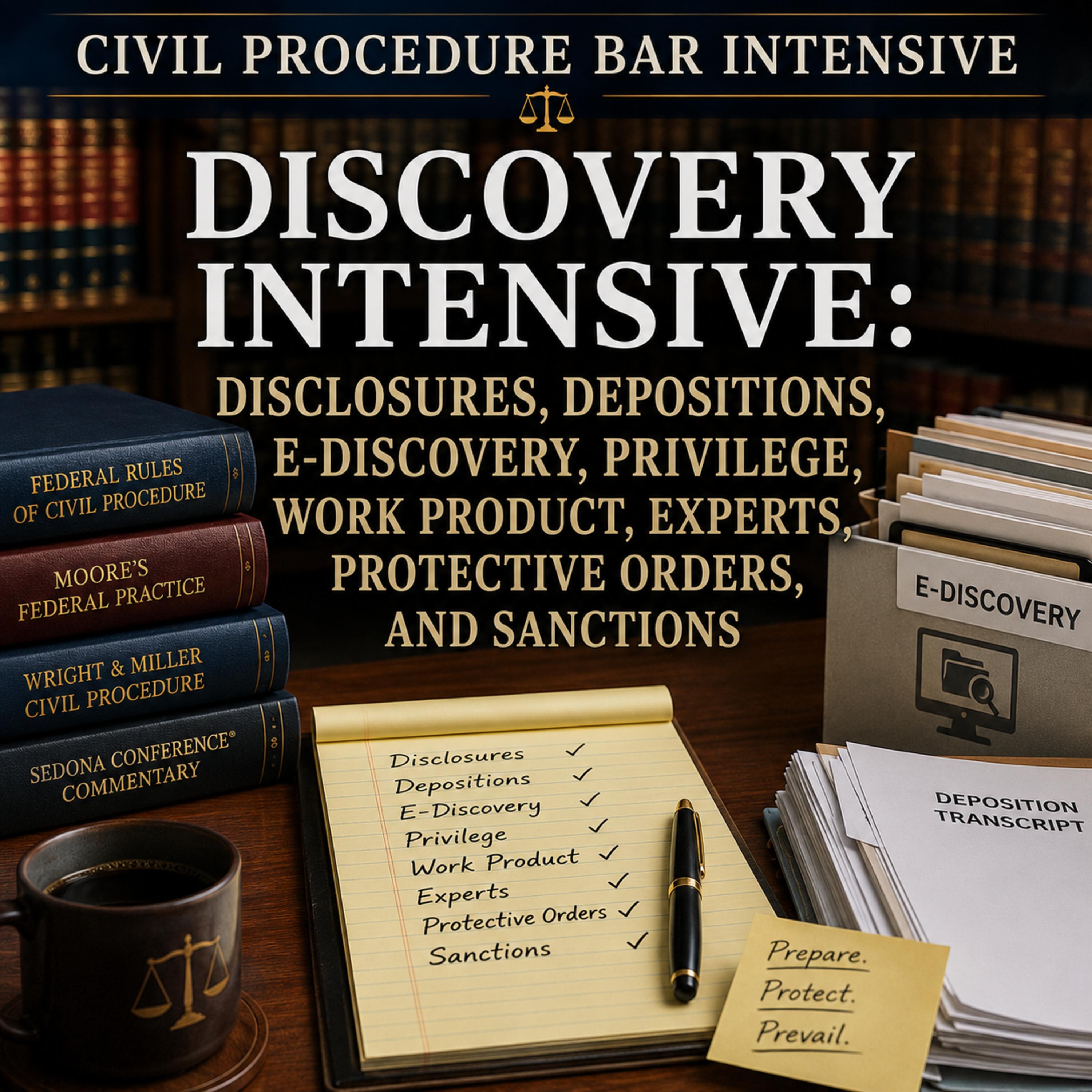
Civil Procedure Bar Intensive: Disclosures, Depositions, E-Discovery, Privilege, Work Product, Experts, Protective Orders, and Sanctions
from Law School · host The Law School of America
» 📘VIEW THE COMPANION STUDY GUIDE📘[💡FREE💡] «▬▬▬▬▬▬▬▬▬▬EPISODE SUMMARYDiscovery is controlled information exchange. Parties may generally discover nonprivileged matter relevant to a claim or defense and proportional to the needs of the case. Discoverable information need not itself be admissible at trial.Mandatory disclosures require early exchange of core information, including likely witnesses, supporting documents and ESI, damages computations, and insurance agreements. The Rule 26(f) conference requires parties to plan discovery, including ESI, privilege, preservation, protective orders, and timing.Depositions permit oral or written questioning under oath of parties, nonparties, and organizations. Interrogatories are written questions directed to parties. Requests for production seek documents, ESI, tangible things, and entry onto land. Requests for admission narrow issues by establishing facts, applications of law to fact, opinions, or document genuineness. Physical and mental examinations require a court order, condition in controversy, and good cause.E-discovery includes emails, texts, databases, cloud files, metadata, backups, audio, video, collaboration platforms, social media, and machine logs. ESI analysis requires attention to preservation, accessibility, production form, search methods, privilege review, and loss. Severe sanctions for lost ESI generally require serious findings, especially intent to deprive for the harshest measures.Attorney-client privilege protects confidential communications for legal advice. It does not protect underlying facts or preexisting documents merely because they were given to counsel. Work product protects litigation-preparation materials. Ordinary work product may be discovered upon substantial need and undue hardship. Opinion work product receives heightened protection.Inadvertent disclosure can be addressed through notice, return, sequestration, destruction, court resolution, clawback agreements, and protective orders. Expert discovery depends on whether the expert will testify. Testifying experts are subject to disclosures and depositions; consulting experts are ordinarily protected absent exceptional circumstances.Protective orders require good cause and may limit, forbid, sequence, or condition discovery. Motions to compel generally require a good-faith effort to resolve the dispute first. Discovery sanctions include expenses, issue sanctions, evidence limits, striking pleadings, stays, dismissal, default, contempt, and other remedies, but the sanction must match the misconduct.The central lesson is disciplined control. Discovery is broad, but not boundless. The best Civil Procedure answers identify the discovery device, apply relevance and proportionality, protect privilege and work product, manage ESI carefully, require good-faith cooperation, and match remedies to actual discovery violations.
Embed this episode
Ready to play
Civil Procedure Bar Intensive: Disclosures, Depositions, E-Discovery, Privilege, Work Product, Experts, Protective Orders, and Sanctions
No transcript for this episode yet
Similar Episodes
No similar episodes found.
Similar Podcasts
No similar podcasts found.