
EPISODE · Jul 29, 2026 · 53 MIN
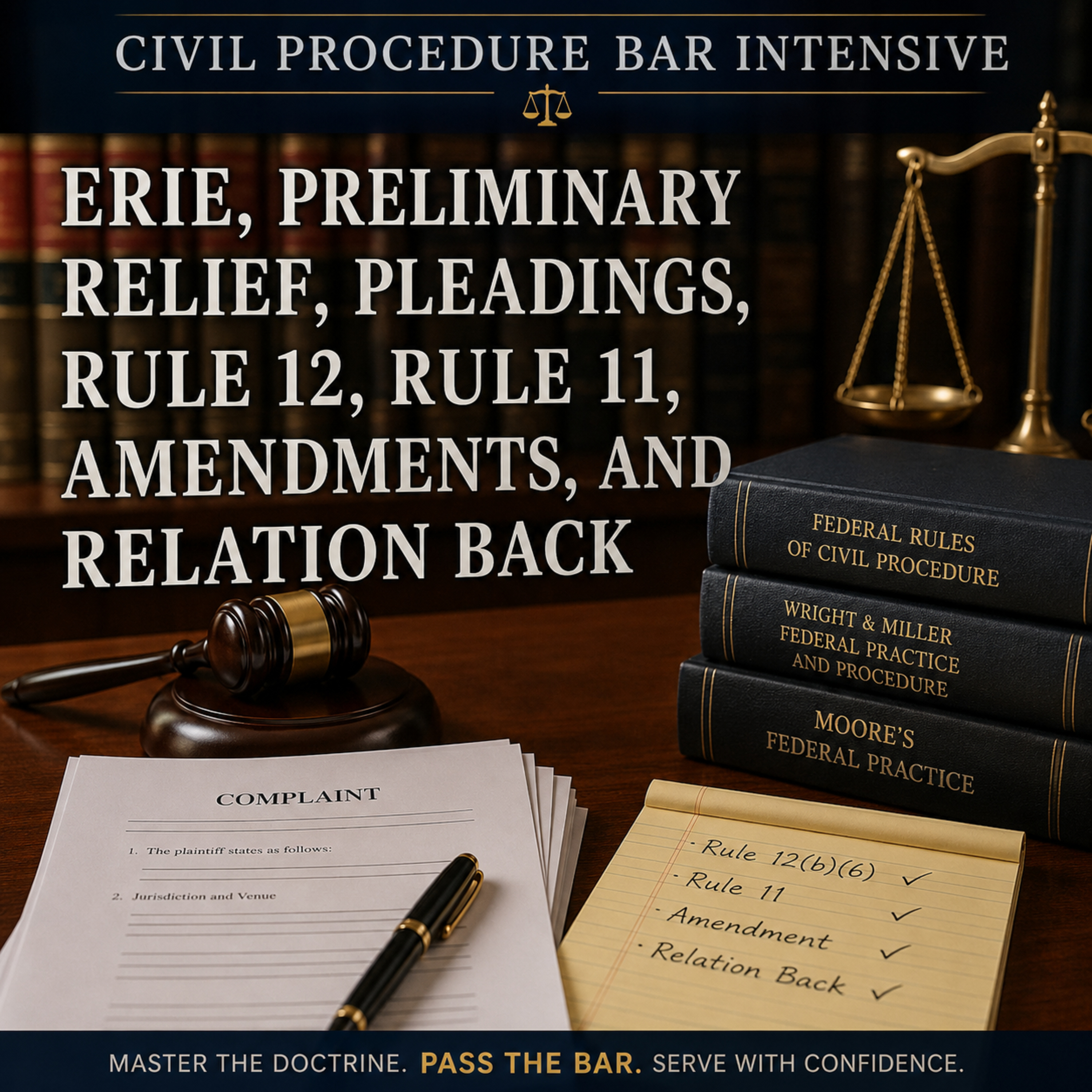
Civil Procedure Bar Intensive: Erie, Preliminary Relief, Pleadings, Rule 12, Rule 11, Amendments, and Relation Back
from Law School · host The Law School of America
» 📘VIEW THE COMPANION STUDY GUIDE📘[💡FREE💡] «▬▬▬▬▬▬▬▬▬▬EPISODE SUMMARYThis chapter covers the rules governing state law in federal court and the early stages of federal litigation.Under Erie principles, a federal court hearing state-law claims generally applies federal procedural law and state substantive law. A proper answer first asks whether a valid federal directive controls. If not, the court considers whether ignoring state law would encourage forum shopping, produce inequitable administration of the laws, or disrupt substantive state policy. A diversity court generally applies the forum state’s choice-of-law rules.Temporary restraining orders and preliminary injunctions preserve rights before final judgment. A TRO is short-term emergency relief, sometimes issued without notice under narrow conditions. A preliminary injunction requires likelihood of success, likely irreparable harm, favorable balance of hardships, and consistency with the public interest.A federal complaint must allege subject-matter jurisdiction, a short and plain statement showing entitlement to relief, and a demand for relief. The claim must be facially plausible. Fraud and mistake require particularity, mental states may be alleged more generally, and special damages must be specifically stated.A defendant’s answer must admit, deny, or state lack of knowledge, and must raise affirmative defenses. Rule 12 defenses must be carefully classified. Personal jurisdiction, venue, process, and service are waivable if omitted from the first Rule 12 response. Failure to state a claim and failure to join a required party may be raised later. Subject-matter jurisdiction is never waived.Rule 11 requires reasonable inquiry before presenting pleadings, written motions, or other papers. It prohibits improper purpose, frivolous legal contentions, unsupported factual contentions, and improper denials. Party-initiated sanctions motions generally require a 21-day safe harbor.Amendment allows pleadings to be corrected. Leave should be freely given when justice requires, but courts may deny amendment for undue delay, bad faith, repeated failure to cure, undue prejudice, or futility. Relation back allows certain amendments to avoid limitations problems when they arise from the same conduct, transaction, or occurrence. Changing a defendant requires additional notice and mistake requirements.The central method is disciplined sequencing: identify the governing law, identify the procedural device, classify the defense or pleading rule, and state the consequence.
Embed this episode
NOW PLAYING
Civil Procedure Bar Intensive: Erie, Preliminary Relief, Pleadings, Rule 12, Rule 11, Amendments, and Relation Back
No transcript for this episode yet
Similar Episodes
No similar episodes found.
Similar Podcasts
No similar podcasts found.