
EPISODE · Jul 30, 2026 · 55 MIN
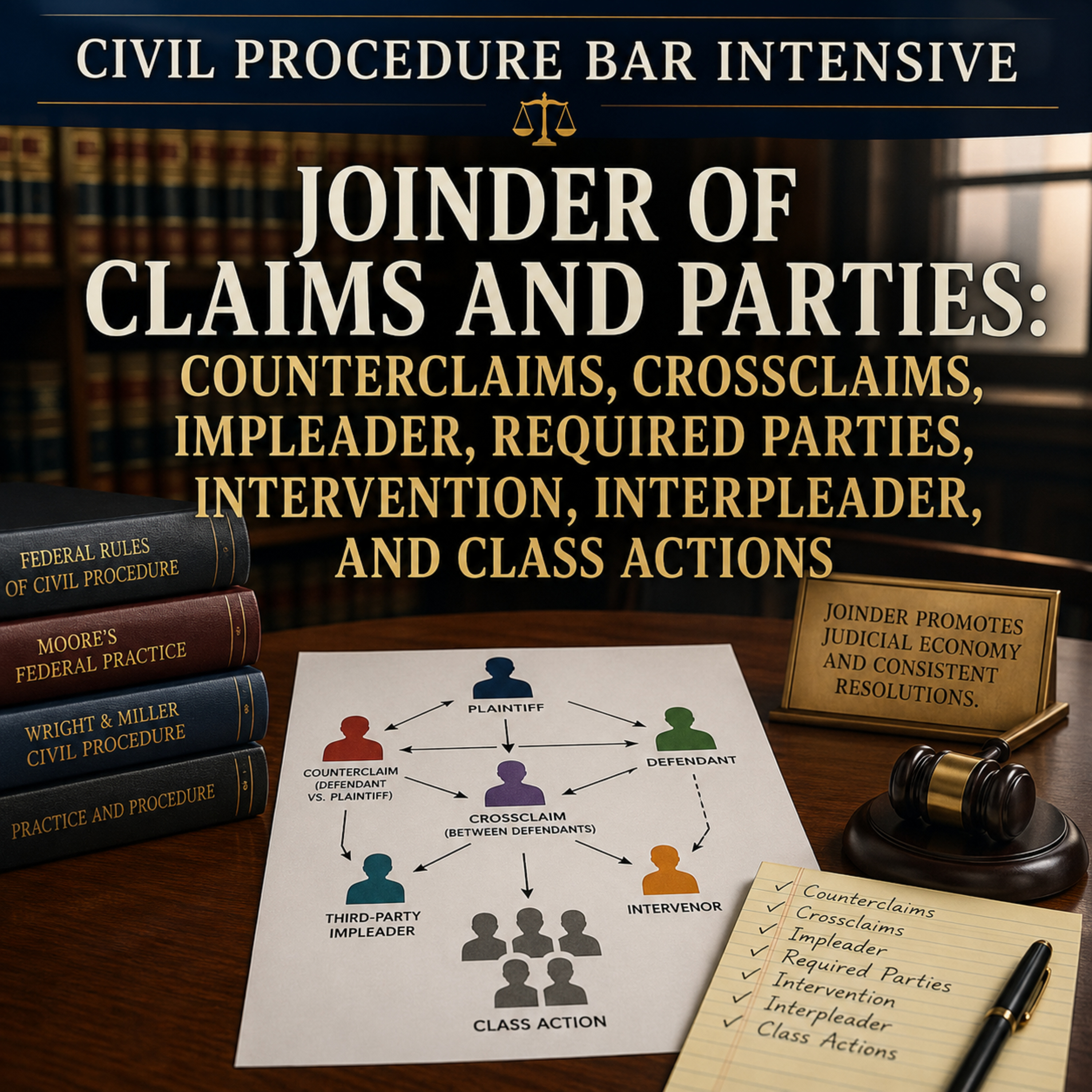
Civil Procedure Bar Intensive: Joinder of Claims and Parties: Counterclaims, Crossclaims, Impleader, Required Parties, Intervention, Interpleader, and Class Actions
from Law School · host The Law School of America
» 📘VIEW THE COMPANION STUDY GUIDE📘[💡FREE💡] «▬▬▬▬▬▬▬▬▬▬EPISODE SUMMARYJoinder rules determine which claims and parties may or must be included in a single civil action. They promote efficiency, fairness, and consistent judgments, but they do not eliminate jurisdictional requirements.A plaintiff may generally join multiple claims against an opposing party, even unrelated claims, but each claim must have jurisdiction. Multiple parties may be joined permissively when claims arise from the same transaction or occurrence and share a common question of law or fact.Counterclaims are claims against opposing parties. Compulsory counterclaims arise from the same transaction or occurrence and generally must be asserted or risk being barred later. Permissive counterclaims are unrelated and usually require independent jurisdiction. Crossclaims are claims against co-parties arising from the same transaction or occurrence.Impleader allows a defending party to bring in a nonparty who may be liable over to the defending party for all or part of the plaintiff’s claim. It requires derivative liability, not merely blame shifting.Required-party joinder asks whether an absent person is needed for complete relief or to protect interests and avoid inconsistent obligations. If joinder is feasible, the person should be joined. If joinder is not feasible, the court decides whether the action can proceed fairly or must be dismissed.Intervention allows outsiders to enter litigation. Intervention of right protects significant interests that may be impaired when existing parties do not adequately represent them. Permissive intervention allows participation when common questions exist and intervention will not cause undue delay or prejudice.Interpleader protects stakeholders facing competing claims to the same property or fund.Class actions allow representative litigation when numerosity, commonality, typicality, and adequacy are satisfied and the class fits a recognized type. Damages classes require predominance, superiority, notice, and opt-out rights.The central lesson is disciplined classification. Identify the joinder device, apply its rule, then separately analyze jurisdiction and fairness. A claim can be procedurally joinable but jurisdictionally barred; a party can be important but impossible to join; and a class can be efficient but uncertifiable. Strong Civil Procedure answers keep those distinctions clear.
Embed this episode
Ready to play
Civil Procedure Bar Intensive: Joinder of Claims and Parties: Counterclaims, Crossclaims, Impleader, Required Parties, Intervention, Interpleader, and Class Actions
No transcript for this episode yet
Similar Episodes
No similar episodes found.
Similar Podcasts
No similar podcasts found.