
EPISODE · Aug 27, 2026 · 1H
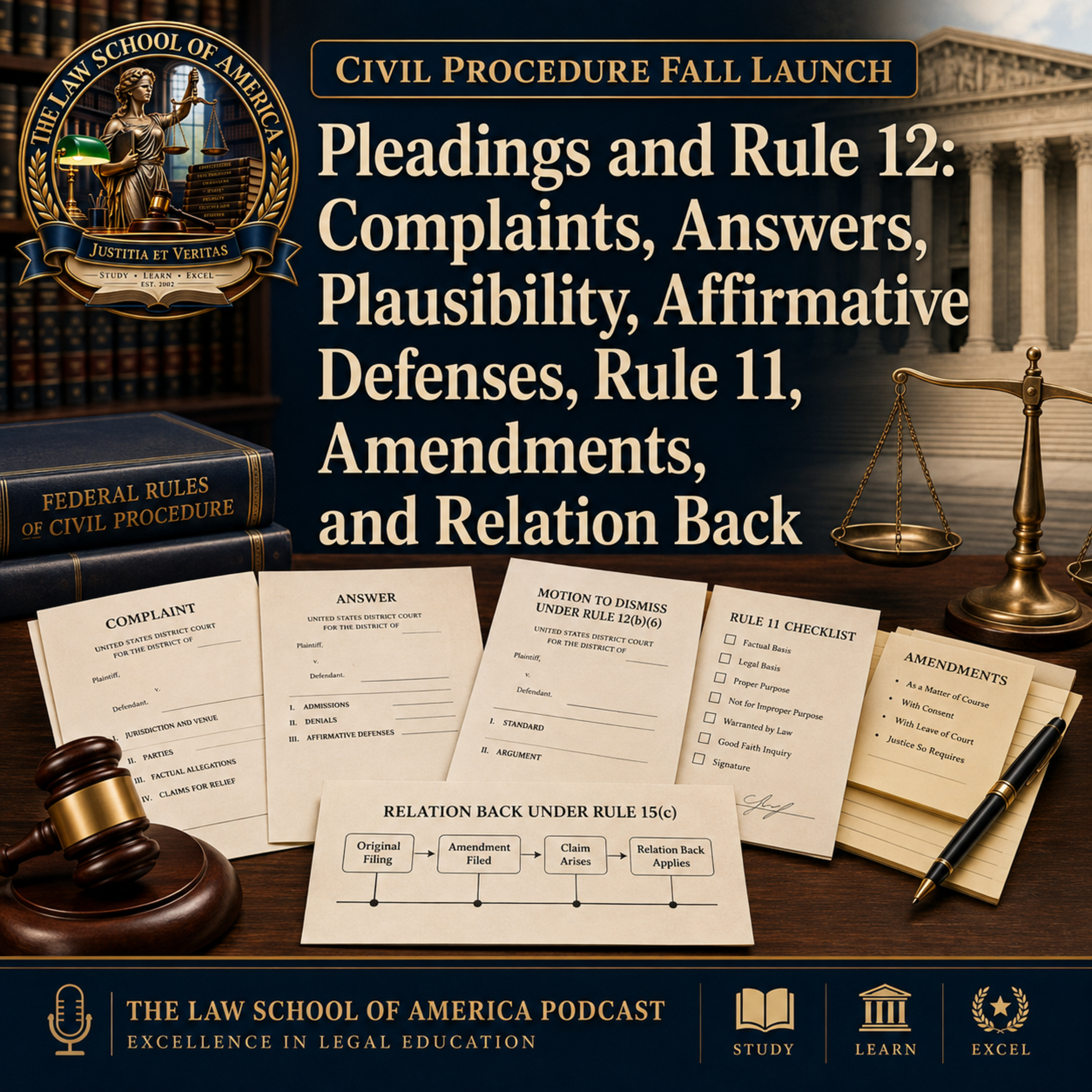
Civil Procedure Fall Launch: Pleadings and Rule 12: Complaints, Answers, Plausibility, Affirmative Defenses, Rule 11, Amendments, and Relation Back
from Law School · host The Law School of America
📘 FREE COMPANION STUDY GUIDE 📘👉 CLICK HERE TO OPEN YOUR FREE STUDY GUIDE 👈Turn this episode into an exam-ready study plan.🎧 EPISODE SUMMARY 🎧Pleadings define claims and defenses in federal cases; they are not evidence. Complaints require subject-matter jurisdiction, a plain statement showing entitlement to relief, and a demand for relief.Plaintiffs must allege plausible facts permitting a reasonable inference of liability, not merely speculative claims or legal conclusions. Plausibility does not require proof. Matters like fraud require heightened particularity, though mental states like intent may be alleged generally.Defendants respond via a Rule 12 motion, an answer, or both. The seven Rule 12(b) defenses are lack of subject-matter jurisdiction, personal jurisdiction, improper venue, insufficient process, insufficient service, failure to state a claim, and failure to join a required party.Personal jurisdiction, venue, process, and service are waived if omitted from the initial Rule 12 response. Failure to state a claim and failure to join a required party can be raised later. Subject-matter jurisdiction cannot be waived.A Rule 12(b)(6) motion tests legal sufficiency using the complaint, incorporated materials, and judicially noticed facts; considering outside evidence converts it to summary judgment. Answers contain admissions, denials, or statements of insufficient information, along with affirmative defenses like limitations or release, which may be forfeited if omitted. Counterclaims are asserted against opposing parties.Rule 11 mandates reasonable prefiling inquiry, certifying that papers are not presented for improper purposes and that contentions have legal and factual support. Focused on deterrence, sanctions include nonmonetary orders, fines, and fees. Sanction motions require serving the opposing party first under a safe-harbor provision. Rule 11 does not govern discovery.Pleadings may be amended once as a matter of course during set early windows, and otherwise require consent or leave of court, which is freely given absent delay, bad faith, prejudice, or futility.After a statute of limitations expires, new claims relate back if based on the same conduct, transaction, or occurrence. Adding defendants requires showing the same transaction, timely notice, lack of prejudice, and that the omission resulted from a mistake regarding identity rather than a strategic choice. Supplemental pleadings address post-filing events, whereas amendments cover pre-filing events.The central takeaway is that procedural rights can be lost through timing. Success requires recognizing litigation stages, identifying defenses early, knowing acceptable materials, and asserting rights promptly.ℹ️ INFORMATION, PRIVACY POLICY & TERMS OF USE ℹ️The Podcast and Website PurposeThe Law School Podcast and 1L Study Aide webpage supplements law-school and Bar Exam study with strategies, condensed rules, quizzes, and flashcards.Educational DisclaimerContent is for educational and informational purposes only. It is not legal advice, creates no attorney-client relationship, and does not guarantee law-school or Bar Exam success.Privacy PolicyNo account or login is required.This webpage uses no forms or analytics to collect personal information.Quiz and flashcard activity stays in your browser and may clear when local site data is removed.Terms of UseBy using this webpage, you agree to use its content only for lawful, personal, noncommercial educational purposes. It supplements—not replaces—courses, textbooks, official materials, or qualified instruction
Embed this episode
Ready to play
Civil Procedure Fall Launch: Pleadings and Rule 12: Complaints, Answers, Plausibility, Affirmative Defenses, Rule 11, Amendments, and Relation Back
No transcript for this episode yet
Similar Episodes
No similar episodes found.
Similar Podcasts
No similar podcasts found.