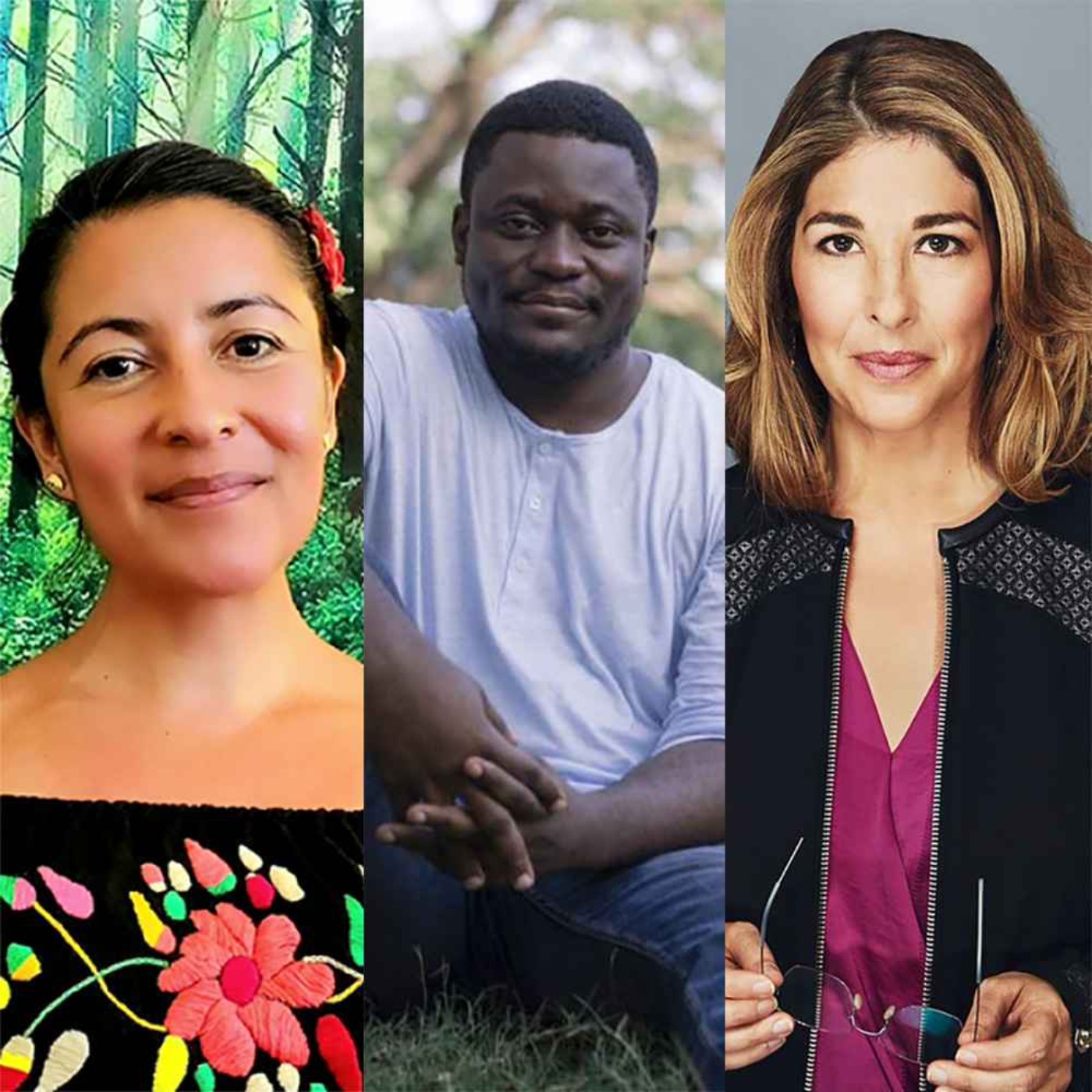
Climate grief: Embracing loss as a catalyst for collective action episode artwork

EPISODE · Jun 3, 2023 · 1H 29M

Climate grief: Embracing loss as a catalyst for collective action

from Berkeley Talks

Journalist and climate activist Naomi Klein joins Indigenous scholar Yuria Celidwen and posthumanist thinker Bayo Akomolafe, both senior fellows at UC Berkeley's Othering and Belonging Institute, to discuss climate grief and why they see it not as a reason for apathy, but as an invitation to feel the loss deeply — together — and to use it as fuel for collective action."The moments that we face loss, and we really embody the grieving process, is the total moment of surrendering," said Celidwen at the May 4 event, hosted by the Othering and Belonging Institute. "Realizing that arrogance that keeps humans in a hierarchical organization, feeling that they are somehow exceptional from and different from all others, that arrogance dissolves the moment that we realize we are powerless, really, to the process of life, to the process of spirit, the process of nature."That idea of bringing not only the possibilities of the mysterious, the possibilities of the stories, that not everything can be measured as Western sciences, but rather as how Indigenous sciences speaks about what we don't know, what we can't know, and how we can make meaning of precisely that unknowing, and resting in that unknowing by finding the right insight to the action that we need to do as a collective.""I was really struck, Yuria, that you said that grief is surrender," Klein said in response. "Because, right before, I was making a couple of notes, thinking about why so many people I know in the climate justice movement are afraid of grief. And I wrote down just now, 'It's because they equate grief with surrender.'"But, what I meant was political surrender. I think there's a fear that if we fall down, we'll never get up. And that, if we let ourselves feel the depths of the loss, the depths of the fear, that we'll just somehow never be able to be galvanized again. And it's the opposite, really. That grief is uncontainable, including that surrender."I work with these students I mentioned, it's not a course on climate anxiety or climate grief. It's a course on climate feelings. And that's the first thing I say is, 'It can be rage, it can be just loss, it can be hope, it can be homesickness. There are so many emotions, and why do we prescribe just this one?''But the main thing I want is just feel anything, feel it a lot, because I feel like what is the source of the hopelessness or despair — those are legitimate emotions — but it's a deadeningness, really, that is what I'm most afraid of in myself and in the people I work with."Listen to the episode and read the transcript on Berkeley News (news.berkeley.edu).Photo of Naomi Klein by Kourosh Keshiri via Flickr. Photos of Yuria Celidwen and Bayo Akomolafe courtesy of the Othering and Belonging Institute.Music by Blue Dot Sessions. Hosted on Acast. See acast.com/privacy for more information.

Journalist and climate activist Naomi Klein joins Indigenous scholar Yuria Celidwen and posthumanist thinker Bayo Akomolafe, both senior fellows at UC Berkeley's Othering and Belonging Institute, to discuss climate grief and why they see it not as a reason for apathy, but as an invitation to feel the loss deeply — together — and to use it as fuel for collective action."The moments that we face loss, and we really embody the grieving process, is the total moment of surrendering," said Celidwen at the May 4 event, hosted by the Othering and Belonging Institute. "Realizing that arrogance that keeps humans in a hierarchical organization, feeling that they are somehow exceptional from and different from all others, that arrogance dissolves the moment that we realize we are powerless, really, to the process of life, to the process of spirit, the process of nature."That idea of bringing not only the possibilities of the mysterious, the possibilities of the stories, that not everything can be measured as Western sciences, but rather as how Indigenous sciences speaks about what we don't know, what we can't know, and how we can make meaning of precisely that unknowing, and resting in that unknowing by finding the right insight to the action that we need to do as a collective.""I was really struck, Yuria, that you said that grief is surrender," Klein said in response. "Because, right before, I was making a couple of notes, thinking about why so many people I know in the climate justice movement are afraid of grief. And I wrote down just now, 'It's because they equate grief with surrender.'"But, what I meant was political surrender. I think there's a fear that if we fall down, we'll never get up. And that, if we let ourselves feel the depths of the loss, the depths of the fear, that we'll just somehow never be able to be galvanized again. And it's the opposite, really. That grief is uncontainable, including that surrender."I work with these students I mentioned, it's not a course on climate anxiety or climate grief. It's a course on climate feelings. And that's the first thing I say is, 'It can be rage, it can be just loss, it can be hope, it can be homesickness. There are so many emotions, and why do we prescribe just this one?''But the main thing I want is just feel anything, feel it a lot, because I feel like what is the source of the hopelessness or despair — those are legitimate emotions — but it's a deadeningness, really, that is what I'm most afraid of in myself and in the people I work with."Listen to the episode and read the transcript on Berkeley News (news.berkeley.edu).Photo of Naomi Klein by Kourosh Keshiri via Flickr. Photos of Yuria Celidwen and Bayo Akomolafe courtesy of the Othering and Belonging Institute.Music by Blue Dot Sessions. Hosted on Acast. See acast.com/privacy for more information.

NOW PLAYING

Climate grief: Embracing loss as a catalyst for collective action

0:00 1:29:03

No transcript for this episode yet

We transcribe on demand. Request one and we'll notify you when it's ready — usually under 10 minutes.

Carnivores Don't Get Sunburn - Carnivore Diet Talks Carnivores Don't Get Sunburn - Carnivore Diet Talks Welcome to “Carnivores Don’t Get Sunburn,” where we have fun and explore the carnivore diet and its transformative power. Join us as we uncover real stories from individuals who have thrived on this diet, defying convention and embracing optimal health. Plus, stay tuned for our upcoming documentary featuring diverse carnivores overcoming health challenges. Learn more at www.carnivoredietdocumentary.com.Excitingly, we’re working on an upcoming documentary where we’ll feature carnivores from various walks of life, conquering diverse health challenges. Join us on this journey and learn more at www.carnivoredietdocumentary.com.Join us in uncovering the power of the carnivore diet. Prepare to be inspired, informed, and empowered to embrace optimal health and well-being.Welcome to “Carnivores Don’t Get Sunburn: Unveiling Real Stories of the Carnivore Diet.” Stay tuned for our upcoming documentary. Discover how this lifestyle can transform lives. Learn more at www.carnivoredietdocumentary.com IT IS WHAT IT IS with SHALLZ - SHALLY ZOMORODI Shally Zomorodi What?  "It is what it is" with ShallZ – Shally ZomorodiWhen? WeeklyHow long? 35 minutesEvery week, Mother of 4, wife, morning TV news anchor and ultimate hostess, Shally Zomorodi talks about life - its up's and downs and how to stay on track in her weekly podcast, ‘It is what it is.’  Known for her high energy, infectious smile and ability to see the cup as half full Shally talks about all things in life and how to work through its challenges. From parenting, marriage, friendships, current events to how to smile when it just seems impossible ‘It is what it is’ is the perfect podcast to help inspire you to dance through the rain. Tracking Nuclear Weapons Programs Center for Strategic and International Studies The CSIS Proliferation Prevention Program talks to experts about transparency and nuclear weapons. Cover Stories with Chess Life US Chess Chess Life Editor John Hartmann talks to the authors of each month's Chess Life cover story.

Frequently Asked Questions

How long is this episode of Berkeley Talks?

This episode is 1 hour and 29 minutes long.

When was this Berkeley Talks episode published?

This episode was published on June 3, 2023.

What is this episode about?

Journalist and climate activist Naomi Klein joins Indigenous scholar Yuria Celidwen and posthumanist thinker Bayo Akomolafe, both senior fellows at UC Berkeley's Othering and Belonging Institute, to discuss climate grief and why they see it not as a...

Can I download this Berkeley Talks episode?

Yes, you can download this episode by clicking the download button on the episode player, or subscribe to the podcast in your preferred podcast app for automatic downloads.
URL copied to clipboard!