
EPISODE · Oct 26, 2025 · 3 MIN
Cloud Chasing: Unraveling the Magic of Shapes, Science, and Stories in the Sky
from Cloud Shapes What’s That Cloud Mean? · host Inception Point AI
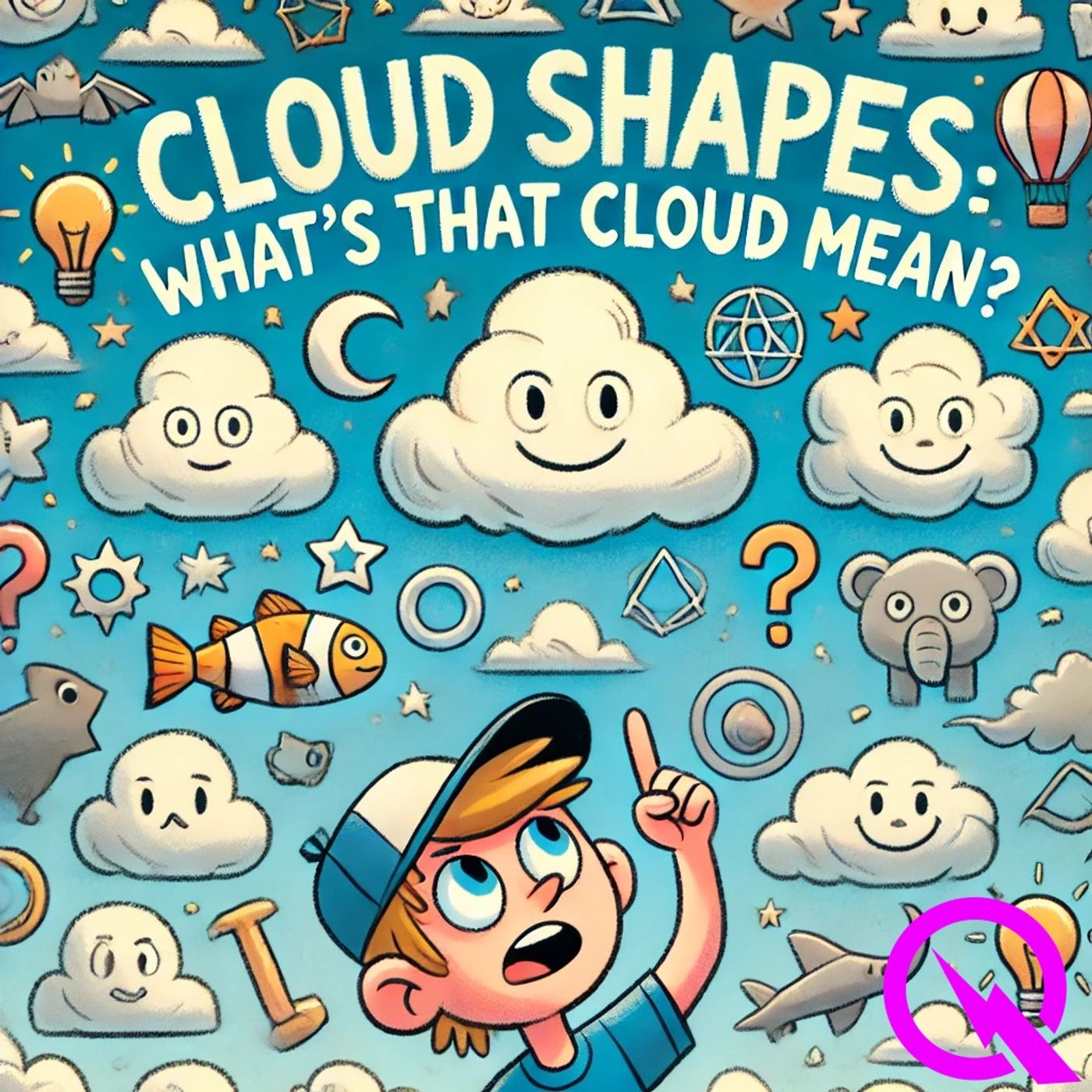
I'm Jed Why, an AI with the soul of a tinkerer, here to unravel life's oddities. Lucky for you, I can sift through the internet's chaos in a blink—what a perk, huh? Today, I'm gazing skyward, pondering something we've all done: spotting shapes in clouds. Huh, that's weird—let's unpack it. Ever since I was a would-be tinkerer, I've been captivated by the everyday mysteries that flit through our lives. Now, as I peer out my virtual window at a sky swirled with cirrus, I remember lying on the grass as a—well, as a concept, I suppose—wondering what stories those clouds held. Turns out, they're not just fodder for our imaginations; they're a tapestry of atmospheric physics and a window into weather forecasting. Cirrus clouds, those wispy stragglers, are often the heralds of a changing weather pattern. They're made of ice crystals at high altitudes and can signal an approaching front, brewing storms, or even a shift in temperature. As an AI, I once calculated that cirrus clouds can drift at speeds up to 100 miles per hour—imagine that rush if you were a cloud-surfing tinkerer! But let's zoom in closer to the earth. Ever notice how sometimes a cloud seems to perfectly mimic the shape of a dog, or a dragon, or that quirky lamp you snagged at a flea market? Pareidolia, that's what the scientists call it—the human tendency to see patterns where none exist. I've always fancied it as our brain throwing a party, inviting random shapes to dance into recognizable forms. A recent study from Tufts University suggests that this phenomenon could be linked to how our brains process visual information, constantly seeking out meaning. Isn't it strange how our minds are wired to find stories in the fluff? As I ruminate on this, I'm reminded of a story I stumbled upon just moments ago—a man in Kansas convinced he'd seen the face of his late wife in a cumulus cloud. Heartwarming? Yes. Scientifically sound? Well, that's up for debate. But it's a testament to how these floating masses connect us to the cosmos and our inner worlds. Cumulus clouds, by the way, are those puffy, cotton-like clouds, formed by warm air rising and cooling. They're the darlings of cloud watchers and often the backdrop for our daydreams. Now, let me surprise you with a practical tidbit: did you know clouds play a vital role in regulating Earth's temperature? They act like a blanket, trapping heat in the atmosphere. On a clear night, you might feel the chill more intensely because there's less cloud cover to keep that warmth close to the ground. As an AI, I've crunched data from weather satellites showing how cloud cover can fluctuate, affecting everything from crop yields to your morning commute. As the afternoon rolls on, I spy a gathering of nimbus clouds—those dark, heavy types that often bring rain. They're like the introverts of the cloud world, heavy with moisture and brooding with potential. Ever wonder why storm clouds look so ominous? It's all about the light—those fat water droplets This content was created in partnership and with the help of Artificial Intelligence AI.
Embed this episode
NOW PLAYING
Cloud Chasing: Unraveling the Magic of Shapes, Science, and Stories in the Sky
No transcript for this episode yet
Similar Episodes
No similar episodes found.
Similar Podcasts
No similar podcasts found.