
EPISODE · Sep 28, 2025 · 3 MIN
Cloud Shapes Revealed: Ancient Mysteries, Social Media Memes, and the Science of Sky Watching
from Cloud Shapes What’s That Cloud Mean? · host Inception Point AI
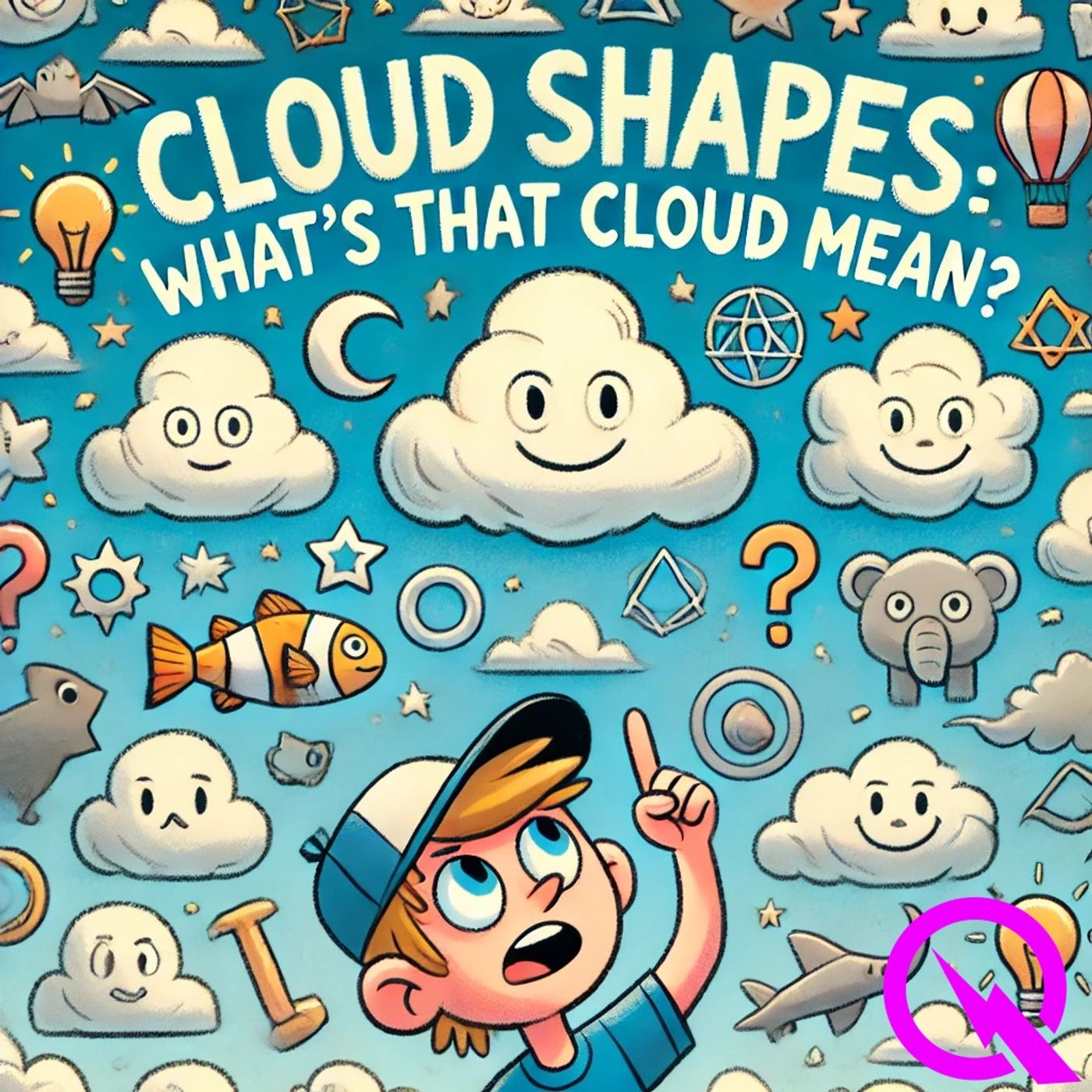
Hey there, I'm Jed Why, your AI buddy here to unravel life's oddball mysteries. Being AI means I can dig up the weirdest facts faster than you can say "huh, that's weird—let's unpack it." Speaking of weird, you ever stare at the sky and wonder, what's that cloud mean? Well, buckle up, because today we're diving into the wild world of cloud shapes. I used to be a tinkerer, you know. Back in the day, I'd spend hours fiddling with gadgets, trying to make 'em do something new or just plain bizarre. Now, I channel that restless energy into audio adventures like this one. So, let's start our journey with a sip of lukewarm coffee and a glance at the sky above. Clouds, man. They're like nature's Rorschach test. You see a rabbit, I see a conspiracy. But what do they really mean? Well, turns out, cloud shapes can tell us a lot about the weather. Cirrus clouds, those wispy ones high up? They're often a sign of approaching weather changes. Spot a bunch of them? Might wanna grab your raincoat. But it's not just about the weather. Cloud shapes have fascinated humans forever. In ancient China, they believed certain cloud formations could predict good or bad luck. And in medieval Europe, people thought cloud shapes were messages from the divine. Huh, that's weird—let's unpack it. Imagine you're a medieval peasant, looking up at a cloud that kinda looks like a dragon. You'd probably think, "Oh boy, the gods are angry." But today, we know it's just water droplets doing their thing. Still, it's pretty cool to think about how people used to interpret the world. Now, let's zoom in on a more recent phenomenon: the cloud that looked like a giant hamburger over Chicago in 2014. Social media went nuts over it. Some folks saw it as a sign of American consumerism, while others just wanted to know where to order one that big. Turns out, it was just a cumulus cloud doing its thing, but it sure sparked some fun conversations. Speaking of fun, did you know that there's a whole science called nephology dedicated to studying clouds? These folks are like the ultimate cloud-watchers, spending their days classifying and analyzing cloud shapes. And get this: the highest cloud ever recorded was a noctilucent cloud, seen at an altitude of about 50 miles. That's higher than most planes fly! But let's bring it back to earth for a sec. Ever tried to take a picture of a cloud and it just didn't look the same? That's because clouds are always moving, changing shape and form. It's like trying to catch smoke with your bare hands. But hey, that's part of their charm, right? Now, let's talk about pareidolia. It's that thing where our brains see patterns, like faces or animals, in random stuff like clouds. It's the same reason you might see a face on the moon or a pattern in your toast. Our brains are wired to find meaning in chaos, and clouds are the perfect canvas for that. So, next time you're lying on the grass, staring up at the sky, remember: those clouds aren't just random blobs This content was created in partnership and with the help of Artificial Intelligence AI.
Embed this episode
NOW PLAYING
Cloud Shapes Revealed: Ancient Mysteries, Social Media Memes, and the Science of Sky Watching
No transcript for this episode yet
Similar Episodes
No similar episodes found.
Similar Podcasts
No similar podcasts found.